
Pristomyrmex africanus
- Sci. Name
- Pristomyrmex africanus
- Tribe
- Crematogastrini
- Subfamily
- Myrmicinae
- Author
- Karavaiev, 1931
- Distribution
- Found in 13 countries
Introduction
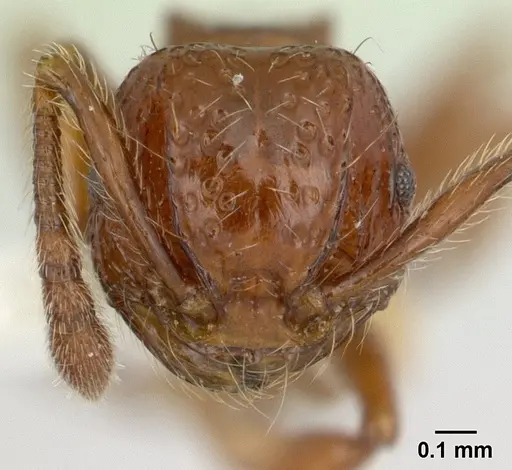
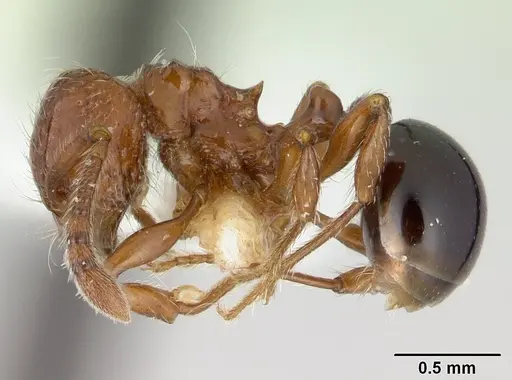
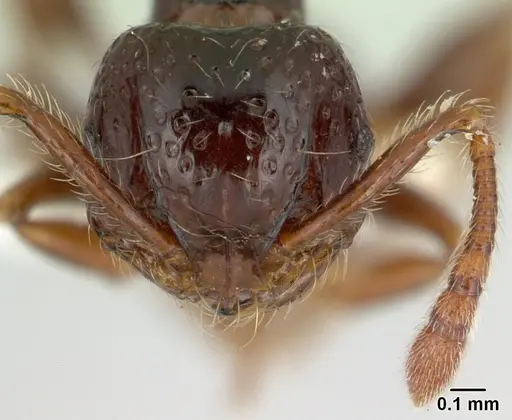
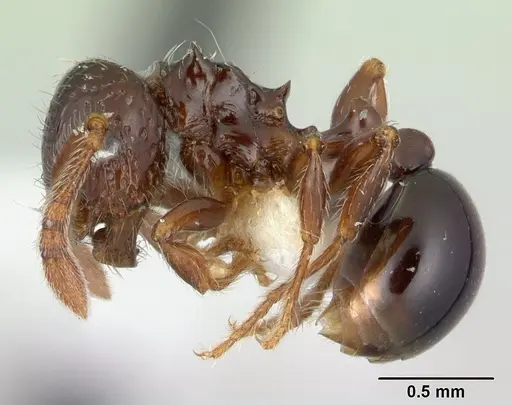
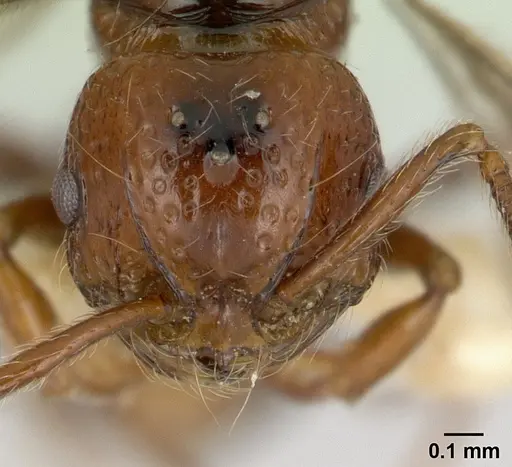
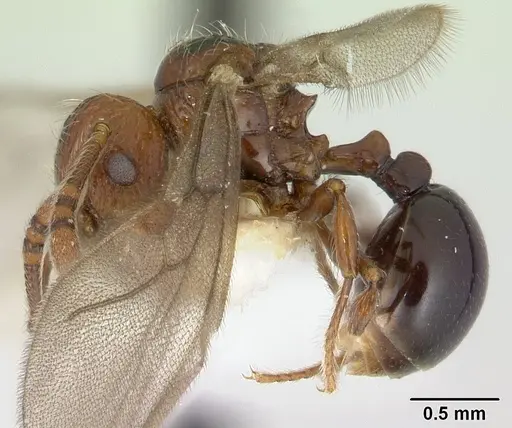
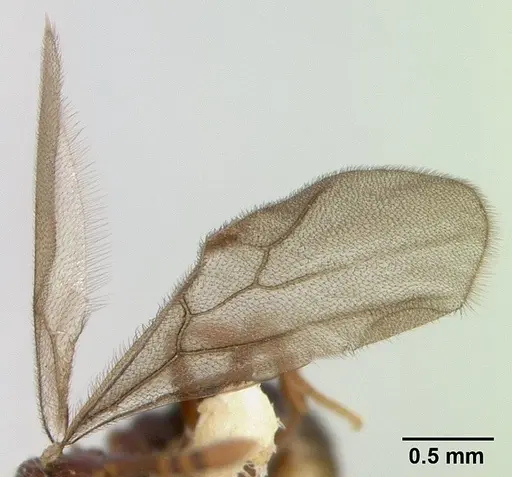
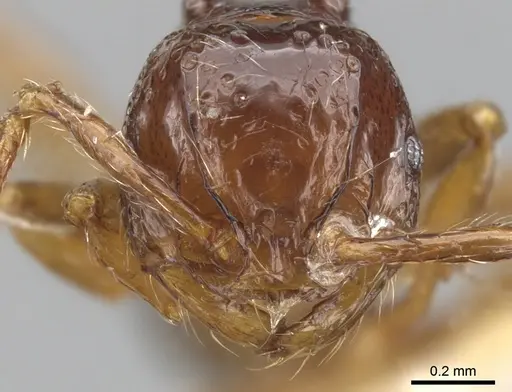
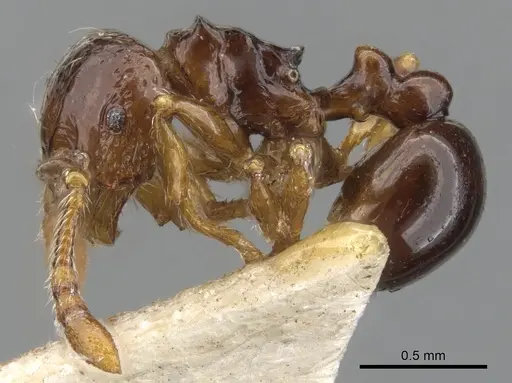
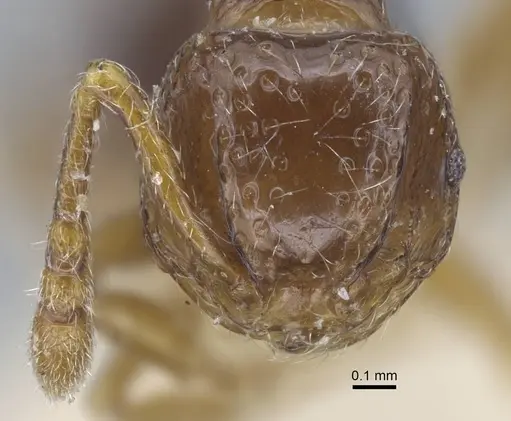
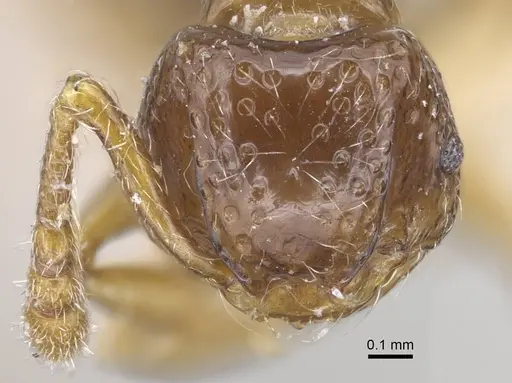
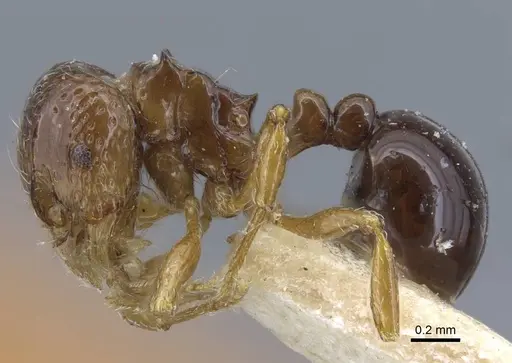
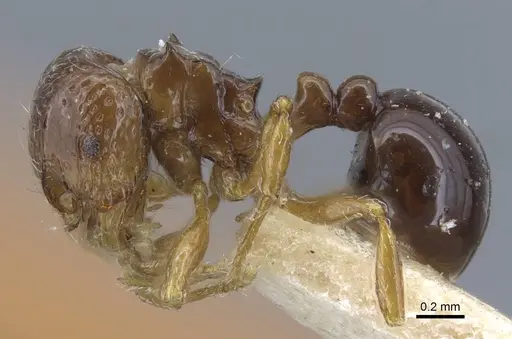
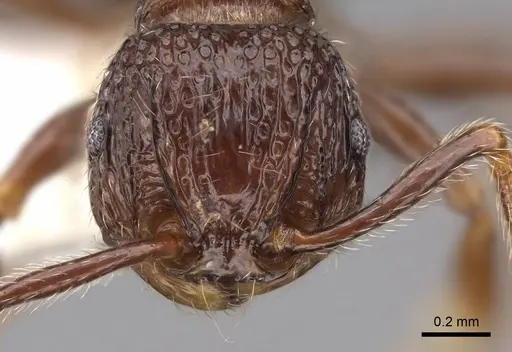
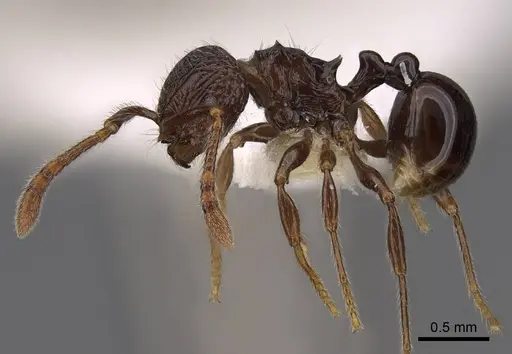
Pristomyrmex africanus is a small, reddish-brown ant native to rainforests across Central and East Africa. Workers are about 2.8-3.4 mm long, and queens are 3.4-3.8 mm long, with a distinctive dark gaster. This species is recognized by its small eyes (only 4-5 ommatidia in the longest row), two tooth-like projections on the clypeus, and scattered foveolate punctures on the head. They inhabit leaf litter and humus on the rainforest floor, where they move slowly and play dead when disturbed. The species has been found in Ghana, Kenya, Uganda, Tanzania, Democratic Republic of Congo, Gabon, and other countries . A unique feature is the presence of both winged and ergatoid (wingless) queens, which may allow for internal queen replacement .
Quick Summary
- Difficulty: Medium
- Origin & Habitat: Rainforests of Central and East Africa, found in leaf litter at elevations from 110m to 640m [2][1].
- Colony Type: Colony structure is unconfirmed, both ergatoid and winged queens have been documented, suggesting potential for internal queen replacement [1].
- Size & Growth:
- Queen: About 3.4-3.8 mm long (winged queens), with ergatoid queens around 3.7 mm [1].
- Worker: About 2.8-3.4 mm long [1].
- Colony: Unknown, no colony size data available.
- Growth: Unknown, likely moderate based on small worker size.
- Development: Unknown, no direct development data available. (Development time is not documented, keep at warm temperatures and observe.)
- Antkeeping:
- Temperature: Keep at 24-28°C, inferred from tropical rainforest habitat.
- Humidity: High humidity required, maintain damp nest substrate, as they live in rainforest leaf litter [1].
- Diapause: No, as a tropical species, they do not require hibernation.
- Nesting: Y-tong (AAC) or plaster nests work well, as they retain moisture and provide tight chambers [1].
- Behavior: These ants are slow-moving and docile, using thanatosis (playing dead) as a defense mechanism when disturbed. Primary defense is smear with a modified stinger, typical for Myrmicinae Crematogastrini. Their small size means escape prevention is critical [1].
- Common Issues: escape prevention is critical due to their tiny size, use fine mesh barriers., high humidity can lead to mold if ventilation is poor., sensitive to drying out, monitor substrate moisture closely.
Nest Preferences and Housing
Pristomyrmex africanus is a small leaf-litter ant that thrives in humid, confined spaces. In captivity, Y-tong (AAC) nests or plaster nests work best because they retain moisture well while providing the tight chambers and narrow passages this species prefers [1]. These ants are too small for test tube setups designed for larger species, the chambers would be too spacious and dry out too quickly. A naturalistic setup with a damp soil layer and some leaf litter on top can also work well, mimicking their natural rainforest floor habitat [1].
Feeding and Diet
In their natural rainforest habitat, Pristomyrmex africanus forages through leaf litter, likely scavenging on small invertebrates, dead insects, and other protein sources. They are not known to tend aphids or collect honeydew [1]. In captivity, offer small protein sources like fruit flies, small mealworms, or other tiny insects. Given their small size, prey items should be appropriately sized, nothing larger than their own body. Sugar water or honey can be offered occasionally, but acceptance is uncertain as their natural diet appears to be primarily predatory/scavenging [1].
Temperature and Humidity Requirements
As a tropical rainforest species from Central and East Africa, Pristomyrmex africanus requires warm and humid conditions. Keep the nest area at 24-28°C, with a slight gradient if possible so workers can choose their preferred temperature. Humidity is critical, the nest substrate should feel consistently damp but never waterlogged [1]. These ants are sensitive to drying out and will decline in overly dry conditions.
Behavior and Temperament
Pristomyrmex africanus is a docile species with a unique defensive behavior. When disturbed, workers stop moving completely and remain motionless, this is called thanatosis or 'playing dead' [1]. This makes them easy to handle, though it can also make them seem inactive. They are slow-moving foragers that search through leaf litter rather than racing around the outworld. Despite being in the Myrmicinae subfamily, these ants show no aggression toward keepers. Their small size of just 2.8-3.4 mm means they can easily escape through tiny gaps, so excellent escape prevention is essential [1].
Colony Structure and Reproduction
This species exhibits an interesting caste system with both ergatoid (wingless) queens and fully winged queens documented. Ergatoid queens measure about 3.7 mm and have reduced eyes compared to workers, while winged queens reach 3.4-3.8 mm with larger eyes and three ocelli [1]. The presence of ergatoid queens suggests the species may have internal queen replacement capabilities, if a queen dies, an ergatoid could potentially take over reproduction without the colony needing to produce new winged queens. However, the exact colony structure (single queen vs. multiple queen) remains unconfirmed in scientific literature [1].
Frequently Asked Questions
How long does it take for Pristomyrmex africanus to produce first workers?
Exact development time is unknown, as no direct data is available. Keep colonies at warm temperatures (24-28°C) and observe for development.
Can I keep Pristomyrmex africanus in a test tube setup?
Standard test tube setups are not ideal for this species. The chambers are too large and spacious for these tiny ants, and they dry out too quickly. Use a Y-tong (AAC) nest or plaster nest with small, tight chambers that retain humidity [1].
Do Pristomyrmex africanus ants sting?
Given their very small size (under 4 mm), any sting would likely be imperceptible to humans. They are docile and prefer to play dead when disturbed rather than defend aggressively [1].
Are Pristomyrmex africanus good for beginners?
They are rated as medium difficulty. While docile and handleable, their high humidity requirements and small size make them trickier than hardy species like Lasius. Beginners should have experience with humidity-dependent ants first.
Do Pristomyrmex africanus need hibernation?
No, as a tropical African species from rainforests near the equator, they do not require hibernation. Keep them warm year-round at 24-28°C.
Why do my Pristomyrmex africanus stop moving when I touch them?
This is normal behavior, they play dead (thanatosis) when disturbed. It's a defensive strategy where they become completely motionless to avoid predators. They will resume normal activity once they feel safe [1].
How big do Pristomyrmex africanus colonies get?
Colony size is not well documented in scientific literature. Based on their small worker size and rainforest leaf-litter lifestyle, colonies likely remain modest, probably under a few hundred workers at most.
What do Pristomyrmex africanus eat?
They appear to be primarily predatory/scavenging, feeding on small insects and invertebrates in leaf litter. In captivity, offer small protein sources like fruit flies, tiny mealworms, or small crickets. Sugar water may be accepted but is not a primary food source [1].
Can I keep multiple Pristomyrmex africanus queens together?
This has not been documented. The colony structure (single queen vs. multiple queen) is unconfirmed. Do not combine unrelated queens, there is no evidence they accept multi-queen arrangements like some other Myrmicinae.
Why are my Pristomyrmex africanus dying?
Common causes include: drying out (they need high humidity), escape through tiny gaps, or mold from poor ventilation. Check that substrate stays damp, escape barriers are secure, and prey is appropriately sized.
Report an Issue
The current care sheet is based fully on literature. See inconsistencies, or something that's incorrect? Please , it will be resolved after review from an admin. Contributing to the blogs tab also helps providing information, to make us be able to further improve the caresheets. Thank you for your support!
References

This caresheet is licensed under CC BY-SA 4.0 .
Community Blogs
CASENT0178302
View on AntWeb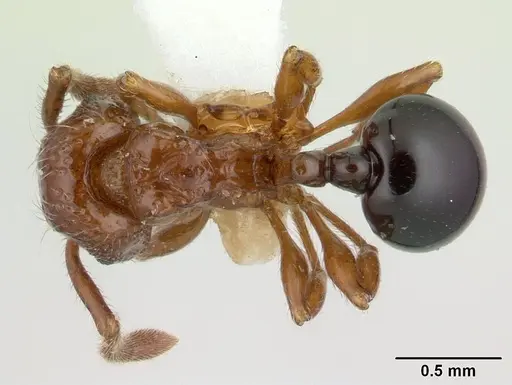
CASENT0178303
View on AntWeb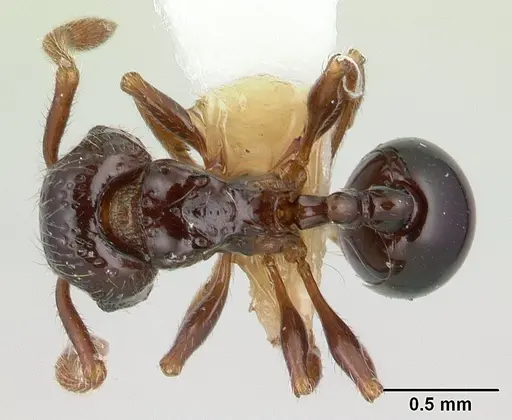
CASENT0178304
View on AntWeb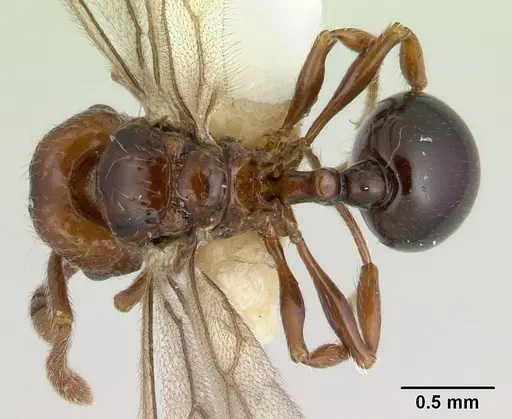
CASENT0840706
View on AntWeb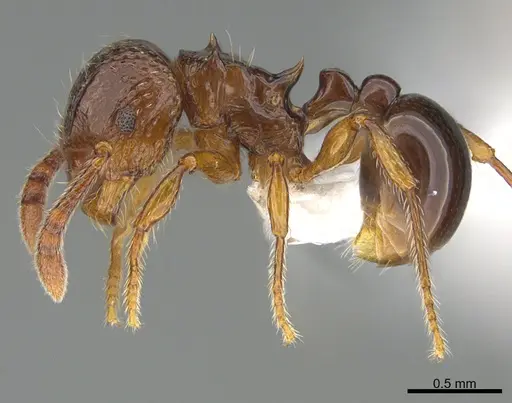
CASENT0901706
View on AntWeb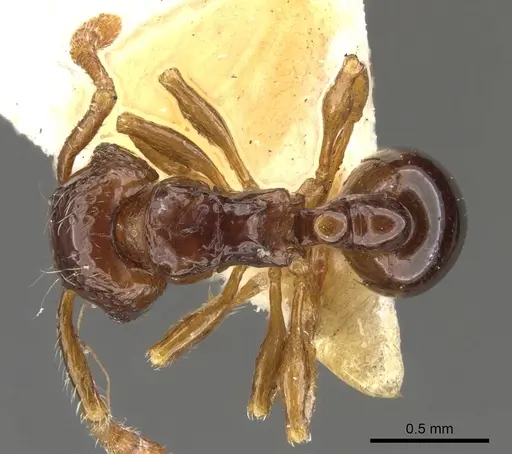
CASENT0917031
View on AntWeb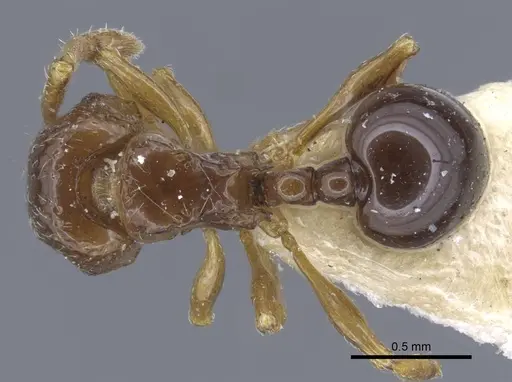
CASENT0922981
View on AntWeb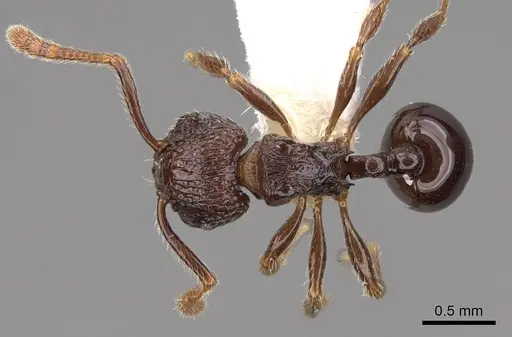
Literature
Loading distribution map...Loading products...