
Prionopelta xerosilva
- Sci. Name
- Prionopelta xerosilva
- Tribe
- Amblyoponini
- Subfamily
- Amblyoponinae
- Author
- Overson & Fisher, 2015
- Distribution
- Found in 1 countries
Introduction
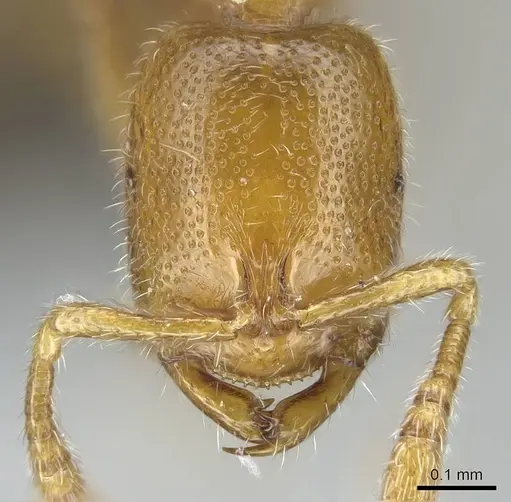
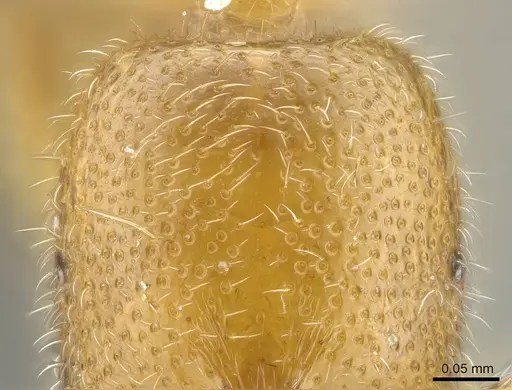
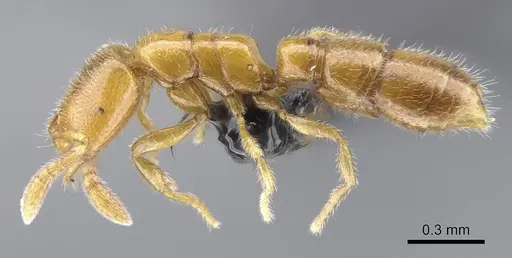
Prionopelta xerosilva is an extremely tiny ant species endemic to the tropical dry forests of western Madagascar. Workers are among the smallest ants in the hobby, though exact body size data is unavailable from the species description . The species was described in 2015 and is known only from the Mahajanga province, collected from forest litter at elevations between 50-300 meters . These ants are identifiable by their widely spaced cephalic foveae (shallow pits on the head) and a clearly visible metanotal suture .
Quick Summary
- Difficulty: Hard
- Origin & Habitat: Tropical dry forests in the Mahajanga province of western-central Madagascar, found at 50-300m elevation in forest litter [1][2]
- Colony Type: Unconfirmed colony structure, no published data on queen number or colony organization for this species
- Size & Growth:
- Queen: Unknown, queen measurements not documented in original species description [1]
- Worker: Size data unavailable, no total length measurements provided in species description [1]
- Colony: Unknown, only known from 7 collected workers (1 holotype,6 paratypes) [1]
- Growth: Unknown, no development data available
- Development: Unknown, no published development timeline exists for this species (Development timeline has not been studied. Related Prionopelta species suggest development may take several months, but this is unconfirmed for P. xerosilva specifically.)
- Antkeeping:
- Temperature: Based on tropical dry forest habitat in Madagascar, keep warm and stable. Start around 24-28°C and monitor colony activity. Avoid temperatures below 20°C or above 32°C as a precaution [1]
- Humidity: Provide a humidity gradient based on forest litter habitat. Keep nest substrate consistently moist but not waterlogged [1][2]
- Diapause: Unknown, as a tropical species, they likely do not require diapause, but no published data exists
- Nesting: In nature they live in forest litter, so a naturalistic setup with moist substrate works best. Their tiny size requires excellent escape prevention [1][2]
- Behavior: No specific behavioral observations published. Based on genus-level knowledge, Prionopelta ants are cryptic and predatory. Workers likely forage in leaf litter. Their tiny size means escape prevention is critical. Temperament is likely docile [2]
- Common Issues: escape prevention is critical due to their extremely small size, standard test tube cotton may be too loose, no published care information means all husbandry is experimental, colony size unknown so keepers cannot plan for eventual colony development, humidity balance is challenging, too dry kills them, too wet causes fungal issues, virtually no available information on founding behavior or queen requirements
Discovery and Taxonomy
Prionopelta xerosilva was formally described in 2015 by Overson and Fisher through taxonomic revision of the genus in the Malagasy region [1]. The species name combines Greek 'xero' (dry) and Latin 'silva' (forest), referencing its habitat in tropical dry forests [1]. The holotype and six paratype workers were collected from the Réserve Forestière Beanka in October 2009. The species is distinguished from related Malagasy Prionopelta by its widely spaced cephalic foveae and the presence of a strongly visible metanotal suture [1].
Natural Habitat and Distribution
This species has an extremely limited distribution known only from tropical dry forests in the Mahajanga province of western-central Madagascar [1]. It has been collected exclusively from forest litter at elevations between 50-300 meters [1]. The habitat includes unique limestone karst formations called 'tsingy', with dry forest vegetation and pronounced dry seasons. This specialized habitat makes captivity challenging due to limited knowledge of specific requirements [1][2].
Size and Morphology
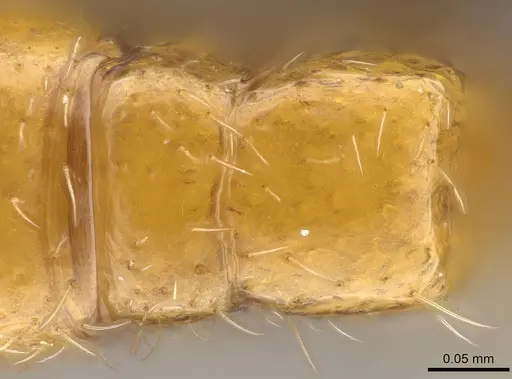
Prionopelta xerosilva workers are among the smallest ants, though exact body size is not documented. Their most distinctive features are shallow, large cephalic foveae on the head that are widely spaced, typically separated by 1-3 foveal diameters [1]. The metanotal suture is strongly visible in dorsal view, helping distinguish this species from similar Prionopelta [1]. The mandibles have an apical tooth of intermediate length [1]. This tiny size presents significant challenges for housing and escape prevention.
Housing and Escape Prevention
Due to their extremely small size, Prionopelta xerosilva requires excellent escape prevention. Workers can squeeze through very small gaps, so use fine mesh barriers, tightly packed cotton in test tubes, and seal connections with fluon. A small test tube setup works for founding colonies, but chambers must be appropriately scaled. Consider ytong nests with narrow chambers or custom small-scale setups. The nesting medium should retain moisture well since forest litter species need humid conditions [1][2].
Feeding and Diet
No specific dietary studies exist for Prionopelta xerosilva, but based on genus-level knowledge of Amblyoponinae ants, they are likely predatory on small arthropods. In captivity, offer tiny live prey such as springtails and fruit fly larvae. Their minute size means prey items must be appropriately scaled. Sugar sources may be accepted but are not primary. Feed small prey every 2-3 days and remove uneaten prey promptly [2].
Experimental Care Approach
Because Prionopelta xerosilva has never been kept in captivity according to available literature, all husbandry represents experimental best guesses. Start with a temperature range of 24-28°C, moderate humidity, and tiny live prey as the primary food source. Monitor colony behavior closely and adapt as needed. This species is expert-only territory due to lack of published care information [1][2].
Frequently Asked Questions
How long does it take for Prionopelta xerosilva to go from egg to worker?
The development timeline is completely unknown, no published data exists on egg-to-worker development for this species. Related Prionopelta species suggest several months may be typical, but this is unconfirmed for P. xerosilva.
Can Prionopelta xerosilva be kept in a test tube setup?
Yes, a test tube setup is appropriate, but standard test tubes may have chambers too large. Consider using narrow-diameter glass tubes with appropriately packed cotton. Escape prevention is critical, use fine mesh and seal all gaps [1][2].
What do Prionopelta xerosilva ants eat?
Based on genus patterns, they likely eat tiny live prey. Offer springtails, fruit fly larvae, and other micro-arthropods appropriately sized for these minute workers. Sugar water may be accepted but is not their primary food source [2].
Are Prionopelta xerosilva ants aggressive?
No specific temperament data exists, but Amblyoponinae ants are typically docile and non-aggressive. Their small size makes them harmless to humans [2].
Do Prionopelta xerosilva ants sting?
While they possess a stinger, it is far too small to penetrate human skin. These ants pose no stinging threat to keepers. Defense mechanism is based on subfamily Amblyoponinae, which uses a potent sting to paralyze prey.
What temperature should I keep Prionopelta xerosilva at?
Based on their Madagascar dry forest habitat, start around 24-28°C. Avoid temperatures below 20°C or above 32°C as a precaution. Monitor colony activity to find the optimal range [1].
How big do Prionopelta xerosilva colonies get?
Unknown, this species is only known from 7 collected workers. No published colony size data exists. Expect small colonies based on the tiny worker size.
Is Prionopelta xerosilva good for beginners?
No, this species is not recommended for beginners. It has never been kept in captivity according to available literature, has no published care information, and presents significant challenges due to its tiny size and unknown requirements.
Do Prionopelta xerosilva queens need to forage during founding?
Unknown, founding behavior has not been documented. Many Amblyoponinae are semi-claustral (queen must hunt during founding), but this is unconfirmed for P. xerosilva.
Does Prionopelta xerosilva need hibernation?
Unknown, no published data on overwintering requirements. As a tropical species from Madagascar, they likely do not require a true diapause but may reduce activity during cooler periods.
Can I keep multiple Prionopelta xerosilva queens together?
Unknown, no data exists on colony structure or whether they are single-queen or multi-queen colonies. Combining unrelated queens is not recommended without any information on their social structure.
Why is Prionopelta xerosilva so rare in the antkeeping hobby?
This species was only described in 2015 and has an extremely limited natural distribution in Madagascar. It has never been documented in captive husbandry, and its tiny size presents significant challenges for collection and maintenance [1].
Report an Issue
The current care sheet is based fully on literature. See inconsistencies, or something that's incorrect? Please , it will be resolved after review from an admin. Contributing to the blogs tab also helps providing information, to make us be able to further improve the caresheets. Thank you for your support!
References

This caresheet is licensed under CC BY-SA 4.0 .
Community Blogs
CASENT0157254
View on AntWeb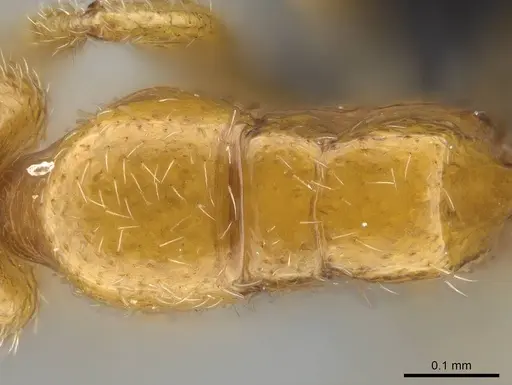
Literature
Loading distribution map...Loading products...