
Prionopelta vampira
- Sci. Name
- Prionopelta vampira
- Tribe
- Amblyoponini
- Subfamily
- Amblyoponinae
- Author
- Overson & Fisher, 2015
- Distribution
- Found in 1 countries
Introduction
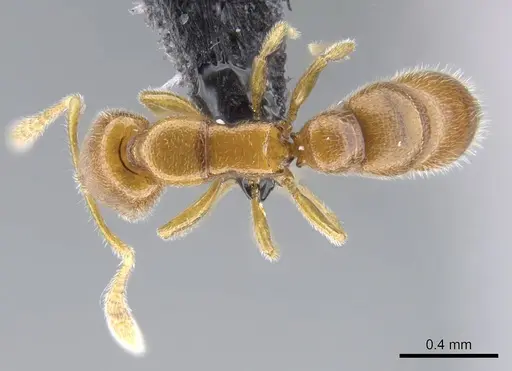
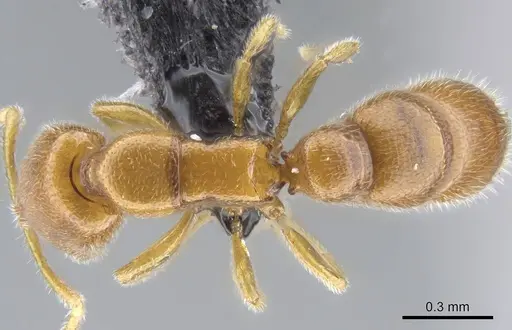
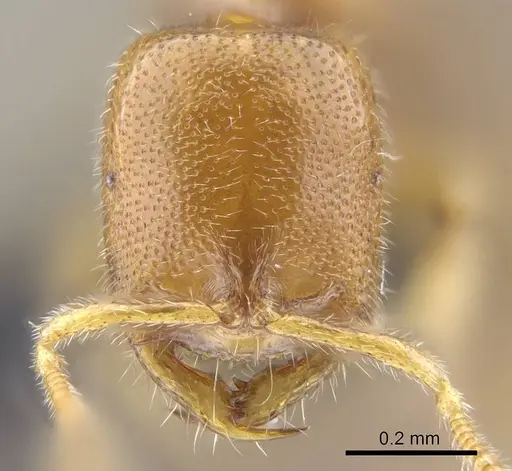
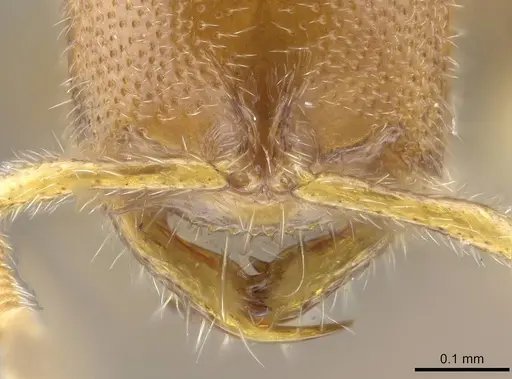
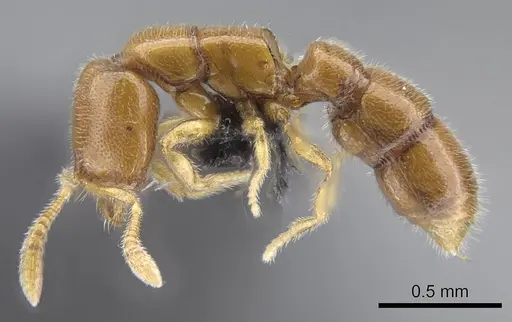
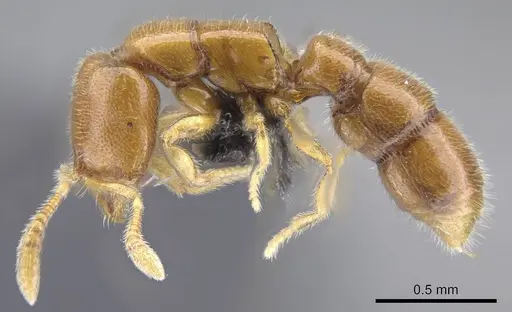
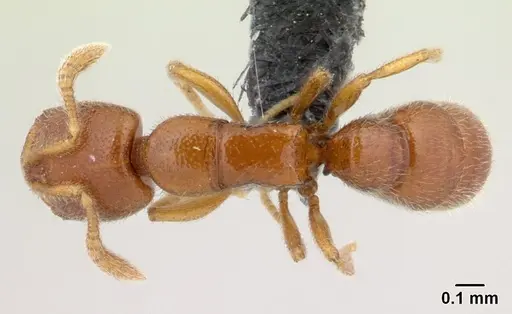
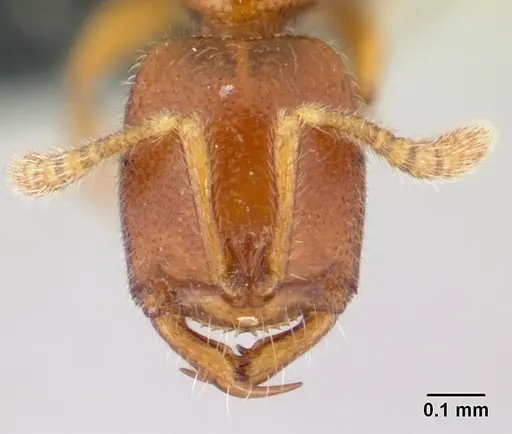
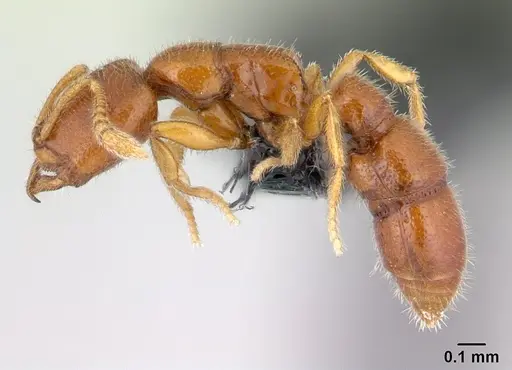
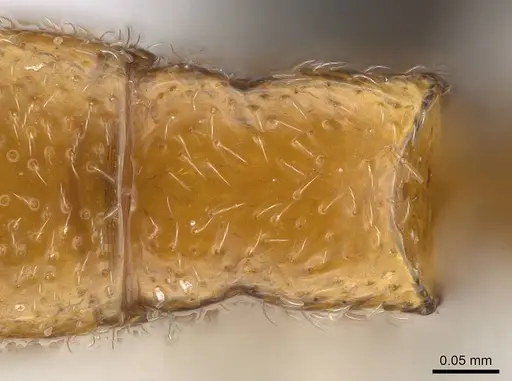
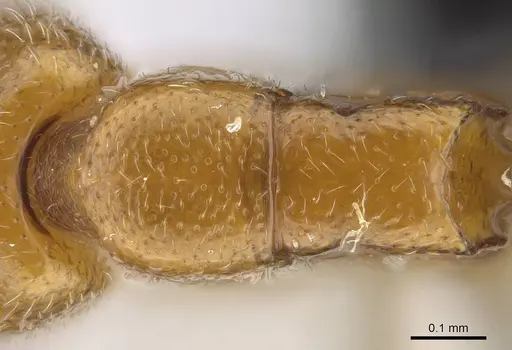
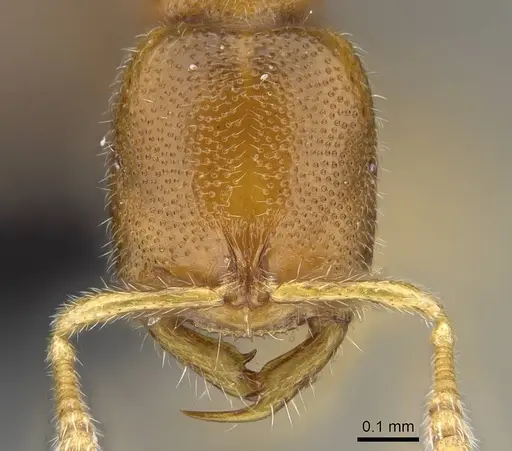
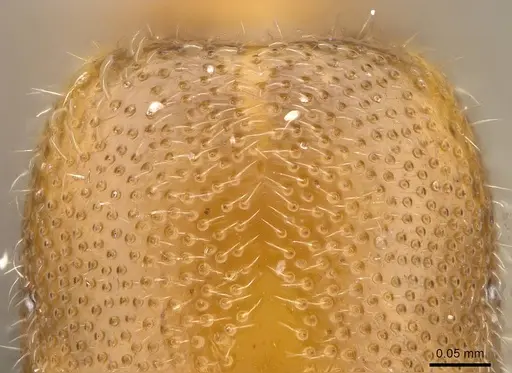
Prionopelta vampira is a small ant species native to northern Madagascar, found in rainforest litter at elevations from 25 to 1200 meters . Workers lack a visible metanotal suture and have a strongly concave propodeal edge . Body size data is unavailable from taxonomic literature, but head measurements are documented . A disjunct population exists 1048 km south in southeastern Madagascar . The most notable feature is the extremely long apical tooth on the mandibles, which is over four times the length of the third apical tooth . Based on its subfamily Amblyoponinae, it is inferred that they may feed on the hemolymph of other ants' brood.
Quick Summary
- Difficulty: Expert
- Origin & Habitat: Northern Madagascar, rainforest litter at 25-1200m elevation [1][2]
- Colony Type: Unconfirmed, no specific data on colony structure
- Size & Growth:
- Queen: Unknown, not described in literature
- Worker: Size data unavailable, body length not provided [1]
- Colony: Unknown, no data on colony size
- Growth: Unknown, no data on growth rate
- Development: Estimated 6-10 weeks based on related Amblyoponinae species, but no specific data for P. vampira (Development time likely temperature-dependent.)
- Antkeeping:
- Temperature: Keep at warm temperatures, around 24-28°C, based on tropical habitat
- Humidity: Keep substrate consistently moist but not waterlogged, mimicking forest floor litter [1]
- Diapause: No, tropical species from Madagascar
- Nesting: Nest in moist litter [1]. In captivity, use a naturalistic setup with moist substrate, such as a soil or plaster nest, scaled to their tiny size.
- Behavior: Workers are secretive and forage in the substrate layer. They are not aggressive towards humans. Escape prevention is critical due to their extremely small size [1].
- Common Issues: escape prevention is critical due to tiny size [1]., specialized diet may be challenging to provide., high humidity requirements can lead to mold if ventilation is poor., slow colony growth tests keeper patience., wild-caught colonies may carry parasites.
Housing and Nest Setup
Prionopelta vampira requires a setup that mimics their natural forest floor habitat. They are extremely small ants, so any enclosure must have excellent escape prevention [1]. A naturalistic terrarium with moist substrate works well, as they naturally live in leaf litter and rotting wood [1]. Alternatively, a small plaster nest with tight chambers and good humidity retention can work, but ensure the chambers are appropriately scaled to their tiny size. The substrate should consist of moist, decomposing leaf mold and small pieces of rotten wood. Avoid letting the substrate dry out completely, but also prevent waterlogging.
Feeding and Diet
The diet of P. vampira is unconfirmed, but based on its subfamily Amblyoponinae, it is likely a specialized predator that feeds on the hemolymph of other ants' brood. In captivity, providing live ant brood may be necessary, but specific requirements are unknown. Some keepers use tiny live arthropods as supplementary food.
Temperature and Humidity
As a tropical species from Madagascar, P. vampira requires warm and humid conditions. Keep the nest area at around 24-28°C, with a slight temperature gradient if possible. Humidity is critical, keep the substrate consistently moist but not waterlogged, mimicking their natural litter habitat [1].
Behavior and Colony Dynamics
P. vampira is a secretive, litter-dwelling species that forages through the substrate layer [1]. Workers are tiny and move slowly. They are not aggressive towards humans. Colony size and growth are unknown, but based on related species, colonies are likely small and slow-growing.
Frequently Asked Questions
How long does it take for Prionopelta vampira to develop from egg to worker?
The exact development time is unknown. Based on related Amblyoponinae species, it may take 6-10 weeks from egg to worker at warm temperatures, but no specific data for P. vampira.
What do Prionopelta vampira ants eat?
Based on subfamily patterns, they are likely specialized predators that feed on hemolymph of other ants' brood. Specific diet in captivity is unconfirmed.
Can I keep Prionopelta vampira in a test tube setup?
A test tube setup is not ideal. These ants need a naturalistic setup with moist substrate to forage through, mimicking their natural litter-layer habitat [1].
Are Prionopelta vampira ants good for beginners?
No, this is an expert-level species due to their tiny size, specialized diet, and humidity requirements.
Do Prionopelta vampira ants sting?
No, Amblyoponinae ants do not have functional stingers. Their defense is based on their cryptic lifestyle.
How big do Prionopelta vampira colonies get?
Colony size is unknown, but based on related Prionopelta species, colonies are likely small [1].
Do Prionopelta vampira ants need hibernation?
No, this is a tropical species from Madagascar and does not require diapause.
Why are my Prionopelta vampira ants dying?
Common causes include escape due to tiny size, mold from improper humidity, starvation from lack of appropriate prey, and stress from disturbance.
Can I keep multiple Prionopelta vampira queens together?
This has not been documented. Based on typical Prionopelta patterns, they likely form single-queen colonies.
When should I move Prionopelta vampira to a formicarium?
Keep them in a naturalistic setup from the start. These ants live in litter and substrate, not in constructed chambers [1].
Report an Issue
The current care sheet is based fully on literature. See inconsistencies, or something that's incorrect? Please , it will be resolved after review from an admin. Contributing to the blogs tab also helps providing information, to make us be able to further improve the caresheets. Thank you for your support!
References

This caresheet is licensed under CC BY-SA 4.0 .
Community Blogs
Literature
Loading distribution map...Loading products...