
Prionopelta laurae
- Sci. Name
- Prionopelta laurae
- Tribe
- Amblyoponini
- Subfamily
- Amblyoponinae
- Author
- Overson & Fisher, 2015
- Distribution
- Found in 1 countries
Introduction
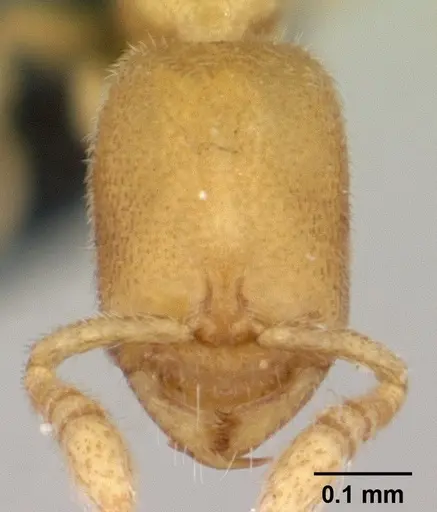
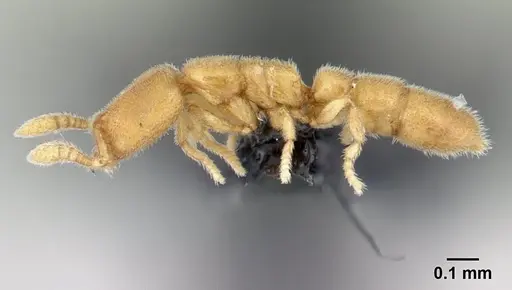
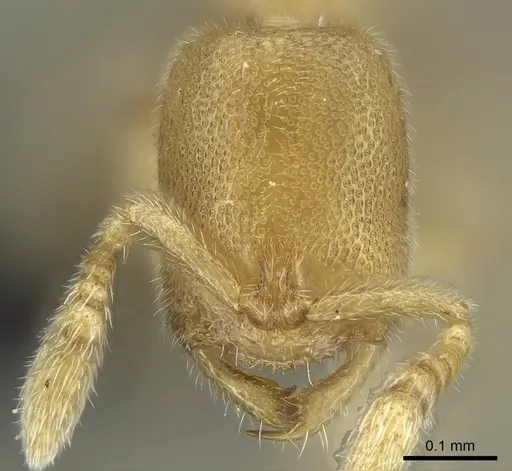
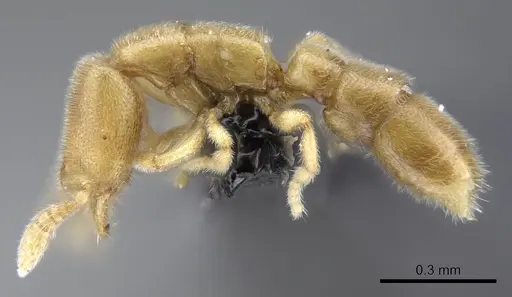
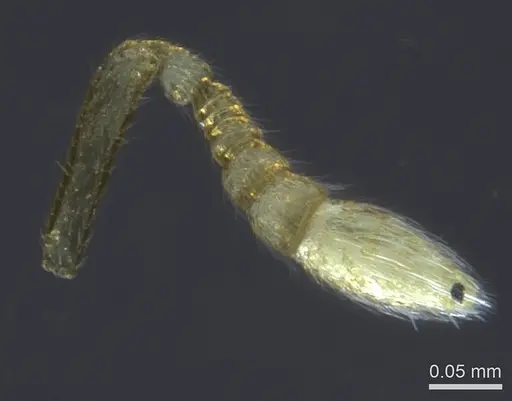
Prionopelta laurae is a very small ant species native to eastern Madagascar, with workers that are distinctly pale yellow throughout their body . It is the smallest Malagasy Prionopelta species, identifiable by having only nine antennal segments compared to twelve in related species . The head is longer than wide, and eyes are greatly reduced, appearing as tiny dark patches . In the wild, this species lives in leaf litter and rotting wood in rainforest environments at elevations between 10 and 600 meters .
Quick Summary
- Difficulty: Hard
- Origin & Habitat: Eastern Madagascar, found in rainforest leaf litter, with some records from littoral and tropical dry rainforest at 10-600 meters elevation [1]. The range is disjunct, with a 500 km gap between known populations.
- Colony Type: Colony structure is unconfirmed. No data on queen number or ergatoid reproductives exists for this species.
- Size & Growth:
- Queen: Size data unavailable, no total length measurements provided in literature.
- Worker: Size data unavailable, no total length measurements provided in literature. Head length is less than 0.4 mm [1], but this is not full body size.
- Colony: Unknown, no colony size data available. Based on tiny worker size, colonies are likely small.
- Growth: Unknown, no development data available.
- Development: Unconfirmed, no direct measurements exist. (Development timeline is unknown.)
- Antkeeping:
- Temperature: Keep warm at 24-28°C, based on rainforest habitat [1]. Provide a gentle temperature gradient.
- Humidity: Keep substrate consistently moist but not waterlogged, mimicking rainforest leaf litter conditions [1].
- Diapause: Unknown, no data on overwintering requirements. As a tropical species, true hibernation is unlikely.
- Nesting: In nature, they live in leaf litter and rotting wood [1]. In captivity, use small chambers with moist substrate, such as Y-tong nests or naturalistic terrariums.
- Behavior: Workers have greatly reduced eyes and rely on chemical cues [1]. They are likely predatory on small soil micro-arthropods. Escape prevention is critical due to their minute size. As Amblyoponinae, they possess a stinger, but it has minimal effect on humans due to their small size.
- Common Issues: extreme escape risk due to tiny size, they can pass through microscopic gaps, humidity control is critical, too dry causes desiccation, too wet causes drowning, no captive breeding history, wild-caught colonies may struggle in captivity, rare in the antkeeping hobby due to restricted range and cryptic habits
Housing and Nest Setup
Prionopelta laurae is very small, so housing must be scaled accordingly. In the wild, they live in leaf litter and rotting wood [1]. Use a small container with moist substrate mix of soil and rotting wood fragments. For formicariums, choose ones with tight chambers and narrow passages. Test tubes can work for founding but may need modification to prevent flooding. Escape prevention is critical, use fine mesh on ventilation holes and reinforce barriers [1].
Feeding and Diet
Based on related Amblyoponinae, this species is likely predatory on small soil micro-arthropods like springtails and mites. Feed small live prey items several times per week, adjusting based on consumption. Remove uneaten prey promptly to prevent mold [1].
Temperature and Humidity
As a rainforest species, keep nest area at 24-28°C with a slight gradient [1]. Humidity should be high, keep substrate damp but not waterlogged. Mist regularly and ensure good ventilation to prevent mold [1].
Handling and Temperament
Workers are fragile and not aggressive. They possess a stinger as Amblyoponinae, but it has minimal effect on humans due to tiny size. Avoid direct handling, use soft brushes or pipettes [1]. Their reduced eyes mean they rely on chemical signals [1].
Acquisition and Availability
This species is rare in antkeeping due to its restricted range in eastern Madagascar [1]. Wild-caught colonies may struggle in captivity. Quarantine any acquired ants and monitor for stress [1].
Frequently Asked Questions
How small are Prionopelta laurae ants?
Workers are very small, with head length less than 0.4 mm [1]. Full body size data is unavailable, but they are among the smallest ants in the region.
What do Prionopelta laurae ants eat?
They are likely predatory on tiny soil micro-arthropods like springtails and mites. Feed small live prey items several times per week [1].
Can I keep Prionopelta laurae in a test tube?
Test tubes can work for founding but require modification to prevent flooding due to their tiny size. A naturalistic setup with moist substrate is often better [1].
Do Prionopelta laurae ants sting?
Yes, as Amblyoponinae, they have a stinger, but it has minimal effect on humans due to their small size. They are not aggressive and will flee rather than sting [1].
What temperature do Prionopelta laurae ants need?
Keep them at 24-28°C, based on their rainforest habitat [1]. Use heating if room temperature is below 24°C.
How fast do Prionopelta laurae colonies grow?
Growth rate is unknown, no development data exists. Expect slow growth based on their tiny size [1].
Are Prionopelta laurae good for beginners?
No, this is a hard species due to tiny size, specific humidity needs, and lack of captive breeding history. It is for experienced keepers [1].
Where does Prionopelta laurae live in the wild?
They are endemic to eastern Madagascar, found in rainforest leaf litter at 10-600 meters elevation [1].
Why is Prionopelta laurae so pale yellow?
The pale yellow color is a diagnostic feature, lighter than other Malagasy Prionopelta species [1].
How many queens does Prionopelta laurae have?
Colony structure is unconfirmed, no data on queen number exists [1].
Do Prionopelta laurae need hibernation?
Diapause requirements are unknown. As a tropical species, true hibernation is unlikely [1].
How do I identify Prionopelta laurae?
It is the only Malagasy Prionopelta with nine antennal segments and pale yellow coloration [1].
Report an Issue
The current care sheet is based fully on literature. See inconsistencies, or something that's incorrect? Please , it will be resolved after review from an admin. Contributing to the blogs tab also helps providing information, to make us be able to further improve the caresheets. Thank you for your support!
References

This caresheet is licensed under CC BY-SA 4.0 .
Community Blogs
CASENT0046143
View on AntWeb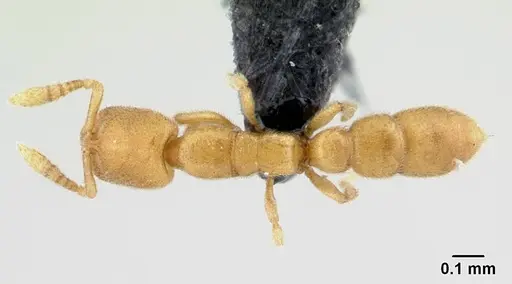
CASENT0046149
View on AntWeb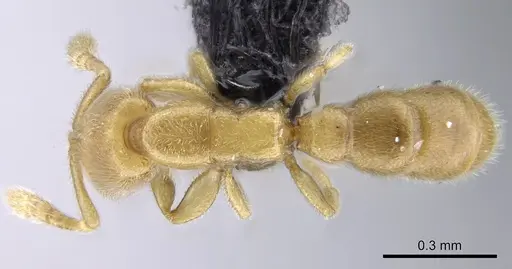
CASENT0046151
View on AntWeb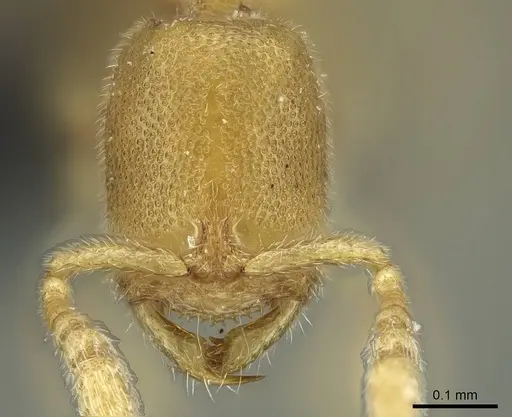
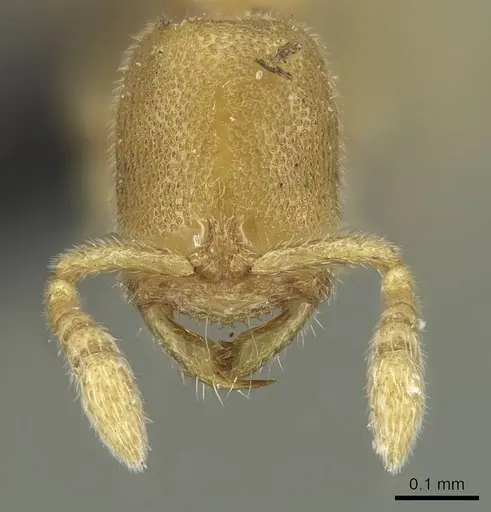
CASENT0057023
View on AntWeb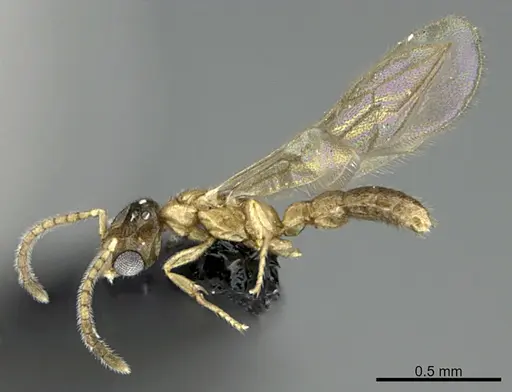
CASENT0141731
View on AntWeb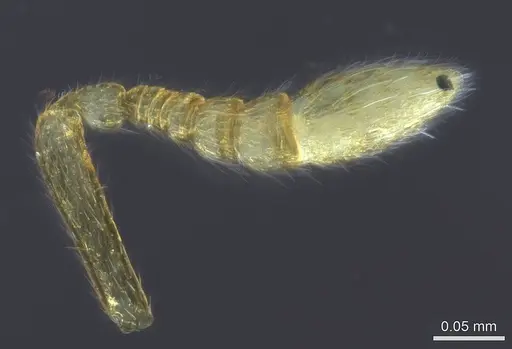
Literature
Loading distribution map...Loading products...