
Prenolepis naoroji
- Sci. Name
- Prenolepis naoroji
- Tribe
- Lasiini
- Subfamily
- Formicinae
- Author
- Forel, 1902
- Distribution
- Found in 5 countries
Introduction
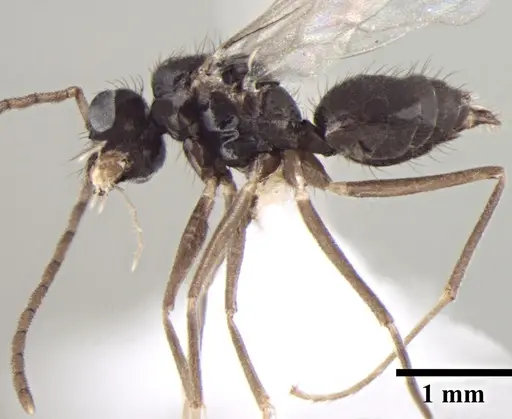
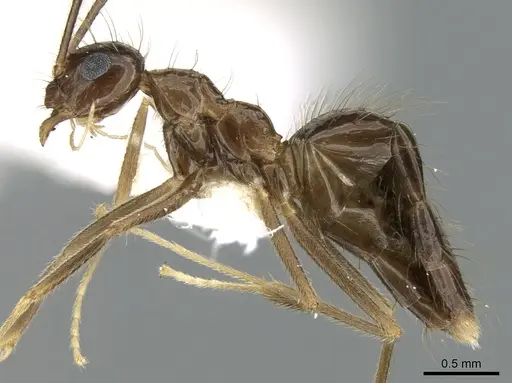
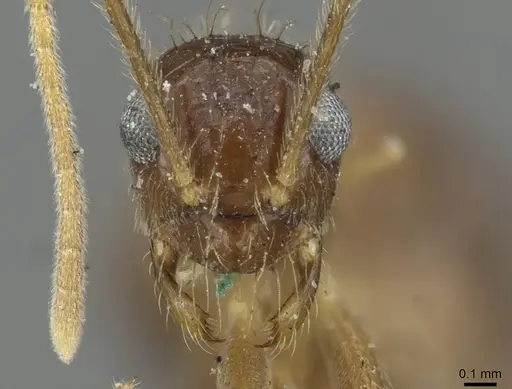
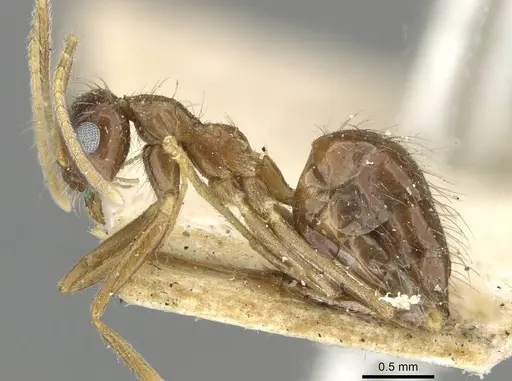
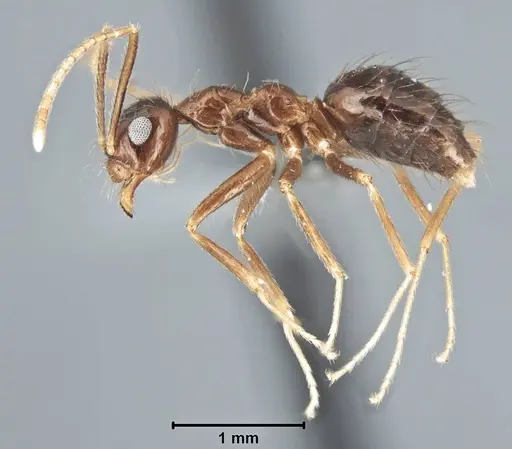
Prenolepis naoroji is a small to medium-sized ant native to South and Southeast Asia, ranging from India and China through Malaysia and Indonesia . Workers measure approximately 2.5-4 mm in total length , with remarkably long antennae scapes and large bulging eyes. They display a faint blue iridescence on their cuticle, one of only two Prenolepis species with this trait . This species is relatively common in northern India and has been found across a wide elevational range from 830m to 1900m in the Himalayas . It is a cold-climate specialist found primarily in primary forest habitats . This species is an arboreal forager, mostly collected by beating vegetation, indicating they search for food in trees and shrubs .
Quick Summary
- Difficulty: Medium
- Origin & Habitat: Native to South and Southeast Asia (India, China, Nepal, Malaysia, Indonesia, Thailand, Vietnam, Philippines, Sri Lanka, Myanmar). Found in primary forest habitats at elevations from 830-1900m in the Himalayas and 574-780m in southern China. Nests on ground surface and in soil, forages arboreally on vegetation [3][1][9][7].
- Colony Type: Colony structure is unconfirmed. Based on related Prenolepis species patterns, likely single-queen colonies, but this has not been directly documented.
- Size & Growth:
- Queen: size data unavailable, no total length measurements available for queens
- Worker: ~2.5-4 mm TL [3][4]
- Colony: Unknown, no colony size data available for this species
- Growth: Unknown, development timeline has not been studied
- Development: Unconfirmed, no direct development data available. Based on typical Formicinae patterns, expect 6-10 weeks at optimal temperature. (Development has not been directly studied. Related Prenolepis species suggest moderate growth rates.)
- Antkeeping:
- Temperature: Based on cold-climate specialist classification [6], prefer cooler temperatures around 18-22°C. Avoid temperatures above 25°C [6][5].
- Humidity: Keep nest substrate moderately moist, based on forest habitat preferences and wet zone records in Sri Lanka [10][7].
- Diapause: Likely required, as a cold-climate specialist from Himalayan elevations, they probably need a winter rest period. Provide 2-3 months at 10-15°C during winter [6].
- Nesting: In nature, they nest in soil and under objects on the ground surface [9][3]. A test tube setup works well for founding colonies. For established colonies, use a naturalistic setup with soil or a Y-tong/plaster nest with moisture chambers.
- Behavior: These ants are arboreal foragers, in the wild they are most often collected by beating vegetation [3][8]. They are likely generalist foragers that tend honeydew-producing insects and collect small prey. Workers are not aggressive and likely have a mild temperament. Escape prevention should be moderate, workers are small (under 4mm) but not extremely tiny.
- Common Issues: primary forest specialist, may be sensitive to habitat changes and may not thrive in disturbed environments [7], cold-climate specialist, overheating is a risk, avoid temperatures above 25°C [6], arboreal foraging, ensure outworld provides climbing opportunities and access to elevated food sources [3], humidity needs, dry conditions may cause colony decline, keep substrate moist [10][7], limited data, this species has not been widely kept in captivity, so care parameters are estimated rather than confirmed, WARNING: This species is Critically Endangered in Sri Lanka [11]. It is illegal to catch queens or disturb colonies in these areas. Check local laws before acquiring.
Natural History and Distribution
Prenolepis naoroji is found across a vast range in South and Southeast Asia, from India and Nepal through China and down to Malaysia, Indonesia, Thailand, Vietnam, and the Philippines [1][2]. This species shows considerable variation in size and color across its range. In the Himalayas, it occurs at elevations between 830 and 1900 meters, making it a cold-climate specialist adapted to cooler temperatures at higher altitudes [6][5]. In southern China (Guangxi, Hunan, Hainan, Guizhou, Yunnan), it is found at lower elevations of 574-780 meters [9]. The species is relatively common in northern India and has been recorded in multiple Indian states [2]. Notably, in Sri Lanka it is classified as Critically Endangered, found only in the wet zone [11][10]. It is a primary forest specialist, research in Xishuangbanna, China found it only in primary rainforest, never in secondary forest or rubber plantations [7].
Identification and Appearance
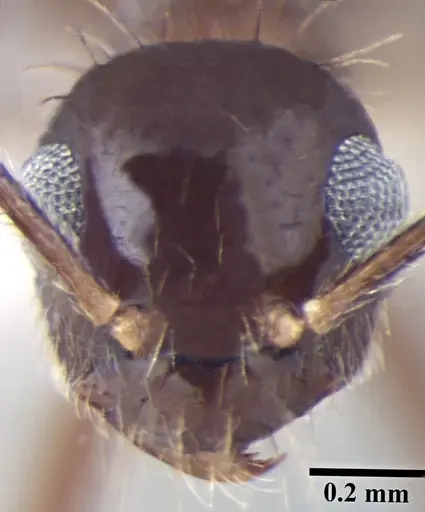
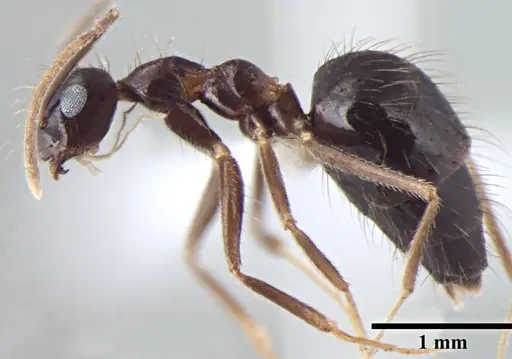
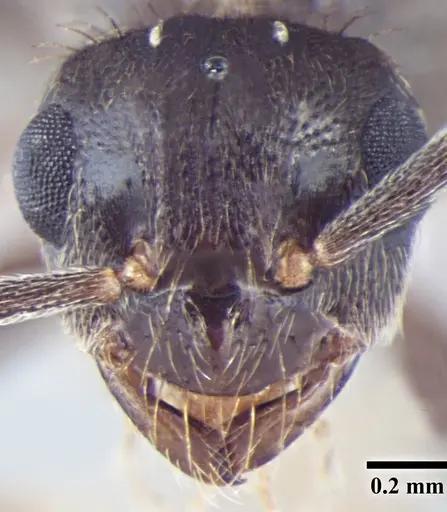
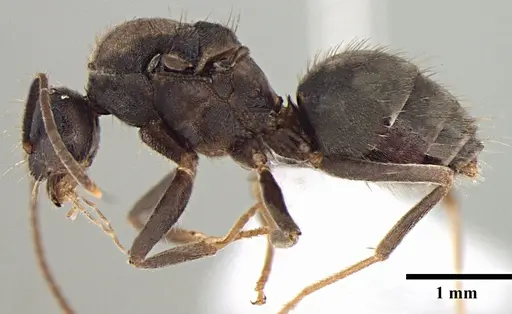
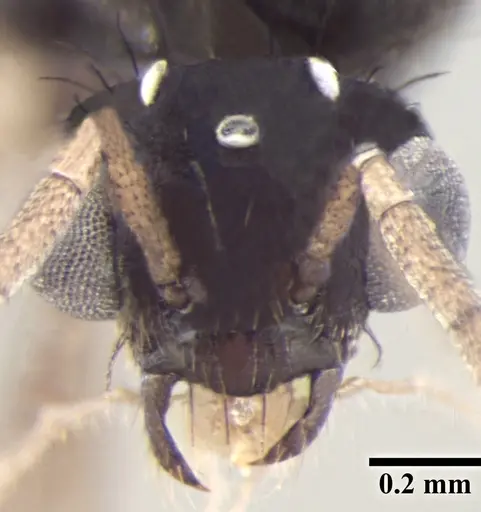
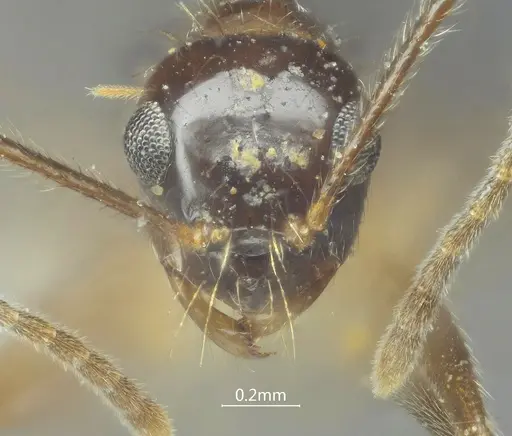
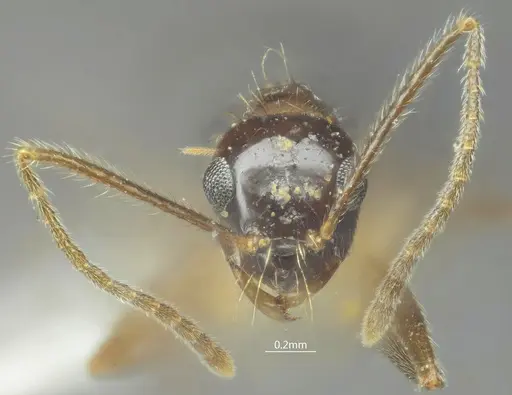
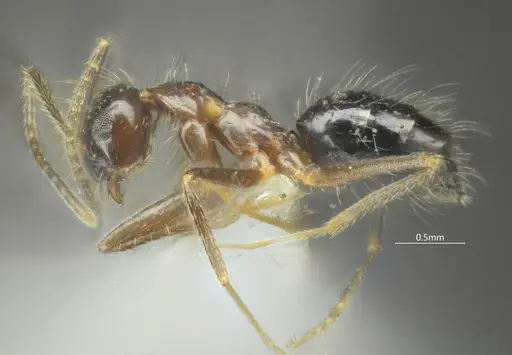
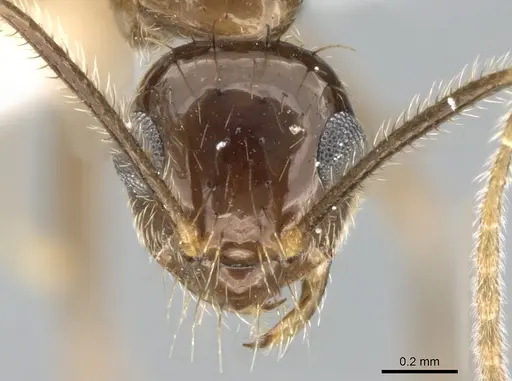
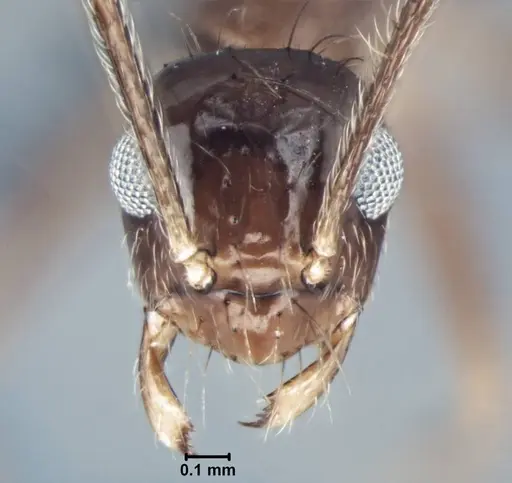
Workers of Prenolepis naoroji are distinctive and relatively easy to identify within their range. Their most striking features are the remarkably long antennae scapes, which extend about half their length beyond the occipital margin of the head [3]. The compound eyes are very large and bulging, extending well beyond the lateral margins of the head in full-face view [1]. The body is covered in very long erect hairs that can reach up to 0.41mm in length, with the longest hairs on the head [3]. Unlike most Prenolepis species, P. naoroji has a faint blue cuticular iridescence, shared only with P. angularis among known species [1]. Color is variable but typically ranges from castaneous to dark piceous brown, with the mesosoma, mandibles, antennae, and legs usually lighter than the head and gaster [3].
Foraging and Diet
This species is an arboreal forager, researchers collected most specimens by beating vegetation, indicating they actively search for food in trees and shrubs rather than just on the ground [3][8]. In forest ecosystems, they likely tend honeydew-producing insects like aphids and scale insects on trees, while also hunting small arthropods [12]. Based on their foraging behavior and the general habits of related Prenolepis species, they are probably generalist feeders that accept both carbohydrate and protein sources. For captive care, offer sugar water or honey regularly, along with small live or frozen insects as protein.
Temperature and Seasonal Care
As a cold-climate specialist found at Himalayan elevations up to 1900m, Prenolepis naoroji prefers cooler conditions than most tropical ant species [6]. In captivity, maintain temperatures between 18-22°C, avoiding anything above 25°C [6][5]. During winter, provide a diapause period of 2-3 months at 10-15°C to simulate their natural seasonal cycle [6]. This winter rest is important for colony health and likely triggers reproductive cycles. The elevation range in the wild indicates they are adapted to moderate temperatures year-round and may struggle in consistently warm conditions.
Nesting and Habitat Setup
In the wild, Prenolepis naoroji nests in soil and under objects on the ground surface, while foraging arboreally in the surrounding vegetation [9][3]. They are not arboreal nesters but are arboreal foragers. For captive care, a standard test tube setup works well for founding colonies. The test tube should have a water reservoir with a cotton plug creating a humidity gradient. For established colonies, provide a naturalistic setup with a soil chamber or a Y-tong/plaster nest with moisture-retaining chambers. Since they are primary forest specialists, they likely prefer dimmer, more stable conditions than ants from open habitats.
Colony Development and Growth
Specific colony development data is not available for this species, as Prenolepis naoroji has not been widely studied in captivity. Founding behavior is unconfirmed, based on typical Formicinae patterns, queens may seal themselves in and raise first workers alone using stored fat reserves, but this has not been documented for P. naoroji. After the first workers emerge, colony growth is probably moderate, related Prenolepis species are not particularly fast growers but can establish decent colonies over several years. Be patient with founding colonies, they may appear slow but should establish steadily once the first workers emerge. [3][8]
Frequently Asked Questions
How long does it take for Prenolepis naoroji to have first workers?
The exact development timeline has not been documented for this species. Based on typical Formicinae patterns, expect first workers approximately 6-10 weeks after the queen lays her first eggs, assuming optimal temperatures around 20°C. Founding behavior is unconfirmed, but queens may seal themselves in and raise the first brood alone using stored fat reserves.
What temperature do Prenolepis naoroji ants need?
Keep them cool compared to tropical ants, around 18-22°C is ideal. They are a cold-climate specialist from Himalayan elevations and do not tolerate heat well. Avoid temperatures above 25°C. Room temperature is often suitable for this species [6][5].
Do Prenolepis naoroji ants need hibernation?
Yes, likely required. As a cold-climate specialist from high elevations, they probably need a winter rest period. Provide 2-3 months at 10-15°C during winter months to simulate their natural seasonal cycle [6]. This helps maintain colony health and may trigger reproductive cycles.
What do Prenolepis naoroji ants eat?
They are generalist foragers. Offer sugar water or honey as a constant carbohydrate source, and small insects (fruit flies, small crickets, mealworms) as protein. Since they are arboreal foragers, place food at elevated positions in the outworld rather than on the ground [3][8].
Are Prenolepis naoroji good for beginners?
They are rated as Medium difficulty. While not the most challenging species, they have specific needs (cool temperatures, humidity, primary forest habitat preferences) that require attention. Their care is relatively straightforward once these parameters are met, but they are not as forgiving as some tropical species.
How big do Prenolepis naoroji colonies get?
Colony size data is not available for this species. Based on related Prenolepis species, colonies likely reach several hundred workers over several years. They are not known for forming supercolonies.
Can I keep multiple Prenolepis naoroji queens together?
Colony structure has not been documented for this species. The safe approach is to keep only one queen per colony (monogyne). Combining unrelated foundresses has not been studied and is not recommended.
What kind of nest should I use for Prenolepis naoroji?
A test tube setup works well for founding colonies. For established colonies, use a naturalistic setup with soil or a Y-tong/plaster nest with moisture-retaining chambers. They nest in soil in the wild and need moderate humidity. Provide a dark, stable environment as they are primary forest specialists [9][3].
Why is my Prenolepis naoroji colony declining?
Common causes include: overheating (keep below 25°C), too dry conditions (maintain moist substrate), poor ventilation, or stress from disturbance. As primary forest specialists, they may be sensitive to environmental changes. Ensure stable, cool, moderately humid conditions and minimize nest disturbances [7].
Is Prenolepis naoroji invasive anywhere?
No, this species is not known to be invasive. It is native to South and Southeast Asia and has not been recorded establishing populations outside its native range.
Where does Prenolepis naoroji live in the wild?
This species is found across South and Southeast Asia including India, Nepal, China, Malaysia, Indonesia, Thailand, Vietnam, Philippines, Sri Lanka, and Myanmar. It lives in primary forest habitats at elevations from 830-1900m in the Himalayas to 574-780m in southern China. It is a cold-climate specialist and primary forest specialist, never found in disturbed areas like rubber plantations [1][2][7].
Report an Issue
The current care sheet is based fully on literature. See inconsistencies, or something that's incorrect? Please , it will be resolved after review from an admin. Contributing to the blogs tab also helps providing information, to make us be able to further improve the caresheets. Thank you for your support!
References

This caresheet is licensed under CC BY-SA 4.0 .
Community Blogs
ANTWEB1008047
View on AntWeb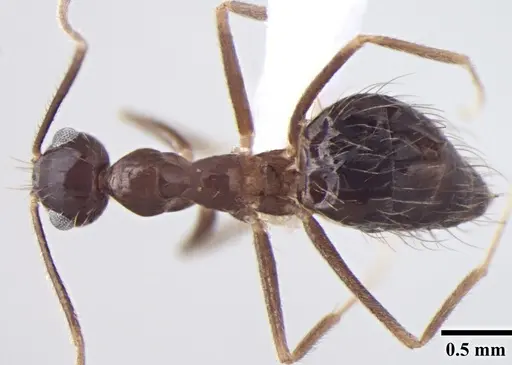
ANTWEB1008048
View on AntWeb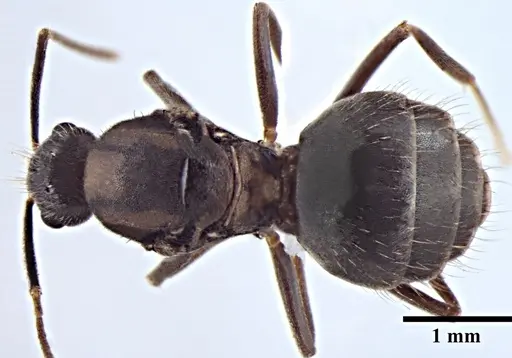
ANTWEB1008049
View on AntWeb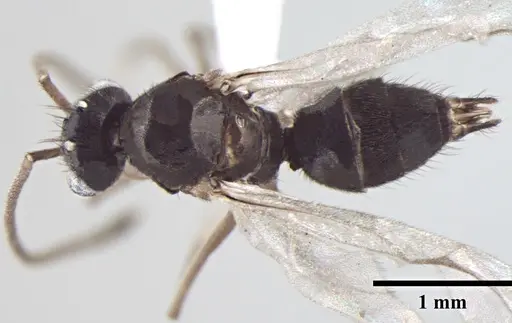
ANTWEB1060623
View on AntWeb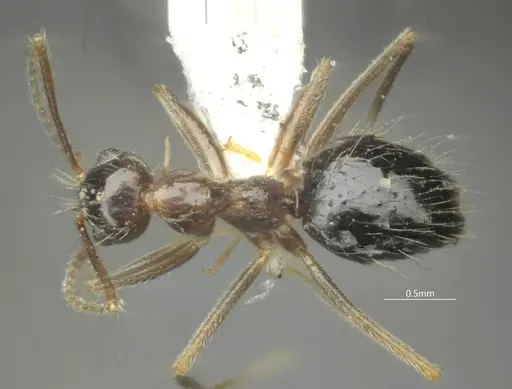
CASENT0906259
View on AntWeb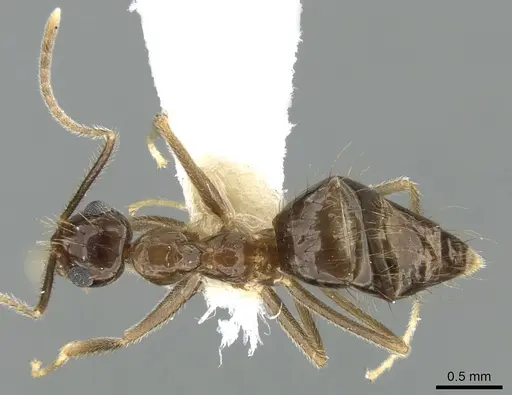
CASENT0911042
View on AntWeb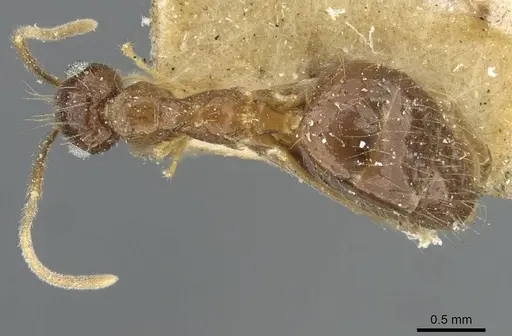
USNMENT00755077
View on AntWeb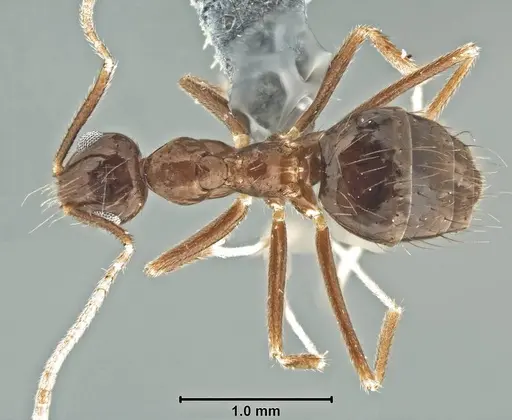
Literature
Loading distribution map...Loading products...