
Ponera woodwardi
- Sci. Name
- Ponera woodwardi
- Tribe
- Ponerini
- Subfamily
- Ponerinae
- Author
- Taylor, 1967
- Distribution
- Found in 1 countries
Introduction
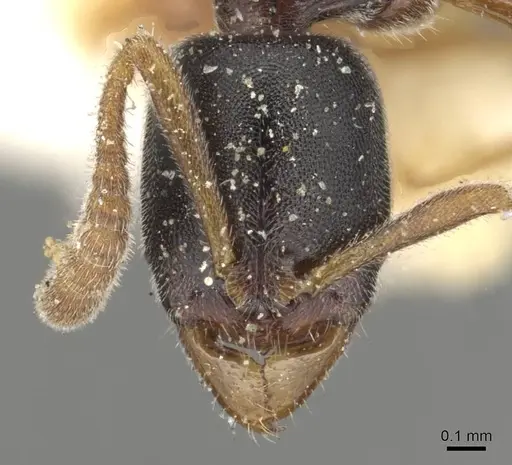
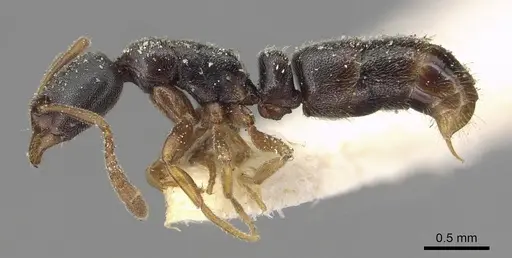
Ponera woodwardi is a small, dark brown ant from the ponerine subfamily, endemic to the mountains of central Upolu, Samoa. It has a narrow head and long scapes, but total body size data is unavailable from current research . This species is notable for its extremely restricted range and its ability to thrive in disturbed forest areas, unlike many other rainforest ants .
Quick Summary
- Difficulty: Expert
- Origin & Habitat: Samoan island of Upolu, Afiamalu-Malololelei area at 650-700m elevation in tropical rainforest [1][2].
- Colony Type: Unconfirmed, research does not specify whether colonies are single-queen or multiple-queen [1].
- Size & Growth:
- Queen: Size data unavailable, no total length measurements provided [1].
- Worker: Size data unavailable, no total length measurements provided [1].
- Colony: Unknown, no colony size data available [1].
- Growth: Unknown, no development timing data [1].
- Development: Unknown, no direct data. Based on typical Ponera patterns, expect several weeks, but this is an estimate [1]. (Larvae have dorsal tubercles, and pupae are enclosed in cocoons [1].)
- Antkeeping:
- Temperature: Keep at 24-28°C with a gradient, based on tropical mountain habitat [1].
- Humidity: Keep nest substrate consistently moist but not waterlogged, with a humidity gradient [1].
- Diapause: Unknown, as a tropical species, diapause may not be required, but monitor for seasonal changes [1].
- Nesting: In nature, nests in rotting wood or under moss. In captivity, use Y-tong, plaster, or naturalistic setups with wood fragments [1].
- Behavior: Shy and non-aggressive. Defense mechanism is stinging, typical for Ponerinae. Escape risk is moderate due to small size.
- Common Issues: complete lack of captive husbandry information means all care is experimental [1], feeding may be difficult, observation colonies refused offered prey in studies [1], extremely restricted natural range makes wild collection unlikely [1][2], humidity requirements may be challenging to maintain consistently, colony size and growth rate are unknown, making planning difficult
Natural History and Distribution
Ponera woodwardi is known only from the Afiamalu-Malololelei area of central Upolu, Samoa, at 650-700m elevation [1][2]. It inhabits tropical rainforest, nesting under moss on logs and in rotting wood fragments on the forest floor [1]. The species is more abundant in disturbed forest areas than in undisturbed rainforest, showing ecological flexibility [1]. Specimens have been collected from moss up to 15m above ground, indicating nesting at various heights.
Nest Preferences and Housing
In nature, this ant nests in preformed cavities within rotting wood or under thick moss [1]. For captivity, provide a naturalistic setup with rotting wood or cork as nesting material. Y-tong or plaster nests can work if supplemented with wood fragments. Maintain high humidity within the nest chamber while allowing ventilation to prevent mold.
Feeding and Diet Challenges
Feeding is experimental, as observation colonies refused small insects and diplopods in studies [1]. As a predatory ponerine, they likely eat small soil arthropods. Offer small live prey like springtails or fruit flies, and sugar sources occasionally. Be prepared for trial and error.
Temperature and Humidity Requirements
Keep temperatures around 24-28°C with a gradient, based on their tropical mountain habitat [1]. Humidity is critical, keep nest substrate moist but not waterlogged, with a gradient for foraging areas [1]. Monitor for condensation or desiccation.
Unique Larval Structures
Larvae have three pairs of dorsal abdominal 'door knob' tubercles, a characteristic feature of some Ponera species [1]. Pupae of all castes are enclosed in cocoons, which may extend development time.
Conservation and Availability
This species is a true island endemic with a very restricted range, making it rare in the hobby [1][2]. It may have contracted its range due to competition with introduced ants [1]. Acquiring colonies is difficult, and any kept represent a conservation responsibility.
Frequently Asked Questions
Is Ponera woodwardi available in the antkeeping hobby?
No, this species is extremely rare due to its restricted range in Samoa and lack of captive care data [1][2].
How do I care for Ponera woodwardi ants?
Care is experimental: provide high humidity, warm temperatures (24-28°C), and nesting in rotting wood. Feeding may be challenging [1].
What do Ponera woodwardi ants eat?
They are predatory but exact diet is unknown. Offer small live prey like springtails, as studies show they refuse some insects [1].
How big do Ponera woodwardi colonies get?
Colony size is unknown, no data exists [1].
What temperature do Ponera woodwardi ants need?
Keep them at 24-28°C with a gradient, based on their tropical habitat [1].
Do Ponera woodwardi ants need hibernation?
Diapause is unknown, as a tropical species, it may not be required, but monitor for seasonal changes [1].
How long does it take for Ponera woodwardi to develop from egg to worker?
Unknown, no direct data, but based on typical Ponera patterns, expect several weeks [1].
Can I keep multiple Ponera woodwardi queens together?
This has not been studied, research does not confirm colony structure [1].
Is Ponera woodwardi a good species for beginners?
No, it is expert-level due to lack of care data, feeding challenges, and rarity [1][2].
Report an Issue
The current care sheet is based fully on literature. See inconsistencies, or something that's incorrect? Please , it will be resolved after review from an admin. Contributing to the blogs tab also helps providing information, to make us be able to further improve the caresheets. Thank you for your support!
References

This caresheet is licensed under CC BY-SA 4.0 .
Community Blogs
CASENT0915300
View on AntWeb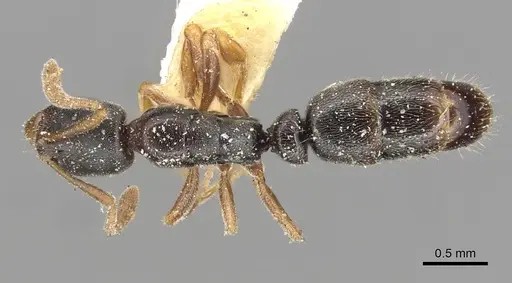
Literature
Loading distribution map...Loading products...