
Ponera tudigong
- Sci. Name
- Ponera tudigong
- Tribe
- Ponerini
- Subfamily
- Ponerinae
- Author
- Pierce <i>et al.</i>, 2019
- Distribution
- Found in 1 countries
Introduction
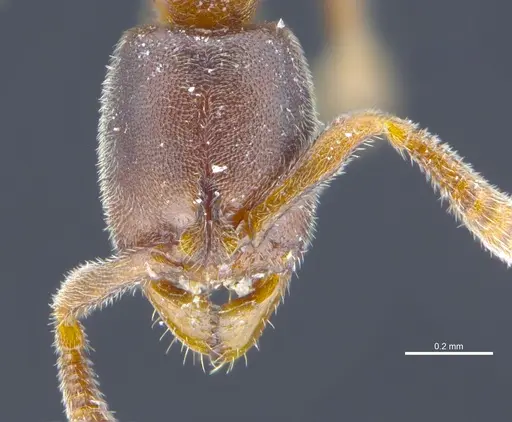
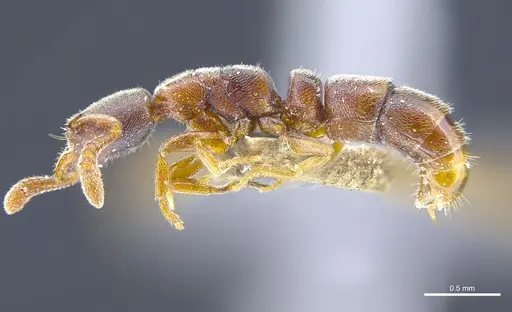
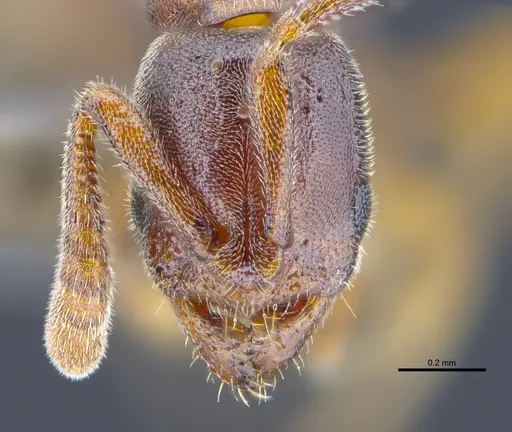
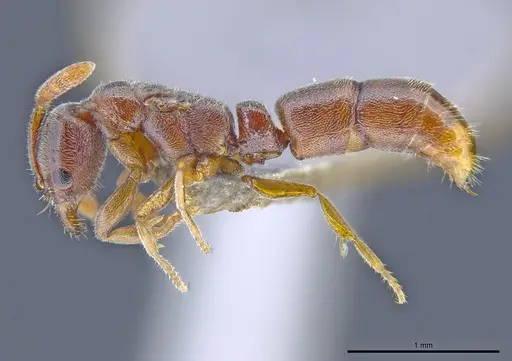
Ponera tudigong is a cryptobiotic ant species described in 2019 from a single location in Tai Lam Country Park, Hong Kong . Workers measure 2.3 mm and are reddish-brown, while queens reach 2.5 mm . This species is unique for having four mandibular teeth, unlike other Ponera species . Workers are completely blind, suggesting a subterranean lifestyle . The petiole is notably thick . Despite extensive sampling, this species is known only from the type locality, with a worker and queen captured 5 meters apart . Specific care information for P. tudigong is unknown. The genus Ponera consists of small, cryptic ants , so care recommendations are based on general ponerine husbandry principles.
Quick Summary
- Difficulty: Expert
- Origin & Habitat: Tai Lam Country Park, Hong Kong SAR, China, restored secondary forest at 249m elevation [1][2]
- Colony Type: Unknown, only single worker and queen ever collected.
- Size & Growth:
- Antkeeping:
- Temperature: Keep around 20-24°C, inferred from subtropical habitat [1].
- Humidity: Keep substrate consistently moist but not waterlogged, based on typical Ponera preferences [3].
- Diapause: Unknown, likely minimal given subtropical climate [1].
- Nesting: Y-tong or plaster nests with small chambers, kept dark and humid [3].
- Behavior: Extremely secretive and likely cryptobiotic. Workers are blind and probably forage underground. Based on genus patterns [3], they are predatory on small arthropods. Escape prevention is critical due to tiny size.
- Common Issues: no species-specific husbandry information exists, all care is experimental [1][2]., tiny size means excellent escape prevention is essential., blind workers suggest sensitivity to light, keep nest covered., diet is unknown, may be difficult to feed., extreme rarity suggests potential sensitivity to environmental changes., no documented colony founding or development timeline.
Discovery and Rarity
Ponera tudigong was only described in 2019,making it one of the most recently discovered ant species in Hong Kong. The species is named after Tudigong, the Chinese deity known as the lord of the soil and ground [1]. The type specimens were collected in November 2017 from Tai Lam Country Park, with the worker and queen captured in separate pitfall traps positioned just 5 meters apart during the same sampling period [1][2]. Despite significant leaf-litter and pitfall-trap sampling efforts throughout Hong Kong, this remains the only recorded collection event for the species, suggesting it is genuinely rare [1][2].
Identification and Unique Features
This species can be identified by several distinctive characteristics. The most remarkable is the mandible structure: workers have a small denticle plus four enlarged triangular teeth on the masticatory margin, making P. tudigong the only known Ponera species with four mandibular teeth [1][2]. Workers are completely blind, lacking any eyes [1][2]. The petiole is notably thick when viewed from the side [1][2]. Workers are a reddish-brown color throughout the body, with lighter brown legs [1]. Queens are larger at 2.5 mm and possess large compound eyes and three ocelli, demonstrating that only the worker caste is eyeless [1][2].
Housing and Nest Setup
Since nothing is known about this species' specific nesting requirements [1][2], recommendations must be based on general Ponera husbandry [3]. These tiny ants do well in Y-tong or plaster nests with small chambers scaled to their size. Keep the nest dark and humid, with a moisture reservoir to maintain humidity without flooding. Escape prevention is critical due to their 2.3 mm size, use fine mesh and tight-fitting barriers.
Feeding and Diet
The natural diet of P. tudigong is unstudied [1][2]. Based on typical ponerine diet patterns [3], they are likely predatory on small soil arthropods. In captivity, offer small live prey such as springtails and fruit flies. Sugar sources may be accepted but are not a primary food source. Feed small amounts of protein prey 2-3 times per week, removing any uneaten prey after 24 hours.
Temperature and Seasonal Care
This species originates from subtropical Hong Kong [1]. Keep temperatures around 20-24°C with a gentle gradient using a heating cable on one side. Humidity should be high, with consistently moist substrate [3]. Diapause is likely minimal given the subtropical climate [1].
Frequently Asked Questions
How long does it take for Ponera tudigong to go from egg to worker?
This is completely unknown, no development data exists for this species [1][2].
Can I keep Ponera tudigong in a test tube setup?
Test tubes can work for founding colonies, but given their tiny 2.3 mm size and need for humidity, a Y-tong or plaster nest with a moisture reservoir is more practical for long-term housing [3].
What do Ponera tudigong ants eat?
Unknown for this specific species [1][2]. Based on related Ponera species, they likely accept small live prey like springtails and fruit flies [3].
How big do Ponera tudigong colonies get?
Unknown, no colony size data exists [1][2]. Based on typical Ponera genus patterns, colonies are likely small [3].
Do Ponera tudigong queens need to hibernate?
Unknown, likely minimal diapause given the subtropical climate of Hong Kong [1]. Monitor colony activity and provide cooler conditions if needed.
Why are my Ponera tudigong dying?
Without any species-specific data, diagnosing problems is difficult. Ensure excellent escape prevention, maintain high humidity, keep the nest dark, and offer appropriate small live prey [3]. The lack of documented husbandry means this species may be difficult to keep in captivity.
Is Ponera tudigong suitable for beginners?
No, this species is absolutely not suitable for beginners. It is one of the least-known ant species in captivity with zero documented husbandry information [1][2]. Only experienced antkeepers should attempt this.
Can I keep multiple Ponera tudigong queens together?
Unknown, colony structure has never been documented for this species [1][2]. Do not attempt combining unrelated queens without evidence.
When should I move Ponera tudigong to a formicarium?
There is no guidance for this species. For small Ponera, a Y-tong or plaster nest can be used from the founding stage [3]. Only move if the temporary setup becomes inadequate.
Report an Issue
The current care sheet is based fully on literature. See inconsistencies, or something that's incorrect? Please , it will be resolved after review from an admin. Contributing to the blogs tab also helps providing information, to make us be able to further improve the caresheets. Thank you for your support!
References

This caresheet is licensed under CC BY-SA 4.0 .
Community Blogs
CASENT0872070
View on AntWeb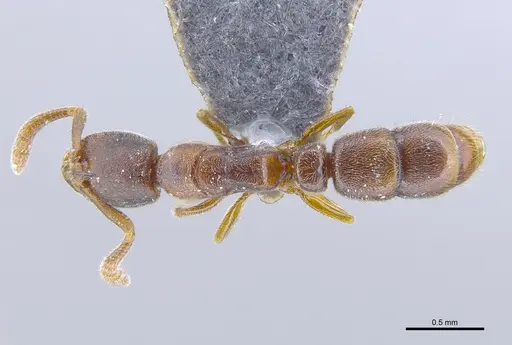
CASENT0872071
View on AntWeb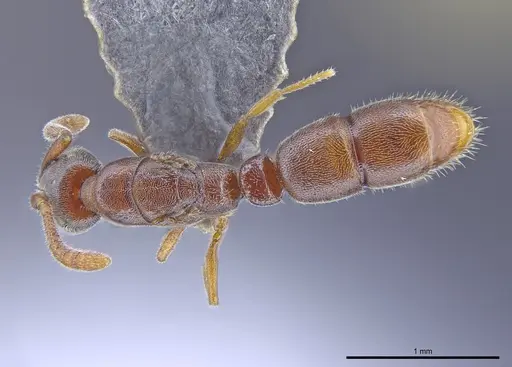
Literature
Loading distribution map...Loading products...