
Ponera menglana
- Sci. Name
- Ponera menglana
- Tribe
- Ponerini
- Subfamily
- Ponerinae
- Author
- Xu, 2001
- Distribution
- Found in 2 countries
Introduction
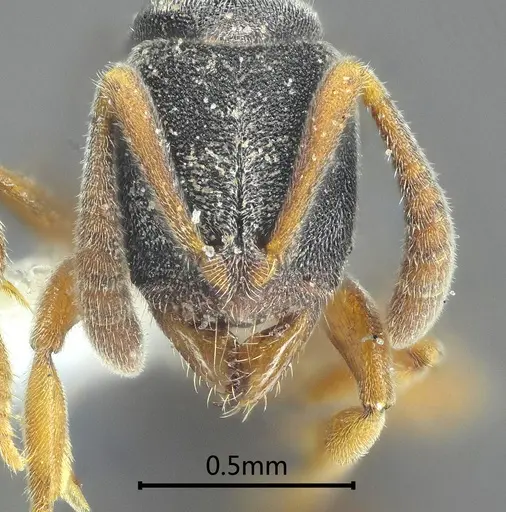
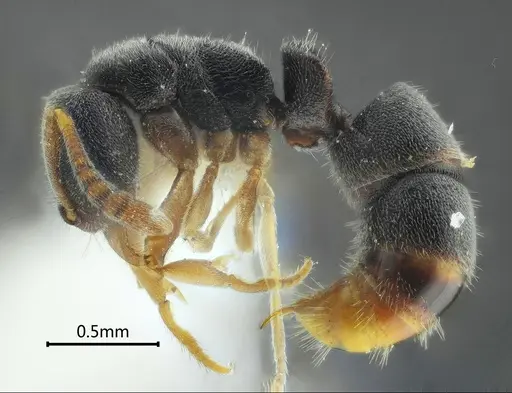
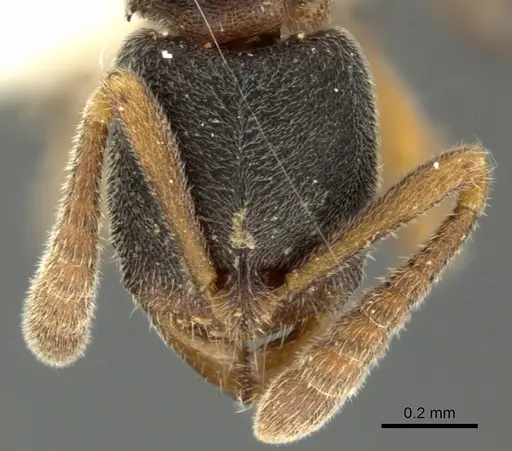
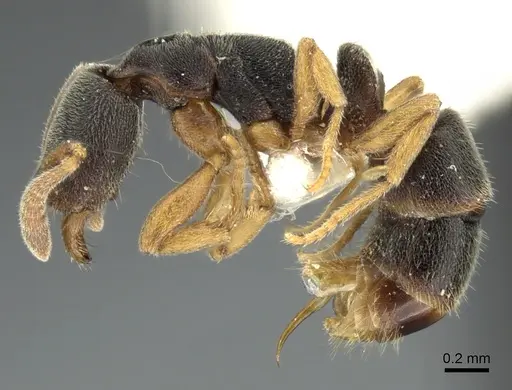
Ponera menglana is a tiny, cryptic ant known only from southern China (Yunnan) and Singapore. Workers measure 2.7-3.1 mm total length and are entirely black with yellowish‑brown mandibles, antennae, and leg tips . They were first described in 2001 and are close to Ponera sinensis but larger. These ants inhabit the soil and leaf litter of seasonal rain forests and karst monsoon forests at elevations of 660-730 m . In surveys, they were far more abundant in limestone forests than in rainforest or rubber plantations, suggesting a strong preference for intact, humid forest habitats . Their secretive nature and small size make them a challenging species to keep.
Quick Summary
- Difficulty: Hard
- Origin & Habitat: Endemic to Yunnan Province, China, and Singapore. Found in seasonal rain forest and karst monsoon forest at 660-730 m elevation, strongly preferring limestone forest over rainforest or rubber plantations [2][3].
- Colony Type: Unconfirmed. Based on typical Ponera patterns, colonies are likely monogyne (single queen) and small, but no published observations exist for this species.
- Size & Growth:
- Queen: Unknown. Queens have not been described from the type series or any literature. Based on worker size (2.7-3.1 mm), queens are expected to be larger, but no measurements are available.
- Worker: 2.7-3.1 mm total length [1]
- Colony: Unknown. No published data. Likely small (under 100 workers) based on worker size and typical Ponera colony sizes, but this is speculation.
- Growth: Unknown. Likely slow, but no data available.
- Development: Unknown. No data available. Developmental times for similar Ponera species at warm temperatures suggest 8-12 weeks, but this is unconfirmed for P. menglana. (All development times are unconfirmed due to lack of captive observations.)
- Antkeeping:
- Temperature: Inferred from its tropical habitat: maintain at 22-26°C. No precise data exist.
- Humidity: Critical. Keep nest substrate consistently moist but not waterlogged, mimicking the damp soil and leaf litter of its natural habitat [1][2].
- Diapause: Inferred from tropical distribution: no diapause required. Colonies may reduce activity in cooler months but do not need a cold period.
- Nesting: Use a naturalistic setup with moist soil or a Y‑tong nest. AntWiki notes they nest in soil and leaf litter. A deep layer of moist substrate (at least 5 cm) with leaf litter on top works well.
- Behavior: Very little is known about their behavior in the wild or captivity. Based on the genus, they are likely cryptic and secretive, spending most of their time underground. They are non‑aggressive and rarely seen foraging on the surface. Their tiny size (2.7-3.1 mm) means standard escape prevention is important.
- Common Issues: high humidity maintenance is critical, they are adapted to constantly moist forest soil and dry conditions quickly kill them, unknown founding behavior makes colony establishment uncertain, no published data on how queens found new colonies, small size makes them easy to overfeed or lose track of, feed only appropriately tiny prey, slow growth is likely but unconfirmed, patience is required, but no timeline is known
Housing and Nest Setup
Because Ponera menglana naturally nests in soil and leaf litter, a naturalistic formicarium is recommended. Y‑tong or plaster nests with a deep (5 cm) layer of moist soil mimic their natural environment. Provide leaf litter on top and keep the nest chambers small, these tiny ants feel secure in tight spaces. Dry acrylic nests are unsuitable unless you can maintain very high humidity inside. A test tube setup can work for founding (if you catch a queen), but transfer to a soil‑based setup once the colony reaches 10+ workers. The outworld should have minimal vertical space since workers rarely forage far. [1]
Feeding and Diet
No specific feeding data exist for P. menglana. Based on the genus, they are likely predators of tiny soil arthropods. Offer small live prey such as fruit flies, springtails, or pinhead crickets. Prey should be no larger than the worker’s head (about 0.5 mm). Remove uneaten prey to prevent mold. Sugar water is rarely accepted by Ponera species, but you can try a tiny drop occasionally. Protein seems to be the key nutrient for brood development. [1]
Temperature and Humidity
Maintain the nest at 22-26 °C, with no specific data, this is inferred from the tropical forests they inhabit. A heating cable on one side of the nest creates a gradient. Humidity is the most critical factor: keep the nest substrate consistently moist, like a squeezed‑out sponge. Mist the outworld regularly but focus on the nest area. Low humidity causes rapid death. [2]
Colony Development
Virtually nothing is known about colony development in P. menglana. Queens have been collected from soil samples but no captive observations have been published. The first workers likely emerge within a few months after a queen begins laying, but this is speculative. Be patient and disturb the colony as little as possible. Expect slow growth, major growth spurts are unrecorded. [1]
Behavior and Observation
Published observations are scarce. Like most Ponera, these ants are extremely cryptic. You will rarely see workers above the substrate, they spend their time in the nest or just below the surface. Foraging is slow and deliberate. They are not aggressive and, at 2.7-3.1 mm, their sting is unlikely to be felt by humans. The reward for keeping them is watching their quiet life in a humid nest, but do not expect dramatic activity. [1]
Frequently Asked Questions
How long does it take for Ponera menglana to produce first workers?
Unknown. No published data exist. Based on similar Ponera species kept at warm temperatures (≈24 °C),8-12 weeks is a rough guess, but this is unconfirmed.
What do Ponera menglana ants eat?
No specific data. They are likely predators of small soil arthropods. Offer tiny live prey such as fruit flies, springtails, or pinhead crickets.
Can I keep Ponera menglana in a test tube?
If you catch a queen, a test tube with a moist cotton plug can work for founding, but once workers appear you should move them to a soil‑based formicarium for better humidity control.
Do Ponera menglana ants sting?
They have a stinger (as all ponerines do), but at 2.7-3.1 mm it is too small to effectively penetrate human skin. Any perceived sting would be extremely mild at worst.
Are Ponera menglana good for beginners?
Not recommended. Their high humidity needs, lack of known founding behavior, and extremely cryptic nature make them suitable only for experienced keepers who can handle uncertainty.
How big do Ponera menglana colonies get?
Unknown. No colony size has ever been reported. Based on worker size and typical Ponera genus patterns, they likely stay under 100 workers, but this is speculation.
Do Ponera menglana need hibernation?
No. They originate from tropical southern China and Singapore, where temperatures are warm year‑round. No diapause is required.
Why are my Ponera menglana dying?
The most common cause is low humidity. Ensure the nest substrate is consistently moist. Also check that prey items are tiny enough and that the colony is not being disturbed excessively.
When should I move Ponera menglana to a formicarium?
Move them when the test tube becomes crowded or moldy. A naturalistic setup with moist soil or Y‑tong works best.
Can I keep multiple Ponera menglana queens together?
Not recommended. There is no evidence that this species is polygynous, and unrelated queens would likely fight.
Report an Issue
The current care sheet is based fully on literature. See inconsistencies, or something that's incorrect? Please , it will be resolved after review from an admin. Contributing to the blogs tab also helps providing information, to make us be able to further improve the caresheets. Thank you for your support!
References

This caresheet is licensed under CC BY-SA 4.0 .
Community Blogs
ANTWEB1060521
View on AntWeb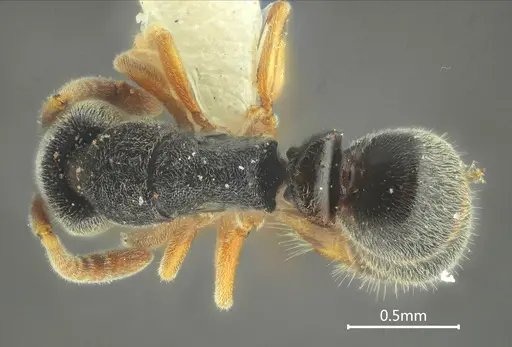
CASENT0235336
View on AntWeb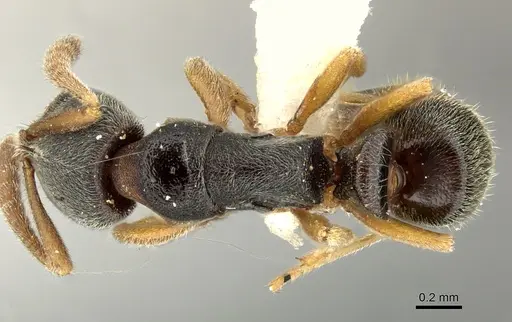
Literature
Loading distribution map...Loading products...