
Ponera manni
- Sci. Name
- Ponera manni
- Tribe
- Ponerini
- Subfamily
- Ponerinae
- Author
- Taylor, 1967
- Distribution
- Found in 1 countries
Introduction
Ponera manni is an ant species endemic to the islands of Fiji, found only on Viti Levu . It nests under stones in wet soil on the floor of rainforests at around 1000m elevation . The species was described by Taylor in 1967 and named after Dr W. M. Mann . This ant has a narrow petiolar node, making it identifiable under magnification . It is a predatory species with a sting, typical of the Ponerinae subfamily.
Quick Summary
- Difficulty: Expert
- Origin & Habitat: Endemic to Fiji, found only on Viti Levu island [1][2]. Natural habitat is slightly disturbed rainforest at approximately 1000m elevation, nesting under stones in wet soil [3].
- Colony Type: Unconfirmed, colony structure has not been documented for this species. Based on typical Ponera genus patterns, likely single-queen colonies, but this is not confirmed.
- Size & Growth:
- Queen: Size data unavailable, no total length measurements provided in literature.
- Worker: Size data unavailable, no total length measurements provided in literature.
- Colony: Unknown, no colony size data available.
- Growth: Unknown, likely moderate based on genus patterns.
- Development: Unconfirmed, no direct development data exists. Based on related Ponera species, estimate 8-12 weeks at optimal temperature. (Development timeline is estimated from genus-level patterns.)
- Antkeeping:
- Temperature: Keep warm, roughly 24-28°C, as they are from tropical Fiji [3]. Provide a temperature gradient.
- Humidity: High humidity is essential, they nest in wet soil [3]. Keep substrate consistently moist but not waterlogged.
- Diapause: No, as a tropical species, diapause is unlikely.
- Nesting: Natural nesting is under stones in wet soil [3]. In captivity, use moist substrate nests like dirt or plaster with moisture chambers.
- Behavior: Ponera manni is predatory and uses its sting to subdue prey. Workers are slow-moving and not aggressive toward humans, but will sting if threatened. Escape prevention is important due to small size.
- Common Issues: limited availability, endemic to Fiji and rarely available in the antkeeping hobby., lack of captive care information makes proper husbandry challenging., predatory diet requirements may be difficult to meet with appropriate live prey., high humidity needs can lead to mold issues if ventilation is poor., wild-caught colonies may have parasites or fail to adapt to captive conditions.
Natural History and Distribution
Ponera manni is endemic to Fiji, found only on Viti Levu island [1][2]. The type specimen was collected from Mt Lomolaki at 1000m elevation [3]. It nests under stones in wet soil in slightly disturbed rainforest [3]. Subsequent collections have come from disturbed or lowland habitats [4].
Identification and Morphology
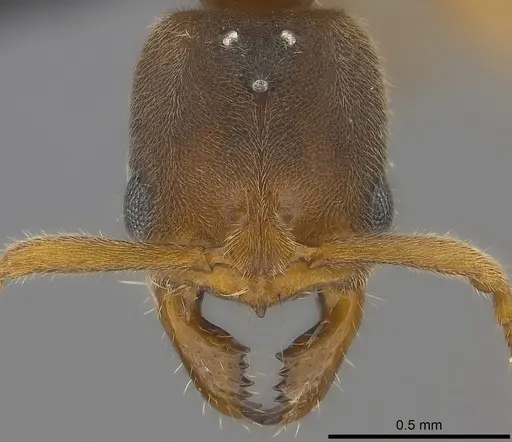
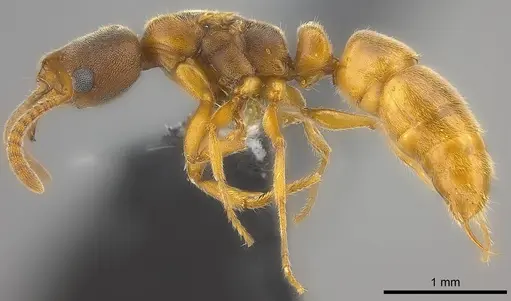
Workers have minute, single-faceted eyes and a narrow petiolar node [3]. Color is dull medium reddish brown, with legs and gastric apex slightly paler [3]. This species is easily separated from other Ponera by its size and node shape [3].
Housing and Nesting
In nature, Ponera manni nests under stones in wet soil [3]. For captive care, provide a moist naturalistic setup or a formicarium that retains humidity well. A dirt colony or plaster nest with a moisture chamber works well. Keep the substrate consistently moist but not waterlogged [3]. Ensure excellent escape prevention, as workers can squeeze through small gaps.
Feeding and Diet
Like other Ponera species, P. manni is likely predatory, feeding on small invertebrates such as springtails and mites. In captivity, offer small live prey like fruit flies, pinhead crickets, and mealworms. They may accept protein foods like bloodworms, but sugar sources are not primary.
Temperature and Seasonal Care
As a tropical species from Fiji, maintain temperatures between 24-28°C for optimal health [3]. A heating cable on one side of the nest creates a gradient. Avoid temperatures below 20°C for extended periods. Diapause is unlikely, but slight temperature reductions in winter may be beneficial.
Colony Development and Growth
Founding behavior is unconfirmed. Development time from egg to worker is estimated at 8-12 weeks at optimal temperature based on related species. Colony size at maturity is unknown.
Frequently Asked Questions
Is Ponera manni available for purchase?
This species is rarely available in the antkeeping hobby. It is endemic to Fiji and not commonly exported [1][2].
How do I identify Ponera manni workers?
Workers have minute, single-faceted eyes and a narrow petiolar node [3]. They are dull reddish-brown [3].
What temperature do Ponera manni ants need?
Keep them warm at 24-28°C, as they are from tropical Fiji [3].
What do Ponera manni ants eat?
They are predatory ants. Feed small live prey like springtails, fruit flies, and mealworms.
What humidity level do they need?
High humidity is essential, they naturally live in wet soil under stones [3]. Keep the nest substrate consistently moist but not waterlogged.
How long does it take for the first workers to emerge?
The exact timeline is unconfirmed. Based on related Ponera species, estimate 8-12 weeks from egg to first worker at optimal temperature.
Can I keep multiple queens together?
Colony structure is unconfirmed. Based on typical Ponera patterns, they likely form single-queen colonies, but combining unrelated queens is not recommended without evidence.
Where is Ponera manni found in the wild?
This species is endemic to Fiji, found only on Viti Levu island [1][2]. The type locality is Mt Lomolaki at about 1000m elevation [3].
Is this species suitable for beginners?
No, this species is not recommended for beginners. It is expert-level due to limited availability, specific humidity needs, predatory diet, and lack of captive care information.
Report an Issue
The current care sheet is based fully on literature. See inconsistencies, or something that's incorrect? Please , it will be resolved after review from an admin. Contributing to the blogs tab also helps providing information, to make us be able to further improve the caresheets. Thank you for your support!
References

This caresheet is licensed under CC BY-SA 4.0 .
Community Blogs
CASENT0187758
View on AntWeb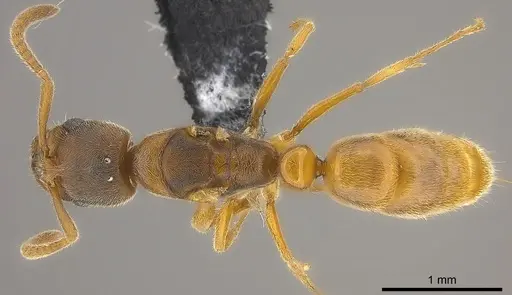
Literature
Loading distribution map...Loading products...