
Polyrhachis wardi
- Sci. Name
- Polyrhachis wardi
- Subgenus
- Aulacomyrma
- Tribe
- Camponotini
- Subfamily
- Formicinae
- Author
- Kohout, 2007
- Distribution
- Found in 1 countries
Introduction
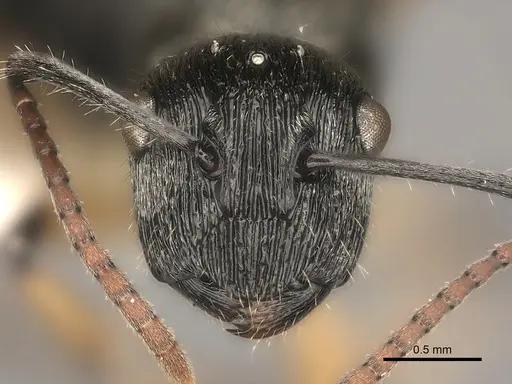
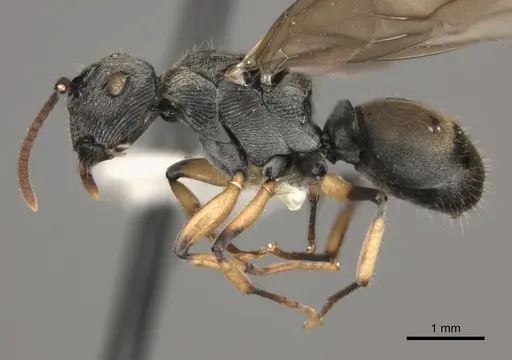
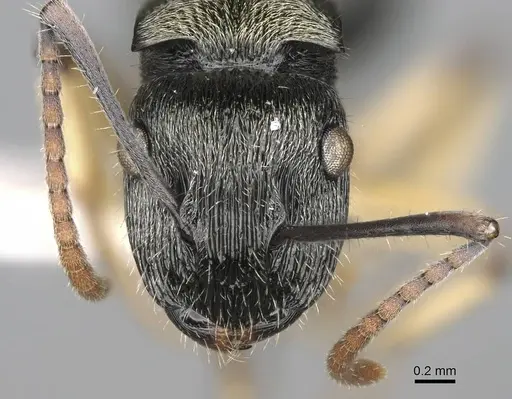
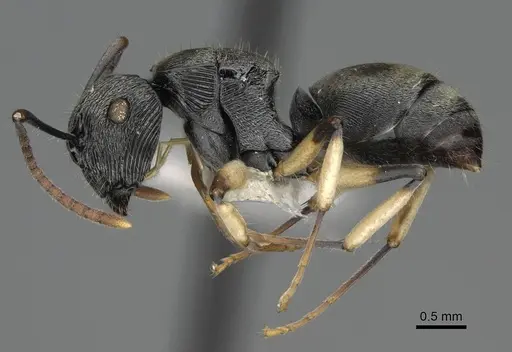
Polyrhachis wardi is a small ant species native to New Guinea, specifically East Sepik Province, Papua New Guinea . Workers measure 4.3-5.1 mm and queens 5.8-6.1 mm in total length . They are black with reddish-brown leg tips and have silvery-yellowish hairs. This species belongs to the subgenus Aulacomyrma, known for wood-nesting habits and presence of pupal cocoons . Polyrhachis wardi lacks a functional sting and instead sprays formic acid for defense, typical of Formicinae ants.
Quick Summary
- Difficulty: Unknown
- Origin & Habitat: New Guinea, East Sepik Province, Papua New Guinea, collected at 400m altitude near Wewak [1]
- Colony Type: Unconfirmed, colony structure has not been documented in scientific literature
- Size & Growth:
- Queen: ~5.8-6.1 mm [1]
- Worker: ~4.3-5.1 mm [1]
- Colony: Unknown, no colony size data available
- Growth: Unknown, no development data available
- Development: Unknown, not directly studied. Based on typical Polyrhachis patterns, estimate 6-10 weeks at optimal temperature (This is an estimate based on genus-level patterns, not species-specific data)
- Antkeeping:
- Temperature: Unconfirmed. As a tropical species, likely prefer 24-28°C
- Humidity: Unconfirmed. Being lignicolous, they prefer moderate humidity with some drier areas [2][3]
- Diapause: No, tropical species from New Guinea do not require diapause
- Nesting: Lignicolous, nest in rotting wood [2][3]. Recommended nest types: Y-tong (AAC), plaster, or 3D-printed nests. Avoid acrylic nests.
- Behavior: They are moderate-tempered, not particularly aggressive. They spray formic acid for defense. Escape risk is moderate due to size, standard barriers should suffice. They construct cocoons around pupae [2][3].
- Common Issues: limited biological data makes care recommendations uncertain, much is inferred from genus patterns, wild-caught colonies may have parasites or diseases not yet documented, tropical origin means they may be sensitive to temperature drops below 20°C, wood-nesting preference means they may reject non-wood nest options, slow growth or poor acceptance of captive diets if not properly matched to their preferences
Nest Preferences and Housing
Polyrhachis wardi is a lignicolous species, meaning it naturally nests in rotting wood [2][3]. In captivity, provide nest options that mimic this preference. Y-tong (AAC) nests work well because they offer dark, enclosed chambers similar to rotting wood. Plaster or 3D-printed nests are also suitable. The ants may reject entirely soil-based formicaria. Ensure the nest has some humidity regulation since wood-nesting species prefer moist but not waterlogged conditions. The colony will need space to expand, so consider a connected outworld.
Feeding and Diet
The specific diet of Polyrhachis wardi has not been documented. Based on typical Polyrhachis patterns, they are omnivorous, feeding on honeydew, nectar, and small insects. In captivity, offer sugar water or honey as a constant energy source, and protein like fruit flies or small mealworms. Prey items should be appropriately sized for their 4-5mm workers. Remove fresh food within 24-48 hours to prevent mold.
Temperature and Humidity
As a tropical species from New Guinea, Polyrhachis wardi likely prefers warm and humid conditions. Aim for temperatures around 24-28°C, avoiding prolonged periods below 20°C. For humidity, keep the nest substrate lightly moist, with some drier areas, as they are lignicolous [2][3]. Provide ventilation to prevent mold, and use a water dish in the outworld for drinking and humidity.
Behavior and Temperament
Specific behavioral observations for Polyrhachis wardi are not documented. The genus Polyrhachis is generally moderate-tempered and not aggressive. They spray formic acid for defense, as typical of Formicinae. Workers move at a moderate pace and are semi-arboreal. They construct cocoons around pupae [2][3]. In captivity, they may be shy initially but should become active with a proper outworld.
Colony Establishment and Growth
Founding behavior is unconfirmed for Polyrhachis wardi. Most Formicinae are claustral, but this is not verified. The first workers may be smaller than normal. Growth rate is unknown, but tropical Polyrhachis species typically develop from egg to worker in 6-10 weeks under optimal conditions. Be patient and minimize disturbance during founding.
Frequently Asked Questions
How long does it take for Polyrhachis wardi to produce first workers?
The exact timeline is unknown. Based on typical Polyrhachis patterns, expect 6-10 weeks from egg to first worker at optimal temperature around 26°C.
What is the best nest type for Polyrhachis wardi?
They are lignicolous, so Y-tong (AAC) nests, plaster nests, or 3D-printed nests work best. They may reject soil nests [2][3].
Do Polyrhachis wardi ants need hibernation?
No. As a tropical species from New Guinea, they do not require hibernation or diapause.
What do Polyrhachis wardi ants eat?
Specific dietary data is unavailable, but Polyrhachis species are typically omnivorous. Offer sugar water or honey constantly, and protein like small fruit flies or mealworms.
Are Polyrhachis wardi good for beginners?
This species is not recommended for beginners due to limited biological data. Care must be inferred from genus patterns.
How big do Polyrhachis wardi colonies get?
Colony size is unknown, no scientific data exists on maximum colony size.
Can I keep multiple queens together?
The colony structure is unconfirmed. Most Polyrhachis species are monogyne, but this is not verified for P. wardi. Do not combine unrelated queens without evidence.
What temperature should I keep Polyrhachis wardi at?
Aim for 24-28°C, inferred from their tropical origin. Avoid temperatures below 20°C.
Why is so little known about Polyrhachis wardi?
This species was described in 2007 and is found in a remote region. It has not been the subject of ecological studies.
Report an Issue
The current care sheet is based fully on literature. See inconsistencies, or something that's incorrect? Please , it will be resolved after review from an admin. Contributing to the blogs tab also helps providing information, to make us be able to further improve the caresheets. Thank you for your support!
References

This caresheet is licensed under CC BY-SA 4.0 .
Community Blogs
CASENT0217442
View on AntWeb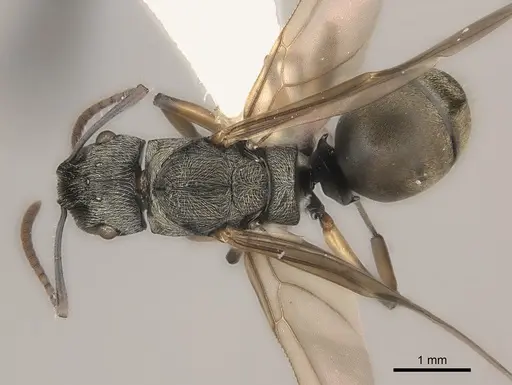
CASENT0217443
View on AntWeb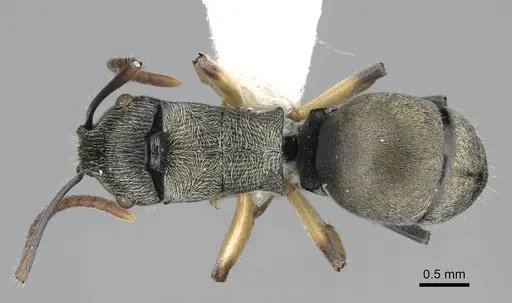
Literature
Loading distribution map...Loading products...