
Polyrhachis thompsoni
- Sci. Name
- Polyrhachis thompsoni
- Subgenus
- Myrmhopla
- Tribe
- Camponotini
- Subfamily
- Formicinae
- Author
- Bingham, 1903
- Distribution
- Found in 1 countries
Introduction
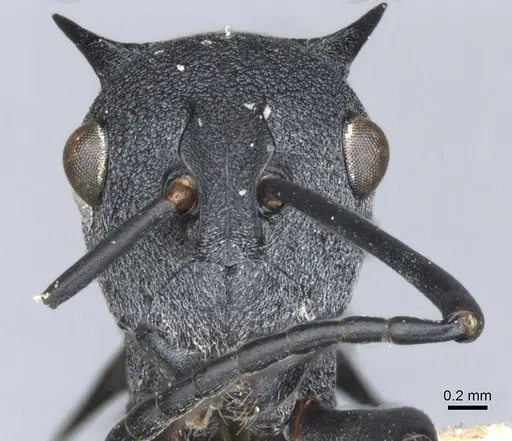
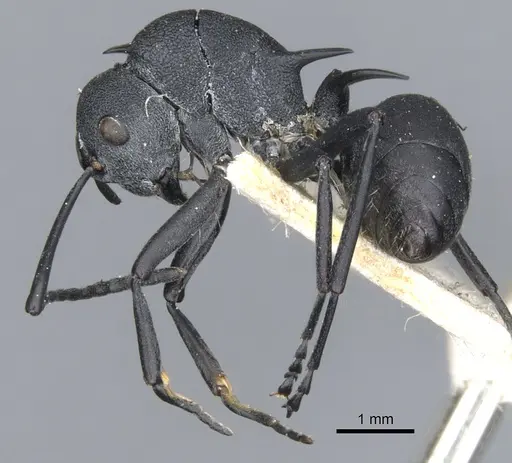
Polyrhachis thompsoni is a spiny ant species belonging to the subgenus Myrmhopla, native to the Himalayan region and Southeast Asia. Workers are medium-sized ants with characteristic spines on their thorax. They are found across India (Himachal Pradesh, Sikkim, Tripura), Nepal, Bhutan, Myanmar, and southern China (Yunnan), typically at elevations between 400-1600 meters . This species inhabits cool broadleaved forests and agricultural areas, suggesting temperate to subtropical conditions at moderate elevations. This species lacks a functional sting but can spray formic acid as a defense mechanism, typical of Formicinae ants.
Quick Summary
- Difficulty: Medium
- Origin & Habitat: Himalayan region and Southeast Asia, found in India (Himachal Pradesh, Sikkim, Tripura), Nepal (Makawanpur district at 400m), Bhutan (Tsirang at 1400-1600m), Myanmar, and China (Yunnan). Inhabits cool broadleaved forests and agricultural land at elevations of 400-1600 meters [1][2][3].
- Colony Type: Based on typical Polyrhachis patterns, likely monogyne (single queen colonies). Colony structure is inferred, not directly studied.
- Size & Growth:
- Queen: Size data unavailable, inferred from Polyrhachis genus
- Worker: Size data unavailable, inferred from Polyrhachis genus
- Colony: Unknown
- Growth: Moderate
- Development: Estimated 6-10 weeks at optimal temperature, based on typical Formicinae development (Development time is temperature-dependent, warmer conditions may accelerate growth.)
- Antkeeping:
- Temperature: Keep at moderate temperatures, roughly 22-26°C, based on their elevation range [1][2][3].
- Humidity: Keep nest substrate consistently moist but not waterlogged, as they inhabit cool broadleaved forests [3].
- Diapause: Yes, based on temperate distribution [1][2][3].
- Nesting: Semi-arboreal nesting preferences. Provide vertical space and climbing structures [4].
- Behavior: Generally calm and non-aggressive for a Formicinae ant [4]. Workers are active foragers with moderate escape risk due to their size.
- Common Issues: lack of specific care data requires starting with moderate conditions and adjusting based on colony behavior, semi-arboreal nature means they need vertical space to prevent stress and escape, winter dormancy requirements are inferred, monitor for seasonal slowdowns to avoid colony decline, wild-caught colonies may be stressed from collection and require careful acclimation, diet acceptance is not documented, provide varied food to ensure nutrition and prevent starvation
Natural History and Distribution
Polyrhachis thompsoni is distributed across the Himalayan foothills and Southeast Asia, with confirmed records from India (Himachal Pradesh, Sikkim, Tripura), Nepal, Bhutan, Myanmar, and southern China (Yunnan province) [1][5][2]. The species was originally described by Bingham in 1903 from Myanmar specimens. Collection data shows they inhabit elevations from 400 meters in Nepal to 1600 meters in Bhutan, typically in cool broadleaved forests and agricultural land [3]. This elevation range suggests they prefer temperate conditions rather than tropical heat.
Housing and Nest Setup
Based on their semi-arboreal nature and typical Polyrhachis behavior, these ants do best in setups that allow for vertical climbing space. Use Y-tong, plaster, or soil nests with appropriately sized chambers. Provide a foraging area with climbing surfaces like branches or cork bark. Escape prevention should be moderate, they are not tiny, but standard barriers are recommended [4].
Feeding and Diet
Like most Formicinae ants, Polyrhachis thompsoni likely has an omnivorous diet. Offer sugar water or honey as a constant energy source, plus small protein items like fruit flies or mealworms. Start with these basics and observe what your colony accepts [4].
Temperature and Seasonal Care
Based on their collection at 400-1600m elevation, aim for moderate temperatures around 22-26°C, with a slight gradient for self-regulation [1][2][3]. Given their temperate distribution, they likely require winter diapause, reduce temperature to 15-18°C for 2-3 months during colder months.
Colony Development
Founding behavior is unconfirmed. Development from egg to worker is estimated at 6-10 weeks at optimal temperature, based on typical Formicinae patterns. Colony growth is moderate, with steady expansion once established.
Frequently Asked Questions
How long does it take for Polyrhachis thompsoni to produce first workers?
Based on typical Formicinae development, expect first workers in about 6-10 weeks after the queen lays eggs, assuming optimal temperature around 24-26°C. This is an estimate since specific data is unavailable.
What temperature do Polyrhachis thompsoni ants need?
Keep them at moderate temperatures, roughly 22-26°C, based on their elevation range in the Himalayan region [1][2][3].
Do Polyrhachis thompsoni ants need hibernation?
Yes, based on their temperate distribution, they likely require a winter rest period. Reduce temperature to 15-18°C for 2-3 months during winter [1][2][3].
What do Polyrhachis thompsoni ants eat?
They are omnivorous like most Formicinae. Offer sugar water or honey plus small protein items like fruit flies or mealworms [4].
Are Polyrhachis thompsoni good for beginners?
This species is rated as Medium difficulty. There is limited captive care information, so beginners should be comfortable with basic antkeeping and prepared to adjust conditions based on colony behavior.
How big do Polyrhachis thompsoni colonies get?
Colony size is not well documented, but growth is moderate. Expect steady expansion over the first year once established.
Can I keep multiple Polyrhachis thompsoni queens together?
This species is likely monogyne based on typical Polyrhachis patterns. Combining unrelated queens is not recommended as they would likely fight. House founding queens alone until colony establishment.
What type of nest is best for Polyrhachis thompsoni?
They do well in Y-tong, plaster, or soil nests with vertical climbing structures. Provide some vertical space since they are semi-arboreal [4].
Where is Polyrhachis thompsoni found in the wild?
They are native to the Himalayan region, specifically India (Himachal Pradesh, Sikkim, Tripura), Nepal, Bhutan, Myanmar, and southern China (Yunnan). They live at elevations of 400-1600 meters in cool broadleaved forests and agricultural areas [1][2][3].
Report an Issue
The current care sheet is based fully on literature. See inconsistencies, or something that's incorrect? Please , it will be resolved after review from an admin. Contributing to the blogs tab also helps providing information, to make us be able to further improve the caresheets. Thank you for your support!
References

This caresheet is licensed under CC BY-SA 4.0 .
Community Blogs
CASENT0903383
View on AntWeb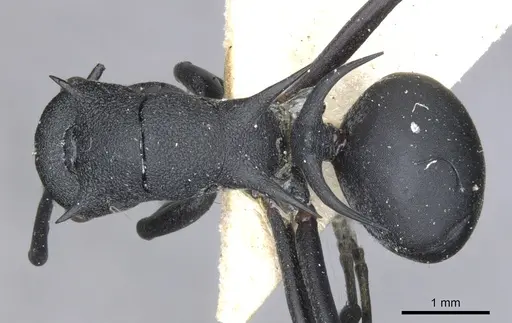
Literature
Loading distribution map...Loading products...