
Polyrhachis taylori
- Sci. Name
- Polyrhachis taylori
- Tribe
- Camponotini
- Subfamily
- Formicinae
- Author
- Kohout, 1988
- Distribution
- Found in 1 countries
Introduction
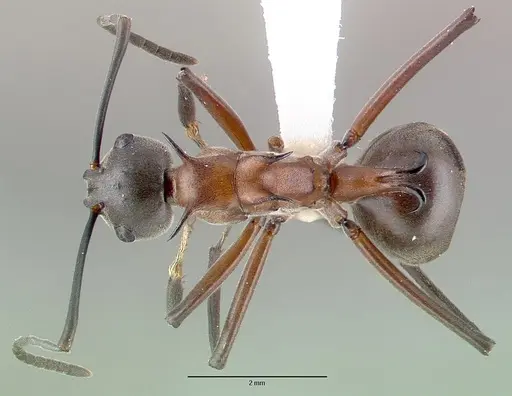
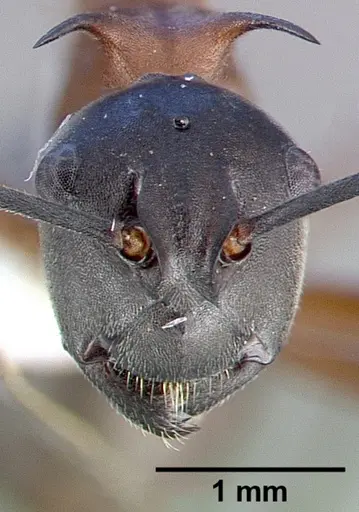
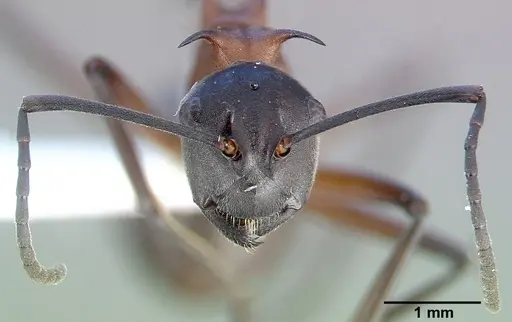
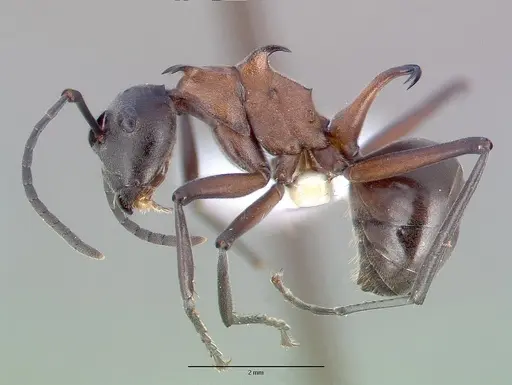
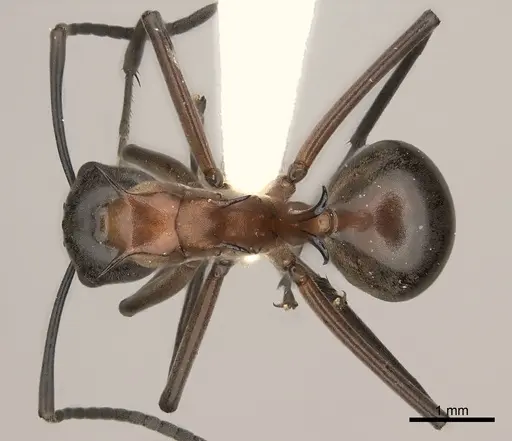
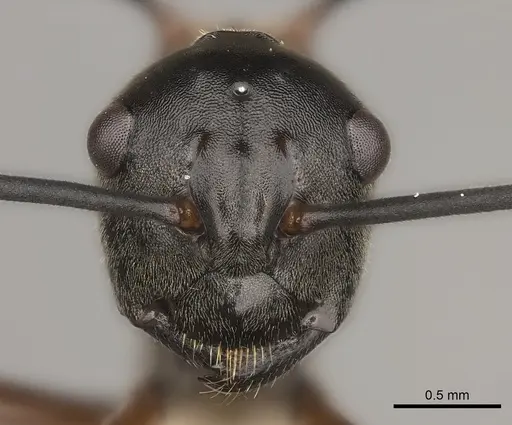
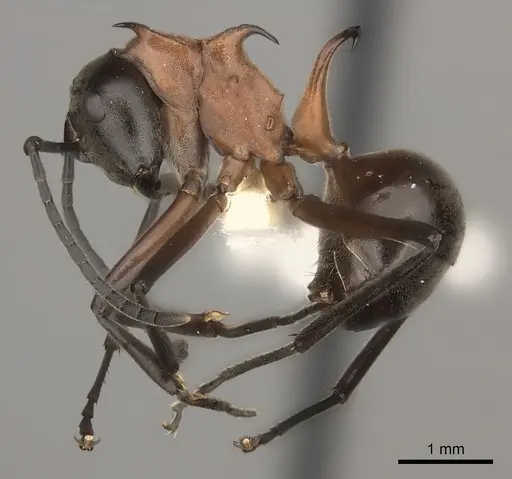
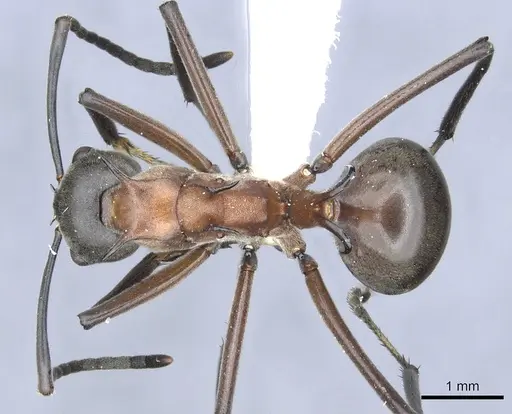
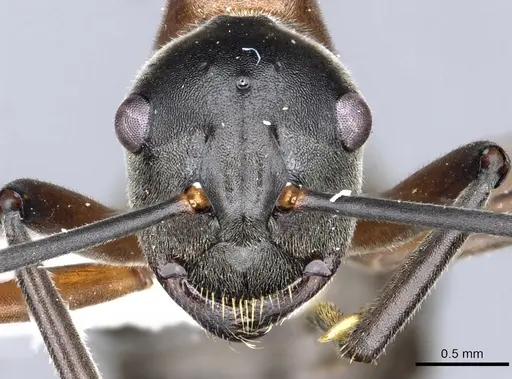
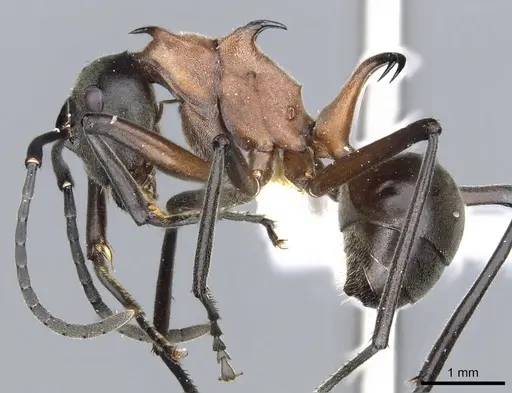
Polyrhachis taylori is a small arboreal ant native to Papua New Guinea, specifically the Torricelli Mountains region. Workers measure 6.18-7.36 mm in total length, making them the smallest species in their subgenus . They have a black head, reddish-brown mesosoma and petiole, and a dark reddish-brown to nearly black gaster, with pronotal spines projecting anterolaterally and distinctive hook-shaped petiolar spines . This species is notable for nesting in dry bamboo sticks serving as land markers, occupying multiple internodes and using silk to line the interior walls . The type colony contained 639 workers and 16 reproductive females, indicating a multi-queen structure .
Quick Summary
- Difficulty: Medium
- Origin & Habitat: Papua New Guinea (Torricelli Mountains, Lumi) at 400-550m elevation, found in native gardens at the margin of primary forest, nesting in bamboo stick markers [1][2].
- Colony Type: Multiple queens per colony confirmed, the type colony had 16 dealate females [2]. Polygyne means multiple queens work together in one colony [3].
- Size & Growth:
- Queen: 8.92-9.47 mm [1]
- Worker: 6.18-7.36 mm [1]
- Colony: Up to 639 workers [2]
- Growth: Moderate, estimated based on Polyrhachis genus patterns
- Development: 6-10 weeks (estimated based on genus patterns) (Development time is inferred from typical Polyrhachis patterns. Pupae are enclosed in cocoons [4].)
- Antkeeping:
- Temperature: Keep warm around 24-28°C, based on tropical distribution.
- Humidity: Keep substrate consistently moist but not waterlogged, based on tropical habitat.
- Diapause: No, tropical species do not require hibernation.
- Nesting: Arboreal nester, prefers setups mimicking bamboo nesting, such as Y-tong nests or natural materials like cork bark [1][4].
- Behavior: Generally calm and non-aggressive. Workers are small and active, foraging arboreally. Escape risk is high due to small size, use fine barriers and secure lids.
- Common Issues: cold temperatures slow brood development, keep warm year-round, dry conditions cause colony decline, maintain humidity, small size increases escape risk, ensure enclosure is secure, arboreal nesting requires vertical space and suitable materials like bamboo or cork, multi-queen colonies may need adequate space to prevent territorial issues
Nest Preferences and Housing
Polyrhachis taylori is an arboreal, wood-nesting species. In the wild, they nest in dry bamboo sticks, occupying multiple internodes and using silk to line the walls [1][4]. For captive care, provide a setup with Y-tong nests or natural materials like bamboo sections and cork bark. Include soft materials for silk-weaving behavior [4].
Feeding and Diet
Based on Polyrhachis genus patterns, this species is likely omnivorous. Feed sugar water or honey regularly, and offer small protein sources like fruit flies weekly.
Temperature and Seasonal Care
As a tropical species, keep temperatures around 24-28°C. A heating cable can create a gradient. Do not allow temperatures below 20°C for extended periods.
Colony Structure and Multi-Queen Dynamics
Polyrhachis taylori has confirmed multi-queen colonies, with 16 dealate females in the type colony [2]. Queens typically coexist peacefully, and multiple queens can accelerate growth [3].
Behavior and Temperament
Workers are calm and arboreal, exploring upward spaces. They use silk for nest construction, a trait shared with other Polyrhachis ants [4]. Escape risk is high due to small size.
Frequently Asked Questions
How long does it take for Polyrhachis taylori to produce first workers?
Exact time is unconfirmed, but based on Polyrhachis patterns, expect 6-10 weeks from egg to worker at warm temperatures.
Can I keep multiple Polyrhachis taylori queens together?
Yes, this species is polygynous, with multiple queens coexisting peacefully [2][3].
What size colony does Polyrhachis taylori reach?
Up to 639 workers, based on the type colony [2].
What nest type is best for Polyrhachis taylori?
Arboreal-style setups like Y-tong nests or natural bamboo and cork materials [1][4].
Do Polyrhachis taylori need hibernation?
No, as a tropical species, they do not require diapause.
Are Polyrhachis taylori good for beginners?
Rated Medium difficulty due to specific humidity and temperature needs, but generally calm.
What do Polyrhachis taylori eat?
Likely omnivorous, feed sugar water and small insects.
How big do Polyrhachis taylori queens get?
Queens are 8.92-9.47 mm in total length [1].
Where is Polyrhachis taylori from?
Papua New Guinea, specifically the Torricelli Mountains [1].
Why are my Polyrhachis taylori dying?
Common causes include cold temperatures, low humidity, or dry nesting conditions, ensure warm and moist environment.
When should I move Polyrhachis taylori to a formicarium?
Wait until the colony has 50+ workers and is actively nesting, but provide natural options from the start.
Report an Issue
The current care sheet is based fully on literature. See inconsistencies, or something that's incorrect? Please , it will be resolved after review from an admin. Contributing to the blogs tab also helps providing information, to make us be able to further improve the caresheets. Thank you for your support!
References

This caresheet is licensed under CC BY-SA 4.0 .
Community Blogs
Literature
Loading distribution map...Loading products...