
Polyrhachis sulcata
- Sci. Name
- Polyrhachis sulcata
- Subgenus
- Myrma
- Tribe
- Camponotini
- Subfamily
- Formicinae
- Author
- André, 1895
- Distribution
- Found in 1 countries
Introduction
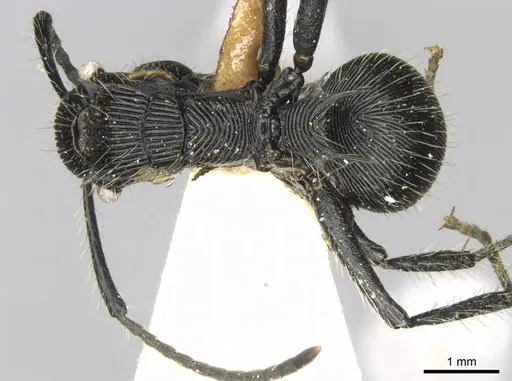
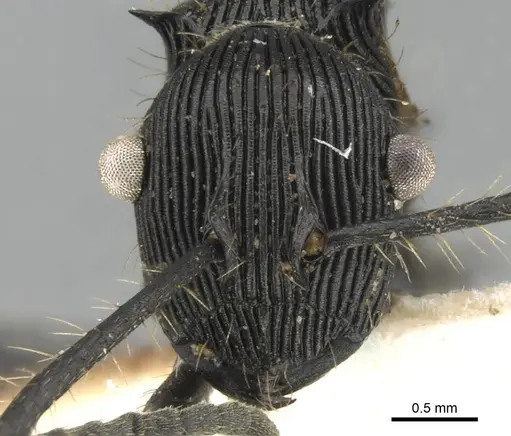
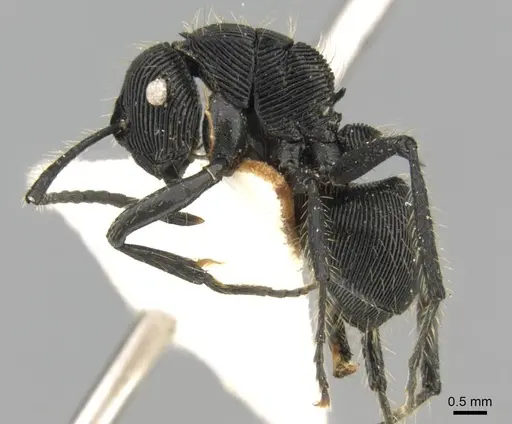
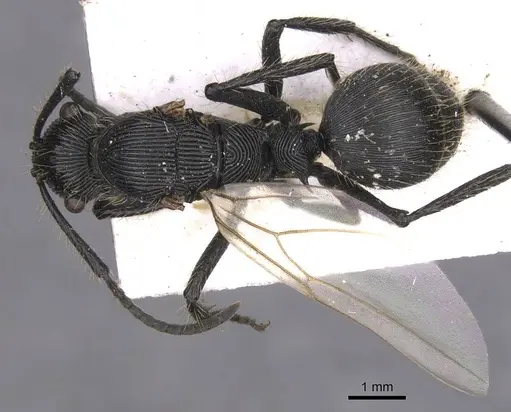
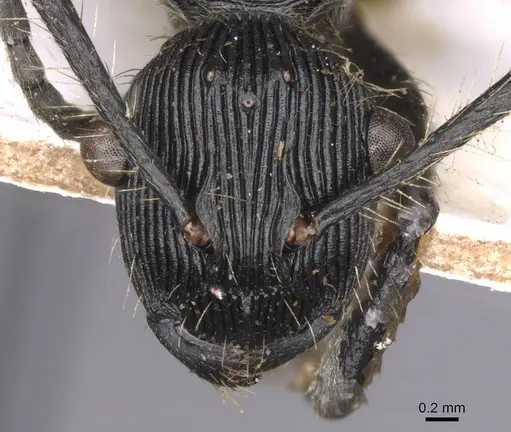
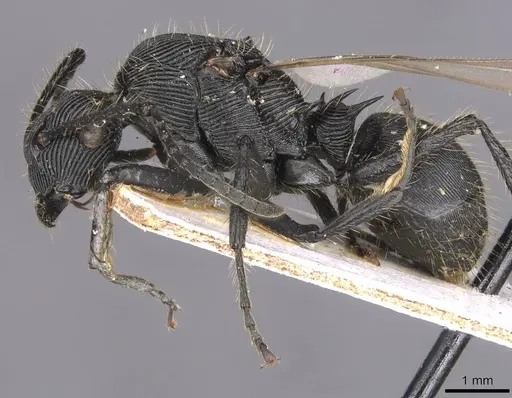
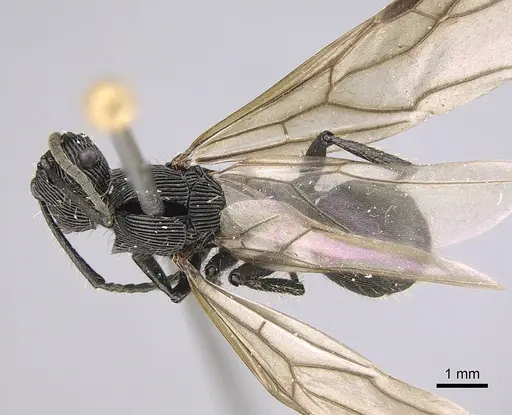
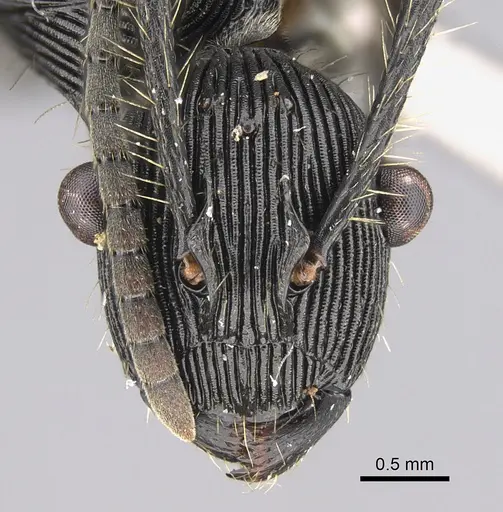
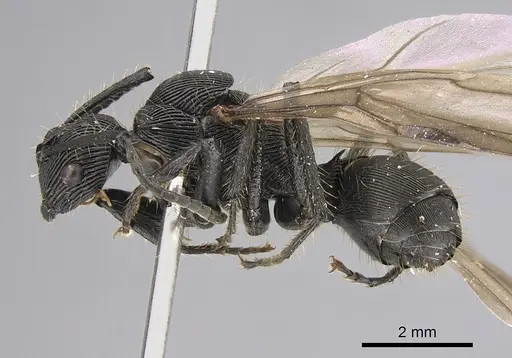
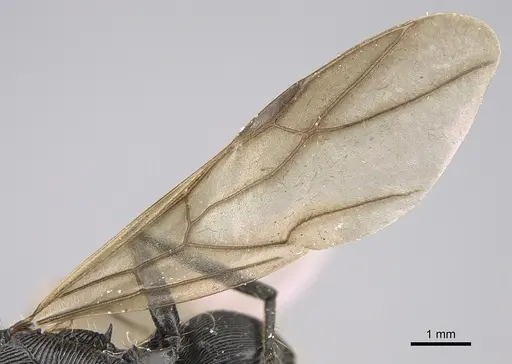
Polyrhachis sulcata is an arboreal ant species from the Afrotropical region, found in Congo, Democratic Republic of Congo, Equatorial Guinea, and Ghana . Workers are 7.8-9.2mm in total length, with a black body, yellow-tipped antennae and legs, and deep striations that give a ploughed appearance . This species belongs to the militaris species-group and is recognized by its unique sculpturation and lack of propodeal margination . This ant is almost entirely arboreal, rarely descending to ground level, which explains why standard collection methods often fail to capture it .
Quick Summary
- Difficulty: Expert
- Origin & Habitat: Arboreal ant from the Afrotropical region, found in Congo, Democratic Republic of Congo, Equatorial Guinea (Bioko), and Ghana [1][2].
- Colony Type: Colony structure is unconfirmed. Based on Polyrhachis genus patterns, likely single-queen (monogyne) colonies, but this has not been directly documented [2].
- Size & Growth:
- Queen: ~10-12mm, inferred from Polyrhachis genus patterns
- Worker: 7.8-9.2mm [2]
- Colony: Unknown, no colony size data available for this species
- Growth: Unknown, no development data available
- Development: Unconfirmed, no direct data. Based on typical Formicinae patterns, estimate 6-10 weeks from egg to worker at optimal temperature [2]. (Development timeline is unconfirmed. Related Polyrhachis species typically take 6-10 weeks from egg to worker.)
- Antkeeping:
- Temperature: Keep warm, around 24-28°C, based on tropical distribution [2].
- Humidity: Maintain moderate to high humidity, as they are from tropical forests [2].
- Diapause: Unknown, tropical species likely do not require diapause [2].
- Nesting: Arboreal nester, use vertical nests like Y-tong (AAC) or naturalistic setups that mimic tree habitats [2].
- Behavior: Arboreal and defensive, workers spray formic acid when disturbed, as typical for Formicinae. Escape risk is moderate due to their size [2].
- Common Issues: very limited data, this is one of the least studied ant species in the hobby, so care recommendations are largely inferred from genus patterns, arboreal nature means they need vertical nesting setups, which differs from typical ground-nesting ant setups, wild-caught colonies may carry fungal parasites like Ophiocordyceps unilateralis that can kill them in captivity [3], their strict arboreal behavior means they may stress in ground-level formicariums, queen founding behavior is unconfirmed, claustral founding is likely based on genus patterns but not documented
Understanding Polyrhachis sulcata's Arboreal Lifestyle
Polyrhachis sulcata is a strictly arboreal species that lives in tree canopies and hardly ever comes down to ground level [2]. This is why researchers had to use pyrethrum knock-down in tree canopies to collect them [2]. In captivity, you should use vertical nest setups to mimic their natural habitat, as they prefer elevated positions [2].
Housing and Nest Setup
For Polyrhachis sulcata, use a nest that reflects their arboreal nature. Y-tong (AAC) nests work well because they provide enclosed chambers [2]. Place the nest in an elevated position or use vertical orientation to help them feel off the ground [2]. Good ventilation is essential to prevent mold in enclosed setups.
Feeding and Diet
Polyrhachis ants are typically omnivorous, feeding on nectar, honeydew, and small insects. Offer sugar sources like honey water constantly and protein sources like fruit flies or mealworms 2-3 times per week [2]. Remove uneaten prey after 24-48 hours to prevent mold.
Temperature and Seasonal Care
As a tropical species, keep Polyrhachis sulcata warm around 24-28°C [2]. Room temperature in most homes should be suitable, but you can provide a gentle warmth gradient. Seasonal changes are minimal, so avoid dramatic cooling.
Important Health Considerations
Be aware that wild-caught colonies may carry fungal parasites like Ophiocordyceps unilateralis, which can kill them in captivity [3]. Quarantine new colonies and monitor for signs of illness. Keep detailed notes on your colony's behavior to contribute to community knowledge.
Frequently Asked Questions
How long does it take for Polyrhachis sulcata to develop from egg to worker?
The exact timeline is unconfirmed, but based on typical Formicinae patterns, estimate 6-10 weeks from egg to worker at optimal warm temperatures [2].
Can I keep Polyrhachis sulcata in a test tube setup?
Test tubes can work for founding colonies, but this species' arboreal nature suggests they would do better in a vertical nest like Y-tong (AAC) as the colony grows [2].
What do I feed Polyrhachis sulcata?
Feed them a varied diet with sugar sources like honey water available constantly, and protein sources like small insects 2-3 times per week [2]. Remove uneaten prey to prevent mold.
Is Polyrhachis sulcata suitable for beginners?
No, this species is not recommended for beginners due to limited care data, specific arboreal needs, and potential parasite issues [2].
Do Polyrhachis sulcata need hibernation or diapause?
Diapause requirements are unknown, but as a tropical species, they likely do not require hibernation [2].
How big do Polyrhachis sulcata colonies get?
The maximum colony size is unknown, no data exists for this species [2].
Where can I get Polyrhachis sulcata?
This is an extremely rare species in the hobby, only known from Central Africa. If available, it would likely come from specialized antkeepers, but be cautious due to potential parasites [2].
Why are they called arboreal ants?
Polyrhachis sulcata is arboreal because it lives almost exclusively in tree canopies and rarely descends to ground level, as discovered by researchers using pyrethrum knock-down in trees [2].
Report an Issue
The current care sheet is based fully on literature. See inconsistencies, or something that's incorrect? Please , it will be resolved after review from an admin. Contributing to the blogs tab also helps providing information, to make us be able to further improve the caresheets. Thank you for your support!
References

This caresheet is licensed under CC BY-SA 4.0 .
Community Blogs
Literature
Loading distribution map...Loading products...