
Polyrhachis semitestacea
- Sci. Name
- Polyrhachis semitestacea
- Subgenus
- Myrma
- Tribe
- Camponotini
- Subfamily
- Formicinae
- Author
- Emery, 1900
- Distribution
- Found in 1 countries
Introduction
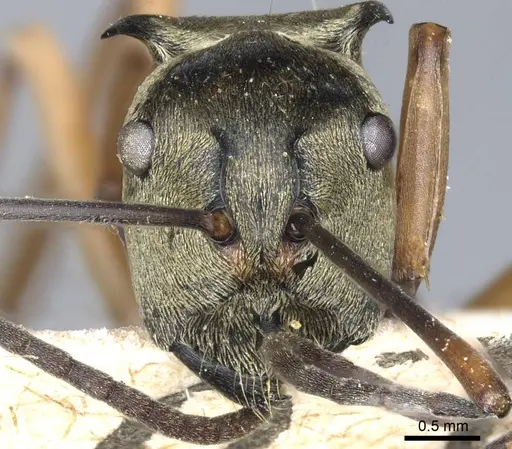
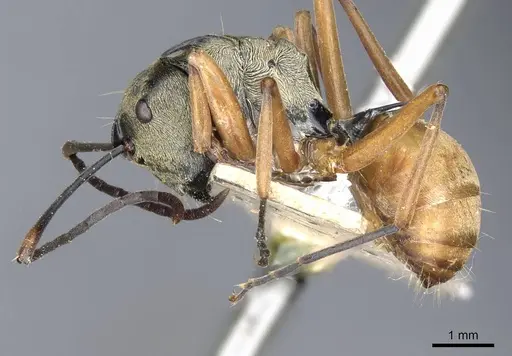
Polyrhachis semitestacea is a spiny ant native to New Guinea, belonging to the subgenus Myrma . Workers have a honey-yellow gaster that contrasts with their dark mesosoma and are slender with closely spaced petiole spines . Queens measure 10.53-10.89 mm in total length . This species is lignicolous, meaning it nests in rotting wood and uses silk to construct nests, with colonies having multiple connected nests . Unlike many ants, P. semitestacea lacks a sting and instead sprays formic acid as a defense mechanism, typical of Formicinae ants.
Quick Summary
- Difficulty: Medium
- Origin & Habitat: New Guinea (Australasian region), lignicolous nesting in rotting wood in tropical forests [2][3][4]
- Colony Type: Colonies are polydomic with multiple connected nests. Queen number is not specified in research.
- Size & Growth:
- Antkeeping:
- Behavior: Generally calm and non-aggressive. Escape risk is moderate due to climbing ability
- Common Issues: temperature must be kept warm for tropical species, lignicolous nesting requires wood-based housing, humidity control is critical to prevent brood death or mold
Housing and Nest Setup
Polyrhachis semitestacea requires lignicolous conditions, nesting in rotting wood and using silk to bind materials [2][3]. For captivity, use Y-tong (AAC), plaster, or naturalistic setups with rotting wood or cork bark. Ensure nesting material stays moist but never waterlogged. Provide an outworld connected to the nest for foraging.
Feeding and Diet
These ants are omnivorous. Offer constant sugar sources (sugar water, honey) and protein foods like small crickets or fruit flies 2-3 times per week. Remove uneaten prey after 24-48 hours to prevent mold.
Temperature and Humidity
Keep temperatures around 24-28°C, using a heating cable if needed for a gradient. Maintain moist nest substrate without waterlogging. No winter diapause is required for this tropical species.
Colony Structure and Dynamics
Colonies are polydomic, with multiple connected nests [2][3]. Queen number is not specified in research, so dynamics may vary. Provide multiple nesting areas if the colony grows.
Growth and Development
Queens are large at 10.53-10.89 mm TL [1]. Pupal cocoons are present [2][3]. Development to workers is estimated at 8-12 weeks at optimal temperatures.
Handling and Temperament
Workers are generally calm and non-aggressive. Standard escape prevention (e.g., Fluon on rims) is sufficient due to moderate climbing ability.
Frequently Asked Questions
How long does it take for Polyrhachis semitestacea to produce first workers?
Expect 8-12 weeks from egg to first worker at optimal temperatures, based on inferred patterns from related species.
Can I keep multiple Polyrhachis semitestacea queens together?
Queen number is unconfirmed from research, so it is unclear if multiple queens coexist. Polydomy is confirmed, but social structure is not specified.
What nest type is best for Polyrhachis semitestacea?
Y-tong, plaster, or wood-based nests are best, as this species is lignicolous and uses silk [2][3].
Do Polyrhachis semitestacea need hibernation?
No, as a tropical species, they do not require diapause. Keep temperatures stable year-round.
How big do Polyrhachis semitestacea colonies get?
Colony size is unknown from research. Polydomy is confirmed, but maximum worker count is not specified.
What do Polyrhachis semitestacea eat?
They are omnivorous, requiring sugar sources and protein foods regularly.
Are Polyrhachis semitestacea good for beginners?
They are rated Medium difficulty due to tropical requirements and specialized nesting, but their calm temperament may be forgiving.
Why is my Polyrhachis semitestacea colony dying?
Common causes include incorrect temperature, dry nest material, or poor humidity control. Check these factors first.
When should I move my colony to a formicarium?
Move when the founding setup becomes crowded, typically with 30-50 workers, using wood-based nests.
Report an Issue
The current care sheet is based fully on literature. See inconsistencies, or something that's incorrect? Please , it will be resolved after review from an admin. Contributing to the blogs tab also helps providing information, to make us be able to further improve the caresheets. Thank you for your support!
References

This caresheet is licensed under CC BY-SA 4.0 .
Community Blogs
CASENT0905608
View on AntWeb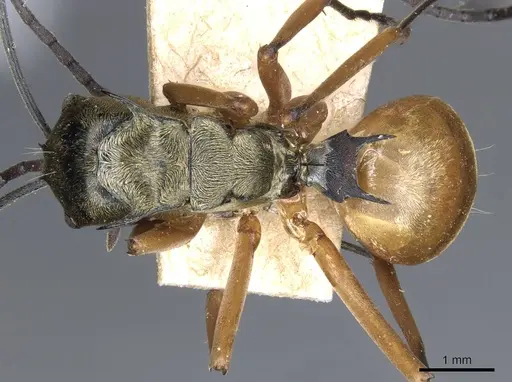
Literature
Loading distribution map...Loading products...