
Polyrhachis schellerichae
- Sci. Name
- Polyrhachis schellerichae
- Subgenus
- Myrmhopla
- Tribe
- Camponotini
- Subfamily
- Formicinae
- Author
- Dorow, 1996
- Distribution
- Found in 1 countries
Introduction
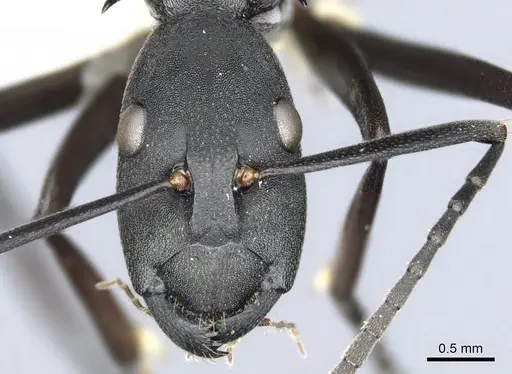
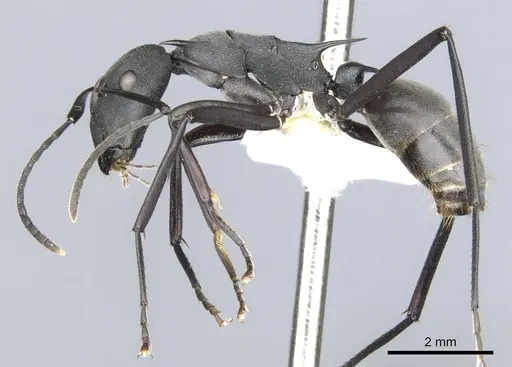
Polyrhachis schellerichae is a tropical ant species native to Malaysia, with workers up to 9.8 mm and queens up to 13.6 mm in total length . It belongs to the hector-group within the subgenus Myrmhopla and is found in West Malaysia, nesting exclusively inside giant bamboo culms . A key feature is its polydomous colony structure, where a single colony occupies multiple bamboo internodes and maintains a symbiotic relationship with mealybugs for honeydew feeding .
Quick Summary
- Difficulty: Expert
- Origin & Habitat: Tropical rainforests of West Malaysia, Ulu Gombak area at 240-500 meters elevation [1].
- Colony Type: Polydomous colonies with multiple nest sites, monogyne (single queen) [4][1].
- Size & Growth:
- Antkeeping:
- Temperature: Keep warm, roughly 24-28°C, based on tropical habitat [1].
- Humidity: Keep nest substrate consistently moist, mimicking bamboo internodes [1].
- Diapause: No, tropical species do not require hibernation [1].
- Nesting: Obligate bamboo dweller, provide artificial bamboo sections or PVC tubes sized to natural internodes (approx. 8 cm diameter) [2][1].
- Behavior: Diurnal and subordinate, will retreat from conflicts [1]. Workers forage individually and use trail pheromones for recruitment [1].
- Common Issues: Providing suitable nesting is extremely difficult due to obligate bamboo dwelling [2], Maintaining mealybug colonies for trophobiosis is challenging [1], Polydomous structure requires multiple connected chambers [1], High humidity needs can lead to mold if not managed [1], Tropical species cannot tolerate low temperatures [1]
The Bamboo Dwelling Specialization
Polyrhachis schellerichae is an obligate bamboo dweller, nesting inside hollow internodes of giant bamboo [2]. Colonies are polydomous, occupying multiple culms connected by worker trails [1]. In captivity, provide artificial bamboo sections or PVC tubes sized to natural dimensions (approx. 8 cm diameter) [2][1].
Trophobiosis and Feeding
This species maintains trophobiosis with mealybugs inside nests, feeding on honeydew [1]. In captivity, offer sugar water as a substitute, as replicating mealybug colonies is difficult [1].
Colony Structure and Behavior
Colonies are monogyne with a single queen, despite producing alate queens [4]. Workers are diurnal, subordinate, and use trail pheromones for recruitment [1].
Temperature and Environmental Needs
As a tropical species, keep temperatures warm (24-28°C) and humidity high, mimicking bamboo internode conditions [1]. No diapause is required [1].
Nesting in Captivity
Provide connected bamboo or PVC sections to support polydomous structure [2][1]. Nest interiors should not be lined, as ants do not modify bamboo walls [1].
Frequently Asked Questions
Can I keep Polyrhachis schellerichae in a regular formicarium?
No, this species is an obligate bamboo dweller and requires artificial bamboo sections or PVC tubes [2][1].
What do Polyrhachis schellerichae eat?
Their primary food is honeydew from mealybugs, in captivity, offer sugar water as a substitute [1].
How big do Polyrhachis schellerichae colonies get?
Mature colonies can have up to 7203 workers [1].
Do they need hibernation or diapause?
No, as a tropical species, they do not require hibernation [1].
How do I provide the mealybugs they need?
This is challenging, many keepers use sugar water instead of replicating mealybug colonies [1].
Are Polyrhachis schellerichae good for beginners?
No, this is an expert-level species due to specialized housing and care needs [1].
How many queens does a colony have?
Colonies are monogyne, with a single queen [4].
When do alates appear in the colony?
Alates are produced year-round in tropical conditions, but specific timing is not documented [1].
How do I connect multiple nest sections?
Use tubes to connect bamboo or PVC sections, allowing worker traffic between chambers [1].
Report an Issue
The current care sheet is based fully on literature. See inconsistencies, or something that's incorrect? Please , it will be resolved after review from an admin. Contributing to the blogs tab also helps providing information, to make us be able to further improve the caresheets. Thank you for your support!
References

This caresheet is licensed under CC BY-SA 4.0 .
Community Blogs
CASENT0903372
View on AntWeb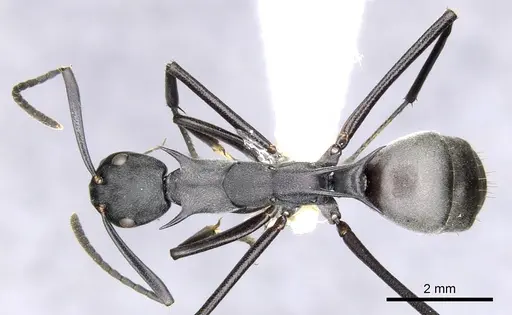
Literature
Loading distribution map...Loading products...