
Polyrhachis reclinata
- Sci. Name
- Polyrhachis reclinata
- Subgenus
- Myrmhopla
- Tribe
- Camponotini
- Subfamily
- Formicinae
- Author
- Emery, 1887
- Distribution
- Found in 2 countries
Introduction
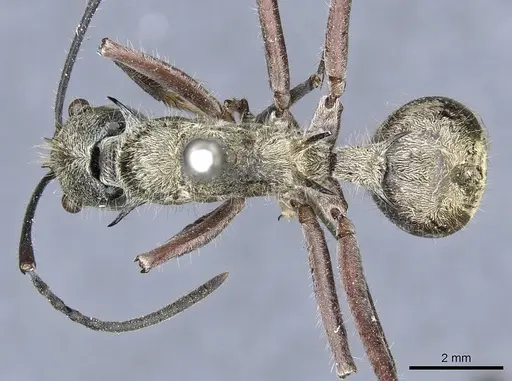
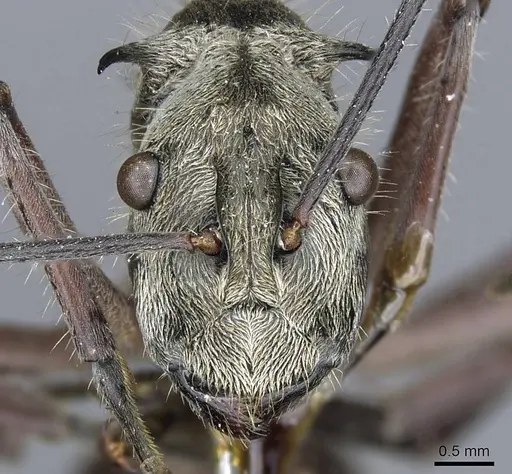
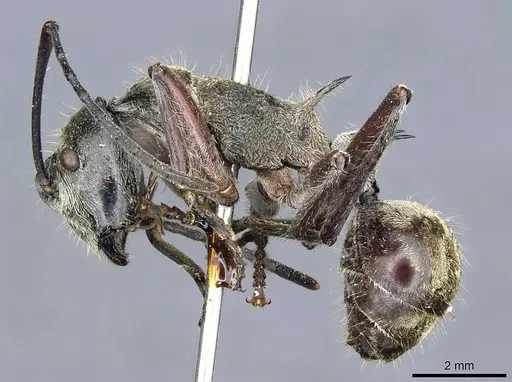
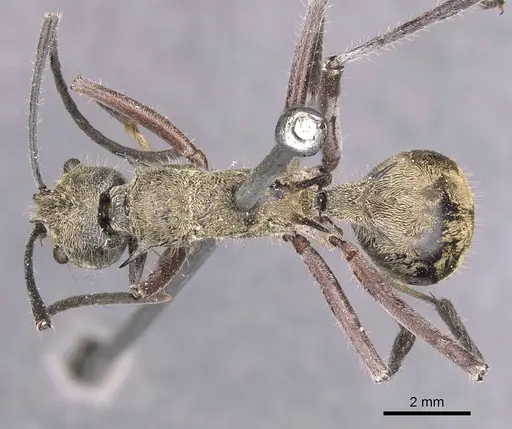
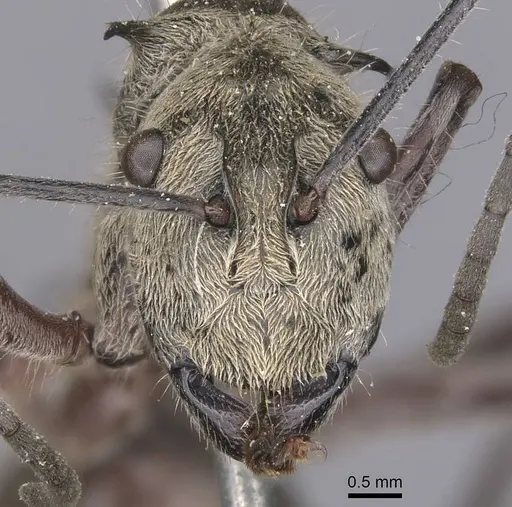
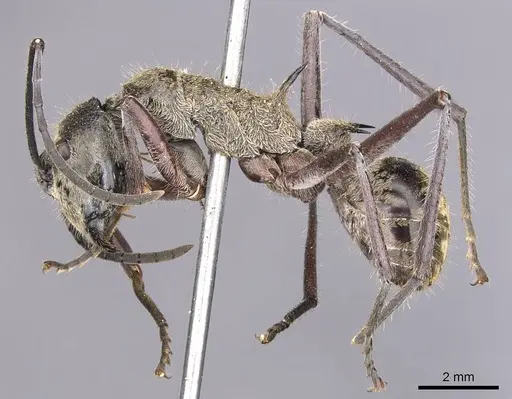
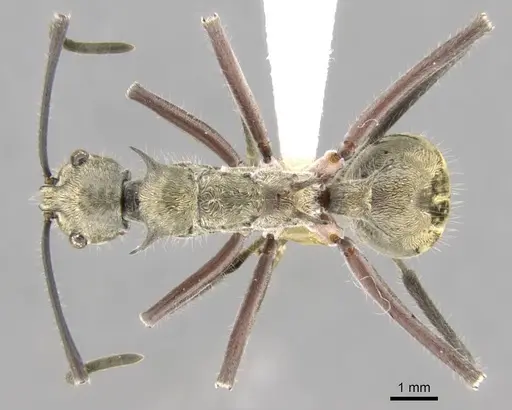
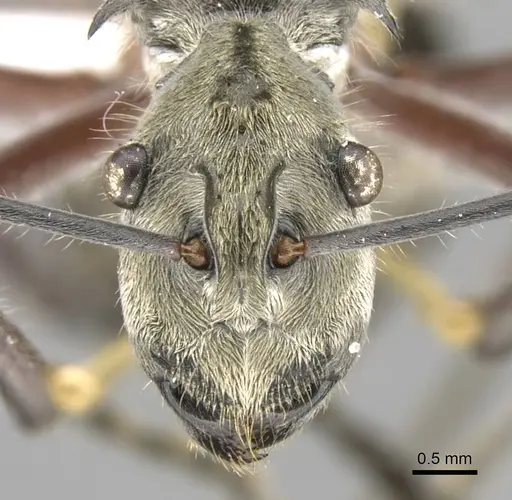
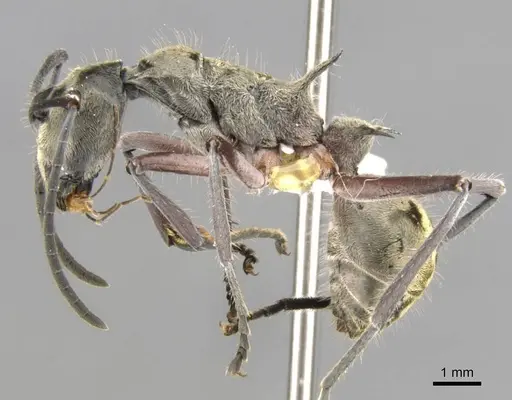
Polyrhachis reclinata is a medium-large arboreal ant species native to the lowland rainforests of southern New Guinea and northern Australia. Workers measure 11-14 mm and have a black body with reddish-brown propodeum and petiole, covered in dense golden pubescence. They belong to the sexspinosa species-group and are identified by long, curved propodeal spines and weak occipital lobes. Colonies nest in hollow bamboo internodes in monsoon rainforest . This species uses larval silk to construct nests in tree hollows, requiring vertical housing instead of typical soil setups. Their arboreal lifestyle means they need climbing opportunities and narrow chambers .
Quick Summary
- Difficulty: Medium
- Origin & Habitat: Lowland rainforest along the Gulf of Papua (Fly River delta, lower Busu River, Port Moresby area, Daru Island) and northern Australia (Queensland, from Lockerbie Scrub south to Iron Range). They nest primarily in hollow internodes of bamboo (Bambusa forbesii) [1][2].
- Colony Type: Colony structure is unconfirmed. Specific data on queen number or social structure is not available in the research.
- Size & Growth:
- Queen: 13.55-14.46 mm [1][2]
- Worker: 11.44-14.31 mm [1][2]
- Colony: Unknown, no specific data on maximum colony size
- Growth: Moderate
- Development: Estimated 6-8 weeks at optimal temperatures, based on typical Polyrhachis patterns [1] (Tropical species with faster development than temperate ants. Direct measurements not available.)
- Antkeeping:
- Temperature: Based on lowland rainforest habitat, keep at 24-28°C with a gentle gradient [1].
- Humidity: Keep nest substrate consistently moist but not waterlogged, based on rainforest conditions [1].
- Diapause: No diapause required, as this is a tropical species from lowland areas [1].
- Nesting: Arboreal specialists, nest in hollow bamboo or tree hollows. Provide vertical formicariums with narrow chambers (8-12 mm) and climbing structures. They use silk to seal gaps [3][4][5].
- Behavior: Workers are calm and not aggressive toward keepers. They are active foragers, excellent climbers, and primarily nocturnal. Escape prevention is important due to their agility. Silk-weaving behavior may cause them to block connections [3][4].
- Common Issues: arboreal nesting requirements mean standard soil formicariums are unsuitable, they need vertical spaces., high humidity needs can lead to mold if ventilation is poor., tropical temperature requirements mean they cannot tolerate cool rooms., silk-weaving behavior may cause them to seal chambers unexpectedly., wild-caught colonies may carry parasites from their native habitat.
Housing and Nest Setup
Polyrhachis reclinata requires arboreal-style housing that mimics bamboo nesting. Use vertical formicariums with narrow chambers (8-12 mm wide), bamboo sections, or DIY cardboard tubes. The nest should have multiple connected chambers for brood distribution. Provide materials like cotton or tissue for silk weaving. The outworld needs climbing structures like twigs or cork bark for foraging [3][4][5].
Feeding and Diet
This species is omnivorous. Offer sugar water or honey constantly, and protein like fruit flies or small crickets 2-3 times per week. Place food on elevated surfaces since they are arboreal foragers. Remove uneaten food to prevent mold [6].
Temperature and Humidity Management
Maintain temperatures at 24-28°C using a heating cable on one side of the nest. Humidity should be kept moist but not waterlogged, with regular misting. Monitor with a hygrometer and ensure good ventilation to avoid mold [1].
Silk Weaving Behavior
Workers use larval silk to construct barriers and seal chambers. This is normal behavior, do not interfere. Provide small amounts of suitable material like cotton fibers to support this [3][4][5].
Colony Founding and Growth
Founding behavior is unconfirmed. Queens are large, but no specific data on claustral or semi-claustral founding. After first workers emerge, growth is moderate. Do not disturb the queen during early stages [1][2].
Frequently Asked Questions
Can I keep Polyrhachis reclinata in a test tube?
Test tubes are not ideal. This species needs vertical space for arboreal nesting. Use a vertical formicarium or bamboo setup instead [3].
What is the best nest type for Polyrhachis reclinata?
Vertical nests with narrow chambers that simulate bamboo internodes work best. Avoid horizontal soil nests [3][4].
How long until first workers with Polyrhachis reclinata?
The development timeline is not specified in research, but based on typical Polyrhachis patterns, it may take 6-8 weeks at optimal temperatures [1].
Do Polyrhachis reclinata ants need hibernation?
No, as a tropical species from lowland rainforest, they do not require hibernation. Keep temperatures stable year-round [1].
Are Polyrhachis reclinata good for beginners?
This species is rated medium difficulty due to specific arboreal and humidity needs. Beginners may find it challenging [1].
What do Polyrhachis reclinata eat?
They are omnivorous. Offer sugar water and protein like small insects several times a week [6].
Why is my Polyrhachis reclinata colony declining?
Common causes include temperatures below 24°C, improper humidity, unsuitable nesting setup, or stress. Check all parameters [1].
Can I keep multiple Polyrhachis reclinata queens together?
Colony structure is unconfirmed. Most Polyrhachis species are single-queen, so housing multiple queens may lead to fighting [1].
What temperature is ideal for Polyrhachis reclinata?
Keep them at 24-28°C with a gentle gradient, based on their tropical habitat [1].
Report an Issue
The current care sheet is based fully on literature. See inconsistencies, or something that's incorrect? Please , it will be resolved after review from an admin. Contributing to the blogs tab also helps providing information, to make us be able to further improve the caresheets. Thank you for your support!
References

This caresheet is licensed under CC BY-SA 4.0 .
Community Blogs
Literature
Loading distribution map...Loading products...