
Polyrhachis pilosa
- Sci. Name
- Polyrhachis pilosa
- Subgenus
- Cyrtomyrma
- Tribe
- Camponotini
- Subfamily
- Formicinae
- Author
- Donisthorpe, 1938
- Distribution
- Found in 1 countries
Introduction
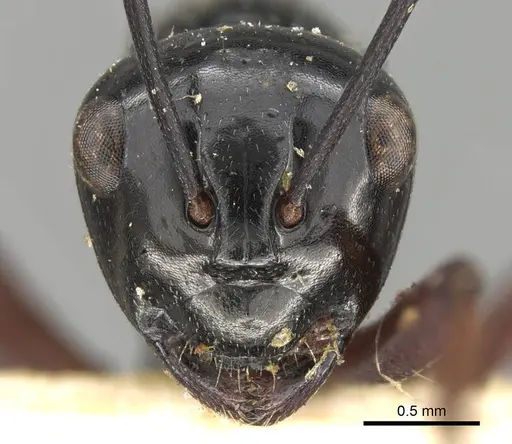
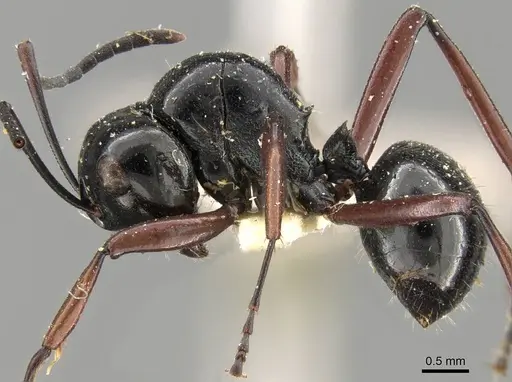
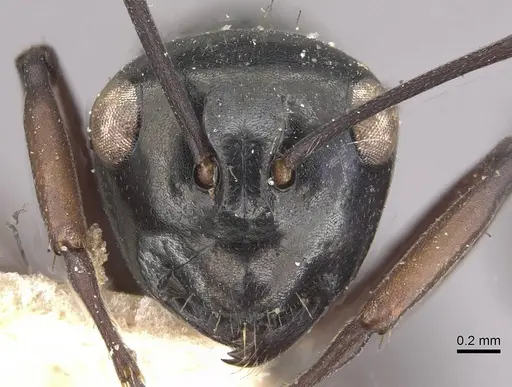
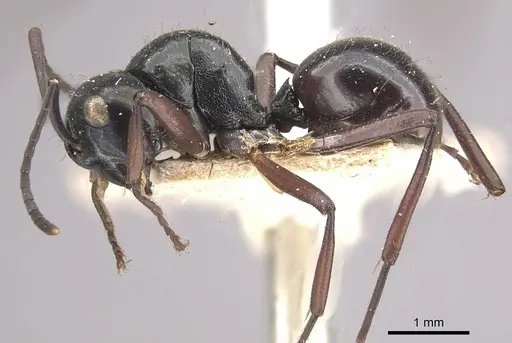
Polyrhachis pilosa is a medium-sized arboreal ant native to eastern Australia, easily recognized by its dense covering of long, erect hairs on the head and mesosoma . Workers are about 6-8 mm long with an evenly convex mesosomal dorsum, unarmed propodeum, and subequal petiolar spines . They are weaver ants that build silk nests between leaves using larval silk, but they lack pupal cocoons . Metapleural glands are absent . What makes this species interesting for antkeepers is its adaptability. In recent years, it has become common in suburban parks and gardens, nesting not only between leaves but also in artificial cavities around houses, like door and window frames . This flexibility might make captive care more forgiving than for other arboreal nesters.
Quick Summary
- Difficulty: Medium
- Origin & Habitat: Eastern Australia: from Townsville, Queensland south to Taree in northern New South Wales. Found in rainforests, forested areas, and increasingly in suburban gardens. Recorded at elevations from 200 m to 1200 m [1][4].
- Colony Type: Colony structure is not documented for this species. Based on genus patterns, likely monogyne (single queen), but unconfirmed.
- Size & Growth:
- Queen: Size data unavailable, inferred from Polyrhachis genus (~10 mm)
- Worker: ~6-8 mm [1]
- Colony: Unknown, likely several hundred workers based on related Polyrhachis species
- Growth: Moderate
- Development: Estimated 6-8 weeks at optimal temperature (based on Formicinae patterns) (Specific data for P. pilosa is unavailable, inferred from related species.)
- Antkeeping:
- Temperature: Keep at 24-28 °C, mimicking their subtropical habitat. Provide a gradient. Avoid direct strong heat sources. [1]
- Humidity: Moderate to high, keep nest substrate moist but not waterlogged. Good ventilation needed to prevent mold on silk. [1]
- Diapause: Unknown, likely a mild winter slowdown given Australian distribution. Reduce to 18-20 °C for a few winter months.
- Nesting: Arboreal weaver ants that use larval silk and spider silk to bind leaves [2][5]. In captivity, provide vertical climbing surfaces (branches, cork bark, live plants). Y‑tong or plaster nests with added plant material work. Avoid fully enclosed nests without climbing.
- Behavior: Generally calm and non-aggressive. Workers are active foragers that explore vertical spaces. Moderate escape risk due to size, standard barriers (fluon, oil) work well. They spend significant time weaving silk structures.
- Common Issues: silk nest collapse from disturbance or poor humidity, handle gently and maintain stable moisture., mold on silk structures from excessive humidity without ventilation, balance moisture with airflow., escape through small gaps despite medium size, seal all openings in enclosure., stress from frequent relocation, allow colony to settle before intervening., overheating from direct heat sources, provide shaded areas and a temperature gradient.
Housing and Nest Setup
Polyrhachis pilosa needs an arboreal setup with vertical nesting and weaving substrates. Unlike ground-nesters, they must connect leaves, bark, or other materials with silk [2]. A naturalistic vivarium with live plants (e.g., pothos, ferns) lets them weave between leaves. Alternatively, a Y‑tong nest connected to an outworld with climbing branches or cork bark works well. Provide a water reservoir in the nest to maintain humidity, but ensure good airflow to prevent mold on silk. Avoid fully enclosed nests without climbing surfaces.
Feeding and Diet
Polyrhachis pilosa is omnivorous, with a preference for protein-rich foods. Offer small insects like fruit flies, pinhead crickets, and mealworms. Sugar sources (honey water, sugar water diluted 1:10) should be available at all times. Feed protein 2‑3 times per week, adjusting portions based on colony size. Remove uneaten prey after 24 hours to prevent mold. Fresh water must be provided.
Temperature and Heating
Maintain temperatures between 24‑28 °C for optimal colony health [1]. This species comes from subtropical to tropical eastern Australia, so they prefer warmth. Room temperature (22‑24 °C) is acceptable but may slow development. Use a small heating cable or mat on the side or top of the nest (not underneath) to create a gradient. Avoid direct strong lighting that could overheat the enclosure.
Weaving Behavior and Colony Maintenance
Polyrhachis pilosa weaves larval silk and often incorporates spider silk into nests [6][5]. Workers use their larvae to produce silk and bind leaves together. To encourage weaving, provide multiple small leaves, moss, or flexible artificial materials. Minimize disturbance to newly built nests to prevent abandonment. Observe them coordinating leaf positioning – a unique behavior for antkeepers.
Seasonal Care and Winter Period
Specific diapause requirements are unknown for P. pilosa. Their Australian range suggests a mild winter slowdown rather than deep hibernation. During winter (June–August in the Southern Hemisphere), reduce temperature to 18‑20 °C and feed less often. Do not cool below 15 °C. Resume normal care in spring as activity increases. [1]
Frequently Asked Questions
Can I keep Polyrhachis pilosa in a test tube?
No, test tubes are unsuitable. They are arboreal weaver ants that need vertical space and materials to weave. Use a naturalistic setup with live plants or a Y‑tong nest with climbing structures.
How long until first workers in Polyrhachis pilosa?
Based on typical Formicinae development, expect first workers around 6‑8 weeks after eggs are laid at 26 °C. Specific data for this species is unavailable.
Are Polyrhachis pilosa good for beginners?
Rated medium difficulty. They are more adaptable than some arboreal species (they will nest in artificial cavities), but their weaving behavior requires a more complex setup than ground-nesting ants. Best for keepers with some experience.
What do Polyrhachis pilosa eat?
Omnivorous: small insects (fruit flies, crickets, mealworms) and sugar water. Feed protein 2‑3 times weekly, keep sugar water always available.
When should I move Polyrhachis pilosa to a formicarium?
Move when the colony has about 30‑50 workers and you have a proper arboreal setup with weaving materials. Use a naturalistic vivarium rather than a standard formicarium.
Do Polyrhachis pilosa need hibernation?
Probably a mild winter slowdown rather than deep hibernation. Reduce temperature to 18‑20 °C for a few winter months and reduce feeding. Avoid dramatic cooling.
Why is my Polyrhachis pilosa colony not weaving?
They need appropriate materials (leaves, moss) and calm conditions. Ensure humidity above 60%, provide small weaving materials, and minimize disturbance. New colonies may take time to start.
Can I keep multiple queens together?
Colony structure is unconfirmed. Based on typical Polyrhachis patterns, they are likely monogyne. Do not combine unrelated queens without evidence.
How big do Polyrhachis pilosa colonies get?
Unknown. Based on related species, colonies likely reach several hundred workers. Specific data unavailable.
Report an Issue
The current care sheet is based fully on literature. See inconsistencies, or something that's incorrect? Please , it will be resolved after review from an admin. Contributing to the blogs tab also helps providing information, to make us be able to further improve the caresheets. Thank you for your support!
References

This caresheet is licensed under CC BY-SA 4.0 .
Community Blogs
CASENT0906790
View on AntWeb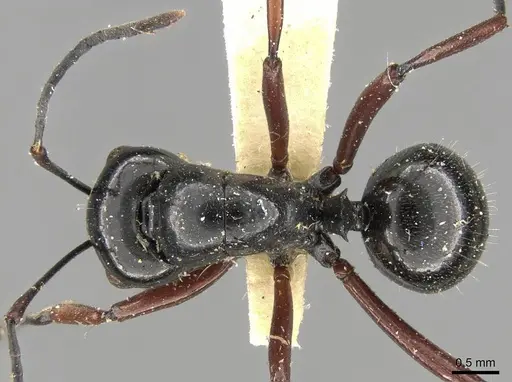
CASENT0910964
View on AntWeb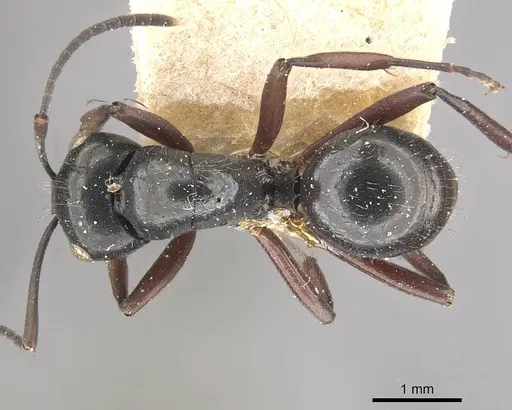
Literature
Loading distribution map...Loading products...