
Polyrhachis paxilla
- Sci. Name
- Polyrhachis paxilla
- Subgenus
- Hagiomyrma
- Tribe
- Camponotini
- Subfamily
- Formicinae
- Author
- Smith, 1863
- Distribution
- Found in 2 countries
Introduction
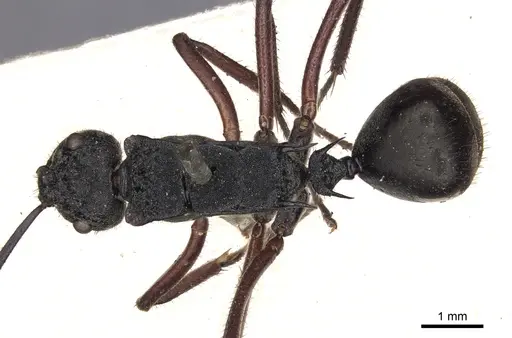
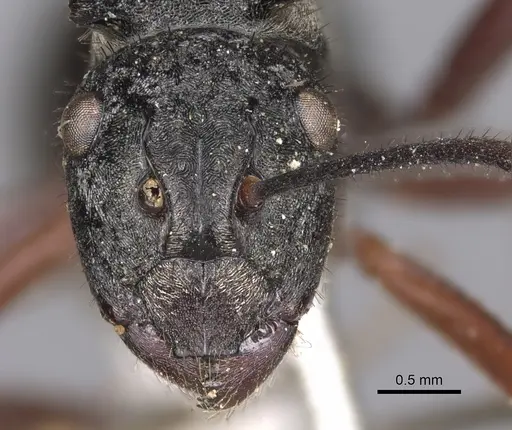
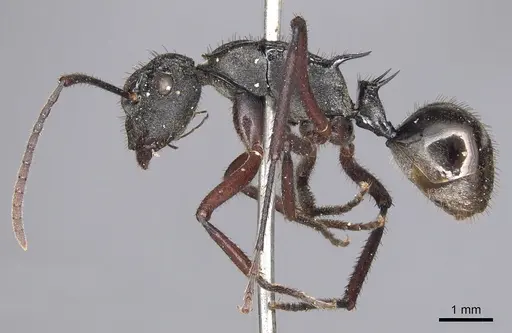
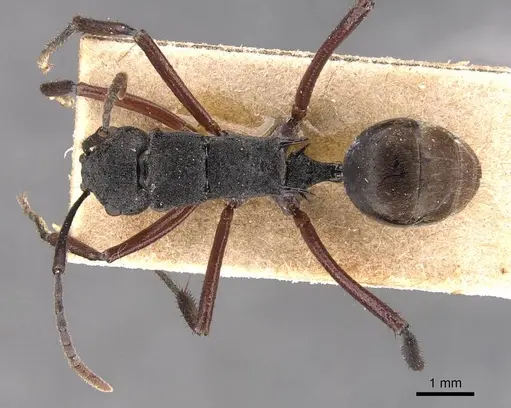
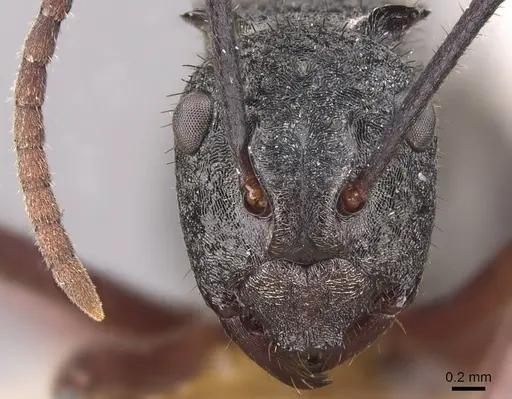
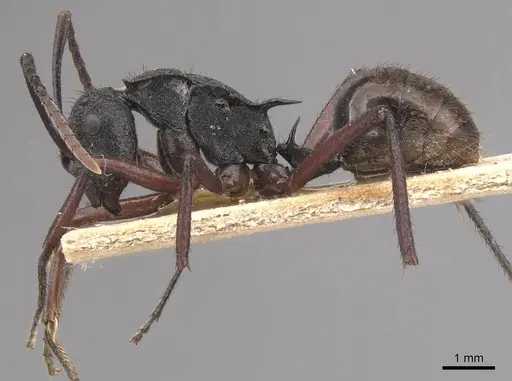
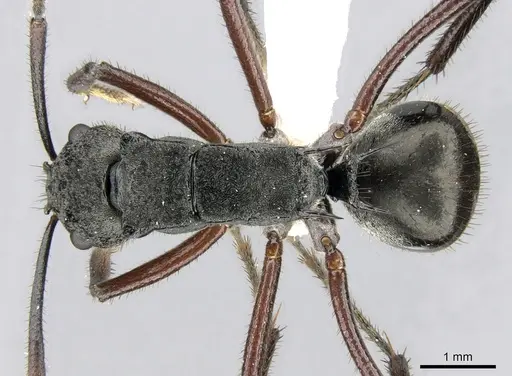
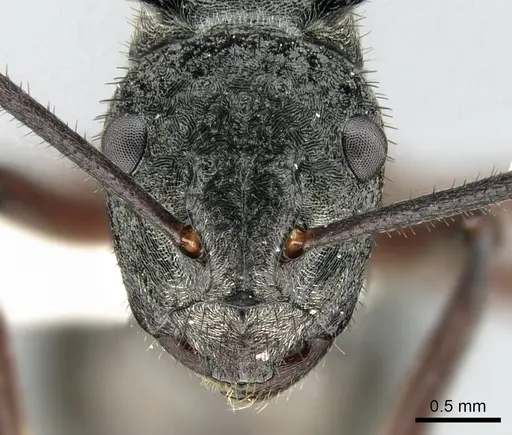
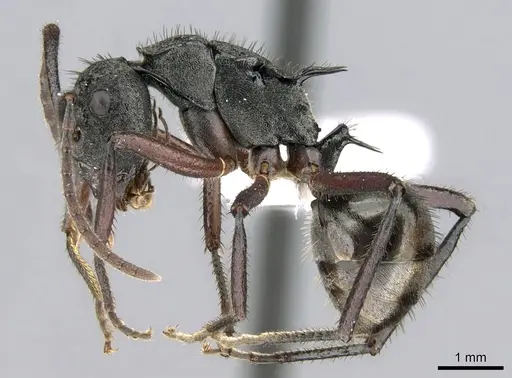
Polyrhachis paxilla is a medium-sized ant with distinctive vermiculate-rugose sculpturation on the head, mesosoma, and petiole. Workers measure up to 8.92 mm in total length . They are native to Indonesia, Papua New Guinea, and Cape York Peninsula in Australia, nesting in dry hollow bamboo internodes in lowland rainforest edges . As a member of the Formicinae subfamily, they lack a functional sting and instead spray formic acid for defense.
Quick Summary
- Difficulty: Medium
- Origin & Habitat: Indonesia, Papua New Guinea, and Cape York Peninsula in Australia. Found in lowland rainforest edges within swampy grassland, nesting in dry hollow bamboo [1][2].
- Colony Type: Colony structure is unconfirmed. No research data on queen number or social structure.
- Size & Growth:
- Antkeeping:
- Temperature: Keep warm, roughly 24-28°C, based on tropical distribution [1]. Use a heating element to create a gentle gradient.
- Humidity: Provide a humidity gradient with dry nesting areas, based on lignicolous habits [1][2]. Keep nest substrate moist but not waterlogged.
- Diapause: No, tropical species does not require hibernation [1]. Maintain stable warm temperatures year-round.
- Nesting: Lignicolous (wood-nesting). Provide nests with dry wood cavities or bamboo-style chambers, such as Y-tong or plaster nests [1][2].
- Behavior: Based on Formicinae patterns, they are generally calm and non-aggressive, spraying formic acid for defense. As arboreal ants, they are good climbers and may attempt to escape. Standard escape prevention is recommended due to their small size.
- Common Issues: temperatures below 22°C may slow activity and harm the colony, keep warm year-round, over-humid conditions can cause mold in dry-nesting species, maintain a moisture gradient, colony size is unknown, growth expectations are uncertain, founding behavior is unconfirmed, new keepers should expect a variable claustral period, escape risk is moderate due to arboreal nature, ensure barriers are secure
Nest Preferences and Housing
Polyrhachis paxilla is a lignicolous species that naturally nests in wood cavities, such as dry hollow bamboo internodes [1][2]. For captivity, use Y-tong (AAC) nests or plaster nests with carved wood-style tunnels. Provide dry nesting chambers to match their natural habitat. Avoid constantly damp substrates to prevent mold. Since they are arboreal, include vertical space for exploration. Standard escape prevention like fluon barriers is sufficient due to their moderate size.
Feeding and Diet
Polyrhachis ants are omnivorous, feeding on sugar sources and protein. Offer sugar water or honey constantly, and provide protein prey like fruit flies or small insects 2-3 times per week. Remove uneaten prey after 24-48 hours to prevent mold. Diet preferences may vary by colony, so observe and adjust.
Temperature and Seasonal Care
As a tropical species, keep temperatures around 24-28°C for optimal activity [1]. Use a heating cable on one side to create a gradient. Temperatures below 22°C may harm the colony. No hibernation is needed due to tropical distribution.
Behavior and Temperament
Workers are generally calm and non-aggressive. They spray formic acid for defense, as typical of Formicinae. As arboreal ants, they climb well and may explore vertically. Escape risk is moderate, ensure barriers are secure. They are easy to observe due to their distinctive appearance. [1]
Colony Development and Growth
Little specific data exists on colony development. Founding behavior is unconfirmed, but claustral founding is likely based on genus patterns. Colony growth is unknown, expect moderate development if conditions are stable. Patience is key during the founding phase.
Humidity and Water
Provide a humidity gradient with dry nesting areas, based on their lignicolous habits [1][2]. Keep nest substrate moist but not waterlogged. Offer a water source in the outworld, such as a test tube with cotton. Mist the outworld occasionally, but avoid direct misting of the nest.
Frequently Asked Questions
How long does it take for Polyrhachis paxilla to produce first workers?
The exact timeline is unknown. No species-specific data is available, so expect variability based on temperature and conditions.
What is the best nest type for Polyrhachis paxilla?
Y-tong (AAC) nests or plaster nests with wood-style tunnels work best, as they are lignicolous ants [1][2].
Do Polyrhachis paxilla ants need hibernation?
No, as a tropical species, they do not require hibernation [1].
Are Polyrhachis paxilla good for beginners?
They are rated Medium difficulty due to specific temperature and nesting needs. Beginners should ensure they can maintain warm conditions.
What do Polyrhachis paxilla eat?
They are omnivorous. Offer sugar sources constantly and protein prey like small insects 2-3 times per week.
How big do Polyrhachis paxilla colonies get?
The maximum colony size is unknown. No data is available on colony size.
Can I keep multiple queens together?
This is unknown. No research exists on colony structure for this species.
When should I move Polyrhachis paxilla to a formicarium?
Wait until the colony has several workers and is actively foraging. Do not disturb during the founding phase.
Why is my Polyrhachis paxilla colony declining?
Check temperature first, they need warm conditions. Ensure the nest is not too humid and that feeding is adequate.
Report an Issue
The current care sheet is based fully on literature. See inconsistencies, or something that's incorrect? Please , it will be resolved after review from an admin. Contributing to the blogs tab also helps providing information, to make us be able to further improve the caresheets. Thank you for your support!
References

This caresheet is licensed under CC BY-SA 4.0 .
Community Blogs
Literature
Loading distribution map...Loading products...