
Polyrhachis osae
- Sci. Name
- Polyrhachis osae
- Subgenus
- Myrmatopa
- Tribe
- Camponotini
- Subfamily
- Formicinae
- Author
- Mann, 1919
- Distribution
- Found in 1 countries
Introduction
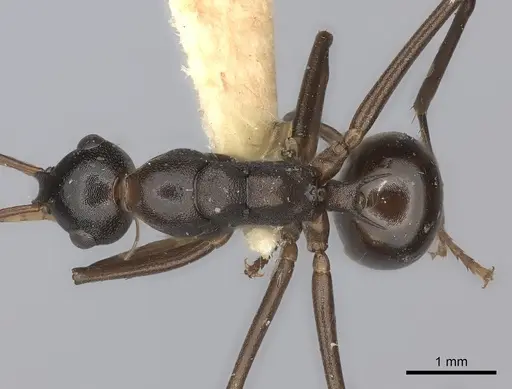
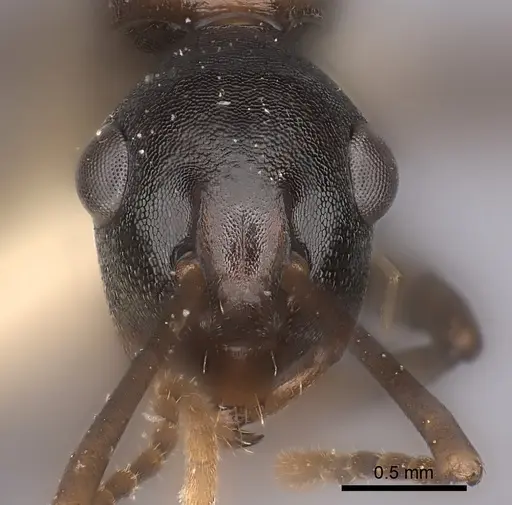
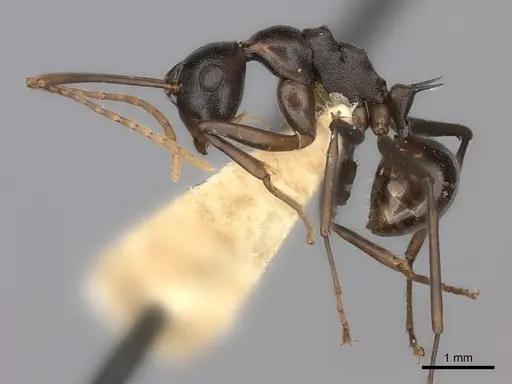
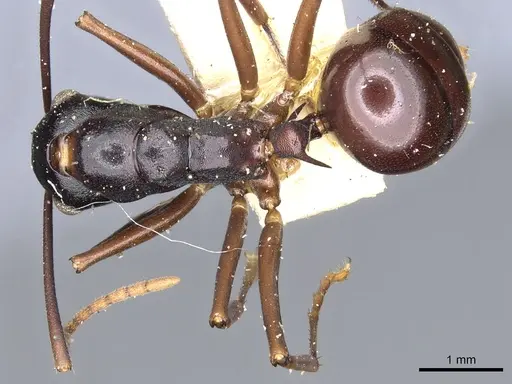
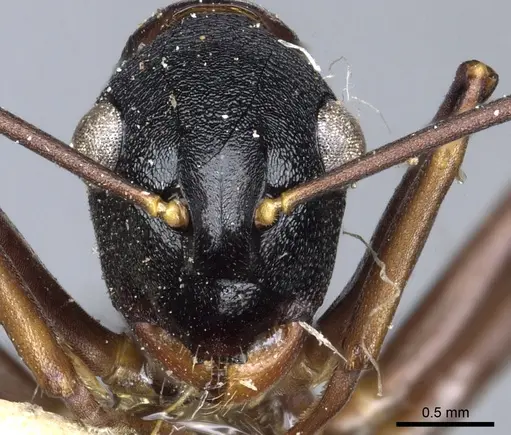
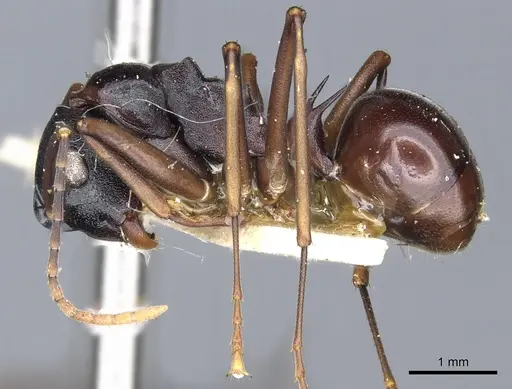
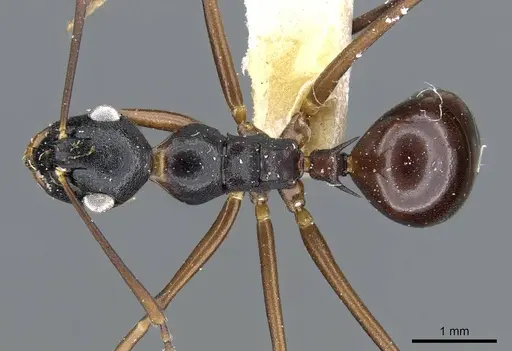
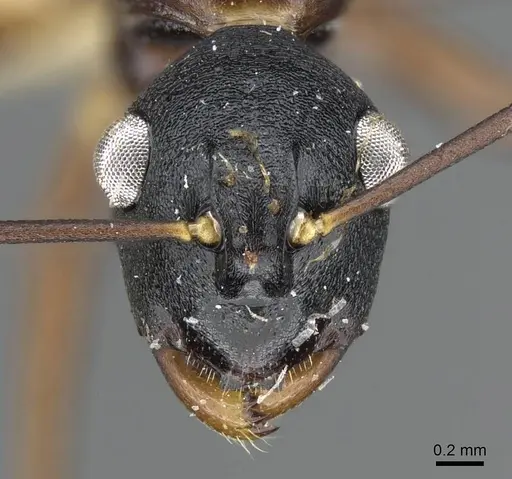
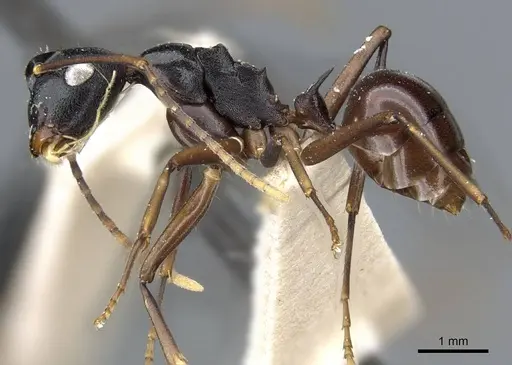
Polyrhachis osae is a tropical arboreal ant native to the Solomon Islands islands of Makira, Guadalcanal, Ugi, and San Cristoval . Workers are moderate-sized spiny ants with hooked spines on the thorax typical of the genus. First described by Mann in 1919 from workers and queens , this species builds nests in trees using silk and carton material, and unlike most Formicinae, their larvae produce no cocoons - they spin naked pupae . They belong to the subgenus Myrmatopa and colonies contain multiple queens .
Quick Summary
- Difficulty: Medium
- Origin & Habitat: Solomon Islands (Makira, Guadalcanal, Ugi, San Cristoval), tropical rainforest, canopy and understory [1][2].
- Colony Type: Polygyne, colonies naturally contain multiple co‑existing queens, which is unusual for Formicinae [4].
- Size & Growth:
- Queen: Estimated 8-10 mm based on Polyrhachis patterns, direct measurements not available.
- Worker: Estimated 5-7 mm based on Polyrhachis patterns.
- Colony: Up to several hundred workers, estimate based on related species.
- Growth: Moderate
- Development: Estimated 6-8 weeks at 25-28°C based on related species [3]. (No cocoon stage means pupae are delicate. Development is continuous year‑round because they are tropical.)
- Antkeeping:
- Temperature: 24-28°C, avoid prolonged temps below 22°C. Provide a gentle warm gradient [3].
- Humidity: High humidity essential, aim for 70-85% or keep nest substrate consistently moist. Mist outworld if needed [3][4].
- Diapause: No, tropical species, no hibernation needed.
- Nesting: Arboreal, prefer vertical structures. Use Y‑tong (AAC), cork bark, or naturalistic setups with branches. They use silk to bind materials, so provide soft material like cotton or leaf litter [3][4].
- Behavior: Calm and non‑aggressive. Forage mainly on elevated surfaces. As Formicinae, they lack a sting and defend by spraying formic acid. Escape risk moderate, good climbers but not tiny, standard fluon or oil barriers work.
- Common Issues: dry conditions kill colonies, maintain high humidity., lack of vertical space is unnatural, provide climbing structures., cold spells (below 22°C) can cause rapid decline, not dormancy., naked pupae are easily damaged, avoid disturbing the nest during pupal stage., multiple queens mean alates may be produced less often as resources are shared.
Housing and Nest Setup
Polyrhachis osae needs an arboreal nest with vertical space. Use Y‑tong (AAC), cork bark, or a naturalistic setup with branches. They use silk to bind materials, so provide small pieces of cotton or soft leaves they can incorporate into the nest [3]. A test tube works only for a founding queen or tiny colony, switch to a vertical nest once a dozen workers emerge. The outworld should include climbing surfaces like mesh or branches. Keep humidity high: moisten the nest substrate regularly, but avoid waterlogging. These tropical ants suffer quickly if the air is too dry.
Feeding and Diet
Omnivorous foragers. In the wild they likely hunt small insects and gather honeydew. In captivity offer a constant source of sugar water or honey, and protein 2-3 times per week, fruit flies, small crickets, or chopped mealworms. Place food on elevated surfaces because they prefer foraging off the ground. Remove uneaten prey after 24 hours to prevent mold. Fresh water should always be available.
Temperature and Seasonal Care
Maintain a steady 24-28°C. This tropical species does not hibernate, cool conditions cause rapid decline, not dormancy. Use a heat cable or mat on one side of the nest to create a gradient, allowing the colony to choose its preferred temperature. Avoid drafts and sudden drops. Stability matters more than hitting an exact number. [3][1]
Colony Structure and Multi‑Queen Care
This species is confirmed polygyne: multiple egg‑laying queens coexist peacefully in the same nest [4]. Unlike monogyne ants, you can keep several foundresses together from the start, and the colony will accept multiple queens long‑term. Because resources are split among queens, alate production may be slower or less frequent than in single‑queen colonies. They are not polydomous, they use only one nest at a time [3].
Growth and Development
Polyrhachis osae lacks cocoons, larvae turn directly into naked pupae [3]. That makes the pupal stage vulnerable to disturbance and mold. Avoid opening the nest during pupal development. Egg‑to‑worker takes about 6-8 weeks at optimal tropical temperatures, based on related Polyrhachis. Nanitics are smaller than mature workers but start foraging right away. Colony growth speeds up as more workers become available.
Frequently Asked Questions
Can I keep Polyrhachis osae in a test tube?
A test tube works for a new queen or very small colony, but these arboreal ants do much better in a vertical nest with climbing structures. Switch to a Y‑tong or cork‑bark nest once you have about 10 workers.
How long until first workers with Polyrhachis osae?
Expect 6-8 weeks from egg to worker at 25-28°C. This is an estimate based on related species, we don't have exact data for P. osae.
Can I keep multiple queens together?
Yes, the species is polygyne, so multiple queens naturally coexist. You can start a colony with several foundresses or add queens later.
What temperature do Polyrhachis osae need?
24-28°C year‑round. They cannot handle cool temperatures and have no winter dormancy.
Are Polyrhachis osae good for beginners?
They are medium difficulty. The main challenges are keeping humidity high and providing the right vertical nest. If you have experience with tropical ants, they can be rewarding.
Do Polyrhachis osae need hibernation?
No, this tropical species does not hibernate. Keep consistent warmth all year.
How big do Polyrhachis osae colonies get?
Exact size is unknown, but related Polyrhachis can reach several hundred workers. With multiple queens the colony may grow more slowly but can be very long‑lived.
What do Polyrhachis osae eat?
They are omnivorous. Provide constant sugar water or honey and protein (fruit flies, small crickets) a few times a week. Offer food on raised surfaces.
Why are my Polyrhachis osae dying?
Most common causes: low humidity (below 60%) or temperatures below 22°C. Check your setup and make sure the nest is properly heated and moist. They are also good climbers, so ensure escape barriers are working.
Report an Issue
The current care sheet is based fully on literature. See inconsistencies, or something that's incorrect? Please , it will be resolved after review from an admin. Contributing to the blogs tab also helps providing information, to make us be able to further improve the caresheets. Thank you for your support!
References

This caresheet is licensed under CC BY-SA 4.0 .
Community Blogs
Literature
Loading distribution map...Loading products...