
Polyrhachis olybria
- Sci. Name
- Polyrhachis olybria
- Tribe
- Camponotini
- Subfamily
- Formicinae
- Author
- Forel, 1912
- Distribution
- Found in 4 countries
Introduction
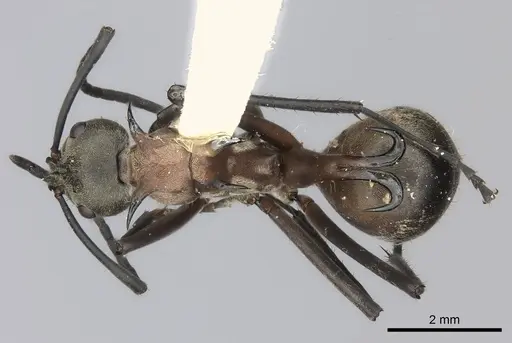
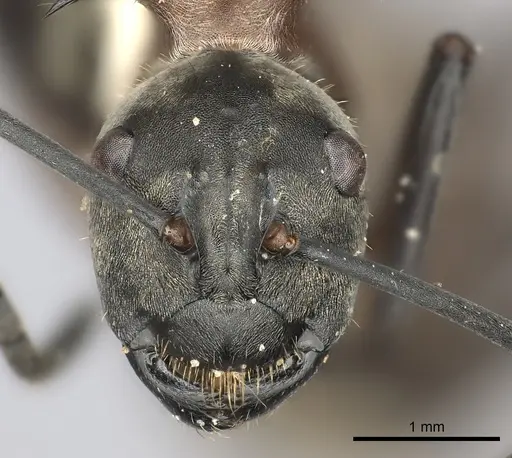
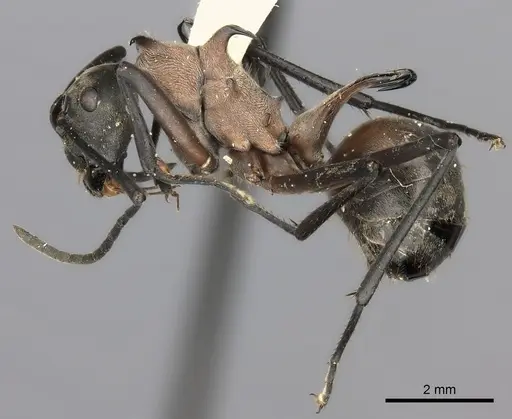
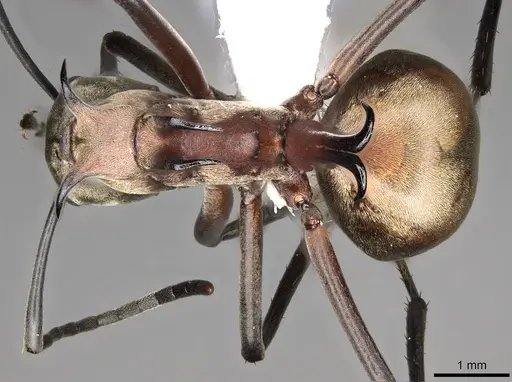
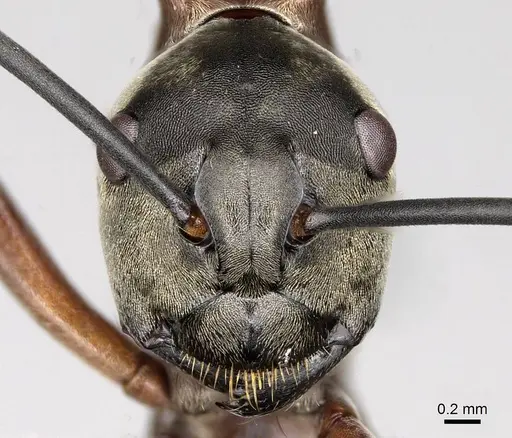
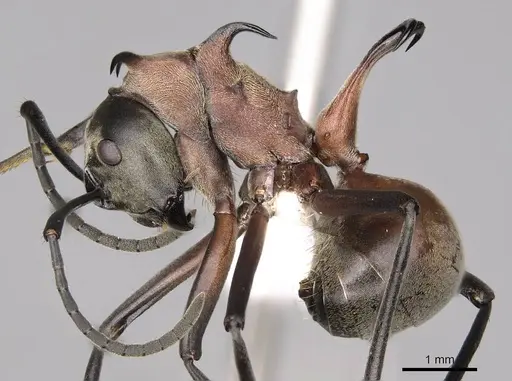
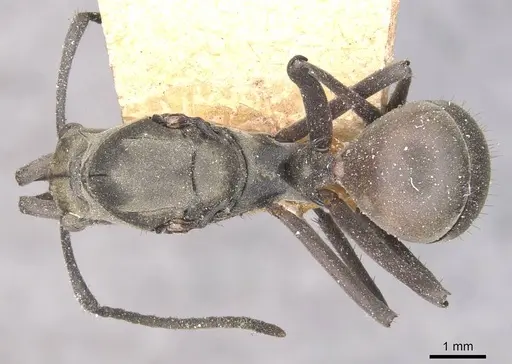
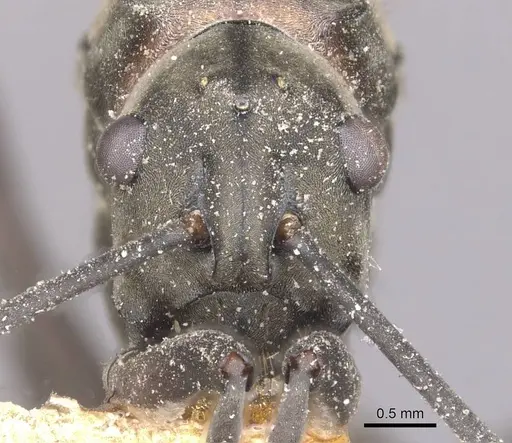
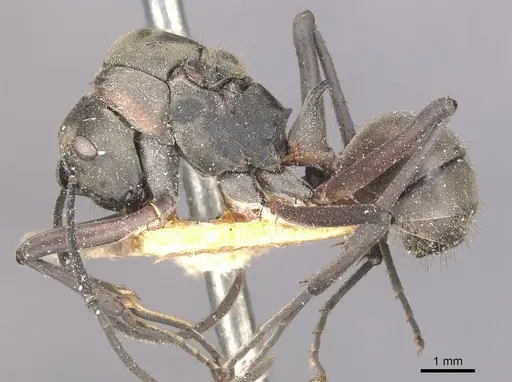
Polyrhachis olybria is a large spiny ant found across Southeast Asia, including Thailand, peninsular Malaysia, Singapore, Borneo, Sumatra, Java, and the Philippines . Workers measure 8.11-9.88 mm in total length, and queens measure 10.08-11.24 mm . They have a reddish-brown first gastral segment and sharp spines on the pronotum, mesonotum, and propodeum . Unlike many Polyrhachis species, this ant nests terrestrially in the ground or in rotten logs . What sets P. olybria apart is its ground-nesting behavior. Most Polyrhachis ants are arboreal, but this species is an exception, living on the forest floor . This makes it a unique choice for antkeepers seeking a terrestrial species with striking appearance.
Quick Summary
- Difficulty: Medium
- Origin & Habitat: Southeast Asia, Thailand, peninsular Malaysia, Singapore, Borneo, Sumatra, Java, and Philippines. Found in tropical rainforest environments, typically nesting in the ground or in rotten logs [1][2].
- Colony Type: Monogyne (single queen) colonies with multiple nests per colony [3]. Each colony maintains several connected nest sites.
- Size & Growth:
- Antkeeping:
- Temperature: Keep at 24-28°C, based on tropical range [1].
- Humidity: Keep nest substrate consistently moist but not waterlogged, matching their rainforest origin [1].
- Diapause: Unknown, no specific data, but as a tropical species, diapause is unlikely.
- Nesting: Terrestrial nesting in moist substrate. Y-tong or plaster nests work well. They prefer multiple connected nest sites [3].
- Behavior: Workers are diurnal and forage actively during the day [5]. They tend hemipterans for honeydew [5]. Generally calm and non-aggressive. Escape risk is moderate due to size, use standard barriers like fluon.
- Common Issues: multi-nest structure requires more space than single-nest species., high humidity needs can lead to mold if ventilation is poor., ground-nesting behavior requires deeper substrate or appropriate nest chambers., large size and diurnal activity make them more visible., wild-caught colonies may be difficult to establish due to stress from collection.
Housing and Nest Setup
Polyrhachis olybria is a terrestrial nester, so they need setups with moist soil or substrate. Use Y-tong (AAC) or plaster nests with chambers scaled to their large size [1]. Because they naturally have multiple nests per colony, consider connecting two or three nest areas with tubing to mimic their wild structure [3]. Keep the nest dark and humid, as they prefer underground conditions [1].
Feeding and Diet
In the wild, P. olybria tends hemipterans for honeydew [5]. In captivity, offer sugar water or honey constantly, and protein like mealworms 2-3 times per week. Remove uneaten prey after 24-48 hours to prevent mold.
Temperature and Humidity
Keep temperatures at 24-28°C, as they are from tropical regions [1]. Humidity should be high, keep the nest substrate moist but not waterlogged. A water tube can help maintain moisture.
Colony Structure and Growth
Colonies are monogyne with multiple nest sites [3]. Queens are large, and workers have distinctive spines. Brood develops in cocoons [4]. Growth is moderate, but exact colony size is unknown.
Behavior and Observation
Workers are diurnal and calm, foraging during the day [5]. They form trails between nest sites [3]. Their large size and spines make them easy to observe, but they prefer dark, humid conditions.
Frequently Asked Questions
How long does it take for Polyrhachis olybria to produce first workers?
No specific data is available. Development time is unknown, but cocoons are present [4].
Can I keep multiple Polyrhachis olybria queens together?
No. This species is monogyne, colonies have a single queen [3]. Multiple queens will fight.
What do I feed Polyrhachis olybria?
Offer sugar water or honey constantly, and protein like mealworms 2-3 times per week [5].
Are Polyrhachis olybria good for beginners?
They are intermediate due to specific humidity and temperature needs [1]. Their large size and calm temperament make them manageable, but they require more space for multiple nests [3].
When should I move my colony to a formicarium?
Start in a test tube setup. Move to a larger nest when the colony has 20-30 workers and consistent brood, typically after several months. Use a Y-tong or plaster nest with connected chambers.
Do Polyrhachis olybria need hibernation?
No specific data, but as a tropical species, diapause is unlikely [1]. Keep them at warm temperatures year-round.
Why is my Polyrhachis olybria colony not growing?
Check temperature (24-28°C), humidity (moist substrate), and food (sugar water and protein). Ensure the nest is dark and quiet. If the queen dies, the colony will not grow.
How big do Polyrhachis olybria colonies get?
Exact maximum size is unknown, but the multi-nest structure suggests they can grow moderately large [3].
Report an Issue
The current care sheet is based fully on literature. See inconsistencies, or something that's incorrect? Please , it will be resolved after review from an admin. Contributing to the blogs tab also helps providing information, to make us be able to further improve the caresheets. Thank you for your support!
References

This caresheet is licensed under CC BY-SA 4.0 .
Community Blogs
Literature
Loading distribution map...Loading products...