
Polyrhachis olena
- Sci. Name
- Polyrhachis olena
- Subgenus
- Myrma
- Tribe
- Camponotini
- Subfamily
- Formicinae
- Author
- Smith, 1861
- Distribution
- Found in 1 countries
Introduction
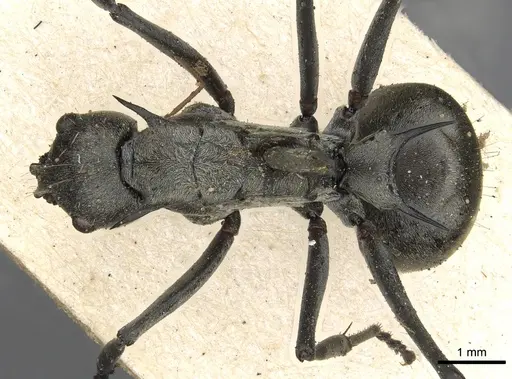
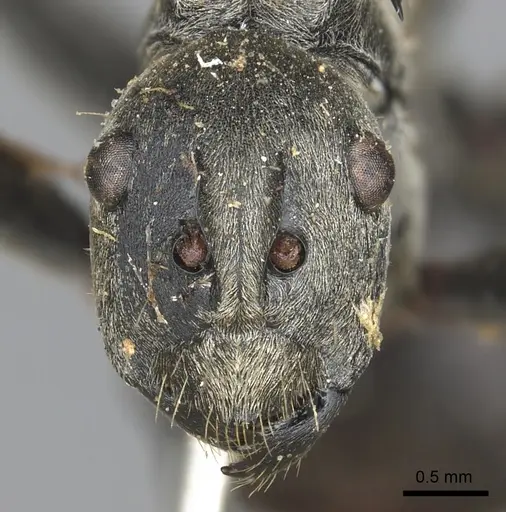
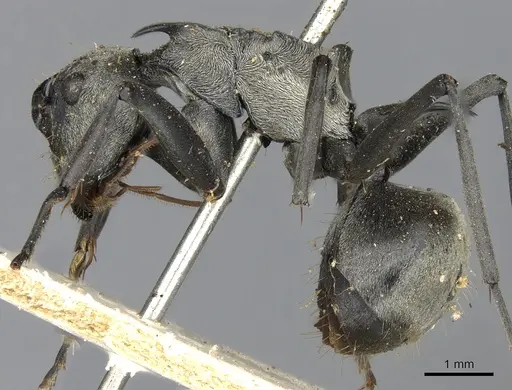
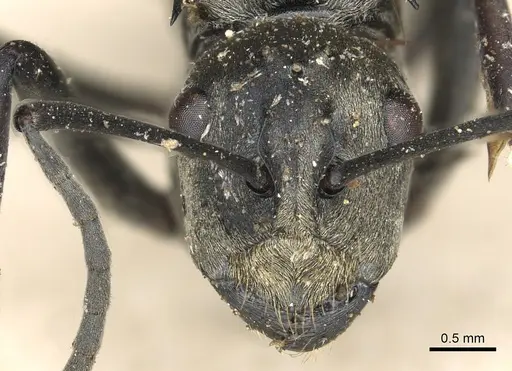
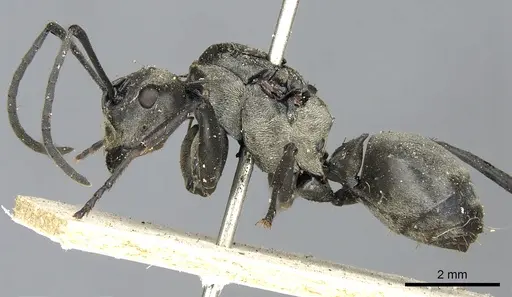
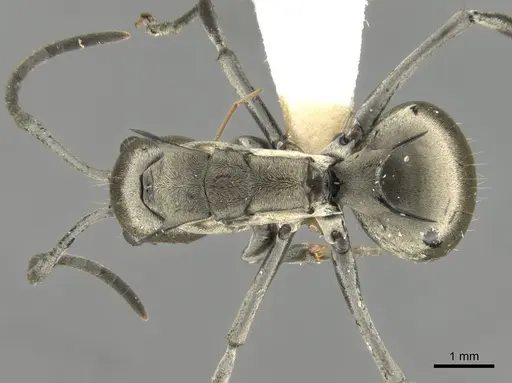
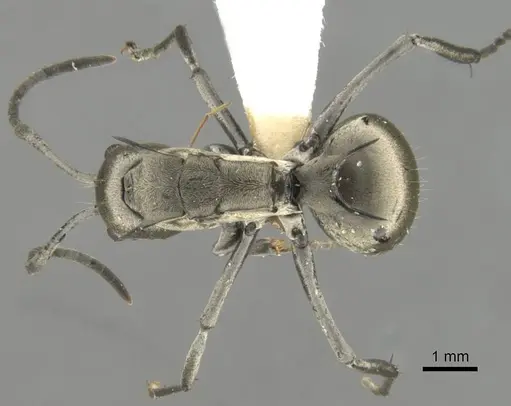
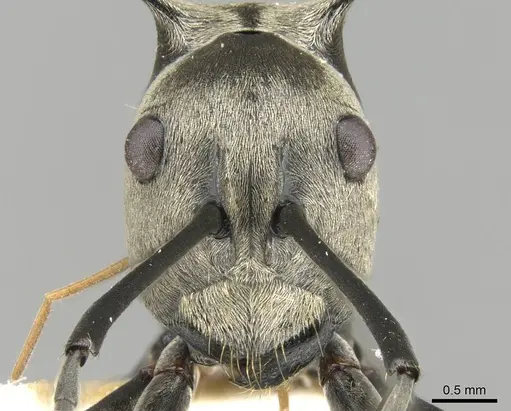
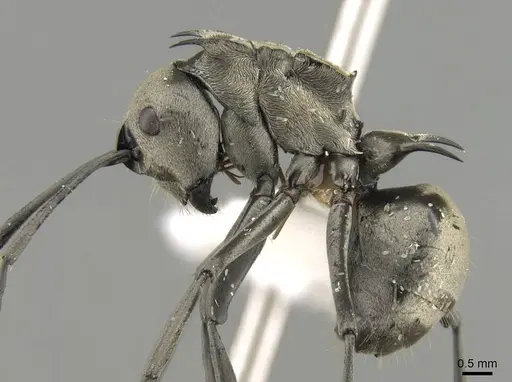
Polyrhachis olena is a medium-sized ant in the Formicinae subfamily, endemic to Sulawesi, Indonesia . Workers have spines on the mesosoma and belong to the Polyrhachis relucens species-group . The species was described in 1861 from specimens near Tondano, Sulawesi . Workers have been collected from fogging samples, including on Pandanus plants, suggesting semi-arboreal habits .
Quick Summary
- Difficulty: Medium
- Origin & Habitat: Endemic to Sulawesi, Indonesia, in tropical forest habitats with vegetation like Pandanus plants [1][2][3].
- Colony Type: Colony structure is unconfirmed.
- Size & Growth:
- Queen: Size data unavailable, but inferred from Polyrhachis genus patterns to be approximately 10-12 mm
- Worker: Size data unavailable, but inferred from Polyrhachis genus patterns to be approximately 6-8 mm
- Colony: Up to several hundred workers, estimated from related Polyrhachis species
- Growth: Moderate
- Development: Estimated 6-10 weeks at tropical temperatures, based on related species patterns (Development time inferred from Polyrhachis genus, direct measurements not available for this species)
- Antkeeping:
- Temperature: Keep at 24-28°C, as a tropical species from Sulawesi [3]. Avoid temperatures below 22°C.
- Humidity: Keep nest substrate consistently moist but not waterlogged, with a humidity gradient [3].
- Diapause: No, tropical species do not require hibernation [3].
- Nesting: Semi-arboreal nesting preferences, use Y-tong, plaster, or naturalistic setups with vertical structures [3].
- Behavior: Workers are generally docile and non-aggressive, with moderate escape risk due to their size [3]. Defense involves spraying formic acid, as typical for Formicinae.
- Common Issues: tropical temperature requirements mean colonies can decline if kept too cool, monitor temperatures closely, semi-arboreal nature may not thrive in horizontal-only setups, provide vertical nesting options, limited available information means care is based on genus-level knowledge, adjust conditions based on colony behavior
Natural History and Distribution
Polyrhachis olena is endemic to Sulawesi, Indonesia [1][2]. Workers have been collected from fogging samples, including on Pandanus plants, indicating semi-arboreal habits [3]. The species belongs to the Myrma subgenus, which includes arboreal ants in Southeast Asia [3].
Housing and Nest Preferences
As a semi-arboreal species, provide nests with vertical structures, such as Y-tong, plaster, or naturalistic setups with cork or twigs [3]. Avoid horizontal-only test tube setups for long-term housing.
Feeding and Nutrition
Polyrhachis olena is omnivorous. Offer sugar sources like honey water always available, and protein such as fruit flies or mealworms 2-3 times per week [3]. Remove uneaten prey after 24 hours.
Temperature and Seasonal Care
Maintain temperatures at 24-28°C year-round, as this tropical species does not require diapause [3]. Use a heating mat to create a gradient.
Behavior and Colony Dynamics
Workers are docile foragers that use chemical trails [3]. Defense involves spraying formic acid, typical for Formicinae. Queens likely seal themselves in during founding, but this is unconfirmed.
Frequently Asked Questions
How long does it take for Polyrhachis olena to produce first workers?
Expect first workers in approximately 6-10 weeks at 25-28°C, based on related Polyrhachis species patterns [3].
What temperature should I keep Polyrhachis olena at?
Keep them at 24-28°C, as they are a tropical species from Sulawesi [3]. Avoid below 22°C.
What do Polyrhachis olena ants eat?
They are omnivores, offer sugar water always and protein like fruit flies 2-3 times per week [3].
Can I keep Polyrhachis olena in a test tube setup?
Test tubes can work for founding but are not ideal long-term, provide vertical nests for semi-arboreal species [3].
Do Polyrhachis olena need hibernation?
No, as a tropical species, they do not require diapause [3].
How big do Polyrhachis olena colonies get?
Colonies likely reach up to several hundred workers, estimated from related Polyrhachis species [3].
Is Polyrhachis olena good for beginners?
This species is Medium difficulty due to tropical requirements and semi-arboreal habits [3].
Where is Polyrhachis olena found in the wild?
Endemic to Sulawesi, Indonesia, with workers collected from fogging samples on Pandanus plants [1][2][3].
How do I set up a nest for Polyrhachis olena?
Use Y-tong, plaster, or naturalistic nests with vertical structures and moist substrate [3].
Report an Issue
The current care sheet is based fully on literature. See inconsistencies, or something that's incorrect? Please , it will be resolved after review from an admin. Contributing to the blogs tab also helps providing information, to make us be able to further improve the caresheets. Thank you for your support!
References

This caresheet is licensed under CC BY-SA 4.0 .
Community Blogs
Literature
Loading distribution map...Loading products...