
Polyrhachis moesta
- Sci. Name
- Polyrhachis moesta
- Subgenus
- Myrmhopla
- Tribe
- Camponotini
- Subfamily
- Formicinae
- Author
- Emery, 1887
- Distribution
- Found in 5 countries
Introduction
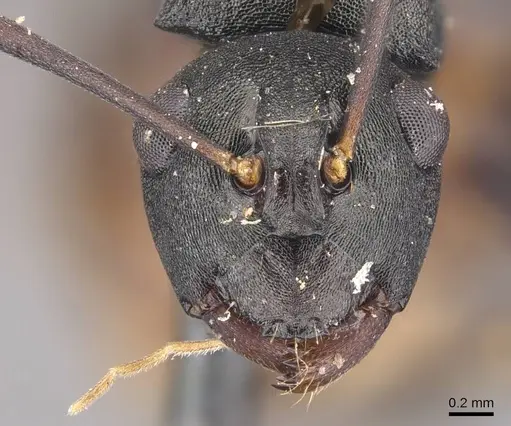
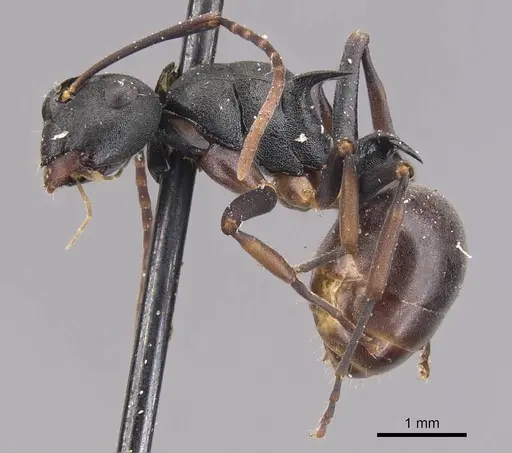
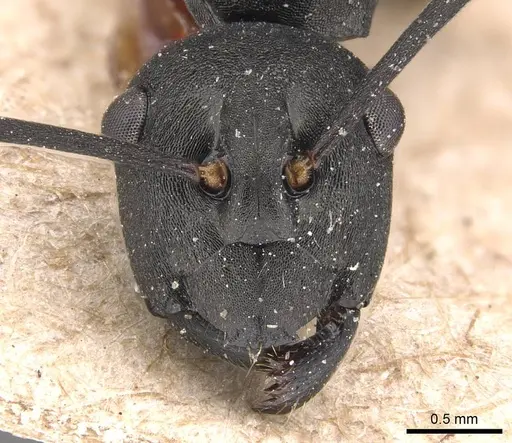
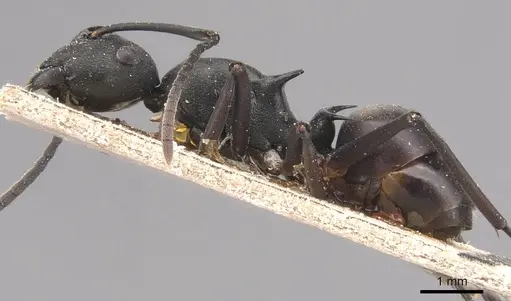
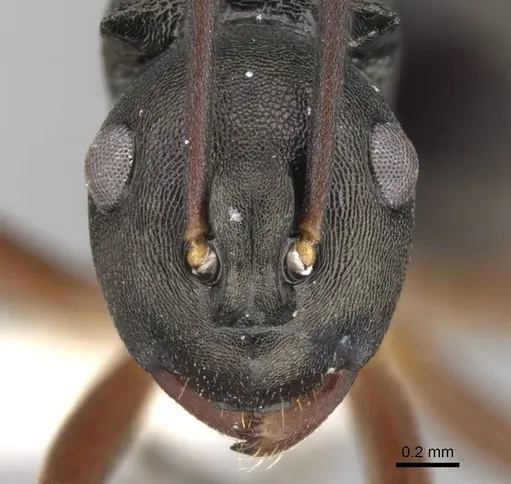
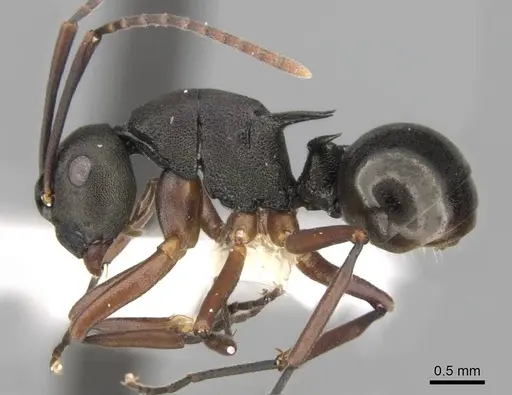
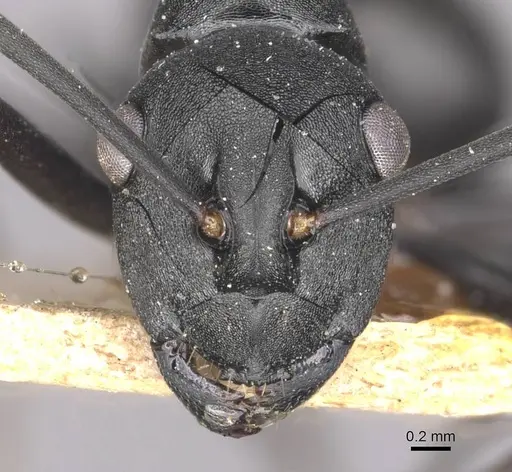
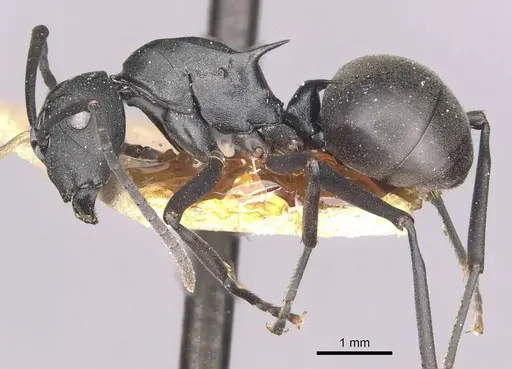
Workers are 5.3–6.8 mm with a jet black body and red-brown legs . The upper surface of the middle body (mesosoma) is smooth and arched, without the ridges seen in many relatives. The propodeum has well-developed spines, and the petiole carries a pair of large curved spines that give it a striking silhouette . This species nests in dead twigs in the treetops and uses silk from its own larvae to reinforce the nest . It ranges across East and Southeast Asia: Japan, China, Taiwan, and Indonesia . A notable feature is cooperative colony founding: multiple unrelated queens can work together to start a new nest . They are also the main host of the zombie‑ant fungus *Ophiocordyceps unilateralis*, which makes infected ants bite onto leaves before the fungus sprouts . In the wild, they sometimes guard the caterpillars of the butterfly *Arhopala japonica* in return for sugary secretions . These traits, combined with their arboreal lifestyle, make them a species for experienced keepers.
Quick Summary
- Difficulty: Medium
- Origin & Habitat: Found in Japan (Honshu, Shikoku, Kyushu, Nansei Islands), China (Hunan, Shanghai, Zhejiang, Taiwan, Yunnan etc.), and Indonesia (Sumatra, Java). Lives in dead twigs in forests and forest edges [2][1].
- Colony Type: Unrelated queens often cooperate during colony founding (pleometrosis) [3][4]. This cooperation speeds up brood production and larval growth [5]. The social structure of mature colonies is not fully known but likely becomes single-queen.
- Size & Growth:
- Queen: ~10 mm (inferred from *Polyrhachis* genus)
- Worker: 5.3–6.8 mm [1][2]
- Colony: Colony size not documented, based on genus patterns, likely up to several hundred workers.
- Growth: Moderate
- Development: Estimated 6–10 weeks at optimal temperature (inferred from related *Polyrhachis* species) (Cooperative founding may speed up early growth [5].)
- Antkeeping:
- Temperature: Keep the nest at 24–28°C for best brood development. Room temperature (20–24°C) works but growth will be slower. Provide a warm side and a cooler side so the ants can choose.
- Humidity: Keep the nest substrate slightly moist but not saturated. As arboreal twig-nesters, they prefer good humidity with good airflow. A humidity gradient works best – one moist corner, the rest drier.
- Diapause: Not required. This subtropical/tropical species stays active year-round. If kept in temperate climates, a gentle winter cool-down to 18–20°C is optional but not needed.
- Nesting: Arboreal specialists that naturally nest in dead twigs. In captivity, use Y-tong, plaster, or 3D-printed nests with narrow passages (3–5 mm). They use larval silk to reinforce their home, so offer some soft plant fibres or dried leaves – they may use them.
- Behavior: Calm and non-aggressive. Workers forage actively but don't swarm when disturbed. They defend by biting and spraying formic acid (typical of Formicinae). They are skilled climbers and will explore upward, so design the outworld with vertical structures and place food at different heights. Thorough escape prevention is a must – they are 5–7 mm and can squeeze through tiny gaps.
- Common Issues: workers are small and excellent climbers – any gap in the enclosure is an escape route., cooperative founding is complex – if keeping multiple queens together, watch for fighting once the first workers appear., wild-caught colonies may carry the zombie-ant fungus *Ophiocordyceps* – quarantine new colonies and watch for odd behaviour., they need vertical space – a flat outworld will be ignored, provide twigs or mesh for climbing., this species is relatively rare in the hobby, so finding a supplier may be hard.
Housing and Nest Setup
Polyrhachis moesta is arboreal and naturally nests in dead twigs [2]. In captivity, they do well in Y-tong, plaster, or 3D-printed nests with narrow chambers (passages 3–5 mm). Avoid acrylic nests. Provide a vertical outworld with climbing structures such as twigs or mesh, because they prefer to move upward. They use larval silk to reinforce their nests, so adding a few dried leaves or soft plant fibers may be accepted. Be thorough with escape prevention – workers are 5–7 mm and can fit through tiny gaps [1][2].
Feeding and Diet
Like most Polyrhachis, they are omnivorous. Offer sugary liquids (honey water, sugar water, ripe fruit) and protein sources (small insects such as fruit flies, pinhead crickets, or mealworms). Feed protein 2–3 times per week and keep sugar available at all times. Remove uneaten food after 24–48 hours to prevent mold. Because they are arboreal, place food at elevated spots in the outworld rather than on the floor.
Temperature and Seasonal Care
This species comes from warm subtropical to tropical areas of East and Southeast Asia [2][1]. Keep the nest area at 24–28°C for active foraging and fast brood development. They can tolerate room temperature (20–24°C) but will grow more slowly. Use a heating cable on one side to create a gradient. They do not need a winter diapause. If you live in a temperate region, a gentle cool-down to 18–20°C during the coldest months is optional – they will still be active at those temperatures. Avoid prolonged temperatures below 15°C.
Colony Founding and Development
One of the most interesting traits of this ant is cooperative colony founding (pleometrosis) [3][4]. Multiple queens, even unrelated ones, often team up to dig a nest chamber and raise the first brood together. This cooperation speeds up brood production and larval growth [5]. After the first workers appear, the queens may become aggressive toward each other, and the colony usually ends up with a single queen. If you keep a founding group, watch for fighting once workers emerge. The development from egg to worker takes about 6–10 weeks at 24–28°C (estimated from related species).
Health and Parasites
In the wild, P. moesta is a common host of the zombie-ant fungus Ophiocordyceps unilateralis sensu lato [6][7]. Infected ants are manipulated to bite onto leaves before the fungus kills them and produces fruiting bodies from the head [6][7]. If you collect wild colonies, quarantine them and watch for signs – lethargic workers or ants that seem to wander away from the nest. In captivity, good ventilation and proper humidity help prevent mold problems. The species also has a mutualistic relationship with caterpillars of the butterfly Arhopala japonica: the ants get honeydew and the caterpillars get protection [9]. This is harmless in captivity.
Behavior and Temperament
P. moesta is generally calm and non-aggressive toward humans. When disturbed, they bite and spray formic acid, like other Formicinae. Their defence is not painful for people. They are active foragers that spend most of their time climbing in search of food. Because they are arboreal, they will ignore ground-level food, place feeding stations at various heights. Workers are 5–7 mm and very agile, so a well-sealed enclosure is essential [2].
Frequently Asked Questions
Is Polyrhachis moesta a good species for beginners?
It is considered medium difficulty. They are calm and relatively easy to care for, but their arboreal needs and cooperative founding behaviour add complexity. A beginner would do better with a hardier, ground-nesting species first.
How long does it take for Polyrhachis moesta to raise their first workers?
About 6–10 weeks from egg to first worker at 24–28°C. Cooperative founding can speed this up [5].
Can I keep multiple Polyrhachis moesta queens together?
Yes – this species naturally founds colonies in groups (pleometrosis). Multiple unrelated queens can be kept together initially [3][4]. However, once the first workers appear, tensions may rise and the colony often ends up with a single queen.
What do Polyrhachis moesta eat?
They are omnivorous. Offer sugar sources (honey water, sugar water, ripe fruit) and protein (small insects like fruit flies, pinhead crickets, or mealworms). Feed protein 2–3 times a week and keep sugar always available. Because they are arboreal, place food at elevated positions.
Do Polyrhachis moesta need hibernation?
No, they do not need a diapause. This species comes from subtropical/tropical regions and can stay active year-round. A slight winter cool-down to 18–20°C is optional but not required [2][1].
What type of nest is best for Polyrhachis moesta?
Use Y-tong, plaster, or 3D-printed nests with narrow chambers (3–5 mm passages). They naturally nest in dead twigs and use larval silk to strengthen the nest, so offering a little soft plant material may be appreciated. Avoid acrylic nests. A vertical outworld with climbing structures works best [2].
Why are my Polyrhachis moesta dying?
Common causes: improper humidity (too dry or too wet), temperatures outside their comfort zone (below 15°C or above 32°C), poor ventilation leading to mold, or stress from wild-caught colonies. This species is also a host for Ophiocordyceps fungus – if you collected wild, check for signs of infection (workers biting onto leaves or unusual sluggishness) [6][7].
How big do Polyrhachis moesta colonies get?
Colony size is not well documented, but based on related Polyrhachis species, a mature colony likely reaches several hundred workers. Growth is moderate.
Report an Issue
The current care sheet is based fully on literature. See inconsistencies, or something that's incorrect? Please , it will be resolved after review from an admin. Contributing to the blogs tab also helps providing information, to make us be able to further improve the caresheets. Thank you for your support!
References

This caresheet is licensed under CC BY-SA 4.0 .
Community Blogs
CASENT0905631
View on AntWeb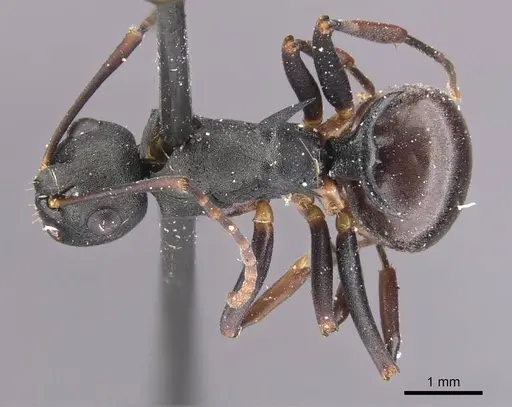
CASENT0905827
View on AntWeb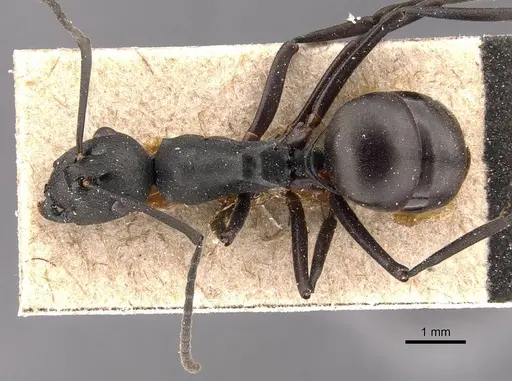
CASENT0906768
View on AntWeb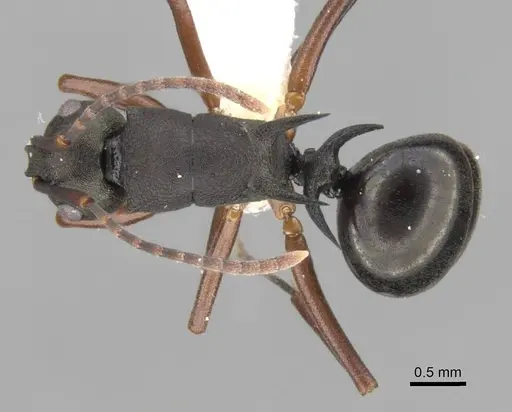
CASENT0910894
View on AntWeb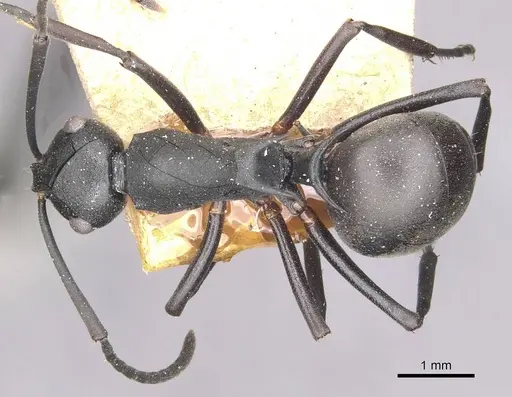
Literature
Loading distribution map...Loading products...