
Polyrhachis malaensis
- Sci. Name
- Polyrhachis malaensis
- Subgenus
- Hedomyrma
- Tribe
- Camponotini
- Subfamily
- Formicinae
- Author
- Mann, 1919
- Distribution
- Found in 1 countries
Introduction
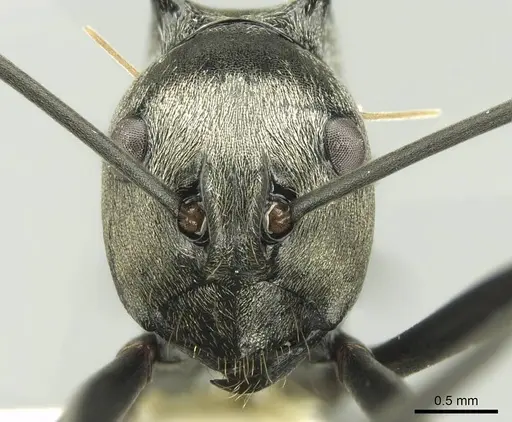
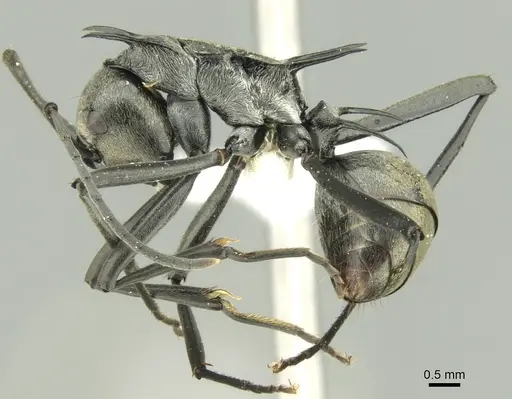
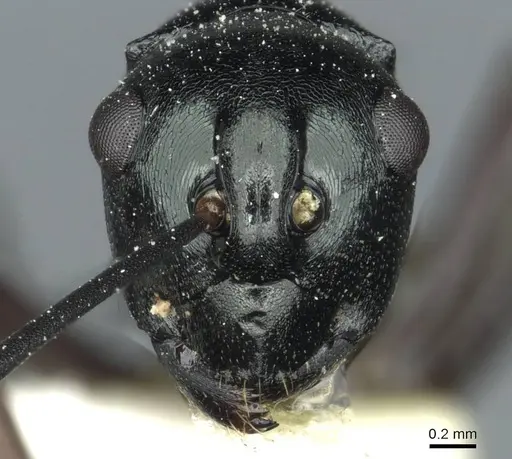
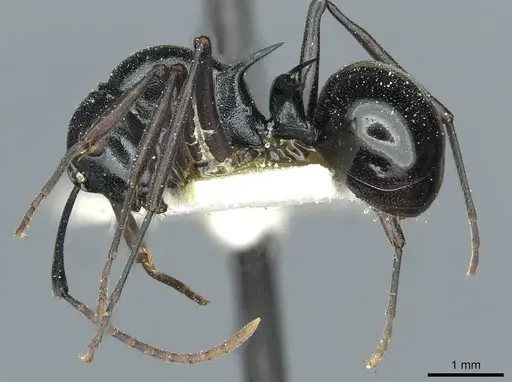
Polyrhachis malaensis is a medium-sized ant native to the Solomon Islands, specifically found on Malaita, Makira, and Guadalcanal islands . Workers are characterized by their elongated body form and distinctive spines on the thorax, typical of the Polyrhachis genus. The species belongs to the subgenus Hedomyrma, which is known for subterranean nesting habits . These ants construct underground nests, unlike some arboreal Polyrhachis species. The species was first described by William Mann in 1919 .
Quick Summary
- Difficulty: Medium
- Origin & Habitat: Solomon Islands (Malaita, Makira, Guadalcanal), tropical island environment with high humidity and warm temperatures year-round [1][2]
- Colony Type: Unconfirmed, research does not specify queen number or social structure.
- Size & Growth:
- Queen: size data unavailable, no total length measurements found in research
- Worker: size data unavailable, no total length measurements found in research
- Colony: Unknown, no specific colony size data for this species
- Growth: Moderate, inferred from tropical ant development patterns
- Development: Estimated 6-8 weeks at tropical temperatures (25-28°C) based on related species [3] (Specific development data is not available for this species.)
- Antkeeping:
- Temperature: Keep warm, roughly 24-28°C, as these are tropical ants [3]. A slight temperature gradient may help.
- Humidity: Keep the nest substrate consistently moist but not waterlogged, as they are from a humid environment [3].
- Diapause: No, as a tropical species, they do not require hibernation.
- Nesting: Subterranean nester, they dig underground chambers [3][4]. In captivity, use soil or plaster nests with depth and moisture.
- Behavior: Polyrhachis malaensis is generally calm. They lack a functional sting and use formic acid spray for defense, typical of Formicinae. Workers forage on the ground and may climb vegetation. They are moderate escape artists, use standard barriers. Pupal cocoons require higher humidity during development [3].
- Common Issues: cold temperatures can slow brood development, keep warm consistently., high humidity needs can lead to mold if ventilation is poor., subterranean nesting requires adequate depth for tunneling., wild-caught colonies may have parasites or diseases.
Housing and Nest Setup
Polyrhachis malaensis is a subterranean nester, meaning they naturally dig chambers underground [3][4]. In captivity, you can use a naturalistic setup with deep soil (at least 5-10cm) or a Y-tong or plaster nest with moisture chambers. Ensure the nest holds moisture well since these ants need humid conditions. A water reservoir or damp substrate helps maintain proper humidity levels.
Feeding and Diet
These ants are omnivorous. Offer sugar water or honey as a constant energy source, and protein-rich foods like small crickets or mealworms 2-3 times per week. Remove uneaten prey after 24-48 hours to prevent mold.
Temperature and Humidity
Keep temperatures warm, roughly 24-28°C, as these are tropical ants [3]. Humidity should be maintained by keeping the nest substrate consistently moist but not waterlogged [3]. Use a hygrometer to monitor conditions.
Colony Founding
The founding behavior of Polyrhachis malaensis has not been documented. You can start a colony in a test tube setup, but once first workers emerge, transition to a proper nest.
Growth and Development
Specific development timelines are not documented. Based on related species, egg to worker may take 6-8 weeks at optimal temperatures. Pupal cocoons are present [3], so development follows the typical ant life cycle. Colonies grow moderately once established.
Frequently Asked Questions
How long does it take for Polyrhachis malaensis to produce first workers?
Based on related species, expect approximately 6-8 weeks from egg to first worker at optimal temperatures (25-28°C). This is an estimate since specific data is not available.
What temperature do Polyrhachis malaensis ants need?
Keep them at roughly 24-28°C. These tropical ants need consistent warmth, temperatures below 22°C can slow development.
Do Polyrhachis malaensis ants need hibernation?
No, they do not require hibernation as a tropical species. Maintain warm conditions year-round.
What do Polyrhachis malaensis ants eat?
They are omnivorous. Offer sugar water or honey constantly, and protein foods like insects 2-3 times per week.
Can I keep multiple Polyrhachis malaensis queens together?
This has not been documented. Based on typical patterns, they are likely single-queen colonies, but it is not recommended to combine unrelated queens.
What type of nest does Polyrhachis malaensis need?
They are subterranean nesters, so use deep soil or plaster nests with moisture chambers [3].
Are Polyrhachis malaensis ants aggressive?
They are generally calm and not aggressive. They use formic acid spray for defense but typically flee when disturbed.
How big do Polyrhachis malaensis colonies get?
Exact colony size is unknown for this species. Growth is moderate, so colonies may expand over time.
Why are my Polyrhachis malaensis dying?
Common causes include cold temperatures, low humidity, mold from poor ventilation, or poor nutrition. Check your setup first.
Report an Issue
The current care sheet is based fully on literature. See inconsistencies, or something that's incorrect? Please , it will be resolved after review from an admin. Contributing to the blogs tab also helps providing information, to make us be able to further improve the caresheets. Thank you for your support!
References

This caresheet is licensed under CC BY-SA 4.0 .
Community Blogs
CASENT0906735
View on AntWeb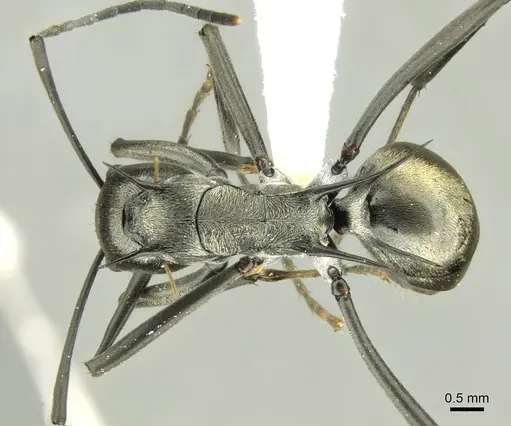
CASENT0912110
View on AntWeb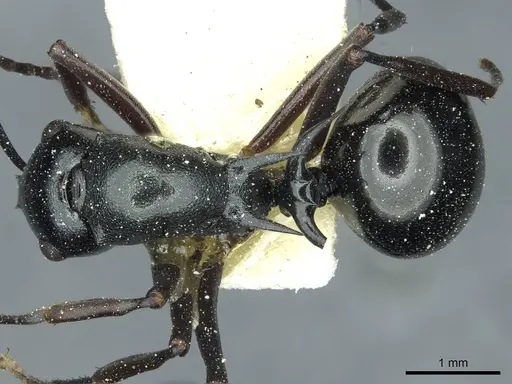
Literature
Loading distribution map...Loading products...