
Polyrhachis mackayi
- Sci. Name
- Polyrhachis mackayi
- Subgenus
- Cyrtomyrma
- Tribe
- Camponotini
- Subfamily
- Formicinae
- Author
- Donisthorpe, 1938
- Distribution
- Found in 1 countries
Introduction
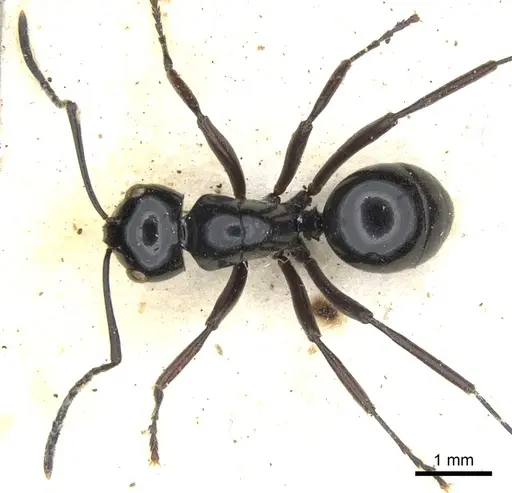
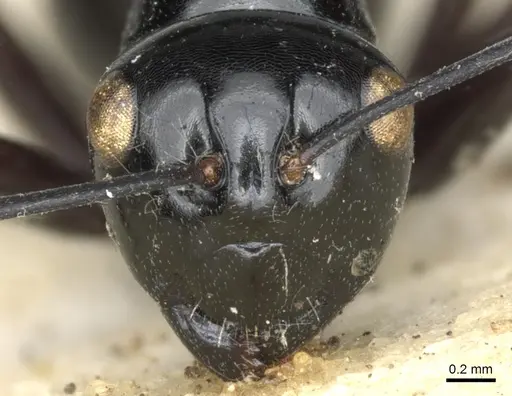
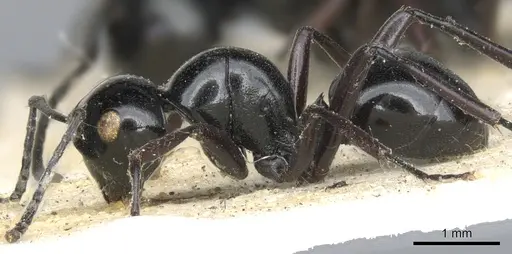
Polyrhachis mackayi is an ant native to eastern Australia, found from Mackay in Queensland to Taree in New South Wales . Workers are about 4.7 mm in total length, and queens are about 6.3 mm . They have a black, shining body with dark brown legs and black antennae . The species is characterized by a convex mesosomal dorsum, rounded pronotal humeri, an unarmed propodeum, and short petiolar spines . This species is arboreal, building nests between leaves using silk produced by larvae . They defend by spraying formic acid, as they lack a functional sting [based on subfamily Formicinae].
Quick Summary
- Difficulty: Medium
- Origin & Habitat: Eastern Australia, from northern Queensland to northern New South Wales. Found along margins of lowland rainforests and woodlands at elevations of 200-600 m [1].
- Colony Type: Unconfirmed, colony structure not specifically documented for this species.
- Size & Growth:
- Queen: 6.3 mm [1]
- Worker: 4.7 mm [1]
- Colony: Size data unavailable for this species.
- Growth: Moderate, inferred from related Polyrhachis species.
- Development: Estimated 6-8 weeks based on related Formicinae species at optimal temperature. (Development time is inferred, specific timing for Polyrhachis mackayi has not been documented.)
- Antkeeping:
- Temperature: Keep warm, around 24-28°C, with a slight gradient, based on their rainforest habitat.
- Humidity: Keep nest substrate moderately humid but not waterlogged, as they live in rainforest margins [1].
- Diapause: Yes, likely required for 2-3 months at 15-18°C during winter, based on temperate region patterns.
- Nesting: Arboreal nesters that use silk to bind leaves. Provide a naturalistic setup with climbing structures and materials for silk weaving. Use Y-tong, plaster, or 3D-printed nests with damp substrate [2].
- Behavior: Generally calm and non-aggressive. Workers are active foragers that search for honeydew and small prey. Escape risk is moderate due to climbing ability, ensure enclosures have smooth barriers. They spray formic acid for defense but lack a sting.
- Common Issues: arboreal nature requires vertical space and climbing structures, horizontal-only setups may cause stress., silk-weaving behavior may be disrupted without appropriate materials, provide leaves or moss., humidity control is important, too dry causes struggle, too wet causes mold., winter diapause is likely required, skipping it may weaken colonies., limited availability in the antkeeping hobby means established colonies are uncommon.
Nest Preferences and Housing
Polyrhachis mackayi is an arboreal species that builds nests between leaves using silk produced by larvae [2]. In captivity, provide a naturalistic setup with live plants, moss, or artificial foliage where they can weave silk nests. Use a tall enclosure with branches or vines for climbing. The outworld should have vertical elements. For standard formicariums, use Y-tong, plaster, or 3D-printed nests with climbing structures and damp substrate [2]. Avoid fully horizontal, soil-based setups.
Feeding and Diet
Diet specifics are not documented for this species, but as a Formicinae ant, they likely feed on honeydew and small insects. In captivity, offer sugar water or honey constantly, and supplement with small insects like fruit flies or mealworms 2-3 times per week. Remove uneaten food after 24-48 hours to prevent mold.
Temperature and Seasonal Care
As a species from Australian rainforest margins, keep the nest area warm, around 24-28°C, with a slight gradient. During winter, provide a diapause period at 15-18°C for 2-3 months to mimic natural seasonal cycles. Avoid temperatures below 15°C or above 30°C for extended periods.
Behavior and Colony Dynamics
Polyrhachis mackayi is generally calm and non-aggressive. Workers forage for honeydew and small prey, and the colony nests arboreally using silk [2]. They defend by spraying formic acid but lack a sting. Escape risk is moderate due to climbing ability, ensure enclosures have smooth barriers.
Frequently Asked Questions
Can I keep Polyrhachis mackayi in a test tube?
A test tube setup can work for founding colonies, but this species is arboreal and prefers to nest between leaves using silk. For long-term housing, provide a naturalistic setup with climbing structures [2].
How long until first workers appear in Polyrhachis mackayi?
Based on related Formicinae species, expect first workers around 6-8 weeks after egg laying at optimal temperatures.
Do Polyrhachis mackayi ants need hibernation?
Yes, they likely require a winter diapause period of 2-3 months at 15-18°C, based on temperate region patterns.
Are Polyrhachis mackayi good for beginners?
This species is rated as medium difficulty. Their arboreal nature and specific nesting requirements make them better suited for keepers with some experience.
What do Polyrhachis mackayi eat?
Diet is unconfirmed, but they likely feed on honeydew and small insects. Offer sugar water and supplement with small insects 2-3 times per week.
How big do Polyrhachis mackayi colonies get?
Colony size data is unavailable for this species.
When should I move Polyrhachis mackayi to a formicarium?
Move them when the test tube setup becomes cramped or the water reservoir is depleted. Provide a naturalistic setup with materials for silk weaving [2].
Can I keep multiple Polyrhachis mackayi queens together?
Colony type is unconfirmed, but combining unrelated queens is not recommended as they may fight.
Why is my Polyrhachis mackayi colony not building a silk nest?
They may not weave silk if appropriate materials like leaves or moss are not available [2].
Report an Issue
The current care sheet is based fully on literature. See inconsistencies, or something that's incorrect? Please , it will be resolved after review from an admin. Contributing to the blogs tab also helps providing information, to make us be able to further improve the caresheets. Thank you for your support!
References

This caresheet is licensed under CC BY-SA 4.0 .
Community Blogs
CASENT0903417
View on AntWeb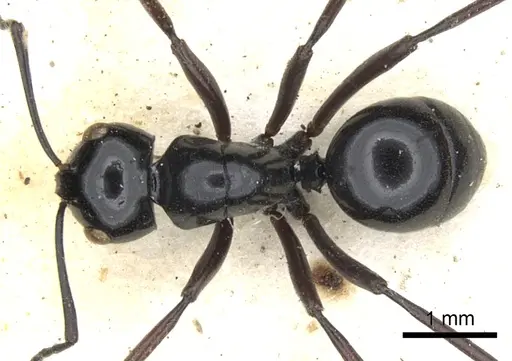
Literature
Loading distribution map...Loading products...