
Polyrhachis loweryi
- Sci. Name
- Polyrhachis loweryi
- Subgenus
- Hirtomyrma
- Tribe
- Camponotini
- Subfamily
- Formicinae
- Author
- Kohout, 1990
- Distribution
- Found in 1 countries
Introduction
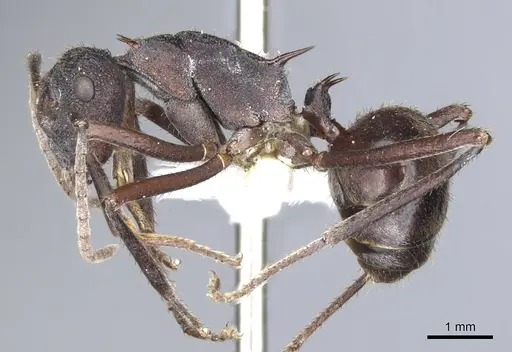
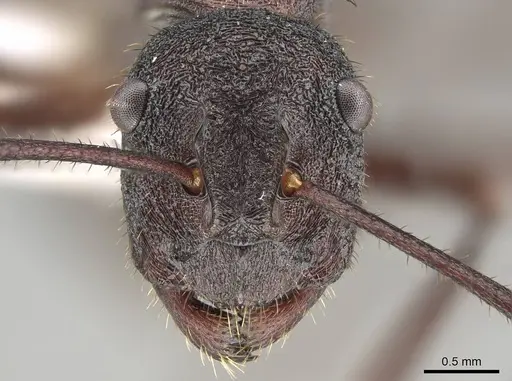
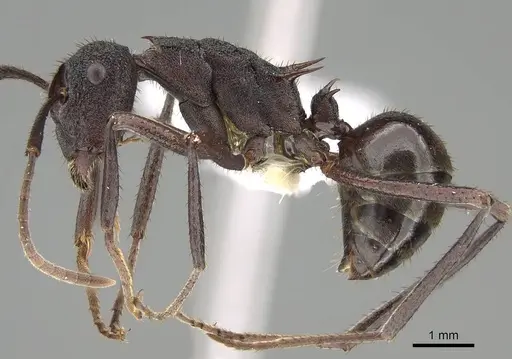
Polyrhachis loweryi is a dark reddish-brown Australian ant with prominent spines on the pronotum, propodeum, and petiole. Workers are monomorphic (all the same size) and measure about 7.5–9.3 mm total length . The body is covered in bristle-like hairs, with silvery hairs on the gaster that have a reddish tint . Queens are slightly larger at about 9.3 mm . This species is only known from dry sclerophyll forest near Miles in southern Queensland, Australia . What makes it special is its lifestyle as a guest ant (inquiline): it lives inside the nests of Rhytidoponera species, a cross-subfamily relationship that was the first of its kind documented in Australia .
Quick Summary
- Difficulty: Expert
- Origin & Habitat: Southern Queensland, Australia. Found in dry sandy sclerophyll forest with Callitris near Miles. Always associated with Rhytidoponera host colonies [1][2].
- Colony Type: Single-queen (monogyne). A social parasite (guest ant) that lives inside host Rhytidoponera colonies [4][5].
- Size & Growth:
- Queen: ~9.3 mm total length [3]
- Worker: 7.5–9.3 mm total length [1][2][3]
- Colony: Up to about 100 workers (a wild colony had 91 workers) [4]
- Growth: Unknown – depends on host colony acceptance and resources
- Development: Unknown – development happens within the host nest, and brood care is done by P. loweryi workers themselves, not the host [4] (P. loweryi workers can lay male eggs, but no data on development time.)
- Antkeeping:
- Temperature: Keep at room temperature 22–26°C. The subtropical Queensland origin suggests stable warmth, avoid extremes [1].
- Humidity: Moderate – keep the nest substrate slightly moist but not waterlogged, with good ventilation. Match conditions suitable for Rhytidoponera hosts.
- Diapause: Unknown. Queensland winters are mild, a slight cool period (15–18°C) with reduced feeding may be beneficial if the colony shows seasonal slowdown, but no data.
- Nesting: You must first establish a healthy Rhytidoponera colony. P. loweryi constructs closed chambers from soil and plant fibers inside the host nest [4]. Use a large naturalistic setup (soil or sand substrate) to accommodate both species.
- Behavior: P. loweryi is a peaceful guest ant that integrates into host colonies without killing the host queen. Workers move freely and receive food from host workers via trophallaxis. They can also forage independently. During nest relocation, they use trail laying and leader communication, and host workers may carry them in a special 'formicine' posture [4]. Defense relies on formic acid spray (lacking a functional sting) combined with their prominent spines. Escape risk is low to moderate given their ~8 mm size.
- Common Issues: host colony requirement is the primary hurdle – without a healthy Rhytidoponera colony, P. loweryi cannot survive, integration failure – the host colony may reject the guests, leading to fighting or death, obtaining both species is extremely difficult for most keepers, colony collapse if the host colony dies or abandons the nest, limited colony growth – resources are constrained by the host colony's size and health
The Guest Ant Lifestyle
Polyrhachis loweryi is a guest ant (inquiline) that lives inside the nests of Rhytidoponera species (Ponerinae) in Queensland, Australia [2][4]. Unlike slave-making ants that attack and enslave other colonies, P. loweryi coexists peacefully with the host without killing the host queen. Mixed colonies contain both species' workers and brood, and usually only one P. loweryi queen is present. The parasite's workers are not inseminated and lay only male eggs [4][5]. Workers from queenright colonies may invade neighboring host nests, carrying young brood to be raised with food provided by host workers. This species cannot establish a colony without a host – it is an obligate parasite.
Housing and Host Requirements
Keeping P. loweryi is extremely challenging because you first need a healthy colony of Rhytidoponera host ants. In the wild, P. loweryi builds its own closed chambers from soil and plant fibers within the host's nest [4]. For captivity, use a large naturalistic setup – a soil or sand nest with a permanent outworld – to house both species. The host Rhytidoponera species are ground-nesters, so provide deep substrate. Introduce P. loweryi workers slowly to allow the host to accept them. Monitor closely for aggression, some initial rejection is normal, but persistent fighting means failure. If the host colony dies, the P. loweryi colony will also perish.
Feeding and Nutrition
P. loweryi workers are omnivorous. Inside the mixed colony, they get carbohydrate and protein food directly from host workers via trophallaxis. They also forage independently for liquids (sugar water or honey) and protein (small insects like fruit flies, mealworms, or cricket pieces) [4]. The host Rhytidoponera colony needs its own varied diet as well. Offer food to the mixed colony a few times per week, and remove leftovers to prevent mold. P. loweryi workers care for their own brood, so protein is essential for colony growth.
Behavior and Colony Dynamics
Mixed colonies show remarkable interactions. P. loweryi workers move freely among host ants and are accepted – host workers will even carry P. loweryi workers and brood during nest relocations. Interestingly, carriers hold P. loweryi in a 'formicine' posture (curled around the carrier's body), different from the typical posture used for their own species [4]. P. loweryi can also relocate independently using trail laying and leader communication. Workers are not aggressive and use their spines for defense. Pupal cocoons are present [6]. Only one P. loweryi queen is typically found, and she stays inside the host nest [4].
Defense and Identification
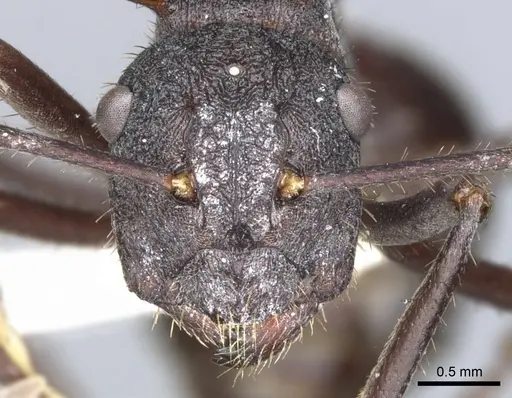
P. loweryi has multiple defensive tools. The primary chemical defense is formic acid spray from the acidopore – the ant bites and sprays acid into the wound. This is typical of Formicinae ants. In addition, the series of robust pronotal, propodeal, and petiolar spines make it hard for predators to swallow. The body is uniformly dark reddish-brown, with the mandibles, spines, and subpetiolar process slightly lighter [1][2]. Workers are monomorphic (one size class). The median ocellus is well-developed and distinct, which helps separate this species from similar Polyrhachis [2]. The combination of spines, reddish colour, and host association with Rhytidoponera makes identification straightforward.
Frequently Asked Questions
Can I keep Polyrhachis loweryi without a host colony?
No. P. loweryi is an obligate guest ant that cannot survive without a host Rhytidoponera colony. You must first establish a healthy Rhytidoponera colony, then introduce the guests [4][5].
How do I introduce Polyrhachis loweryi to a host colony?
Introduce small numbers of P. loweryi workers gradually to allow acceptance. In the wild, workers from established colonies invade neighboring host nests. Monitor for fighting, some rejection is normal, but persistent aggression means the introduction may fail [4].
What do Polyrhachis loweryi eat?
Omnivorous. In mixed colonies they receive food from host workers via trophallaxis. They also forage for carbohydrates (sugar water/honey) and protein (small insects). Feed a few times per week [4].
Are Polyrhachis loweryi good for beginners?
No. This is an expert-level species because it requires a host colony. You need to successfully keep Rhytidoponera first, then manage a mixed-species colony. The parasitic lifestyle and difficulty obtaining both species make it unsuitable for beginners.
How big do Polyrhachis loweryi colonies get?
In the wild, mixed colonies contain up to about 100 Polyrhachis workers plus brood. A measured colony had 91 workers [4]. Growth is limited by host colony resources.
Do they need hibernation?
Unknown. The species comes from subtropical Queensland with mild winters. A cool period (15–18°C) with reduced feeding may be safe if the colony slows down, but specific requirements are not documented.
Can I keep multiple P. loweryi queens together?
Only one P. loweryi queen is typically found in a mixed colony [4]. Multiple queens would likely compete. Keep single-queen colonies for best success.
Where can I find Polyrhachis loweryi in the wild?
Only known from the Miles area in southern Queensland, Australia, in dry sclerophyll forest. They are found inside Rhytidoponera nests. Check host colonies for the presence of the parasitic guests [1][2].
Why is this species called a guest ant?
Guest ant (inquiline) means it lives inside another ant's nest without harming the host. P. loweryi uses host resources, maintains its own queen and brood, and is not attacked by host workers. The term 'guest ant' better describes this peaceful relationship than 'social parasite' [4][5].
Report an Issue
The current care sheet is based fully on literature. See inconsistencies, or something that's incorrect? Please , it will be resolved after review from an admin. Contributing to the blogs tab also helps providing information, to make us be able to further improve the caresheets. Thank you for your support!
References

This caresheet is licensed under CC BY-SA 4.0 .
Community Blogs
CASENT0903356
View on AntWeb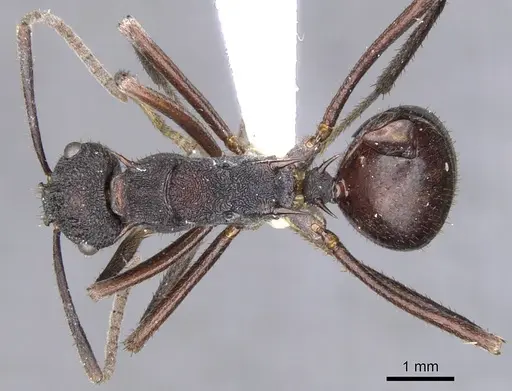
CASENT0919911
View on AntWeb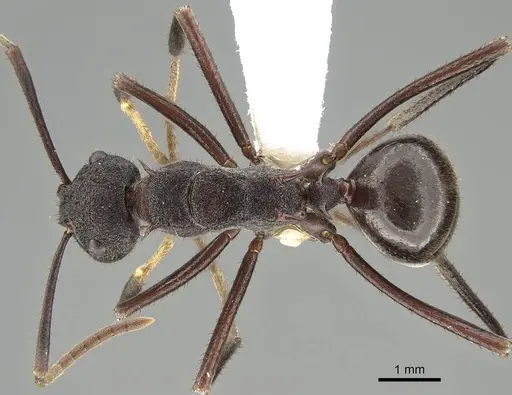
Literature
Loading distribution map...Loading products...