
Polyrhachis longiseta
- Sci. Name
- Polyrhachis longiseta
- Subgenus
- Myrma
- Tribe
- Camponotini
- Subfamily
- Formicinae
- Author
- Rigato, 2016
- Distribution
- Found in 1 countries
Introduction
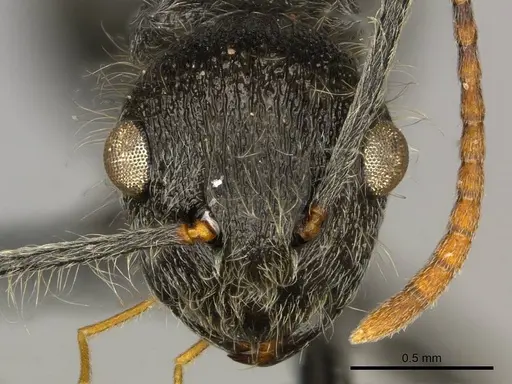
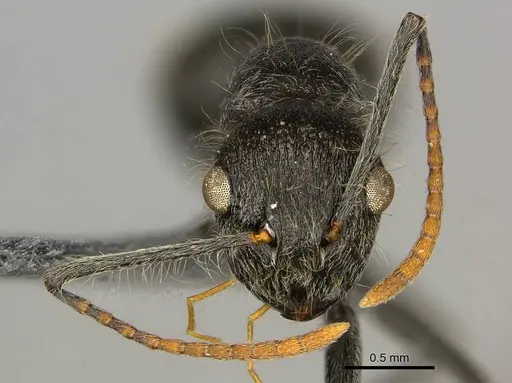
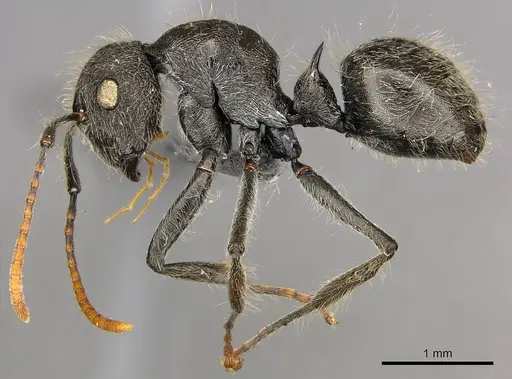
Polyrhachis longiseta is a small ant species described in 2016,found in primary forests of Cameroon and the Republic of Congo . It belongs to the revoili species-group and is identified by abundant long standing hairs that exceed the tibial width and an evenly convex clypeal margin . Body size data is unavailable, but it is considered a small species within the Polyrhachis genus . This species was collected via canopy fogging, suggesting arboreal or canopy-dwelling habits . As a newly described species, its biology is not well documented, but it shares characteristics with other Polyrhachis ants, such as potential arboreal nesting preferences.
Quick Summary
- Difficulty: Medium
- Origin & Habitat: Primary forests in Cameroon and Republic of Congo [1]
- Colony Type: Unconfirmed, no specific data on queen number or social structure
- Size & Growth:
- Queen: size data unavailable
- Worker: size data unavailable
- Colony: Unknown, based on small size, colonies are likely small
- Growth: Unknown
- Development: Estimated 6-8 weeks at optimal temperatures (24-28°C) based on related tropical ant species [2] (No direct development data exists, estimate based on genus-level patterns for small tropical ants)
- Antkeeping:
- Temperature: Keep warm at 24-28°C, inferred from tropical origin [1]
- Humidity: Maintain high humidity with moist substrate, inferred from primary forest habitat [1]
- Diapause: No, tropical species do not require hibernation
- Nesting: Prefers humid, enclosed spaces, likely arboreal based on collection data [1]. Use Y-tong, plaster, or soil nests with high humidity.
- Behavior: Temperament likely calm and non-aggressive. Escape risk is high due to small size, use fine mesh barriers. Defense mechanism: sprays formic acid, as typical for Formicinae.
- Common Issues: limited species-specific data makes care recommendations uncertain, some trial and error may be needed., tiny size creates high escape risk, use fine mesh and tight-fitting barriers., high humidity requirements can lead to mold if ventilation is inadequate., tropical species may decline if kept too cool, monitor temperatures closely., newly described species means wild colonies may have unknown parasites or diseases.
Nest Preferences and Housing
Polyrhachis longiseta was collected from primary forest in Cameroon and Congo, with one specimen from canopy fogging, suggesting arboreal habits [1]. Based on this, they likely prefer humid, enclosed spaces like rotting wood cavities or under bark. For captive care, use Y-tong, plaster, or soil nests that hold humidity well. Naturalistic setups with small wood pieces can mimic their environment. Chambers should be scaled to their small size, with narrow passages for security. Test tubes can work for founding colonies but need humidity maintenance. Avoid dry setups, provide a humidity gradient with consistently moist substrate [1].
Feeding and Diet
Specific feeding data is not available, but Polyrhachis ants are generalist feeders. Offer sugar water, honey, or diluted syrup for carbohydrates. For protein, provide small prey like fruit flies or tiny mealworms, sized appropriately for their small workers. Feed sugar water constantly and protein 2-3 times per week, removing uneaten prey to prevent mold. Adjust based on colony consumption [2].
Temperature and Seasonal Care
As a tropical species, keep temperatures at 24-28°C year-round [1]. Use a heating cable on one side of the nest to create a gentle gradient, placed on top to avoid drying substrate. Monitor with a thermometer, temperatures below 22°C may slow activity, while above 30°C could stress the colony. No hibernation is needed for this tropical species.
Behavior and Colony Dynamics
Polyrhachis ants are generally calm, and this species is likely non-aggressive. They lack a sting but can spray formic acid, as typical for Formicinae. Escape risk is high due to small size, use fine mesh (0.5mm or tighter) and barrier tape. Colony growth is unknown but likely moderate, be patient with small colonies.
Acquiring and Establishing a Colony
This species was described in 2016 and may be hard to find. If obtaining a founding queen, provide a small, humid chamber and do not disturb her until workers emerge. Wild colonies should not be collected in protected areas. Document colony development to contribute to knowledge [1].
Frequently Asked Questions
How long does it take for Polyrhachis longiseta to produce first workers?
Exact timing is unknown. Based on related species, expect 6-8 weeks from egg to worker at 24-28°C [2].
What size colony does Polyrhachis longiseta reach?
Colony size is unconfirmed, but likely small due to tiny worker size [1].
What temperature do Polyrhachis longiseta ants need?
Keep them at 24-28°C, inferred from their tropical origin [1].
Are Polyrhachis longiseta good for beginners?
Not ideal for beginners due to limited data and high escape risk, suitable for experienced keepers familiar with tropical species.
What do Polyrhachis longiseta ants eat?
Generalist diet: sugar water, honey, and small protein prey like fruit flies [2].
Do Polyrhachis longiseta need hibernation?
No, as a tropical species, they do not require hibernation [1].
How do I house Polyrhachis longiseta?
Use humid nests like Y-tong or plaster, with high humidity and escape prevention due to small size [1].
Where is Polyrhachis longiseta found?
Known from primary forests in Cameroon and Republic of Congo [1].
Why are my Polyrhachis longiseta dying?
Common causes: low temperatures, low humidity, escapes, mold, or disturbance. Check environment and secure barriers.
Report an Issue
The current care sheet is based fully on literature. See inconsistencies, or something that's incorrect? Please , it will be resolved after review from an admin. Contributing to the blogs tab also helps providing information, to make us be able to further improve the caresheets. Thank you for your support!
References

This caresheet is licensed under CC BY-SA 4.0 .
Community Blogs
CASENT0250036
View on AntWeb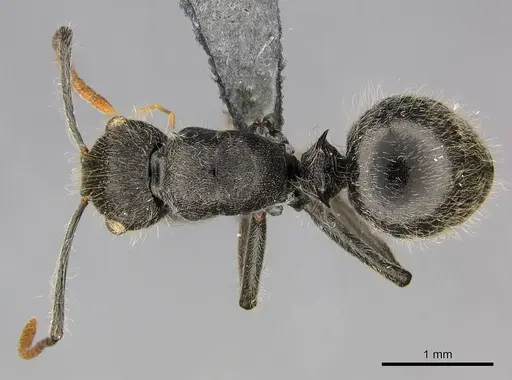
Literature
Loading distribution map...Loading products...