
Polyrhachis lepida
- Sci. Name
- Polyrhachis lepida
- Subgenus
- Cyrtomyrma
- Tribe
- Camponotini
- Subfamily
- Formicinae
- Author
- Kohout, 2006
- Distribution
- Found in 1 countries
Introduction
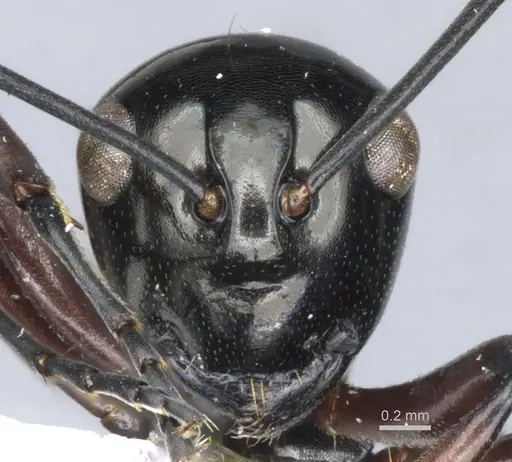
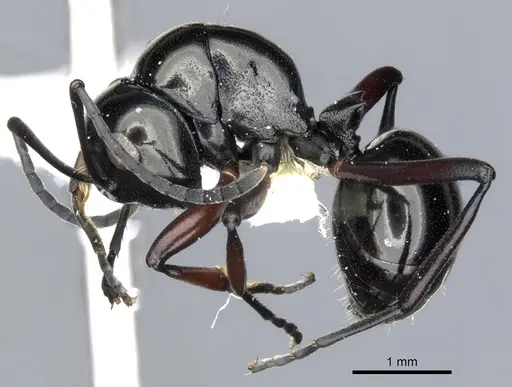
Polyrhachis lepida is a medium-sized arboreal ant endemic to Borneo, with workers measuring 5.64-6.00 mm and queens 6.80-7.61 mm in total length . They have a black body with reddish-brown legs and distinctive petiolar spines, short dorsal teeth and longer lateral spines . The species is distinguished from Polyrhachis rastellata by its smaller size, more convex occiput, and longer antennal scapes . These ants are common along rainforest edges in Borneo, from lowlands to higher altitudes . Polyrhachis lepida builds nests between leaves in the lower arboreal zone, often weaving temporary structures with larval silk. They have also been found nesting in hollow bamboo stems on the ground, showing flexibility in nesting sites . This adaptability suggests they can thrive in various captive setups.
Quick Summary
- Difficulty: Medium
- Origin & Habitat: Endemic to Borneo (Indonesia, Malaysia, Singapore), found in rainforest edges from lowlands to higher altitudes [2]
- Colony Type: Unconfirmed, colony structure has not been specifically documented. Based on typical Polyrhachis patterns, likely single-queen colonies.
- Size & Growth:
- Queen: 6.80-7.61 mm [1]
- Worker: 5.64-6.00 mm [1]
- Colony: Unknown, no published colony size data exists
- Growth: Unknown, no development timing data available
- Development: Unconfirmed, no direct data. Based on typical Polyrhachis patterns, expect 6-10 weeks at warm temperatures (Development timeline has not been studied for this species)
- Antkeeping:
- Temperature: Keep warm and stable, roughly 24-28°C, as these are tropical rainforest ants. Room temperature around 24-26°C is suitable.
- Humidity: Keep the nest substrate consistently moist but not waterlogged, as they are arboreal nesters.
- Diapause: No, these are tropical ants from Borneo and do not require hibernation. Keep them warm year-round.
- Nesting: Provide a naturalistic setup with climbing structures like branches or cork bark. A Y-tong nest or other suitable nest with a connected outworld works well [2].
- Behavior: Polyrhachis lepida is generally calm and not aggressive toward keepers. Workers are active foragers that climb well. They lack a functional sting and instead spray formic acid when biting, as typical for Formicinae ants. Escape prevention is important due to their climbing ability.
- Common Issues: temperatures below 22°C may slow activity and affect brood development, escape prevention is critical, they can climb and squeeze through small gaps, no specific colony data means keepers must observe and adjust care based on colony response, wild-caught colonies may carry parasites or diseases that can cause colony failure
Nest Preferences and Housing
In the wild, Polyrhachis lepida typically builds nests between leaves in the lower arboreal zone, using larval silk to weave leaf edges together [2]. One nest was found in a hollow bamboo stem on the ground, showing flexibility [2]. For captive care, provide vertical climbing space with branches or cork bark. A Y-tong nest or other suitable nest with a connected outworld works well. Keep the nest chamber relatively small and enclosed for founding queens.
Feeding and Diet
Polyrhachis lepida is an omnivore. In captivity, offer a constant sugar source like honey water and protein sources such as fruit flies or small crickets 2-3 times per week. Remove uneaten prey after 24-48 hours to prevent mold.
Temperature and Seasonal Care
As a tropical species from Borneo, Polyrhachis lepida requires warm conditions year-round. Keep the nest at 24-28°C, with a slight gradient if possible. No hibernation is needed, maintain consistent warmth to avoid stressing the colony.
Behavior and Colony Dynamics
Polyrhachis lepida is relatively calm and not aggressive. Workers are active foragers that climb well. They defend by spraying formic acid, as typical for Formicinae ants. Queens are robust, and colonies are likely single-queen based on genus patterns. Escape prevention is important due to their climbing ability. [1][2]
Frequently Asked Questions
How long does it take for Polyrhachis lepida to produce first workers?
The exact timeline is unconfirmed. Based on typical Polyrhachis patterns, expect 6-10 weeks from egg to first worker at warm temperatures around 26°C.
What do Polyrhachis lepida ants eat?
They are omnivores. Offer sugar sources like honey water and protein like small insects 2-3 times per week.
Do Polyrhachis lepida ants need hibernation?
No. These are tropical ants from Borneo and do not require hibernation. Keep them warm year-round.
What size colony do Polyrhachis lepida reach?
Colony size data is not available for this species. Based on related Polyrhachis species, expect moderate sizes over several years.
Can I keep multiple Polyrhachis lepida queens together?
This has not been documented. Based on typical genus patterns, they are likely single-queen colonies. Introducing additional queens is not recommended.
What type of nest is best for Polyrhachis lepida?
A naturalistic setup with climbing structures works best. A Y-tong nest or other suitable nest with a connected outworld is recommended.
Are Polyrhachis lepida good for beginners?
They are rated medium difficulty due to need for warm, humid conditions and arboreal housing. Some antkeeping experience is helpful.
How do I set up a colony founding setup for Polyrhachis lepida?
Use a test tube setup with a water reservoir. Keep it warm (26°C), dark, and undisturbed. After workers emerge, gradually introduce them to a larger outworld.
Where is Polyrhachis lepida found in the wild?
This species is endemic to Borneo, found in Indonesia, Malaysia, and Singapore. They live in rainforest edges and build nests between leaves.
Report an Issue
The current care sheet is based fully on literature. See inconsistencies, or something that's incorrect? Please , it will be resolved after review from an admin. Contributing to the blogs tab also helps providing information, to make us be able to further improve the caresheets. Thank you for your support!
References

This caresheet is licensed under CC BY-SA 4.0 .
Community Blogs
CASENT0903391
View on AntWeb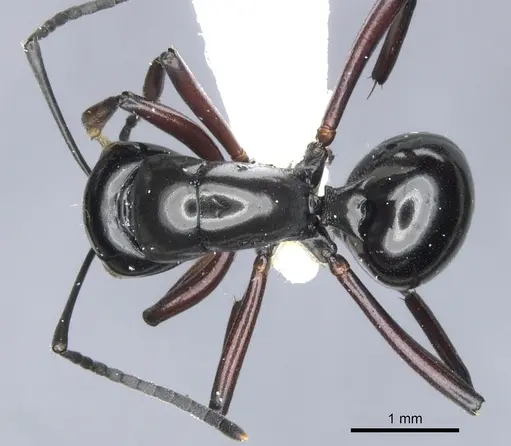
Literature
Loading distribution map...Loading products...