
Polyrhachis lacteipennis
- Sci. Name
- Polyrhachis lacteipennis
- Subgenus
- Myrmhopla
- Tribe
- Camponotini
- Subfamily
- Formicinae
- Author
- Smith, 1858
- Distribution
- Found in 8 countries
Introduction
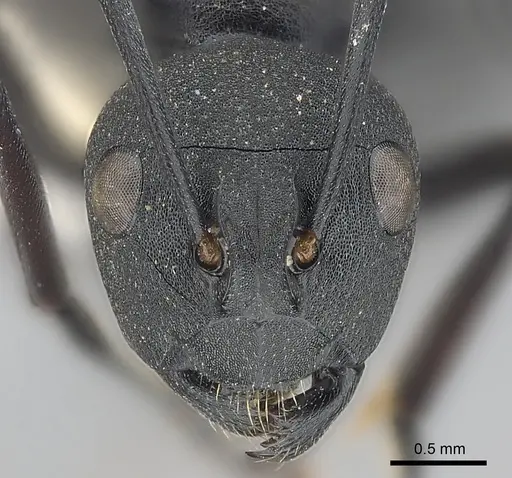
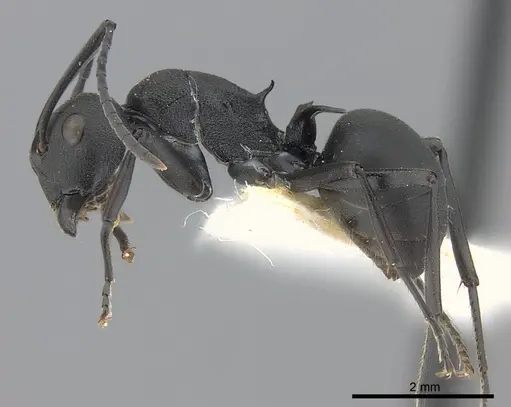
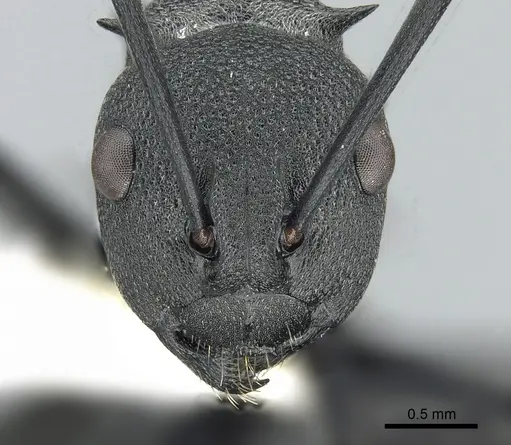
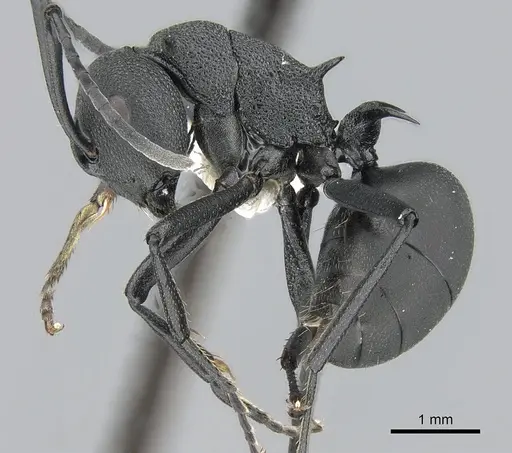
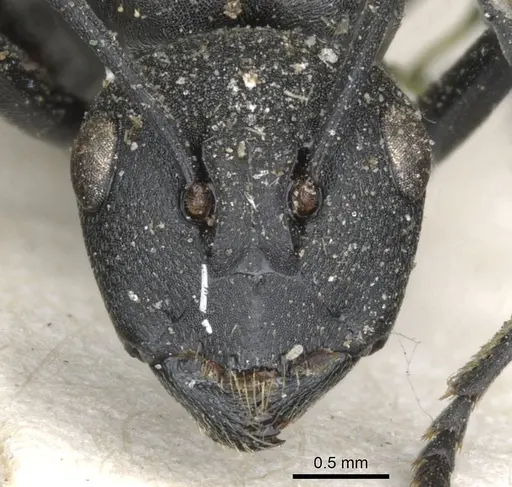
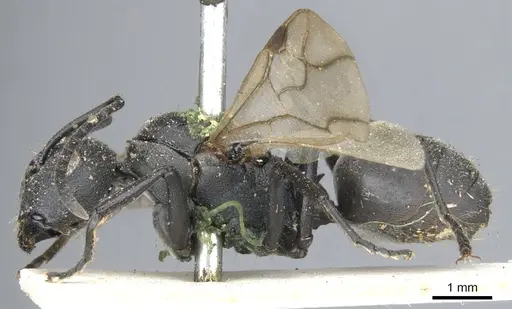
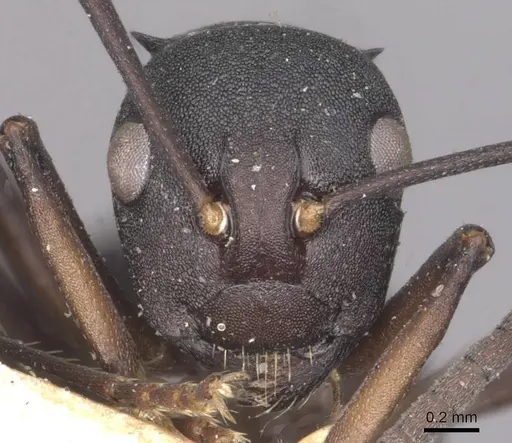
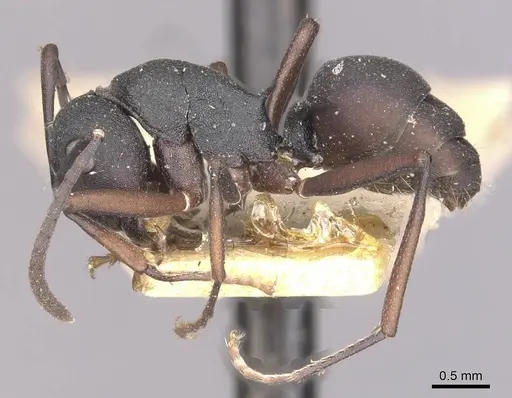
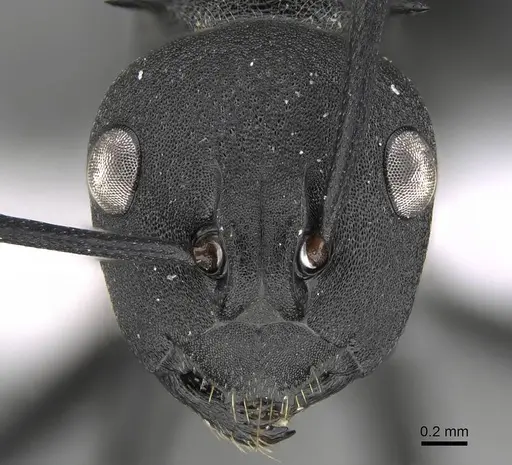
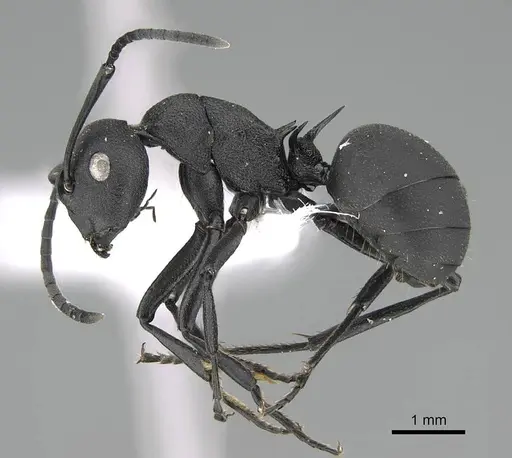
Polyrhachis lacteipennis is a spiny ant species found across South Asia and the Middle East. Workers are 4.5-7.0 mm in body length, entirely black, with three pairs of spines: short pronotal spines, upright propodeal spines, and curved petiolar spines that wrap around the gaster . Their body is finely punctured and granulate, with a matte texture, and the gaster is short and globose . These ants construct carton nests using salivary secretions, nest inside date palm trunks, or build silk-weaver nests in vegetation . They are common in urban South India and have spread into arid regions like Iran and the Arabian Peninsula .
Quick Summary
- Difficulty: Medium
- Origin & Habitat: Native to South Asia (India, Nepal, Sri Lanka) with range extending through the Middle East (Iran, Israel, Oman, UAE, Saudi Arabia, Yemen) to Afghanistan and Turkmenistan [5][6]. They occupy diverse habitats from tropical agricultural areas to desert oases, thriving in date palm groves and irrigated farmland with organic matter [1]. In India, they are common in agricultural ecosystems and urban gardens, often foraging on trees [7][8]. Recorded from sea level up to 1900m elevation in the Himalayas [9].
- Colony Type: Based on Polyrhachis genus patterns, colonies are likely monogyne or polygyne, with polydomous structure meaning multiple nests across locations [10]. Colony structure ranges from small monogynous colonies to large polygynous colonies with thousands of workers [10].
- Size & Growth:
- Queen: ~7 mm [11], based on total length measurements
- Worker: ~4.5-7.0 mm [1], based on total length measurements
- Colony: Up to several thousand workers, estimated from genus patterns [10]
- Growth: Moderate, inferred from typical Polyrhachis development
- Development: Estimated 6-8 weeks at optimal temperature, based on genus patterns for tropical Formicinae [10] (Development time may vary with temperature and conditions.)
- Antkeeping:
- Temperature: Keep at 24-28°C. This warm-adapted species from tropical and subtropical regions benefits from a temperature gradient using a heating cable [1].
- Humidity: Provide a humidity gradient, keep the nest substrate slightly moist but allow some drying between waterings, as they tolerate drier conditions from their natural habitats [1].
- Diapause: No true diapause required, based on seasonal patterns showing activity year-round in most of their range [12]. In cooler regions, reduced activity may occur, but full hibernation is not needed.
- Nesting: Versatile nesters, provide a naturalistic setup with multiple chambers or a Y-tong/plaster nest. They can be arboreal or ground-nesting, so include vertical space and materials for silk nests [3][13].
- Behavior: Diurnal species that forages actively on vegetation and tree trunks [10]. Not particularly aggressive but will defend nests vigorously. Workers form long columns to aphids for honeydew [14]. Moderate escape risk due to agility, use standard prevention. Defense mechanism: lack a sting and spray formic acid as a general Formicinae trait. Mutualistic with aphids like Aphis craccivora [15].
- Common Issues: colonies may fail if kept too cold, maintain warm temperatures year-round, escape prevention is important, they are active foragers, slow founding phase, first workers may take weeks to emerge, wild-caught colonies may carry parasites, polydomous nature may require more space as colony grows
Housing and Nest Setup
You can use a test tube setup for founding colonies, as queens seal themselves in to raise first brood. As the colony grows, transfer to a formicarium with multiple chambers. These ants are versatile nesters, include vertical space and small twigs in the outworld to encourage natural carton or silk nest building [3][13]. A Y-tong or plaster nest works well for humidity control. Provide a dark, secure nest area with an interesting outworld for exploration [10].
Feeding and Diet
Offer sugar water or honey constantly, as they are primarily sugar feeders collecting honeydew from aphids [15][10]. Provide protein 2-3 times per week with small insects like fruit flies or mealworms. They are mutualistic with aphids such as Aphis craccivora and Rhopalosiphum maidis [15]. If you keep aphids, ants may tend them, but this is optional [14].
Temperature and Seasonal Care
Keep temperatures at 24-28°C for optimal activity and brood development. Use a heating cable to create a gradient [1]. In cooler climates, reduce temperatures to 18-20°C if activity slows, but full hibernation is not needed [12]. Avoid prolonged temperatures below 18°C.
Colony Dynamics and Growth
Colonies can grow to several thousand workers in optimal conditions [10]. They are polydomous, so may expand to multiple nests in captivity. Founding queens may take 6-8 weeks to produce first workers [10]. Workers have large spines for defense but are not aggressive toward keepers.
Foraging Behavior
Workers forage individually during daylight hours, forming columns to aphid colonies for honeydew [14]. In captivity, they explore outworlds readily. Ensure constant access to sugar sources and offer protein supplements [15][10].
Frequently Asked Questions
How long does it take for Polyrhachis lacteipennis queens to raise first workers?
Expect 6-8 weeks from egg to first worker at 24-28°C, based on genus patterns [10]. The claustral queen raises the first brood alone using stored fat reserves.
What do Polyrhachis lacteipennis ants eat?
They primarily feed on sugar sources like honeydew from aphids [15]. Offer constant sugar water and protein 2-3 times weekly with small insects [10].
Do Polyrhachis lacteipennis ants need hibernation?
No true hibernation is required. Based on seasonal patterns, they remain active year-round in most of their range [12]. In cooler areas, you can reduce temperatures slightly if activity slows.
How big do Polyrhachis lacteipennis colonies get?
Mature colonies can reach up to several thousand workers [10]. They are polydomous, so provide adequate space.
Can I keep multiple Polyrhachis lacteipennis queens together?
Based on genus patterns, colonies can have multiple queens, but this is unconfirmed for this species. Introduce queens carefully if attempting [10].
What temperature is best for Polyrhachis lacteipennis?
Keep them at 24-28°C with a temperature gradient [1]. Avoid temperatures below 18°C for extended periods.
Are Polyrhachis lacteipennis good for beginners?
They are rated medium difficulty due to temperature and feeding needs. Their large size and distinctive appearance make them rewarding [1].
When should I move my colony to a formicarium?
Move from test tube to formicarium once the colony reaches 15-20 workers or the test tube is crowded. Use a Y-tong or plaster nest with climbing structures [3][13].
Why is my Polyrhachis lacteipennis colony not growing?
Check temperature (24-28°C), constant sugar water access, and substrate moisture. Cold temperatures are a common cause. Be patient with founding colonies [10].
Report an Issue
The current care sheet is based fully on literature. See inconsistencies, or something that's incorrect? Please , it will be resolved after review from an admin. Contributing to the blogs tab also helps providing information, to make us be able to further improve the caresheets. Thank you for your support!
References

This caresheet is licensed under CC BY-SA 4.0 .
Community Blogs
CASENT0227531
View on AntWeb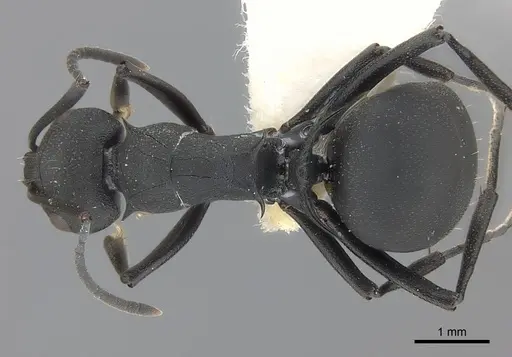
CASENT0281400
View on AntWeb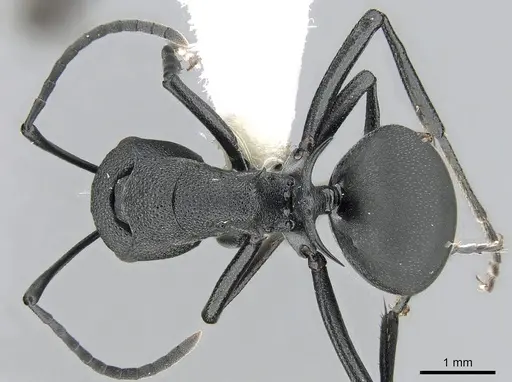
CASENT0903386
View on AntWeb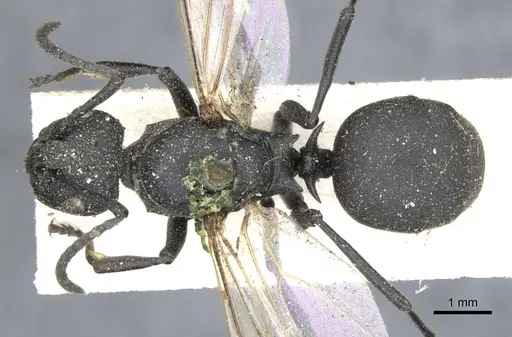
CASENT0910897
View on AntWeb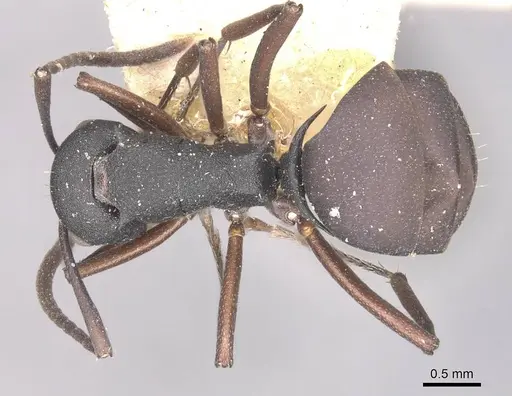
CASENT0922268
View on AntWeb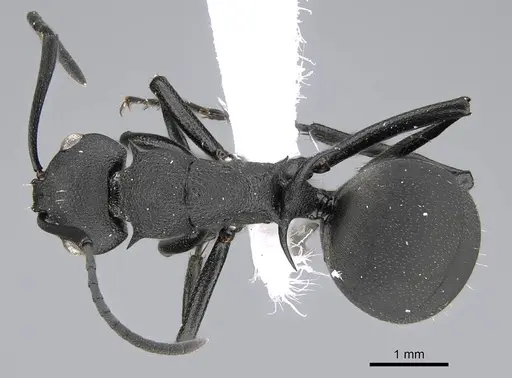
Literature
Loading distribution map...Loading products...