
Polyrhachis kohli
- Sci. Name
- Polyrhachis kohli
- Subgenus
- Myrma
- Tribe
- Camponotini
- Subfamily
- Formicinae
- Author
- Forel, 1916
- Distribution
- Found in 0 countries
Introduction
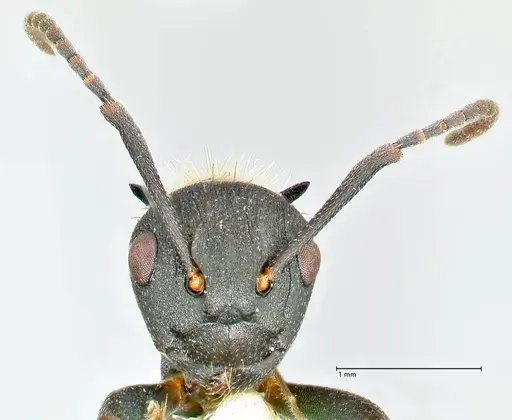
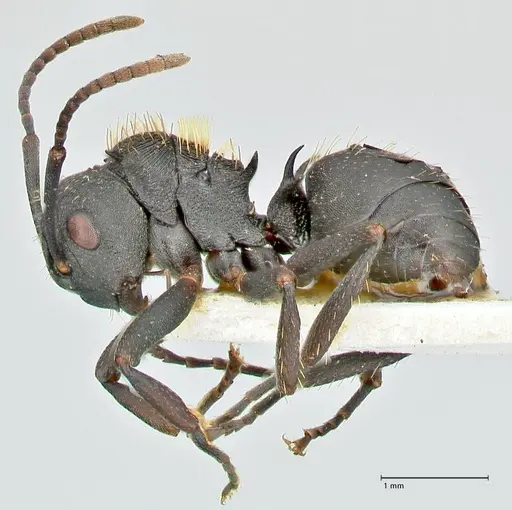
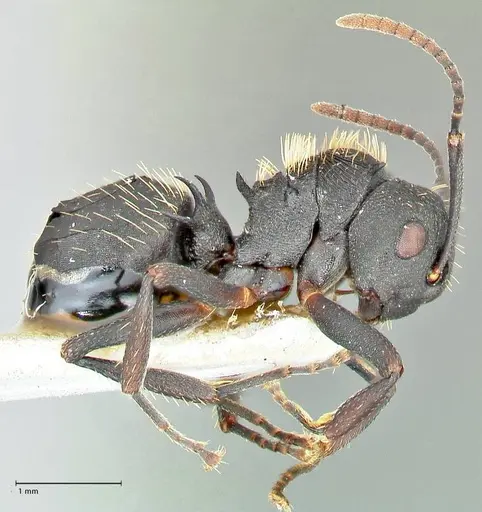
Polyrhachis kohli is a hairy ant species in the revoili-group, endemic to the Democratic Republic of Congo. It has an immarginate mesosoma, a propodeal dorsum longer than wide, and long sinuous standing hairs on its appendages. The body is black with brown mandibles, piceous legs, and ferrugineous antennae. Size data for this species is unavailable, but Polyrhachis ants are generally small to medium-sized. This species was revived from synonymy with P. volkarti in 2016 and remains poorly studied . The most notable aspect of P. kohli is its recent taxonomic recognition and limited biological data, making it a rare subject in antkeeping.
Quick Summary
- Difficulty: Hard
- Origin & Habitat: Democratic Republic of Congo (Afrotropical region). Specific habitat preferences are unconfirmed, but Polyrhachis species are typically arboreal [2][3].
- Colony Type: Colony structure is unconfirmed. Based on typical Polyrhachis patterns, likely monogyne (single queen) colonies.
- Size & Growth:
- Queen: Size data unavailable, inferred from Polyrhachis genus to be around 4-7mm total length
- Worker: Size data unavailable, inferred from Polyrhachis genus to be around 3-6mm total length
- Colony: Unknown
- Growth: Unknown
- Development: Unconfirmed, no species-specific data exists (Development timeline is unknown, estimates based on related Formicinae species are unreliable without confirmation.)
- Antkeeping:
- Temperature: Unconfirmed. Based on tropical distribution, aim for warm temperatures around 24-28°C with a gentle gradient [2].
- Humidity: Unconfirmed. Polyrhachis species generally prefer moderate humidity, provide a moisture gradient with a damp nest area and drier options for self-regulation [3].
- Diapause: Unconfirmed, likely no diapause given tropical distribution [2].
- Nesting: Based on typical Polyrhachis behavior, they prefer arboreal nesting. In captivity, use vertical structures like cork bark or Y-tong/plaster nests with chambers [3].
- Behavior: Polyrhachis ants are generally peaceful and not aggressive. Workers are active foragers that likely scavenge for sugars and proteins. Escape risk is high due to small size, use fine barriers like fluon. Specific behavior for P. kohli is unstudied.
- Common Issues: small size increases escape risk, ensure barriers are effective, humidity control may be challenging in tropical setups, lack of species-specific data makes care optimization difficult
Species Identification and History
Polyrhachis kohli was described by Forel in 1916 from specimens in the Democratic Republic of Congo. It was considered a synonym of P. volkarti until Rigato (2016) revived it as a valid species based on morphological differences, such as longer sinuous hairs and closer propodeal ridges [1]. This species belongs to the revoili-group, characterized by hairy appearance and immarginate mesosoma.
Natural History and Distribution
Polyrhachis kohli is endemic to the Democratic Republic of Congo, with no confirmed specific habitat beyond the type locality. The genus Polyrhachis includes over 600 species, many arboreal nesters that use vegetation or hollow stems. Whether P. kohli exhibits weaver ant behavior is unknown [2][3].
Housing and Nesting Preferences
Since specific nesting data is unavailable, use typical Polyrhachis setups. Provide vertical structures like cork bark or branches in a naturalistic enclosure. Alternatively, use a Y-tong or plaster nest with chambers. Maintain a humidity gradient with a moist nest area and good ventilation to prevent mold [3].
Feeding and Diet
Dietary preferences are unconfirmed. Offer a constant sugar source like honey water and protein prey such as fruit flies or mealworms 2-3 times per week. Remove uneaten food to prevent mold. Observe colony preferences and adjust [3].
Temperature and Seasonal Care
Keep the colony at warm temperatures around 24-28°C, mimicking its tropical habitat. Use a heating cable for a gentle gradient. Avoid temperatures below 20°C. No diapause is needed [2][3].
Colony Development and Growth
No specific development data exists. Based on genus patterns, expect slow growth. Queens may seal themselves in a chamber to raise the first brood, but founding behavior is unconfirmed. First workers may be smaller than mature workers [1][3].
Frequently Asked Questions
How long does it take for Polyrhachis kohli to produce first workers?
The exact timeline is unconfirmed. No species-specific data exists, so estimates are unreliable [1].
What is the best nest type for Polyrhachis kohli?
Based on typical Polyrhachis behavior, use arboreal setups with vertical structures or Y-tong/plaster nests [3].
What do Polyrhachis kohli ants eat?
Offer sugar sources constantly and protein prey 2-3 times weekly, based on general Polyrhachis diet [3].
Are Polyrhachis kohli good for beginners?
No, this species is not recommended for beginners due to lack of data and rarity. Start with better-documented species [3].
Do Polyrhachis kohli need hibernation?
Unlikely, given the tropical distribution. No diapause is recommended [2].
How big do Polyrhachis kohli colonies get?
Colony size is unknown for this species [3].
Can I keep multiple Polyrhachis kohli queens together?
Colony structure is unconfirmed. Based on genus patterns, they likely form single-queen colonies, so combining queens is not recommended [3].
Where is Polyrhachis kohli found in the wild?
Polyrhachis kohli is endemic to the Democratic Republic of Congo [2][1].
Why is there so little information about Polyrhachis kohli?
This species was only revived from synonymy in 2016 and remains poorly studied, with no comprehensive biological data [1].
Report an Issue
The current care sheet is based fully on literature. See inconsistencies, or something that's incorrect? Please , it will be resolved after review from an admin. Contributing to the blogs tab also helps providing information, to make us be able to further improve the caresheets. Thank you for your support!
References

This caresheet is licensed under CC BY-SA 4.0 .
Community Blogs
FOCOL2579
View on AntWeb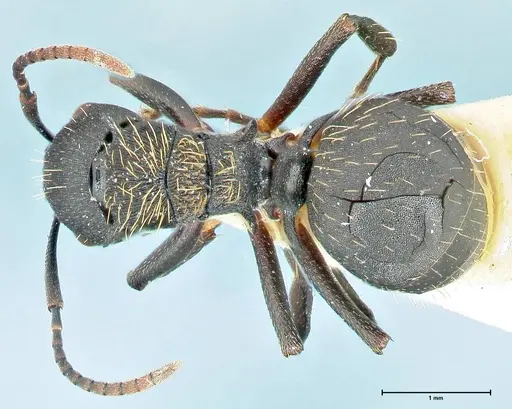
Literature
Loading distribution map...Loading products...