
Polyrhachis kaipi
- Sci. Name
- Polyrhachis kaipi
- Subgenus
- Chariomyrma
- Tribe
- Camponotini
- Subfamily
- Formicinae
- Author
- Mann, 1919
- Distribution
- Found in 1 countries
Introduction
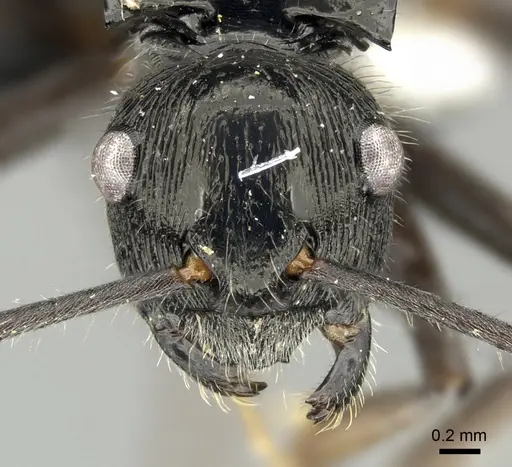
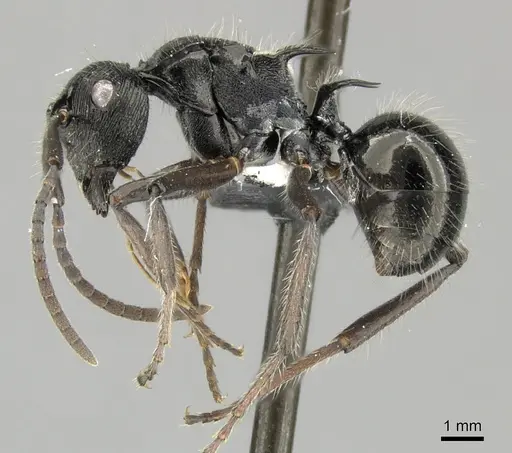
Polyrhachis kaipi is a tropical spiny ant native to the Solomon Islands archipelago. Workers feature prominent spines on their thorax and a dark body with subtle metallic highlights. They inhabit warm, humid tropical forests in the southwestern Pacific . First recorded in 1919,this species remains poorly studied in modern literature . Most Polyrhachis species build silk nests or nest in wood, but P. kaipi lacks detailed behavioral records. Keepers should expect a quiet, arboreal-adapted species that thrives in stable tropical conditions.
Quick Summary
- Difficulty: Medium
- Origin & Habitat: Solomon Islands (Makira, Guadalcanal, Malaita) and Santa Cruz Islands (Anuda). They live in warm, humid tropical forests [1][2].
- Colony Type: Single-queen colonies are typical for the genus, but specific data for Polyrhachis kaipi is unconfirmed.
- Size & Growth:
- Queen: size data unavailable
- Worker: size data unavailable
- Colony: Unknown, no published data available.
- Growth: Moderate
- Development: Unknown, development time is unconfirmed. (Tropical species typically develop faster in warm conditions, but exact timelines for this species are unstudied.)
- Antkeeping:
- Temperature: Keep consistently warm, roughly 24-28°C. Tropical species need stable heat year-round. A heating cable on one side of the nest creates a safe gradient [3].
- Humidity: Provide a humidity gradient. Keep the nest substrate consistently moist but not waterlogged. High ambient humidity mimics their forest home.
- Diapause: No, as a tropical species, they do not require winter diapause. Maintain warm conditions year-round.
- Nesting: They adapt well to Y-tong (AAC), plaster, soil, or 3D-printed nests. Provide enclosed chambers with some vertical space. Avoid acrylic nests entirely.
- Behavior: Workers are generally calm and active. They forage for honeydew and small insects. Escape risk is moderate due to their size. Standard barrier methods like Fluon on test tube rims work well. They do not construct silk nests in captivity.
- Common Issues: temperature drops below 20°C stall development and cause worker mortality, poor ventilation combined with high humidity leads to mold growth, limited natural history data means colony founding may take longer than expected, wild-caught queens often stress easily and require careful acclimation, small initial colony sizes result in slower population growth
Housing and Nest Setup
Polyrhachis kaipi adapts well to various captive setups. Y-tong (AAC), plaster, soil, or 3D-printed nests work excellently. These materials let you control humidity precisely. For a founding colony, a standard test tube setup with a water reservoir works, but monitor humidity carefully. Tropical ants in test tubes can develop mold if condensation becomes excessive. Provide an outworld area for foraging. Since they are likely arboreal in the wild, include some vertical space in the nest or add climbing materials. A formicarium with 2-3 connected chambers gives the colony room to expand as it grows. Always ensure excellent escape prevention. Standard barrier methods like Fluon on test tube rims work well. Avoid acrylic nests entirely. [3]
Feeding and Diet
In the wild, Polyrhachis species feed on honeydew from aphids and scale insects, plus small insects and nectar. In captivity, offer a varied diet. Sugar water or honey water provides a constant energy source. Protein sources like mealworms, small crickets, or fruit flies work well twice weekly. They are generalist feeders. Remove uneaten prey after 24 hours to prevent mold. Feed small amounts initially and adjust based on how quickly workers clear the food. A well-fed colony will have distended abdomens on workers. This is normal and indicates good nutrition. [3]
Temperature and Humidity
As a Solomon Islands species, Polyrhachis kaipi requires warm, humid conditions. Maintain temperatures between 24-28°C year-round. A heating cable placed on top of the nest helps maintain warmth, especially in cooler rooms. Room temperature of 24-26°C may suffice in warm climates. Humidity should stay high. Use a water tube attached to the nest or mist the outworld regularly. Allow some areas to dry slightly to give ants options. Poor humidity leads to stalled brood development and worker mortality. Conversely, poor ventilation combined with high humidity causes mold. Balance is essential. Watch for condensation pooling in test tube setups. [3]
Colony Development and Growth
A newly mated queen will found her colony, but the exact founding method is unconfirmed. Expect unknown timelines for eggs to develop into workers at optimal temperature. The first workers, called nanitics, are typically smaller than mature workers. Growth rate is moderate. Do not expect rapid colony expansion. A healthy founding colony should reach a stable size within several months under good conditions. Colony growth depends heavily on consistent warmth and proper feeding. Once established, colonies can grow steadily over 1-2 years. Patience is key with this species. They are not fast growers but can become impressive colonies with time.
Behavior and Temperament
Polyrhachis kaipi workers are active and alert but not particularly aggressive. They will investigate new foods and defend the nest if threatened, but they do not launch mass attacks. Workers forage individually rather than in large raiding parties. They are diurnal, with most activity during daylight hours. When disturbed, they may raise their abdomen in warning. They lack a functional sting. They bite targets and spray concentrated formic acid from an acidopore. Their spines provide additional defense against predators. In the outworld, they establish foraging trails quickly once they locate food sources. They adapt well to observation and do not panic easily. [3]
Frequently Asked Questions
How long does it take for Polyrhachis kaipi to get first workers?
Unknown. Development time is unconfirmed. Keep the colony warm and stable around 24-28°C. Tropical species typically develop faster in heat, but exact timelines for this species are unstudied.
What do I feed Polyrhachis kaipi?
Offer sugar water or honey water constantly for energy. Provide protein sources like mealworms, small crickets, or fruit flies twice weekly. They are generalist feeders and should accept most standard ant foods. Remove uneaten food after 24 hours.
Can I keep Polyrhachis kaipi in a test tube?
Yes, test tubes work for founding colonies. Ensure humidity is maintained and watch for mold buildup. Move to a larger formicarium once the colony reaches a stable size and the test tube shows signs of crowding.
Do Polyrhachis kaipi need hibernation?
No. As a tropical Solomon Islands species, they do not require hibernation. Keep them warm year-round at 24-28°C.
Are Polyrhachis kaipi good for beginners?
They are medium difficulty. Their humidity and temperature requirements are stricter than temperate species, but they adapt well to standard setups. Experienced beginners can succeed with them.
How big do Polyrhachis kaipi colonies get?
Unknown. No published data exists for mature colony sizes. Expect moderate growth based on typical Polyrhachis patterns.
When should I move my colony to a formicarium?
Move from test tube to formicarium when the colony reaches a stable size and the test tube shows signs of mold or humidity issues. A Y-tong, plaster, soil, or 3D-printed nest works well for this species.
Why is my colony growing slowly?
Check temperature and humidity. Tropical species need consistent warmth. Cool temperatures stall development. Also ensure the queen is still laying eggs and the colony is not stressed.
Report an Issue
The current care sheet is based fully on literature. See inconsistencies, or something that's incorrect? Please , it will be resolved after review from an admin. Contributing to the blogs tab also helps providing information, to make us be able to further improve the caresheets. Thank you for your support!
References

This caresheet is licensed under CC BY-SA 4.0 .
Community Blogs
CASENT0219719
View on AntWeb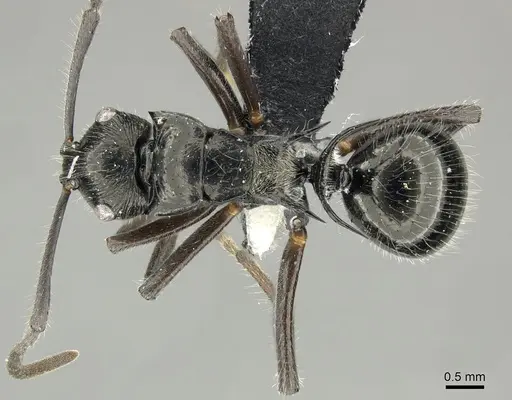
Literature
Loading distribution map...Loading products...