
Polyrhachis inermis
- Sci. Name
- Polyrhachis inermis
- Subgenus
- Myrma
- Tribe
- Camponotini
- Subfamily
- Formicinae
- Author
- Smith, 1858
- Distribution
- Found in 5 countries
Introduction
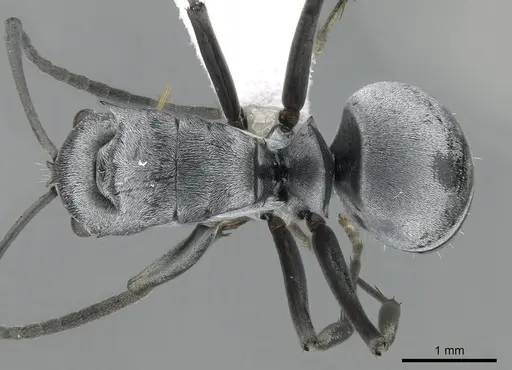
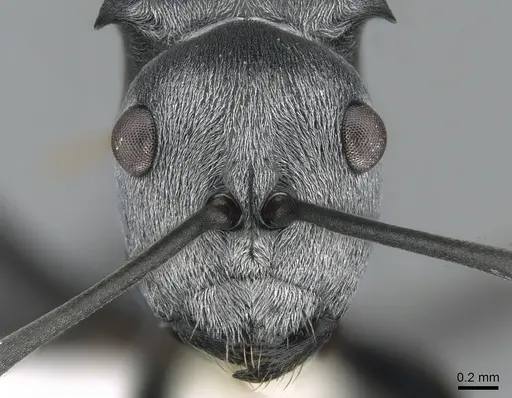
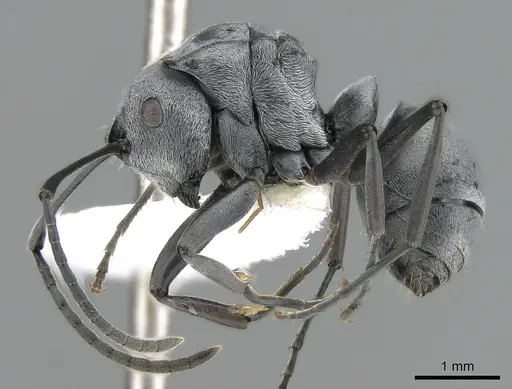
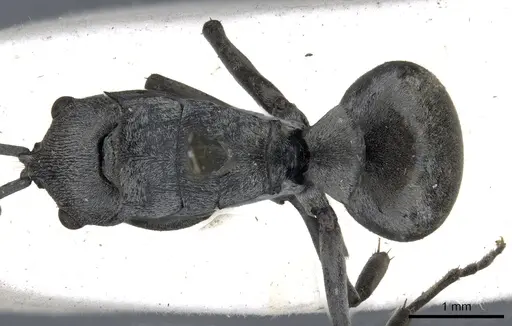
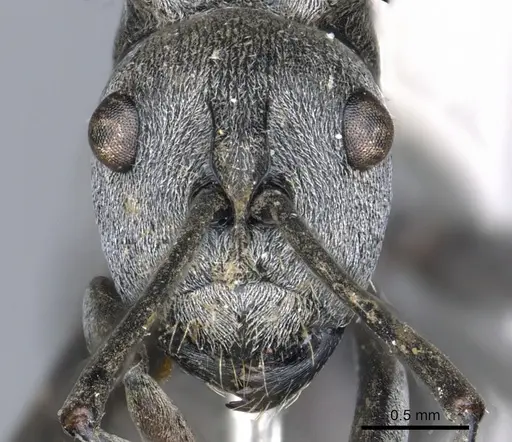
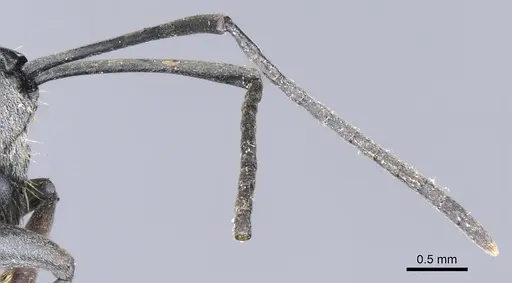
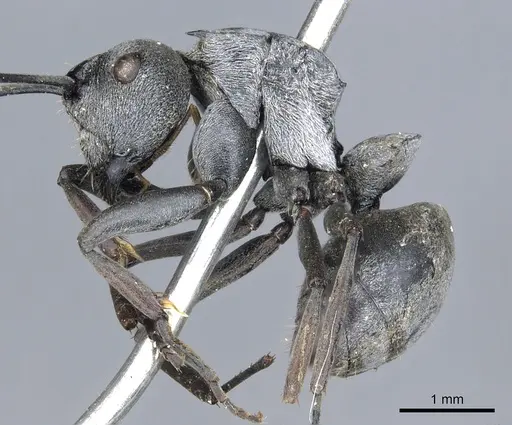
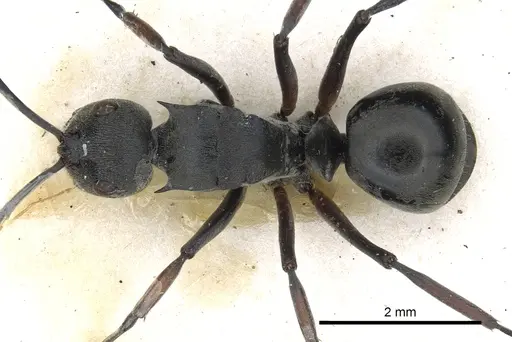
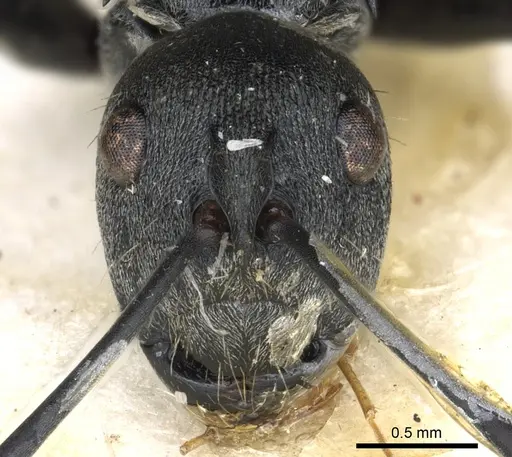
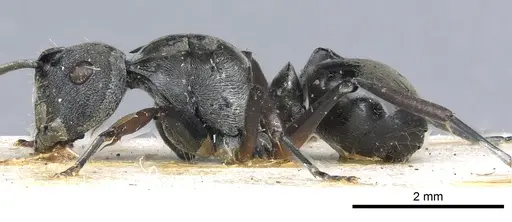
Polyrhachis inermis is a small, black ant species in the subgenus Myrma, part of the inermis-group. Workers measure approximately 4.8 mm long . This species is found throughout the Indomalaya region, including Borneo, Sulawesi, the Philippines, Malaysia, Singapore, and Thailand . They inhabit tropical rainforests, often in the canopy layer and have been collected in alluvial forests . One notable aspect is their canopy-dwelling behavior, foraging in trees rather than on the ground .
Quick Summary
- Difficulty: Medium
- Origin & Habitat: Tropical Southeast Asia, found in Borneo, Sulawesi, Philippines, Malaysia, Singapore, and Thailand. They live in tropical rainforests, particularly in the canopy and alluvial forests [2][4][5].
- Colony Type: Unconfirmed, no specific data on queen number for this species.
- Size & Growth:
- Antkeeping:
- Temperature: Keep warm, around 24-28°C, as they are tropical ants
- Humidity: Keep nest substrate consistently moist but not waterlogged
- Diapause: No, tropical species do not require hibernation
- Nesting: Provide vertical space for climbing, as they are canopy-dwelling [4]. Use Y-tong or naturalistic nests with moisture.
- Behavior: Generally peaceful and non-aggressive. Workers are active foragers in the canopy [4]. Escape risk is high due to small size, use fine mesh barriers.
- Common Issues: tropical species requires consistent warmth, cold temperatures can slow or stop brood development., high humidity needs mean mold can be an issue if ventilation is poor., small size makes escape prevention critical, use fine mesh and tight-fitting lids., canopy-dwelling nature means they need vertical space in their enclosure., slow founding means colonies take time to establish, patience is required.
Housing and Nest Setup
Polyrhachis inermis is a canopy-dwelling species [4], so you should provide vertical space for climbing in their enclosure. A Y-tong nest works well, or you can use a naturalistic setup with plants and branches. Because they come from humid tropical rainforests [5], keep the nest substrate consistently moist but not flooded. Provide a foraging area with some height so workers can explore. Escape prevention is critical, these small ants can squeeze through small gaps, so use fine mesh on all openings.
Feeding and Diet
Like most Polyrhachis species, P. inermis is likely omnivorous. You should offer sugar water or honey as a constant energy source. For protein, provide small insects like fruit flies, pinhead crickets, or mealworms. Feed them small prey items 2-3 times per week, and keep a sugar source available at all times. Remove uneaten prey after 24 hours to prevent mold.
Temperature and Humidity
These are tropical ants that need warm, humid conditions. Keep temperatures between 24-28°C year-round, they do not tolerate cool conditions well. A small heating cable on one side of the nest can help maintain warmth if your room temperature is below 24°C. Humidity should stay high, mist the nest area regularly and keep the water reservoir filled. Avoid placing the nest near air conditioning or drafty windows. Unlike temperate species, they do not need any cooling period or hibernation.
Colony Development
A newly mated queen will seal herself in a chamber and lay eggs after a few weeks. She feeds the first brood using her stored fat reserves, this is called claustral founding, but founding behavior for this species is unconfirmed. The first workers (nanitics) will be smaller than mature workers and appear after 6-8 weeks at optimal temperatures. After the nanitics emerge, the colony grows gradually. Colonies develop moderately fast once established, but the founding phase requires patience.
Behavior and Temperament
Polyrhachis inermis is generally peaceful and less aggressive than some other Polyrhachis species. Workers are active foragers that explore their territory methodically. As arboreal ants, they prefer to stay elevated and will often travel along branches or plants in their enclosure. They are not known for stinging and pose no danger to keepers. Their small size and agile movement make them interesting to watch. Escape prevention is essential due to their tiny size. [4]
Frequently Asked Questions
How long does it take for Polyrhachis inermis to have first workers?
Expect first workers (nanitics) to emerge in about 6-8 weeks after the queen lays eggs, provided temperatures are kept at 24-28°C. This is an estimate based on related tropical Polyrhachis species, the exact development time for P. inermis has not been directly studied.
What temperature do Polyrhachis inermis need?
Keep them warm at 24-28°C year-round. They are tropical ants and do not tolerate cool temperatures. A heating cable on one side of the nest can help maintain these temperatures.
Can I keep multiple Polyrhachis inermis queens together?
Not recommended, there is no documented evidence that unrelated queens can found colonies together successfully. Polyrhachis species are typically single-queen (monogyne) colonies, but this is unconfirmed for P. inermis.
What do Polyrhachis inermis eat?
They are omnivorous. Offer sugar water or honey as a constant energy source, and small insects like fruit flies, pinhead crickets, or mealworms 2-3 times per week for protein.
Are Polyrhachis inermis good for beginners?
They are rated as medium difficulty. While not the hardest species, they do require warm, humid tropical conditions year-round, which may require more equipment than temperate species. Their small size also demands good escape prevention.
Do Polyrhachis inermis need hibernation?
No, they are tropical ants and do not require hibernation or any cooling period. Keep them warm at 24-28°C throughout the year.
How big do Polyrhachis inermis colonies get?
The exact maximum colony size is undocumented. Expect moderate growth over several years.
When should I move Polyrhachis inermis to a formicarium?
Wait until the colony has a decent worker count before moving them. A test tube setup works well for the founding phase. Once the colony is established, you can move them to a naturalistic setup or Y-tong nest with a foraging area.
Why are my Polyrhachis inermis dying?
Common causes include: temperatures below 24°C (they are tropical and need warmth), low humidity, or poor escape prevention. Check that your setup maintains proper heat and humidity, and ensure all openings are sealed with fine mesh.
Report an Issue
The current care sheet is based fully on literature. See inconsistencies, or something that's incorrect? Please , it will be resolved after review from an admin. Contributing to the blogs tab also helps providing information, to make us be able to further improve the caresheets. Thank you for your support!
References

This caresheet is licensed under CC BY-SA 4.0 .
Community Blogs
Literature
Loading distribution map...Loading products...