
Polyrhachis halidayi
- Sci. Name
- Polyrhachis halidayi
- Subgenus
- Campomyrma
- Tribe
- Camponotini
- Subfamily
- Formicinae
- Author
- Emery, 1889
- Distribution
- Found in 5 countries
Introduction
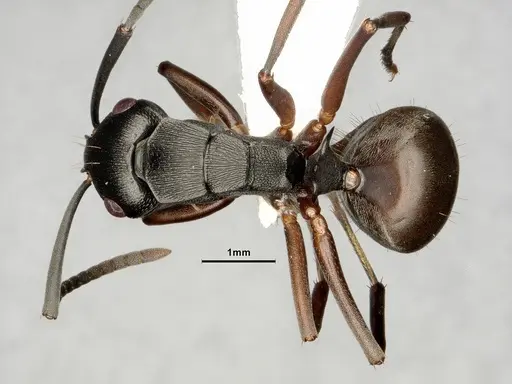
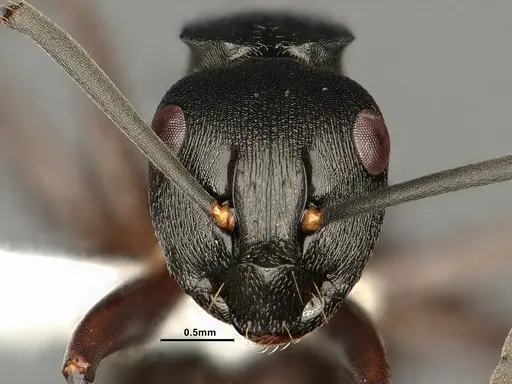
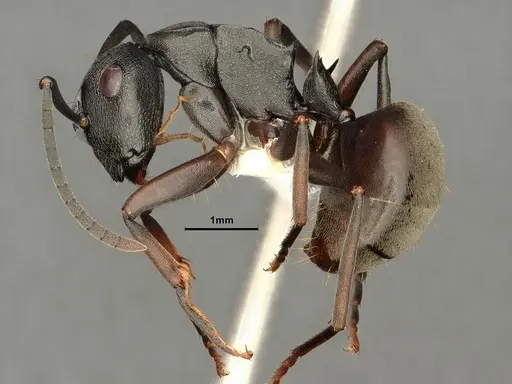
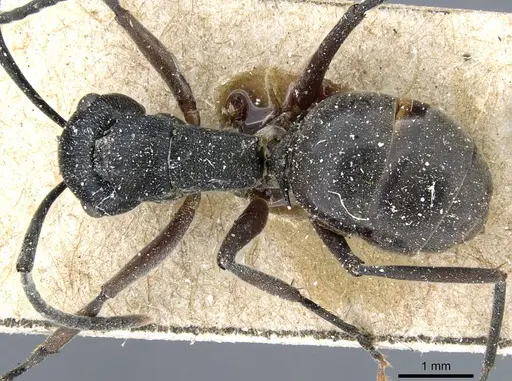
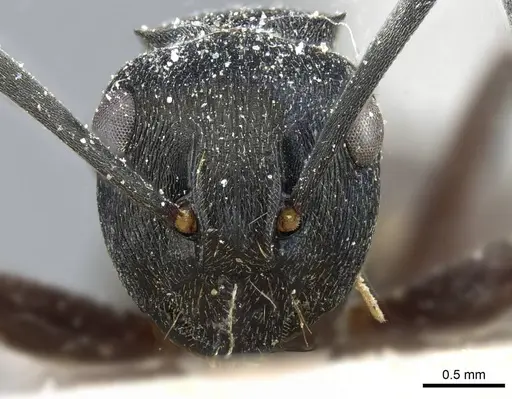
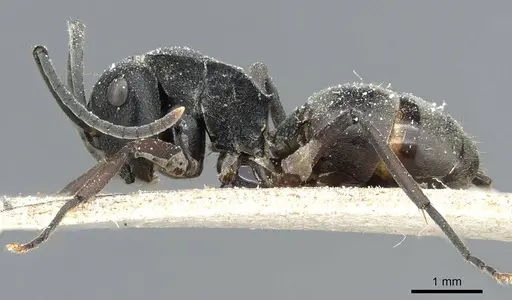
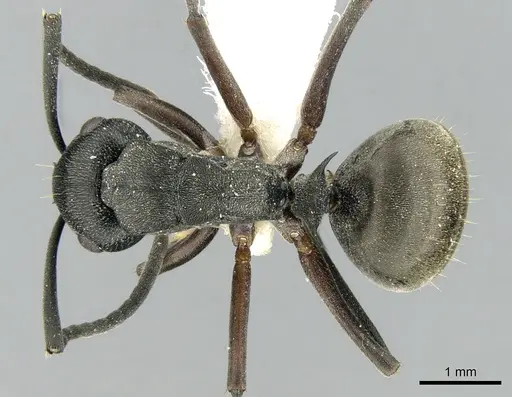
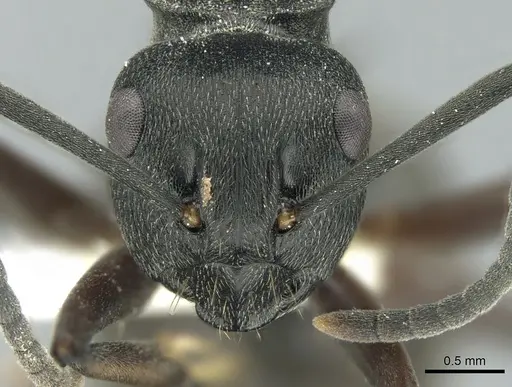
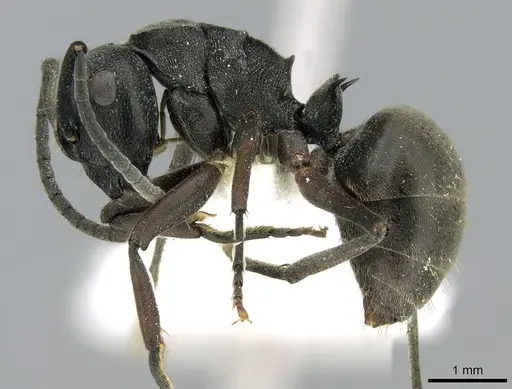
Polyrhachis halidayi is a medium-sized ant from the subgenus Campomyrma, found across Southeast Asia and parts of southern China. Workers measure 6.80-8.80 mm, and queens are slightly larger at 8.68-8.80 mm . Their body is mostly black, with reddish-brown to black legs and gaster, and they have two sharp, backward-pointing spines on the petiole (waist) with two small denticles between them. The propodeal spines are short and point upward, which helps tell them apart from lookalikes like P. quadrispinosa and P. lao. They also have sparse erect hairs on the first gastral tergite, while their lookalikes have none . This species is flexible in where it nests. Earlier reports suggested they nest between leaves, but newer research shows they use rotting wood on the forest floor, dead bamboo stems, and twigs in trees . They live in both primary forests (dry evergreen, mixed deciduous, hill evergreen) and disturbed forests from 250 to 1500 m elevation . One study found them only in rubber plantations, not in primary or secondary forests of the same area , but other records confirm they occur in a wide range of forest types across Asia.
Quick Summary
- Difficulty: Medium
- Origin & Habitat: Southeast Asia and southern China, including Thailand, Laos, Myanmar, Vietnam, India (Arunachal Pradesh), and southern China (Yunnan, Hainan, Zhejiang, Fujian, Guangxi) [1][2][3][4][5][6]. Found in primary forests (dry evergreen, mixed deciduous, hill evergreen) and disturbed forests,250-1500 m elevation [1].
- Colony Type: Colony structure is unconfirmed, no published data on whether they are single-queen (monogyne) or multi-queen (polygyne).
- Size & Growth:
- Queen: 8.68-8.80 mm [1]
- Worker: 6.80-8.80 mm [1]
- Colony: Unknown, no published data
- Growth: Unknown, no development timing data available
- Development: Unknown, no direct measurements. Based on related Polyrhachis species, expect 6-10 weeks at optimal temperature, but this is an estimate. (Development timeline has not been studied for this species.)
- Antkeeping:
- Temperature: Keep warm, around 24-28°C, based on their tropical/subtropical range [1]. Provide a temperature gradient so workers can self-regulate. Avoid prolonged temperatures below 20°C or above 32°C.
- Humidity: They nest in rotting wood and forest floor debris, so moderate to high humidity is important [1]. Keep the nest substrate consistently moist but not waterlogged. Provide a water tube and mist if needed.
- Diapause: Unknown, no published data. Since their range includes tropical and subtropical areas, true hibernation is unlikely, but they may slow down in cooler months. Observe colony activity and adjust feeding accordingly.
- Nesting: In captivity, offer wooden nests (Y-tong/plaster), or naturalistic setups with rotting wood pieces. They naturally use decaying wood, dead bamboo, and twigs [1]. Avoid completely dry nests.
- Behavior: Polyrhachis halidayi is a calm, moderate‑sized ant. Workers are not aggressive and do not sting, they defend by biting and spraying formic acid (common to Formicinae). Escape risk is moderate, standard barriers work well for this size. They forage actively on the forest floor and tree trunks [1].
- Common Issues: humidity requirements not well‑documented, if set wrong, the colony risks desiccation or mold growth., diet preferences are unknown, you may need to experiment with different sugars and proteins., founding behavior is unconfirmed, a caught queen may fail if conditions are mismatched., no published colony size or growth data, making it hard to gauge colony health.
Nest Preferences
Polyrhachis halidayi naturally nests in rotting wood on the forest floor, dead bamboo stems, and twigs in trees [1]. Earlier claims of strictly arboreal nesting (between leaves) are not supported by recent surveys [1]. In captivity, give them a nest with wood or wood‑derived materials, like Y‑tong (AAC), plaster, or a naturalistic setup with rotting wood pieces. The nest should have chambers large enough for 7-9 mm workers and narrow passages that make them feel secure. A water tube connected to the nest helps maintain needed moisture.
Feeding and Diet
The natural diet of Polyrhachis halidayi has not been studied. Based on other Polyrhachis and Formicinae species, they likely accept both sugary foods (honey water, sugar water) and protein (small insects, mealworms). Start by offering a constant sugar source and add protein prey 2-3 times per week. Remove uneaten prey within 24-48 hours to prevent mold. If they ignore sugar, try focusing on protein. Observe which foods they prefer and adjust.
Temperature and Care
These ants come from tropical and subtropical forests (250-1500 m elevation) [1], so they need steady warmth. Keep the nest at 24-28°C. If your room is cooler, use a heating cable on one side to create a gradient. Avoid direct sunlight and big temperature swings. Humidity is important, keep the nest substrate consistently moist but not soaked. A water tube provides a reliable moisture source. Check that the nest doesn't dry out, especially if you use a heat source.
Behavior and Temperament
Workers are moderate‑sized (6.80-8.80 mm) and generally calm. They do not have a sting, like other Formicinae ants, they defend by biting and spraying formic acid. They are not known to be aggressive toward keepers. They forage actively on the forest floor and in low vegetation [1]. Escape prevention is straightforward, standard barriers (fluon, talc, oil) work well for this size. Check connections regularly.
Colony Establishment
Since founding behavior is unconfirmed for this species, the safest approach is to get a start from a reputable seller with an established colony. If you catch a queen, place her in a test tube setup with a moist cotton plug (not wet), in darkness, and leave her undisturbed. Development timeline is unknown, so be patient and don't disturb for at least 6-8 weeks. Once the first tiny workers (nanitics) appear, start offering small food items. Transfer to a proper nest only when the colony has clearly outgrown the tube. Growth is likely slow at first. Keep detailed notes to share with the community.
Frequently Asked Questions
How long does it take for Polyrhachis halidayi to produce first workers?
The exact development time is unknown. Based on other Polyrhachis species, you might expect 6-10 weeks from egg to first worker at around 25°C, but this is an estimate. Be patient and let the queen remain undisturbed in darkness until workers emerge.
What do Polyrhachis halidayi ants eat?
Their diet hasn't been studied, but like other Polyrhachis ants, they likely accept sugary foods (honey water, sugar water) and protein (small insects, mealworms). Offer sugar water constantly and provide protein prey 2-3 times per week. Remove uneaten prey quickly to avoid mold.
Can I keep Polyrhachis halidayi in a test tube setup?
Yes, test tubes work well for a young colony. Keep the cotton moist (not soaked) and the tube dark. Once the colony has several workers and outgrows the tube, move them to a wooden formicarium or naturalistic setup with rotting wood, matching their natural nesting preferences [1].
What temperature do Polyrhachis halidayi need?
Keep them at 24-28°C, which matches their natural tropical and subtropical habitat (250-1500 m elevation) [1]. If your home is cooler, use a heating cable on one side of the nest to create a gradient. Avoid temperatures below 20°C or above 32°C.
How big do Polyrhachis halidayi colonies get?
Maximum colony size is unknown, there are no published data. Based on their moderate worker size and related Polyrhachis species, colonies may reach several hundred workers over a few years, but this is a guess.
Are Polyrhachis halidayi good for beginners?
They are rated medium difficulty. They are not as demanding as some exotic species, but their care requirements (exact humidity, diet, founding) are not well documented, so you need to observe and adjust. They are better for keepers with some experience.
Do Polyrhachis halidayi need hibernation?
Diapause requirements are unknown. Given their tropical to subtropical range, they probably do not need true hibernation. They may slow down in cooler months, if that happens, reduce feeding but no special cooling period is needed.
When should I move my colony to a formicarium?
Move them from the test tube to a proper nest (wooden/plaster formicarium or naturalistic setup) when they clearly outgrow the tube. Avoid moving too early, wait until the colony has several workers and the tube becomes crowded. They naturally nest in rotting wood, so a Y‑tong or wooden nest with moisture provision works well [1].
Can I keep multiple queens together?
Colony structure (monogyne vs polygyne) is unconfirmed for this species, so it is not recommended to combine unrelated queens. They might fight. Start with a single queen or a known multi‑queen start from a reliable source.
Report an Issue
The current care sheet is based fully on literature. See inconsistencies, or something that's incorrect? Please , it will be resolved after review from an admin. Contributing to the blogs tab also helps providing information, to make us be able to further improve the caresheets. Thank you for your support!
References

This caresheet is licensed under CC BY-SA 4.0 .
Community Blogs
Literature
Loading distribution map...Loading products...