
Polyrhachis gribodoi
- Sci. Name
- Polyrhachis gribodoi
- Subgenus
- Campomyrma
- Tribe
- Camponotini
- Subfamily
- Formicinae
- Author
- Emery, 1887
- Distribution
- Found in 1 countries
Introduction
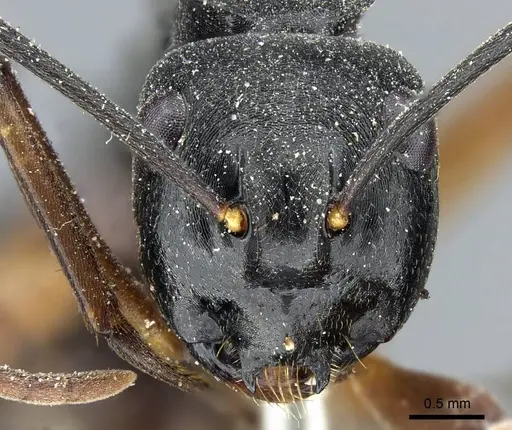
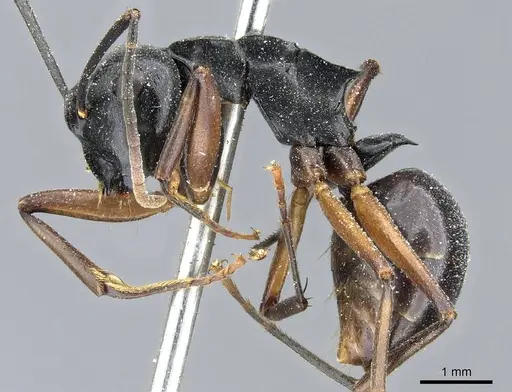
Polyrhachis gribodoi is a moderately large ant species native to rainforests in Borneo, Java, and Malaysia . Workers have a total length of 6.95-8.82 mm, with distinctive features like propodeal spines, a bilobed clypeus, and longitudinally striated pronotum . This species belongs to the equina species-group and subgenus Campomyrma . P. gribodoi is arboreal and lignicolous, nesting in hollow branches and around tree bases in humid rainforest environments . This nesting behavior makes it a unique choice for antkeepers seeking species that prefer elevated sites over ground-dwelling ants.
Quick Summary
- Difficulty: Medium
- Origin & Habitat: Rainforests of Borneo, Java, and Malaysia in the Indomalaya region, nesting in hollow branches and around tree bases [1][2].
- Colony Type: Colony structure is unconfirmed. Specific data on queen number is not available for this species.
- Size & Growth:
- Queen: Size data unavailable, no measurements provided in research
- Worker: 6.95-8.82 mm total length [1]
- Colony: Colony size data unavailable, no specific counts provided
- Growth: Moderate, inferred from tropical Polyrhachis patterns
- Development: Unknown, no specific data available for this species (Development time is unconfirmed, maintain warm temperatures for optimal growth)
- Antkeeping:
- Temperature: Keep warm, roughly 24-28°C, based on tropical rainforest habitat [1]. Use a heating cable if room temperature falls below this range.
- Humidity: Keep nest substrate consistently moist but not waterlogged, with a humidity gradient. This matches their rainforest habitat [1].
- Diapause: No, tropical species do not require winter diapause [1].
- Nesting: Provide enclosed spaces like hollow branches or cork bark, as they nest in wood in the wild [1].
- Behavior: Arboreal foragers that climb actively. They are not highly aggressive but will defend their nest. Escape risk is moderate due to their size and climbing ability.
- Common Issues: dry conditions can cause colony decline, maintain moist substrate, standard test tube setups are unsuitable, provide wood-based nesting options, temperature drops below 22°C can stress the colony, colonies may grow slowly compared to faster-growing species, wild-caught colonies may carry parasites affecting health
Housing and Nest Setup
You need housing that reflects their arboreal lifestyle. In the wild, they nest in hollow branches and around tree bases [1]. Use cork bark, hollow twigs, or wooden elements in captivity. A Y-tong nest with narrow chambers can work, but add wood pieces for nesting. Avoid standard test tube setups for founding queens, they prefer enclosed wooden spaces. Provide an outworld with branches for foraging. Ensure escape prevention, as they are agile climbers [1].
Feeding and Diet
You should offer a varied diet. Provide sugar sources like honey water constantly, and protein such as small insects 2-3 times per week. Remove uneaten prey after 24-48 hours to prevent mold. Place food on branches or elevated surfaces, as they are arboreal foragers.
Temperature and Humidity Management
You must maintain warm and humid conditions year-round. Keep temperatures around 24-28°C, as they are from tropical rainforests [1]. Humidity should be high, keep the nest substrate moist but not waterlogged. Mist the outworld regularly and monitor with a hygrometer.
Colony Development and Growth
Colonies develop at a moderate pace. The queen is expected to be claustral, but this is unconfirmed for this species. First workers may be smaller than mature workers. Growth depends on consistent temperature and feeding. Patience is key, as colonies may grow slowly.
Behavior and Handling
Workers are active foragers with moderate aggression when defending their nest. They are arboreal, so provide vertical structures in the outworld. They use chemical communication and lay pheromone trails to food sources.
Frequently Asked Questions
What is the best nest type for Polyrhachis gribodoi?
A naturalistic setup with cork bark, hollow branches, or a Y-tong nest with wood elements works best. They are arboreal and lignicolous, so avoid standard test tubes [1].
How long does it take for Polyrhachis gribodoi to produce first workers?
Unknown, no specific data is available for this species. Maintain warm temperatures for optimal development.
What temperature do Polyrhachis gribodoi need?
Keep them at roughly 24-28°C, based on their tropical rainforest habitat [1].
How often should I feed Polyrhachis gribodoi?
Provide sugar water constantly and protein 2-3 times per week. Adjust based on colony consumption.
Can I keep multiple Polyrhachis gribodoi queens together?
This is not recommended, as colony structure is unconfirmed and most Polyrhachis are single-queen species.
Do Polyrhachis gribodoi need hibernation?
No, as a tropical species, they do not require diapause [1].
Why is my Polyrhachis gribodoi colony not growing?
Check temperature, humidity, and nesting setup. Poor growth can result from improper conditions or feeding.
Are Polyrhachis gribodoi good for beginners?
They are rated Medium difficulty due to specific humidity and temperature needs.
What humidity level do Polyrhachis gribodoi need?
Keep the nest substrate consistently moist, matching their rainforest habitat [1].
Report an Issue
The current care sheet is based fully on literature. See inconsistencies, or something that's incorrect? Please , it will be resolved after review from an admin. Contributing to the blogs tab also helps providing information, to make us be able to further improve the caresheets. Thank you for your support!
References

This caresheet is licensed under CC BY-SA 4.0 .
Community Blogs
CASENT0905553
View on AntWeb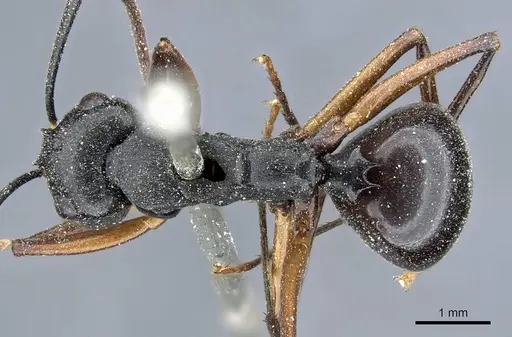
Literature
Loading distribution map...Loading products...