
Polyrhachis gibbula
- Sci. Name
- Polyrhachis gibbula
- Subgenus
- Myrma
- Tribe
- Camponotini
- Subfamily
- Formicinae
- Author
- Rigato, 2016
- Distribution
- Found in 1 countries
Introduction
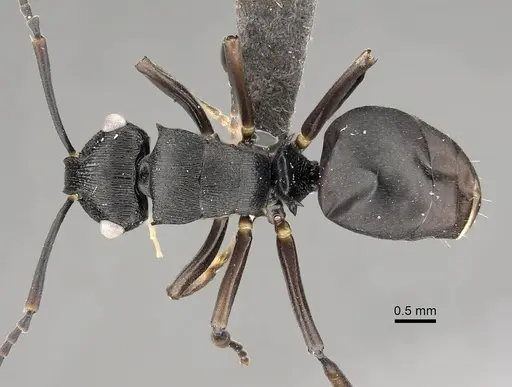
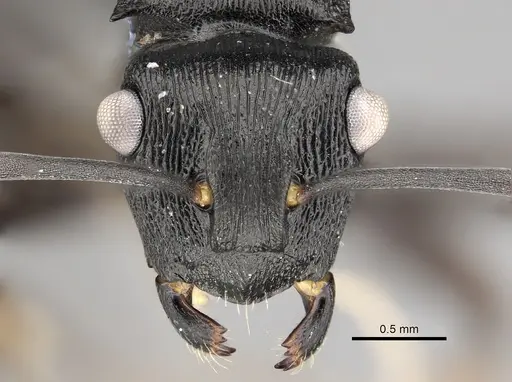
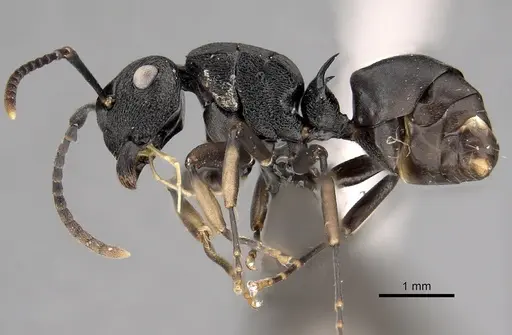
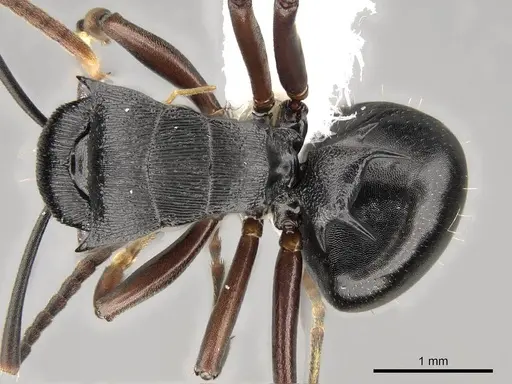
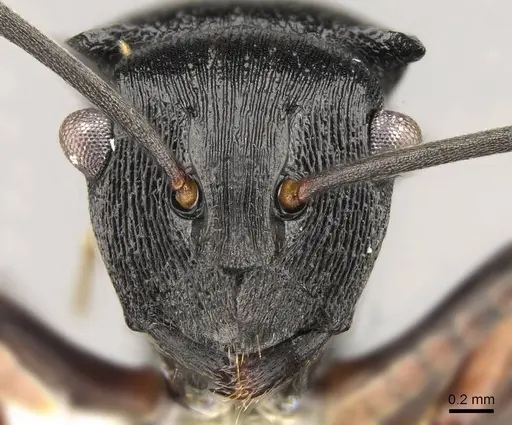
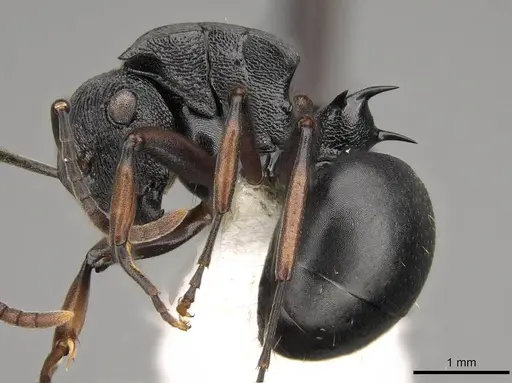
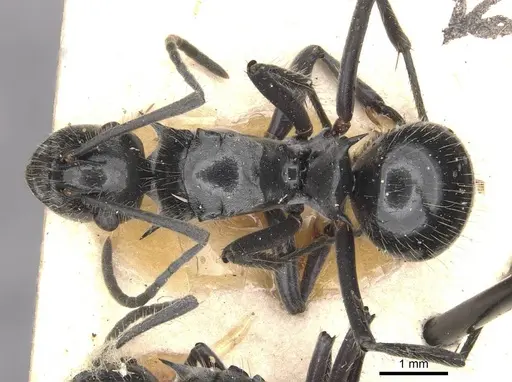
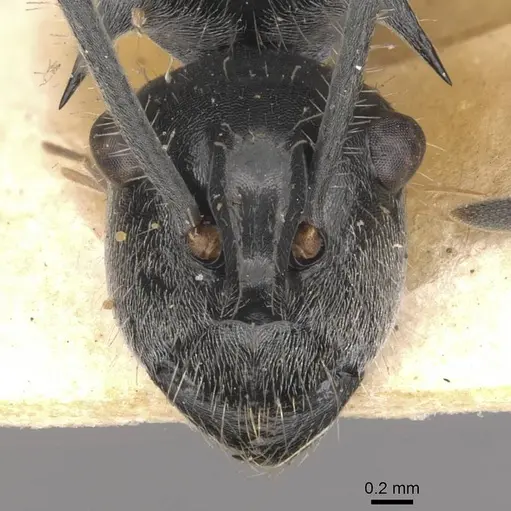
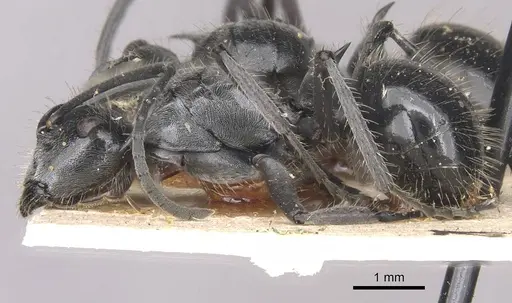
Polyrhachis gibbula is a small ant species from the viscosa-group, found in Kenya and Tanzania . Workers have a trapezoidal head with bulging eyes, longitudinal rugulosity on the head and mesosoma, and a strongly arched propodeum . The petiole has four spines, with two longer dorsal spines and two shorter lateral spines . The body is black with brown appendages, and this species was collected from dead twigs in semideciduous forest habitat . This species belongs to the subgenus Myrma and is known for its spiny petiole and arboreal nesting habits. As a recently described species, detailed care information is limited, but Polyrhachis ants are generally docile and adaptable.
Quick Summary
- Difficulty: Medium
- Origin & Habitat: Kenya and Tanzania, East Africa. Found in semideciduous forest at low elevation (around 20m), typically nesting in dead twigs [1].
- Colony Type: Colony structure is unconfirmed. Based on Polyrhachis genus patterns, likely single-queen (monogyne) colonies. No data on ergatoid replacement reproductives for this species.
- Size & Growth:
- Queen: Unknown, queen has not been described.
- Worker: Size unknown, inferred from Polyrhachis genus (~4-8 mm)
- Colony: Unknown, no data available.
- Growth: Unknown, no development data.
- Development: Unconfirmed. Based on typical Polyrhachis patterns and small size, estimated 6-10 weeks at optimal temperature. (No direct development studies exist for this species. Estimate based on genus-level data.)
- Antkeeping:
- Temperature: Keep around 24-28°C with a gentle gradient, based on their lowland East African forest habitat [1].
- Humidity: Provide a humidity gradient, mostly dry nest chamber with one small moist area, as they nest in dead twigs in semideciduous forest [1].
- Diapause: Unknown for this species. Many East African ants do not require true hibernation.
- Nesting: Natural nesting in dead twigs or small cavities [1]. In captivity, use a test tube setup for founding colonies, and later a small Y-tong or plaster nest with narrow chambers.
- Behavior: Polyrhachis ants are generally docile and non-aggressive. They lack a functional sting and use formic acid spray for defense, typical of Formicinae. Workers are small and active foragers, likely feeding on honeydew and small insects. Their small size means escape prevention is critical, they can squeeze through tiny gaps.
- Common Issues: small size makes escape likely without fine mesh barriers and tight-fitting lids, humidity control is important, too dry causes desiccation, too wet promotes mold, limited species-specific care data means estimates are based on genus patterns
Housing and Nest Setup
For founding colonies, use a standard test tube setup with water and cotton plug. Cover the tube to reduce stress. Workers are small, so ensure tight seals to prevent escape. Once the colony grows, move to a small Y-tong or plaster nest with chambers scaled to their size. Include a moist area for humidity, as they nest in dead twigs [1].
Feeding and Diet
Offer sugar water or honey water for energy, and small prey like fruit flies for protein. Remove uneaten food to prevent mold. No species-specific diet data exists, so follow general antkeeping guidelines.
Temperature and Heating
Maintain temperatures around 24-28°C with a gradient, based on their East African habitat [1]. Use a heating mat on one side of the nest, but avoid direct heat on water reservoirs. Temperatures below 20°C or above 32°C should be avoided.
Humidity and Water
Provide a humidity gradient with a moist nest area and drier outworld, as they nest in dead twigs in semideciduous forest [1]. In test tubes, the water reservoir maintains humidity. For formicariums, keep substrate damp but not waterlogged to prevent mold.
Behavior and Temperament
Polyrhachis ants are docile and non-aggressive. They defend by spraying formic acid, typical of Formicinae. Workers are shy and prefer enclosed spaces, foraging likely at crepuscular times. Provide dark, secure areas to reduce stress.
Frequently Asked Questions
How long does it take for Polyrhachis gibbula to produce first workers?
The exact timeline is unconfirmed, but based on typical Polyrhachis development, expect 6-10 weeks from egg to first worker at optimal temperature (24-28°C).
Can I keep Polyrhachis gibbula in a test tube?
Yes, test tubes work well for founding colonies. Use a tight-fitting lid to prevent escape due to their small size.
What do Polyrhachis gibbula eat?
Based on genus behavior, they likely eat honeydew and small insects. Feed sugar water for energy and small prey for protein.
Are Polyrhachis gibbula good for beginners?
This species is rated medium difficulty. Limited species-specific care data means some experience is helpful, and escape prevention is critical due to small size.
Do Polyrhachis gibbula need hibernation?
Hibernation requirements are unknown. Being from East Africa, they likely do not require a true dormancy period.
How big do Polyrhachis gibbula colonies get?
Colony size is unconfirmed for this species. No data is available on maximum colony size.
When should I move Polyrhachis gibbula to a formicarium?
Move to a small formicarium once the colony outgrows the test tube, ensuring chambers are appropriately sized for their tiny workers.
Can I keep multiple Polyrhachis gibbula queens together?
Colony structure is unconfirmed. It is unknown whether they are single-queen or multi-queen, so combining queens is not recommended without data.
Why are my Polyrhachis gibbula escaping?
Their small size means they can squeeze through tiny gaps. Use fine mesh on ventilation and ensure all lids fit tightly.
Report an Issue
The current care sheet is based fully on literature. See inconsistencies, or something that's incorrect? Please , it will be resolved after review from an admin. Contributing to the blogs tab also helps providing information, to make us be able to further improve the caresheets. Thank you for your support!
References

This caresheet is licensed under CC BY-SA 4.0 .
Community Blogs
Literature
Loading distribution map...Loading products...