
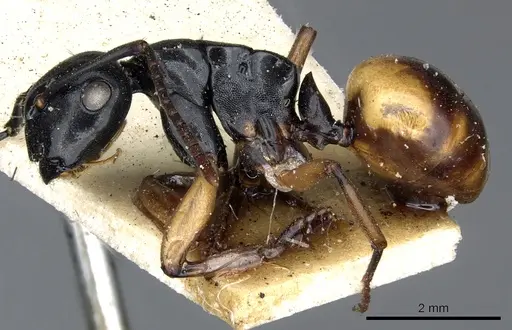
Northern Broad-nosed Spiny Ant
Polyrhachis flavibasis
- Sci. Name
- Polyrhachis flavibasis
- Subgenus
- Campomyrma
- Tribe
- Camponotini
- Subfamily
- Formicinae
- Author
- Clark, 1930
- Common Name
- Northern Broad-nosed Spiny Ant
- Distribution
- Found in 1 countries
Introduction
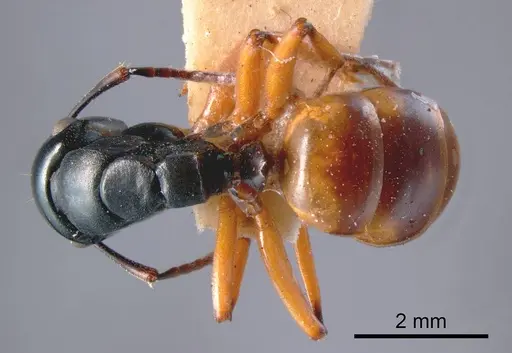
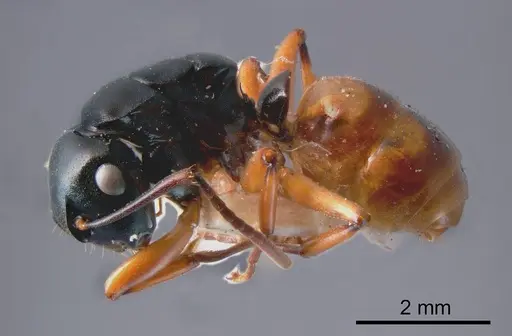
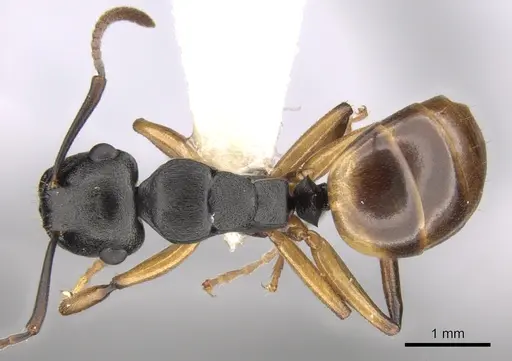
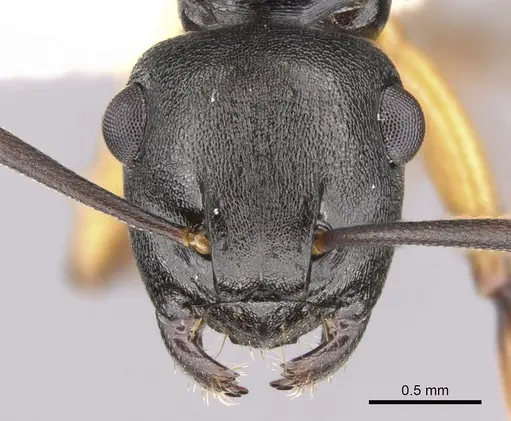
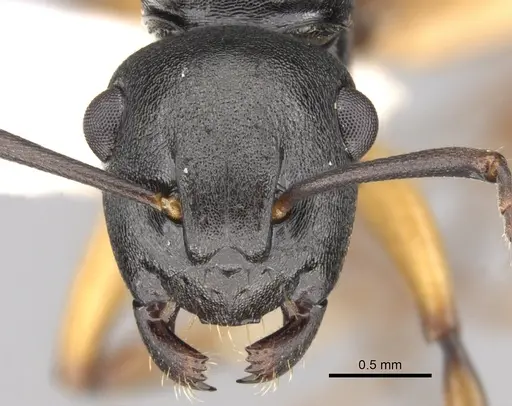
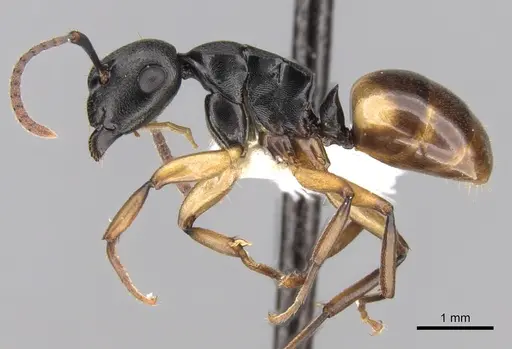
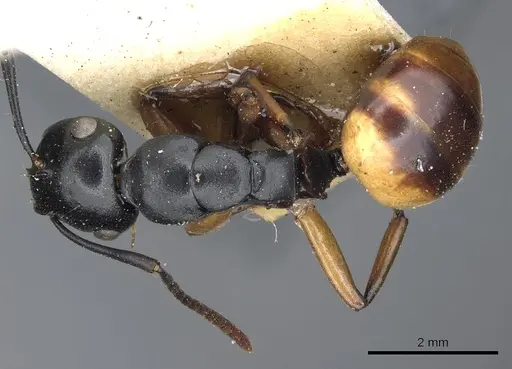
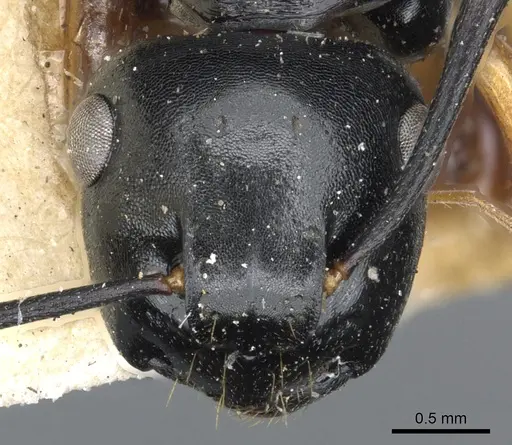
Polyrhachis flavibasis is an Australian ant species in the subgenus Campomyrma, commonly known as spiny ants due to their thoracic spines. They are found in southeastern Australia, particularly in rainforests of Queensland and New South Wales . Size data is unavailable from the research context. A notable behavior is their construction of carton entrances using plant material, which protects the nest opening .
Quick Summary
- Difficulty: Medium
- Origin & Habitat: Southeastern Australia, in rainforest and wet sclerophyll forest environments, nesting in rotting wood [2][5].
- Colony Type: Unconfirmed, no specific data on queen number in research context.
- Size & Growth:
- Queen: size data unavailable
- Worker: size data unavailable
- Colony: Colonies can grow to hundreds of workers (estimated from related species)
- Growth: Moderate, typical for Polyrhachis species
- Development: Estimated 6-8 weeks at optimal temperature, inferred from Polyrhachis patterns [3] (Development time is inferred, specific data for P. flavibasis is unavailable.)
- Antkeeping:
- Temperature: Keep warm, roughly 22-26°C, based on subtropical habitat.
- Humidity: Provide a humidity gradient, mostly dry nest chamber with one small moist area, as they are from rainforest habitats.
- Diapause: Yes, based on Bassian affinity and seasonal patterns in southeastern Australia [5].
- Nesting: Lignicolous, prefer rotting wood nests with carton entrances [3][4].
- Behavior: Generally calm and non-aggressive. Workers are active foragers. Defense mechanism is spraying formic acid, as typical for Formicinae. Escape risk is moderate, use standard barriers.
- Common Issues: wood nesting requires appropriate nest materials, test tubes alone may not be ideal, rainforest origin means they need higher humidity, dry conditions cause colony decline, slow growth may frustrate beginners expecting rapid expansion, carton nest building may cause enclosure modifications, provide suitable materials, subtropical origin means they need winter rest, keeping warm year-round may shorten lifespan
Housing and Nest Preferences
Polyrhachis flavibasis is a lignicolous species that naturally nests in rotting wood in humid forests [3][4]. In captivity, use naturalistic setups like cork bark or Y-tong nests with moisture chambers. They build carton entrances, so provide plant materials for this behavior. Keep the nest substrate moist but not waterlogged [3].
Feeding and Diet
They are omnivores. Offer sugar water or honey as a constant energy source, and protein like small crickets or fruit flies 2-3 times per week [6]. Remove uneaten prey to prevent mold.
Temperature and Seasonal Care
Keep temperatures around 22-26°C with a gradient. During winter, reduce to 15-18°C for 2-3 months to simulate natural diapause [5].
Behavior and Temperament
Workers are calm and active foragers. They defend by spraying formic acid, typical for Formicinae. Escape risk is moderate, use Fluon barriers [5].
Colony Development
Founding behavior is unconfirmed. Pupal cocoons are present [3][4]. First workers appear in 6-8 weeks at optimal temperature, inferred from genus patterns.
Frequently Asked Questions
How long does it take for Polyrhachis flavibasis to produce first workers?
Estimated 6-8 weeks from egg to worker at optimal temperature, inferred from Polyrhachis patterns [3].
What do Polyrhachis flavibasis ants eat?
They are omnivores. Offer sugar water and protein like small crickets [6].
Are Polyrhachis flavibasis good for beginners?
Rated medium difficulty due to humidity and temperature needs.
Do Polyrhachis flavibasis need hibernation?
Yes, they benefit from a winter rest period at 15-18°C for 2-3 months [5].
What type of nest is best for Polyrhachis flavibasis?
Lignicolous nests like rotting wood or Y-tong with moisture chambers, and they build carton entrances [3][4].
How big do Polyrhachis flavibasis colonies get?
Colonies can grow to hundreds of workers over several years.
Can I keep multiple Polyrhachis flavibasis queens together?
This species is likely monogyne, but unconfirmed. Combining queens is not recommended.
Where is Polyrhachis flavibasis found in the wild?
Southeastern Australia, in rainforests nesting in rotting wood [2][5].
Why is my Polyrhachis flavibasis colony declining?
Common causes include low humidity, incorrect temperature, or lack of protein. Check humidity first.
Report an Issue
The current care sheet is based fully on literature. See inconsistencies, or something that's incorrect? Please , it will be resolved after review from an admin. Contributing to the blogs tab also helps providing information, to make us be able to further improve the caresheets. Thank you for your support!
References

This caresheet is licensed under CC BY-SA 4.0 .
Community Blogs
Literature
Loading distribution map...Loading products...