
Polyrhachis fissa
- Sci. Name
- Polyrhachis fissa
- Subgenus
- Myrma
- Tribe
- Camponotini
- Subfamily
- Formicinae
- Author
- Mayr, 1902
- Distribution
- Found in 6 countries
Introduction
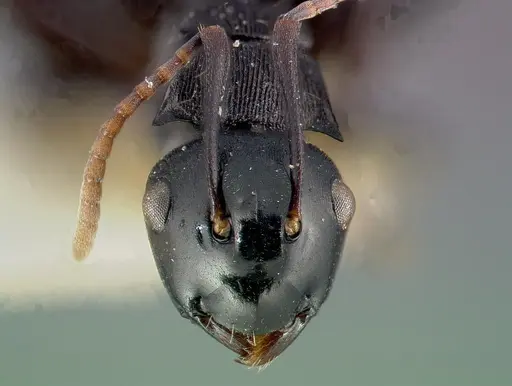
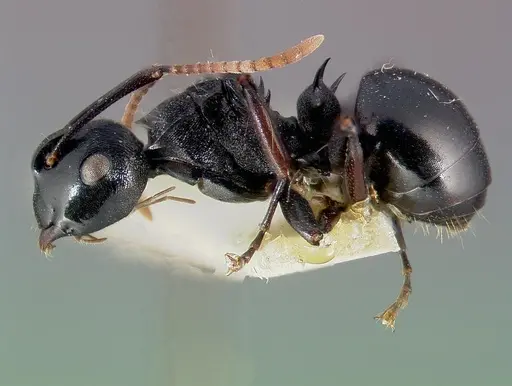
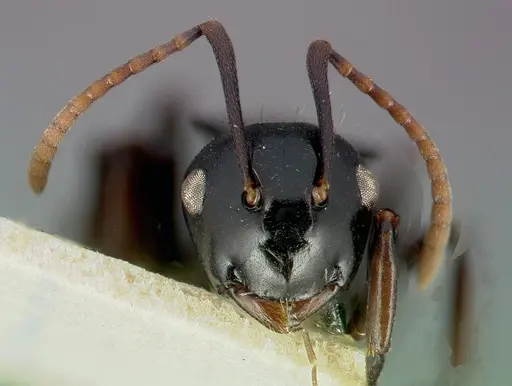
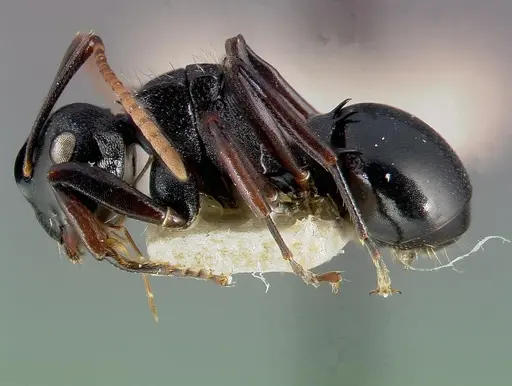
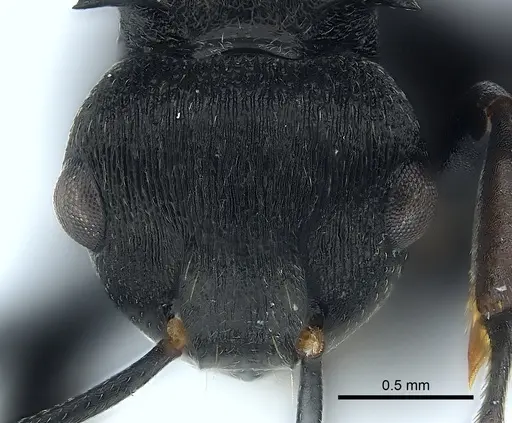
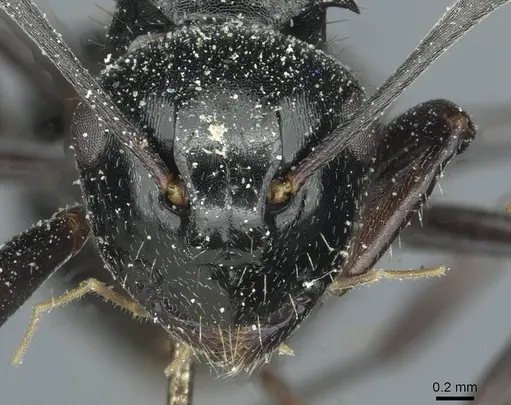
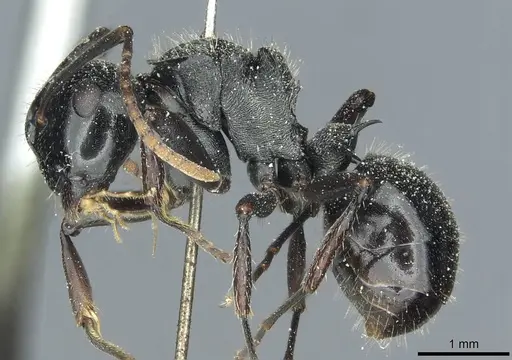
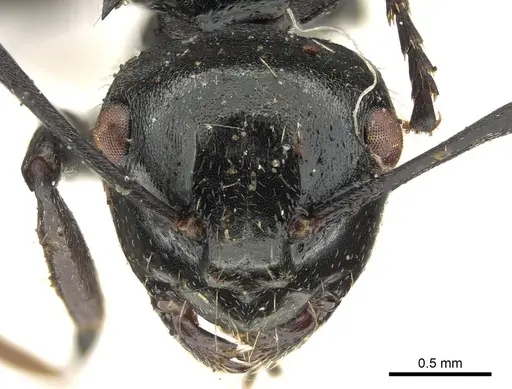
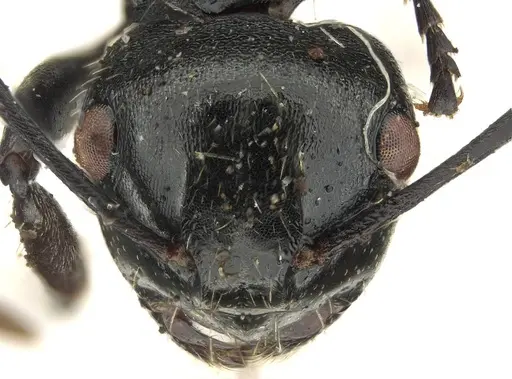
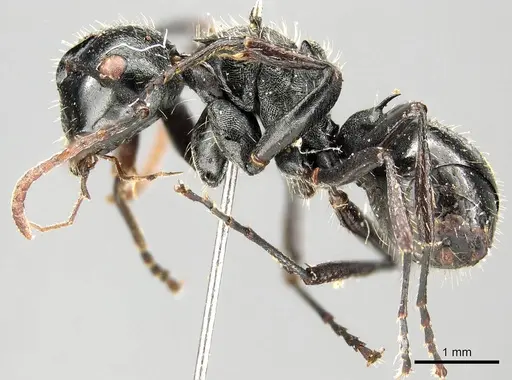
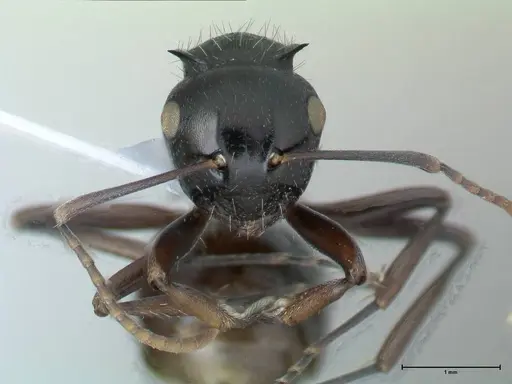
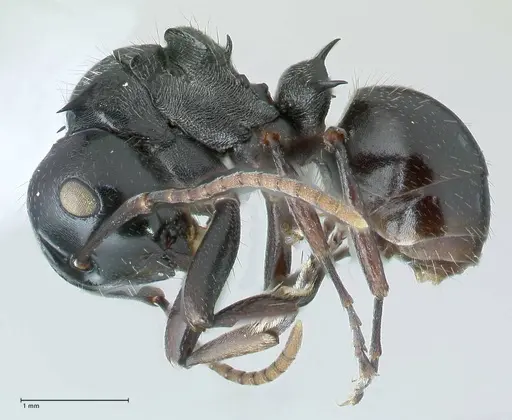
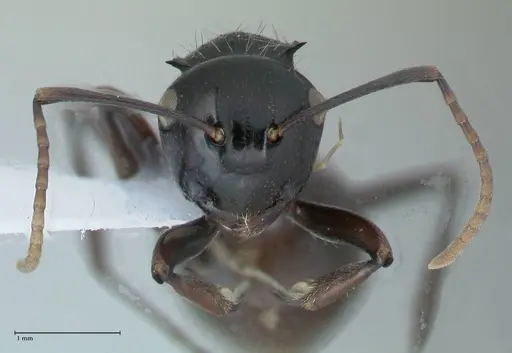
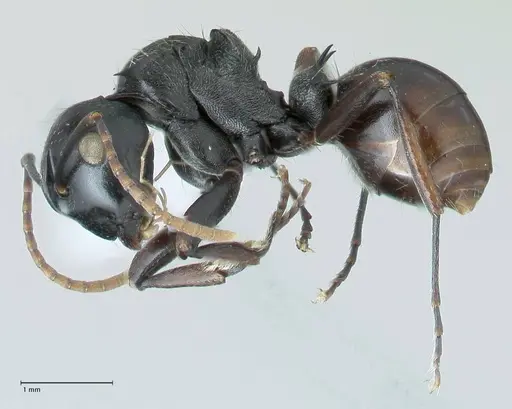
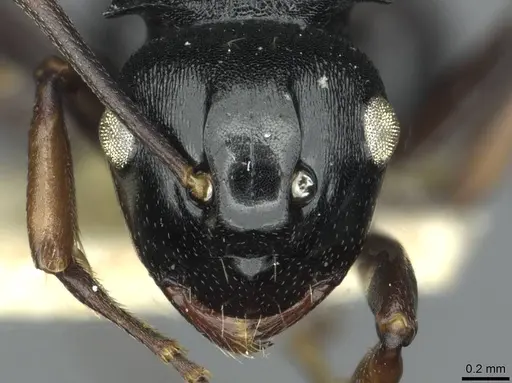
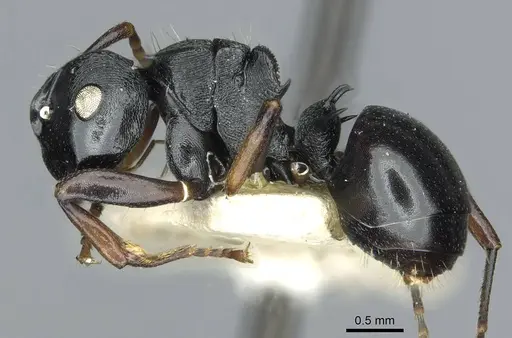
Polyrhachis fissa is a medium-sized arboreal ant found across West and Central Africa, including Cameroon, Congo, Democratic Republic of Congo, Gabon, Ghana, Nigeria, and Uganda . Workers measure 5.2-6.3 mm and are entirely black with a shiny gaster, plus distinctive spines, broad triangular pronotal spines and four curved spines on the petiole . This species belongs to the militaris species group within the subgenus Myrma and is closely related to Polyrhachis lauta. Unlike most ground-nesting ants, these ants are arboreal, building silk-and-leaf nests in forest trees .
Quick Summary
- Difficulty: Medium
- Origin & Habitat: West and Central African forests at elevations from 110m to 640m [1][2].
- Colony Type: Based on genus patterns, likely single-queen colonies, but not directly documented.
- Size & Growth:
- Antkeeping:
- Temperature: Keep warm, roughly 24-28°C, based on tropical forest habitat [1].
- Humidity: Keep nest substrate consistently moist but not waterlogged.
- Diapause: No, tropical species, no hibernation needed [1][2].
- Nesting: Arboreal specialists, build silk nests between leaves [4]. In captivity, use naturalistic setups with vertical space and textured surfaces [4].
- Behavior: Workers are active foragers, generally calm. Escape risk is moderate due to size and climbing ability. They use silk for nesting [4].
- Common Issues: arboreal nature requires vertical space and climbing surfaces [4]., tropical warmth needed year-round [1]., limited availability in the antkeeping hobby., fungal parasites documented in wild populations [5]., silk-nesting behavior requires specific setups [4].
Housing and Nest Setup
Polyrhachis fissa requires arboreal housing. In the wild, they build silk nests between leaves [4]. In captivity, use a naturalistic vivarium with live plants or a Y-tong/plaster nest with textured surfaces for climbing. Avoid smooth glass nests, they need vertical space and rough textures to grip [4].
Temperature and Heating
Keep temperatures warm, around 24-28°C, based on their tropical forest habitat [1]. Use a heating cable on one side of the nest to create a warm zone, allowing ants to regulate by moving between areas.
Feeding and Diet
Offer sugar water or honey constantly, plus protein sources like small crickets or fruit flies 2-3 times per week. They are active foragers, so place food in accessible locations.
Humidity and Water
Keep the nest substrate consistently moist but not waterlogged. Provide a water tube or dish for drinking, and mist the outworld occasionally to maintain humidity.
Behavior and Colony Life
Workers are active foragers that patrol tree trunks. They use silk to construct nests, which is unusual among Formicinae [4]. Alates have been collected in June and November, suggesting nuptial flight periods [3].
Frequently Asked Questions
Can I keep Polyrhachis fissa in a test tube setup?
No, test tubes are not suitable. This species is arboreal and needs vertical climbing surfaces [4].
What temperature do Polyrhachis fissa ants need?
Keep them warm at 24-28°C, based on their tropical habitat [1].
How long does it take for Polyrhachis fissa to produce first workers?
Estimated 6-8 weeks from egg to worker at optimal temperature.
Do Polyrhachis fissa ants need hibernation?
No, as a tropical species, they do not require hibernation [1][2].
What do Polyrhachis fissa ants eat?
They are omnivorous. Offer sugar water or honey constantly, plus protein sources like small crickets or fruit flies.
Are Polyrhachis fissa good for beginners?
No, this is a medium difficulty species due to arboreal housing needs and tropical warmth requirements.
How big do Polyrhachis fissa colonies get?
Colony size is undocumented in scientific literature [3].
When do Polyrhachis fissa nuptial flights occur?
Alates have been collected in June and November, suggesting these periods [3].
Why is my Polyrhachis fissa colony dying?
Common causes include temperatures below 22°C, too-dry conditions, unsuitable nests, or fungal parasites from wild-caught colonies [5].
Report an Issue
The current care sheet is based fully on literature. See inconsistencies, or something that's incorrect? Please , it will be resolved after review from an admin. Contributing to the blogs tab also helps providing information, to make us be able to further improve the caresheets. Thank you for your support!
References

This caresheet is licensed under CC BY-SA 4.0 .
Community Blogs
CASENT0003154
View on AntWeb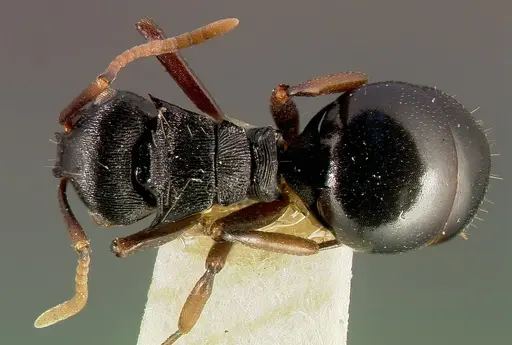

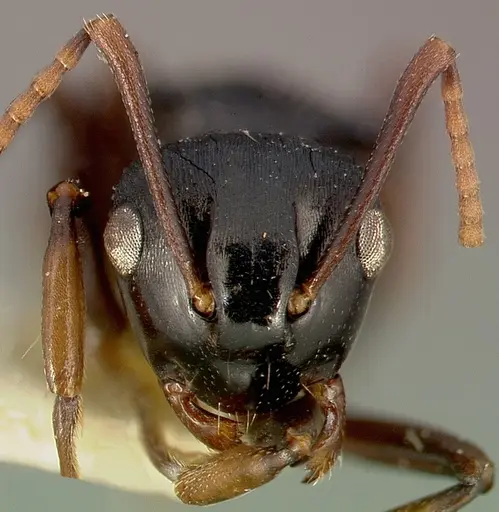
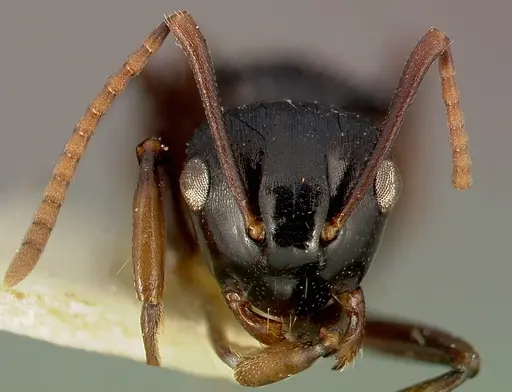
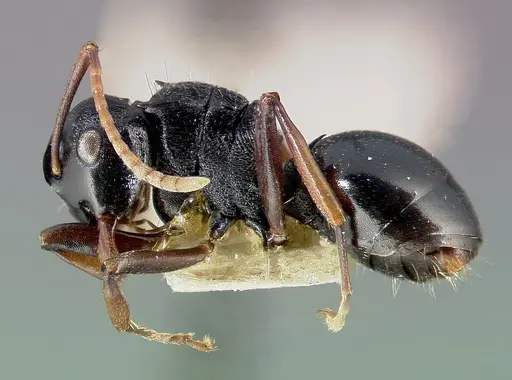

CASENT0006022
View on AntWeb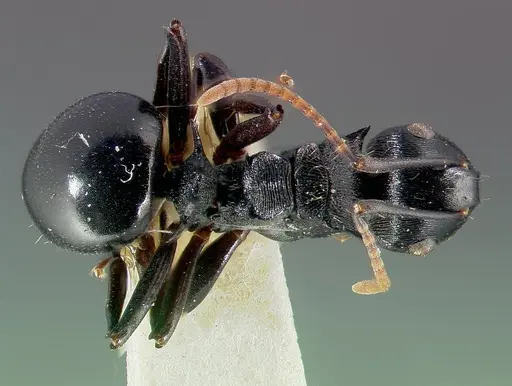
CASENT0006023
View on AntWeb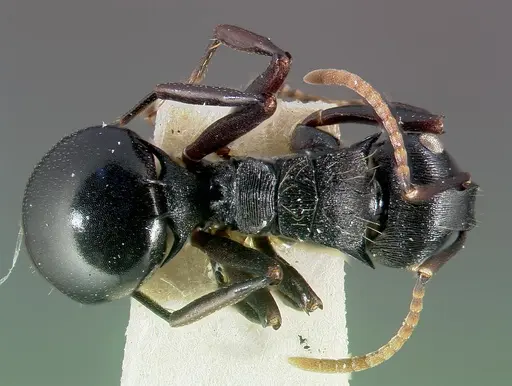
CASENT0227530
View on AntWeb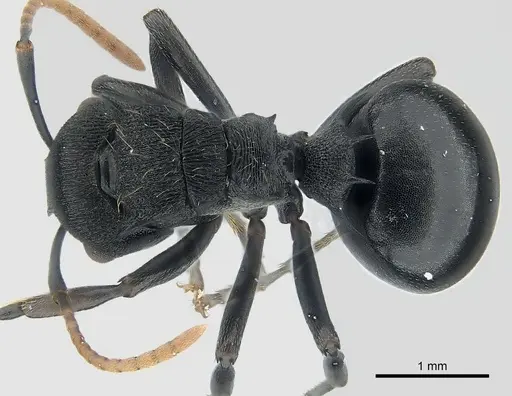
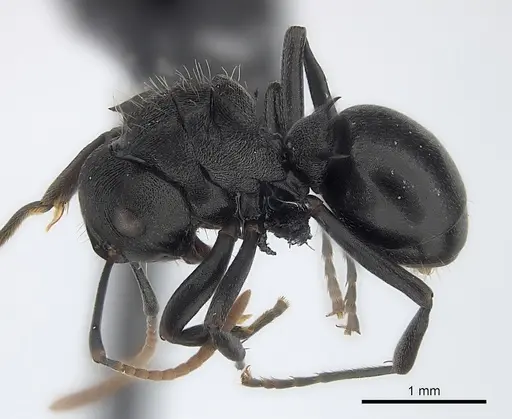
CASENT0910948
View on AntWeb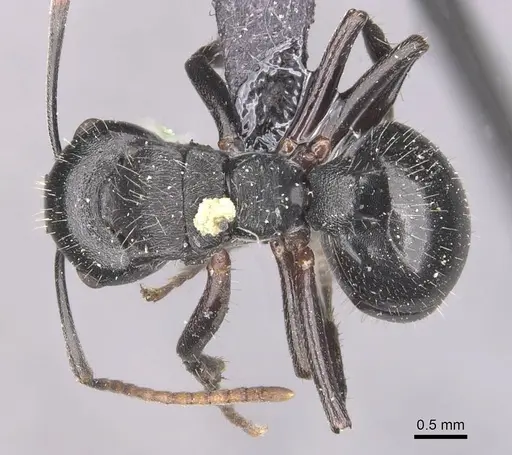
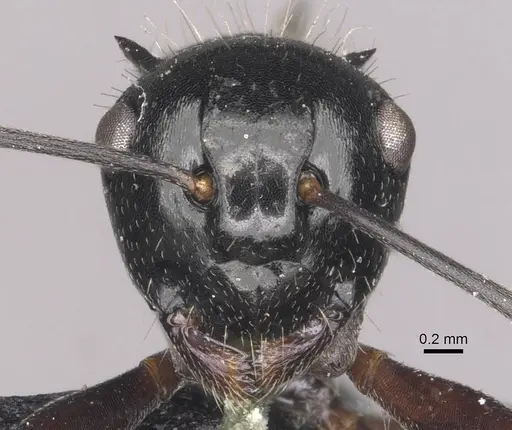
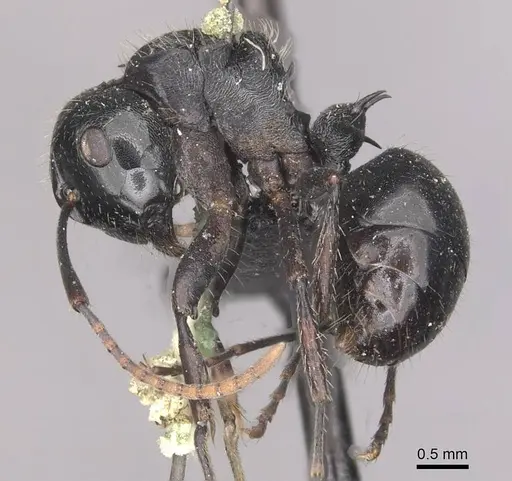
CASENT0912119
View on AntWeb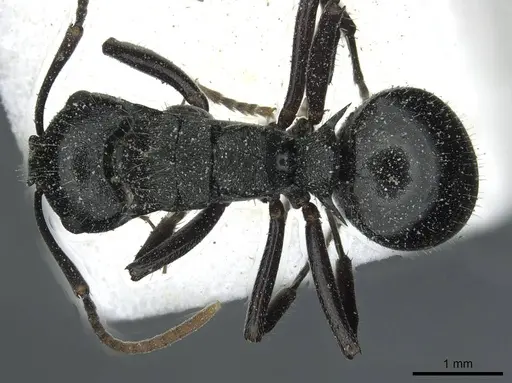
CASENT0915812
View on AntWeb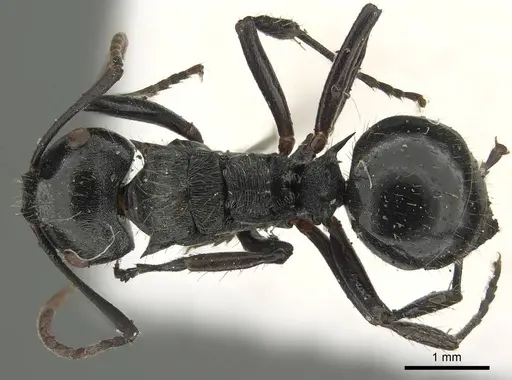
FOCOL1787-1
View on AntWeb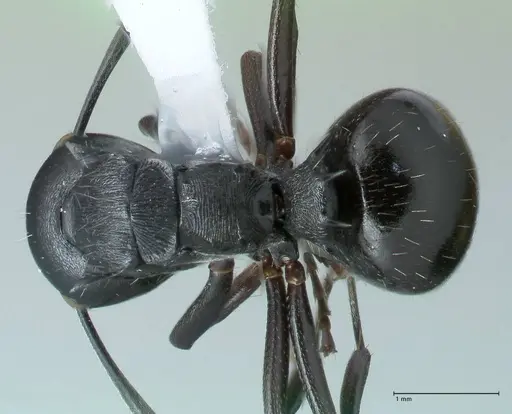
FOCOL1787-2
View on AntWeb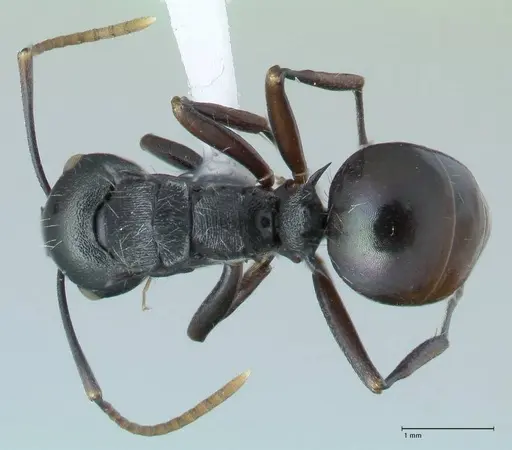
RMCAENT000017822
View on AntWeb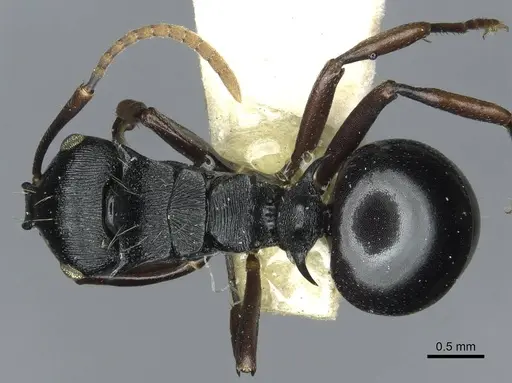
Literature
Loading distribution map...Loading products...