
Polyrhachis exotica
- Sci. Name
- Polyrhachis exotica
- Subgenus
- Myrmhopla
- Tribe
- Camponotini
- Subfamily
- Formicinae
- Author
- Kohout, 1987
- Distribution
- Found in 1 countries
Introduction
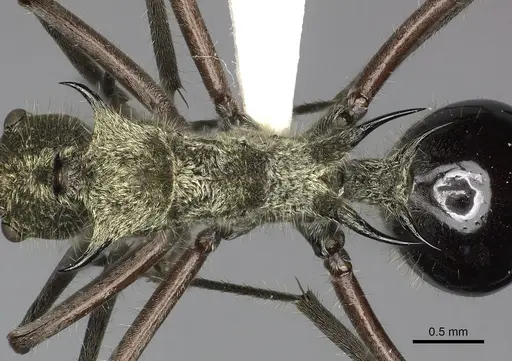
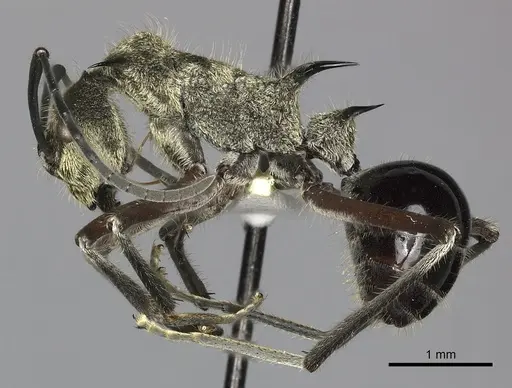
Polyrhachis exotica is a large ant native to the Philippines. Workers measure 13.31-14.66 mm in total length, and queens measure 16.08-16.63 mm . It has a domed pronotum, long curved spines, and a smooth, shiny gaster. The body is black to dark reddish brown with reddish-brown legs and mandibles . This species is endemic to the Philippines . Nothing is known about its biology in the scientific literature, so care recommendations are based on inference from related Polyrhachis species .
Quick Summary
- Difficulty: Medium
- Origin & Habitat: Philippines, endemic to this region [2].
- Colony Type: Colony structure is unconfirmed due to lack of data.
- Size & Growth:
- Queen: ~16.08-16.63 mm [1]
- Worker: ~13.31-14.66 mm [1]
- Colony: Unknown, no colony size data exists
- Growth: Moderate, inferred from genus patterns
- Development: Estimated 6-10 weeks based on typical Polyrhachis development at tropical temperatures [1] (Direct development data unavailable, estimate based on related species)
- Antkeeping:
- Temperature: Keep warm, roughly 24-28°C, with a temperature gradient. Based on tropical species patterns [1].
- Humidity: Keep nest substrate consistently moist but not waterlogged. Based on tropical habitat [1].
- Diapause: Unknown, no data on hibernation for this species.
- Nesting: Inferred from genus: prefer rotting wood or soil nests. Use Y-tong, plaster, or naturalistic setups [1].
- Behavior: As Formicinae, they defend by biting and spraying formic acid. Workers are moderately active. Escape risk is low due to large size.
- Common Issues: humidity control is critical, tropical ants easily die in dry conditions, temperature must remain warm, cool conditions will slow or stop brood development, wild-caught colonies may carry parasites that are difficult to treat, slow growth can frustrate beginners, patience is required
Appearance and Identification
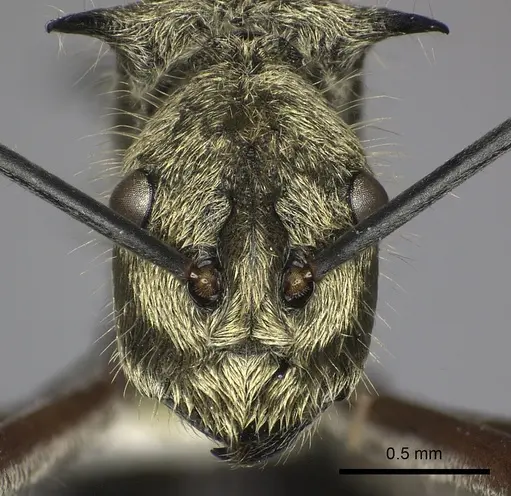
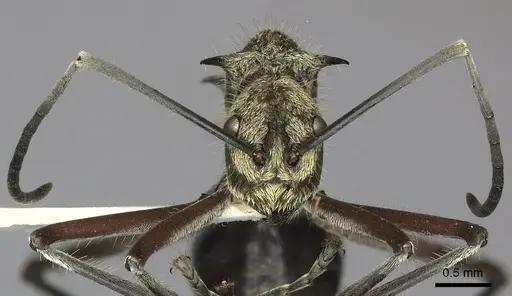
Polyrhachis exotica workers measure 13.31-14.66 mm in total length, and queens measure 16.08-16.63 mm [1]. The species has a domed pronotum, long curved spines on the pronotum and propodeum, and a smooth, shiny gaster, which is unique among related species [1]. Body color is black to dark reddish brown with reddish-brown appendages [1].
Natural History
Polyrhachis exotica is endemic to the Philippines [2]. Beyond distribution, nothing is known about its biology in the scientific literature [1]. Care must be inferred from related Polyrhachis species, which typically nest in rotting wood or soil and feed on honeydew and insects [1].
Temperature and Care
As a tropical species, Polyrhachis exotica requires warm temperatures. Keep the nest area at 24-28°C with a gradient [1]. Temperature stability is important for brood development [1].
Humidity and Nesting
High humidity is essential for this tropical species. Keep the nest substrate consistently moist but not waterlogged [1]. Use Y-tong, plaster, or naturalistic nests with damp soil [1].
Feeding and Diet
Based on genus patterns, Polyrhachis species are omnivorous, feeding on honeydew, nectar, and small insects [1]. In captivity, offer sugar sources and protein like small insects [1].
Colony Development
Founding behavior is unconfirmed. Based on genus patterns, queens may seal themselves in a chamber [1]. Development from egg to worker is estimated at 6-10 weeks at optimal temperatures [1].
Frequently Asked Questions
How long does it take for Polyrhachis exotica to produce first workers?
The exact timeline is unknown, but based on typical Polyrhachis development, expect 6-10 weeks from egg to first worker at optimal tropical temperatures [1].
What temperature do Polyrhachis exotica ants need?
Keep them at 24-28°C with a gradient, as they are a tropical species [1].
Can I keep Polyrhachis exotica in a test tube?
A test tube can work for a founding queen, but transfer to a larger nest as the colony grows [1].
How big do Polyrhachis exotica colonies get?
The maximum colony size is unknown, no wild colony data exists [1].
Do Polyrhachis exotica need hibernation?
Unknown, no data on hibernation for this species.
What do Polyrhachis exotica eat?
Based on genus patterns, they likely accept sugar sources and protein [1].
Is Polyrhachis exotica good for beginners?
This species is rated Medium difficulty due to lack of documented biology [1].
Can I keep multiple Polyrhachis exotica queens together?
Colony structure is unconfirmed, so keeping one queen per colony is recommended [1].
Why is my Polyrhachis exotica colony dying?
Common causes include too low temperature, too dry conditions, or parasites from wild-caught colonies. Review temperature and humidity first.
Report an Issue
The current care sheet is based fully on literature. See inconsistencies, or something that's incorrect? Please , it will be resolved after review from an admin. Contributing to the blogs tab also helps providing information, to make us be able to further improve the caresheets. Thank you for your support!
References

This caresheet is licensed under CC BY-SA 4.0 .
Community Blogs
CASENT0249116
View on AntWeb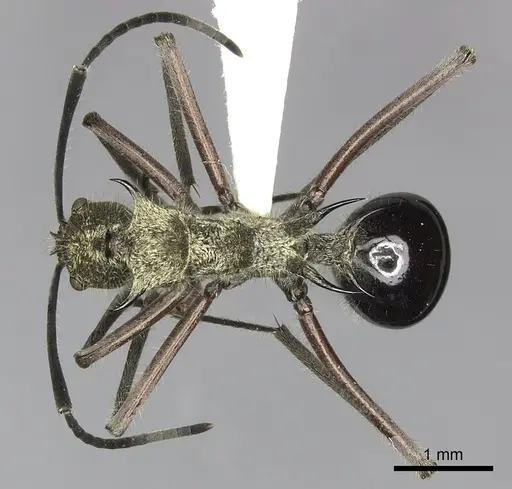
Literature
Loading distribution map...Loading products...