
Polyrhachis esuriens
- Sci. Name
- Polyrhachis esuriens
- Subgenus
- Myrmhopla
- Tribe
- Camponotini
- Subfamily
- Formicinae
- Author
- Emery, 1897
- Distribution
- Found in 1 countries
Introduction
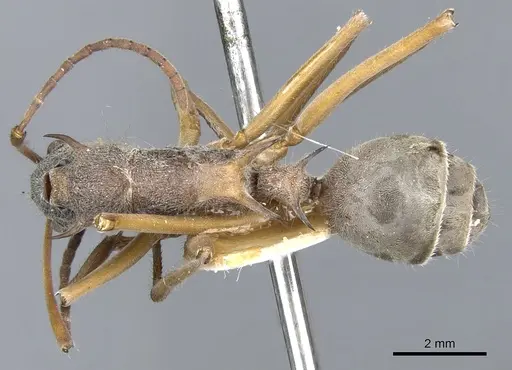
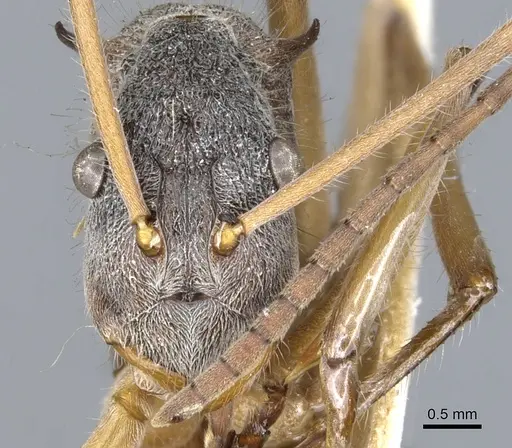
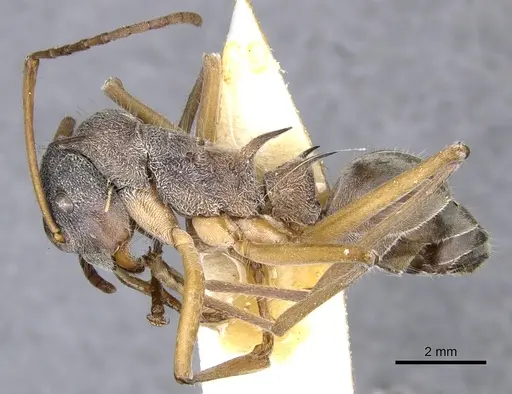
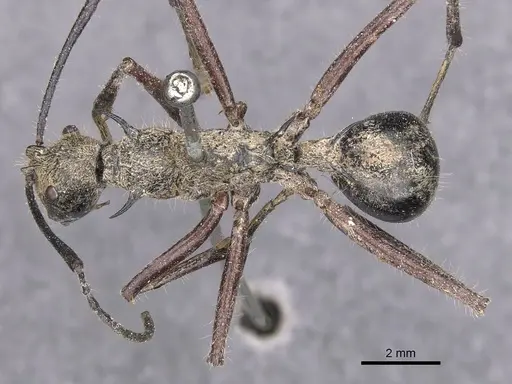
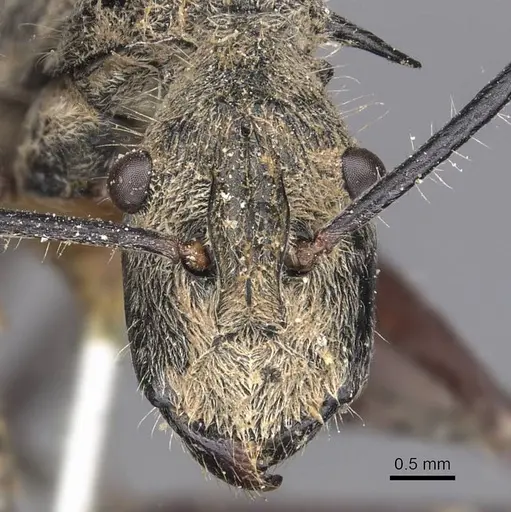
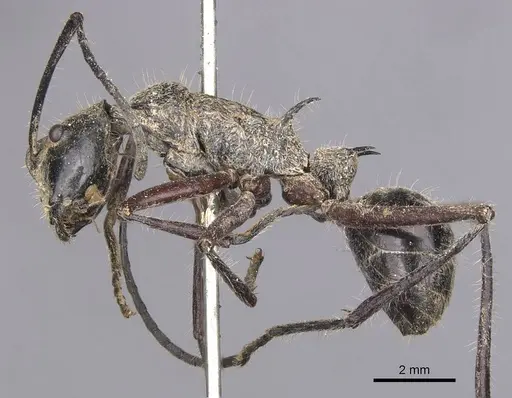
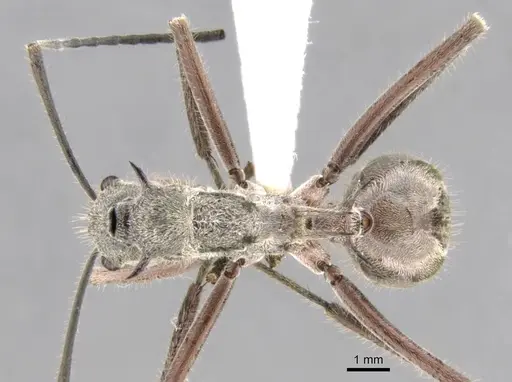
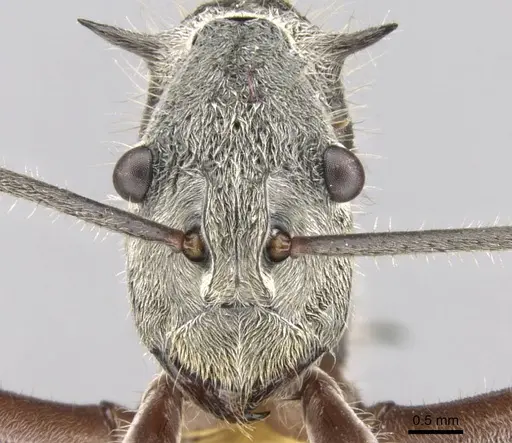
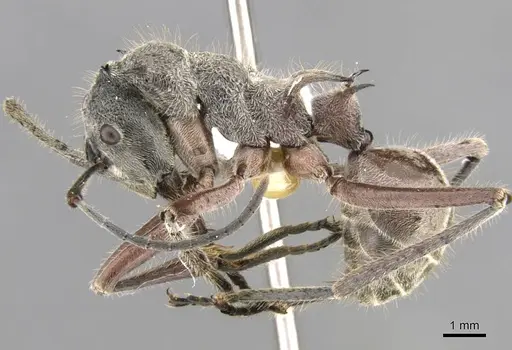
Polyrhachis esuriens is a tropical arboreal ant belonging to the Myrmhopla subgenus . Workers have characteristic spines on the thorax. This species is native to New Guinea and the Philippines, where it nests in trees and shrubs in tropical forest environments . They construct nests using carton material and spin cocoons around their pupae . They are arboreal by nature , preferring elevated spaces and climbing opportunities.
Quick Summary
- Difficulty: Medium
- Origin & Habitat: New Guinea and Philippines, tropical rainforest environments where they nest arboreally in trees and shrubs [2].
- Colony Type: Based on typical Polyrhachis patterns, likely monogyne (single queen), but unconfirmed for this species.
- Size & Growth:
- Queen: size unknown, inferred from Polyrhachis genus (~10-12 mm)
- Worker: size unknown, inferred from Polyrhachis genus (~6-8 mm)
- Colony: Up to several hundred workers, estimated based on related species
- Growth: Moderate
- Development: 6-10 weeks, estimated based on tropical species (Development time is temperature-dependent)
- Antkeeping:
- Temperature: Temperature needs are unknown, keep warm around 24-28°C based on tropical habitat.
- Humidity: Keep nest substrate consistently moist but not waterlogged, with a humidity gradient.
- Diapause: No, tropical species, no hibernation required.
- Nesting: Arboreal specialists, need vertical space and climbing structures. They construct carton nests [1][3].
- Behavior: They are generally calm and non-aggressive. Workers are active climbers and spend time on vertical surfaces. They spray formic acid for defense, as typical of Formicinae ants. Escape risk is moderate due to their size and climbing ability.
- Common Issues: arboreal nature requires vertical space and climbing structures, flat nests limit natural behavior., carton nest building may be disrupted in artificial nests, provide suitable materials., tropical temperature needs may require heating in cooler climates., high humidity needs can lead to mold if ventilation is inadequate.
Housing and Nest Setup
Polyrhachis esuriens is an arboreal species that needs vertical space and climbing opportunities. They prefer to live above the substrate level and construct carton nests [1][3]. A naturalistic setup with branches, cork bark, or artificial plants works well. If using an artificial formicarium, choose one with multiple levels or add climbing structures. Rough-textured materials like cork or wood help with nest attachment.
Temperature and Heating
Specific temperature requirements for Polyrhachis esuriens are unknown. As a tropical species, they likely need warm conditions, but no literature data is available. Keep them at room temperature or slightly warmer, and observe colony behavior.
Feeding and Diet
Like other Polyrhachis species, they are omnivorous. Offer small insects as protein sources and sugar water or honey for carbohydrates. Remove uneaten prey after 24-48 hours to prevent mold.
Humidity and Water
Humidity needs are unconfirmed, but as tropical ants, they likely require moist conditions. Keep the nest substrate consistently moist but not waterlogged, and provide a water source.
Colony Development
Queens and workers are inferred from Polyrhachis genus sizes. Development from egg to worker is estimated at 6-10 weeks. They spin cocoons around pupae, which is notable for Formicinae [1].
Behavior and Temperament
Polyrhachis esuriens is generally calm and less aggressive. Workers are active climbers and spend time on vertical surfaces. They spray formic acid for defense, typical of Formicinae ants. Escape risk is moderate due to their size.
Frequently Asked Questions
Can I keep Polyrhachis esuriens in a test tube setup?
Test tubes can work for founding colonies, but these arboreal ants will be happier in a setup with vertical space. Consider transitioning to a larger enclosure once the colony reaches 20-30 workers.
What temperature do Polyrhachis esuriens need?
Specific temperature needs are unknown for Polyrhachis esuriens. Keep them warm based on their tropical habitat.
How long does it take for the first workers to emerge?
Expect 6-10 weeks from egg to first worker, estimated based on tropical species.
Do Polyrhachis esuriens need hibernation?
No, they are tropical ants and do not require hibernation.
Are Polyrhachis esuriens good for beginners?
They are rated as medium difficulty. The main challenges are maintaining tropical temperatures and providing arboreal housing.
What do Polyrhachis esuriens eat?
They are omnivorous. Offer small insects for protein and sugar water or honey for carbohydrates.
How big do Polyrhachis esuriens colonies get?
Colonies likely reach up to several hundred workers, estimated based on related species.
When should I move my colony to a formicarium?
Move from a founding setup to a larger enclosure when the colony reaches 30-50 workers, with climbing structures.
Can I keep multiple queens together?
This has not been documented for this species. Based on typical Polyrhachis patterns, they are likely single-queen colonies.
Report an Issue
The current care sheet is based fully on literature. See inconsistencies, or something that's incorrect? Please , it will be resolved after review from an admin. Contributing to the blogs tab also helps providing information, to make us be able to further improve the caresheets. Thank you for your support!
References

This caresheet is licensed under CC BY-SA 4.0 .
Community Blogs
Literature
Loading distribution map...Loading products...