
Polyrhachis esarata
- Sci. Name
- Polyrhachis esarata
- Subgenus
- Myrma
- Tribe
- Camponotini
- Subfamily
- Formicinae
- Author
- Bolton, 1973
- Distribution
- Found in 1 countries
Introduction
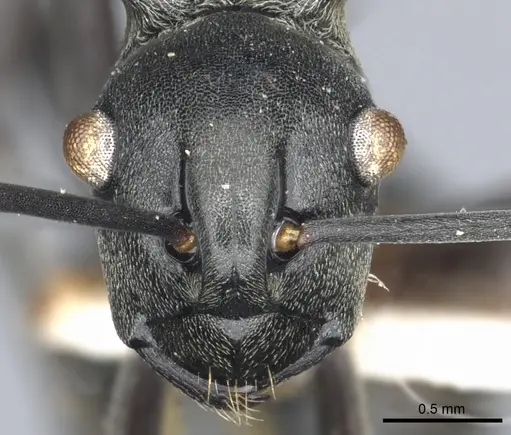
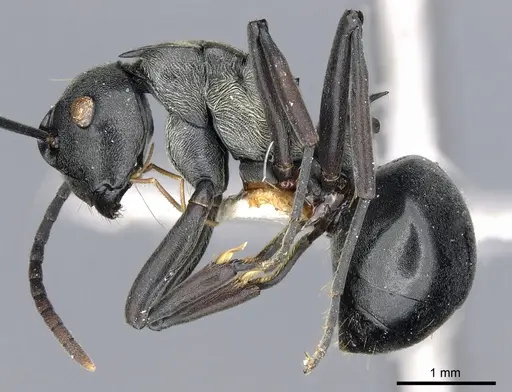
Polyrhachis esarata is a medium-sized ant in the militaris species-group within the Myrma subgenus . Workers have a total length of approximately 7.2 mm , with a single pair of erect hairs on the head dorsum, prominent pronotal spines, and smaller propodeal teeth . The body is black with dark brown-black legs, and it is distinguished from Polyrhachis decellei by larger, elliptical eyes and a shorter scape . This species is found in West and Central Africa, including Ghana, the Democratic Republic of Congo, and Equatorial Guinea . Like other Polyrhachis in the Myrma subgenus, P. esarata builds subterranean nests lined with woven material and has pupal cocoons . As a Formicinae ant, it defends itself by spraying formic acid rather than stinging.
Quick Summary
- Difficulty: Medium
- Origin & Habitat: West and Central Africa, including Ghana, Democratic Republic of Congo, and Equatorial Guinea. The type specimen was collected in Ghana's Eastern Region using a pyrethrum knock-down method [2]. They inhabit forested areas and nest underground [2].
- Colony Type: Colony structure is unconfirmed for this species. Based on genus-level patterns for Polyrhachis, they are typically monogyne (single-queen colonies) [4].
- Size & Growth:
- Queen: Size data unavailable, no total length measurements are available for queens.
- Worker: Approximately 7.2 mm total length [2].
- Colony: Up to several hundred workers, inferred from related militaris-group species [4].
- Growth: Moderate, inferred from typical Polyrhachis patterns [4].
- Development: Estimated 6-10 weeks based on typical Polyrhachis genus patterns at tropical temperatures [4]. (Development time may vary with temperature and conditions.)
- Antkeeping:
- Temperature: Keep nest area warm, roughly 24-28°C, as inferred from tropical distribution [2]. Use a heating cable to create a gradient if needed.
- Humidity: Maintain moderate to high humidity, keep nest substrate consistently moist but not waterlogged, as typical for subterranean nesters [4].
- Diapause: No diapause required for this tropical species [2].
- Nesting: Subterranean nests with woven material [4]. Use Y-tong (AAC) or plaster nests, provide loose substrate for weaving behavior.
- Behavior: Polyrhachis esarata is relatively calm. As Formicinae ants, they spray formic acid for defense. Workers are active foragers. Escape prevention is moderate due to medium size, use standard barriers like fluon on test tube rims.
- Common Issues: temperature must be kept warm, cool conditions can slow development and activity., humidity must be maintained, dry conditions can desiccate brood., colony growth may be slow, requiring patience.
Housing and Nest Setup
Polyrhachis esarata is a subterranean nester, so it naturally lives underground in soil or rotting wood [4]. For captive care, use Y-tong (AAC) nests or plaster nests. These ants weave material into their nests, so provide loose substrate or textured surfaces to encourage natural behavior [4]. For founding colonies, a test tube setup works well. Once the colony grows, move to a larger formicarium. Keep the nest substrate humid but not wet [4].
Temperature and Heating
As a tropical African species, Polyrhachis esarata requires warm temperatures. Keep the nest area at roughly 24-28°C for optimal brood development [2]. Use a heating cable or mat on one side to create a gradient, allowing ants to regulate their temperature [2].
Feeding and Diet
Polyrhachis ants are omnivorous, typically foraging for honeydew, nectar, and small insects. In captivity, offer sugar water or honey as a constant energy source, and protein like fruit flies or small crickets 2-3 times per week. Remove uneaten prey after 24 hours to prevent mold [2].
Humidity Requirements
These ants come from humid tropical forests, so maintain moderate to high humidity. Keep the nest substrate consistently moist but not waterlogged [4]. A water tube helps provide drinking water and maintain humidity.
Behavior and Temperament
Polyrhachis esarata is generally calm and not aggressive. As Formicinae ants, they defend by spraying formic acid rather than stinging. Workers are active foragers. Escape prevention is important but not critical for medium-sized ants, use standard barriers.
Frequently Asked Questions
How long does it take for Polyrhachis esarata to produce first workers?
Exact development time is unconfirmed, but based on typical Polyrhachis patterns at tropical temperatures, expect 6-10 weeks from egg to first worker [4].
What temperature do Polyrhachis esarata ants need?
Keep them at roughly 24-28°C, as inferred from their tropical distribution [2]. Use a heating cable to create a gradient if needed.
Can I keep Polyrhachis esarata in a test tube?
Yes, test tubes work well for founding colonies. Use a standard setup with a water reservoir and cotton plug. Move to a larger formicarium as the colony grows.
What do Polyrhachis esarata ants eat?
They are omnivorous. Offer sugar water or honey constantly, and protein sources like small insects 2-3 times per week [2].
Do Polyrhachis esarata need hibernation?
No. As a tropical species, they do not require diapause [2].
How big do Polyrhachis esarata colonies get?
Colony size data is limited, but up to several hundred workers are inferred from related species [4].
Is Polyrhachis esarata good for beginners?
This species is rated medium difficulty due to tropical temperature and humidity requirements. Beginners should ensure they can maintain consistent warm, humid conditions.
What humidity level do Polyrhachis esarata need?
Keep the nest substrate consistently moist but not waterlogged, as typical for subterranean nesters [4].
Where is Polyrhachis esarata found?
This species is found in West and Central Africa, including Ghana, Democratic Republic of Congo, and Equatorial Guinea [2][3].
Report an Issue
The current care sheet is based fully on literature. See inconsistencies, or something that's incorrect? Please , it will be resolved after review from an admin. Contributing to the blogs tab also helps providing information, to make us be able to further improve the caresheets. Thank you for your support!
References

This caresheet is licensed under CC BY-SA 4.0 .
Community Blogs
CASENT0903457
View on AntWeb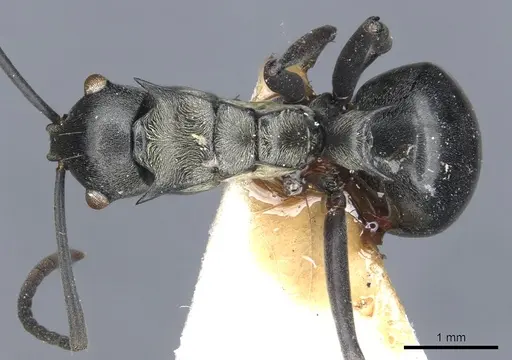
Literature
Loading distribution map...Loading products...