
Polyrhachis erosispina
- Sci. Name
- Polyrhachis erosispina
- Tribe
- Camponotini
- Subfamily
- Formicinae
- Author
- Emery, 1900
- Distribution
- Found in 2 countries
Introduction
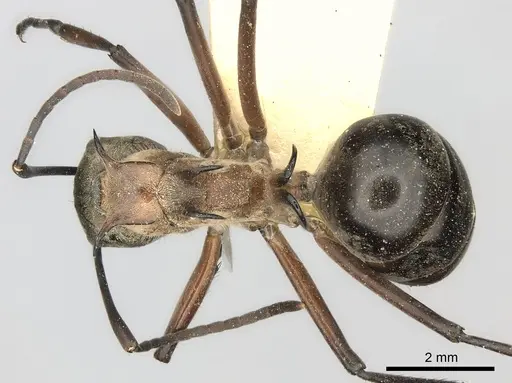
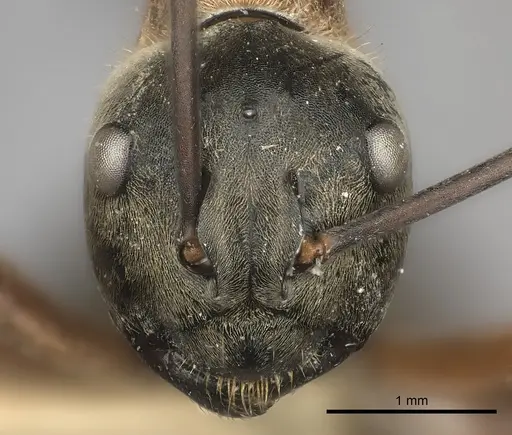
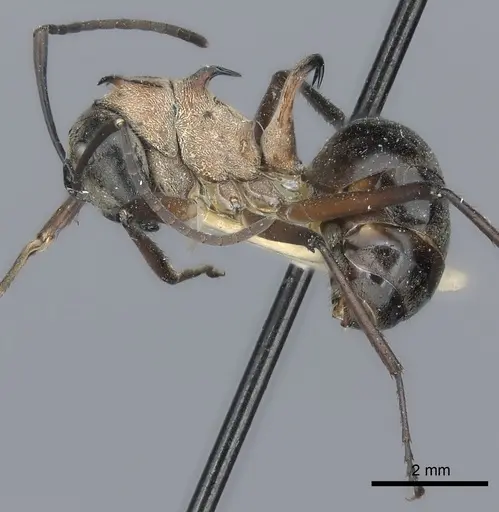
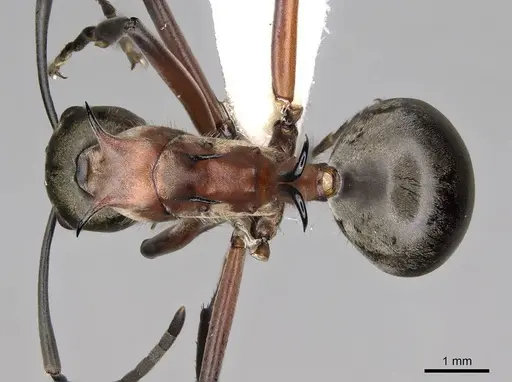
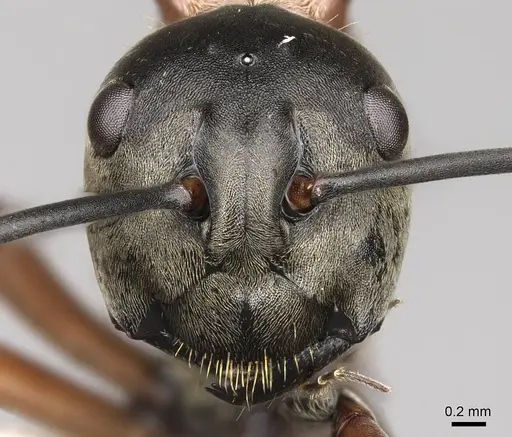
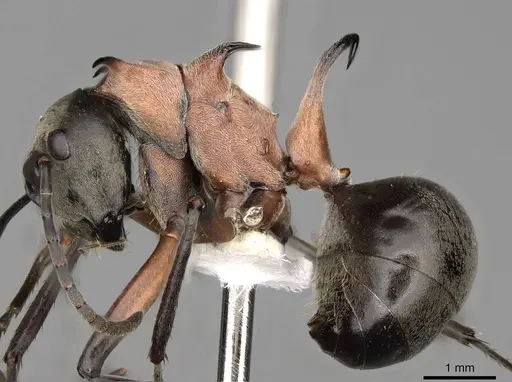
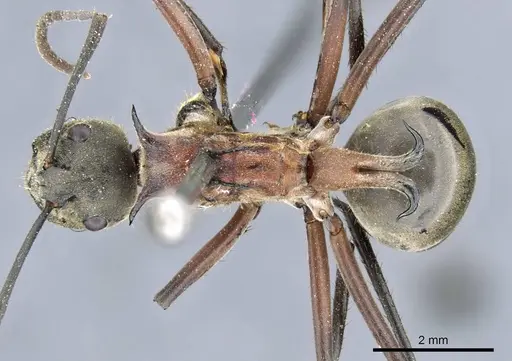
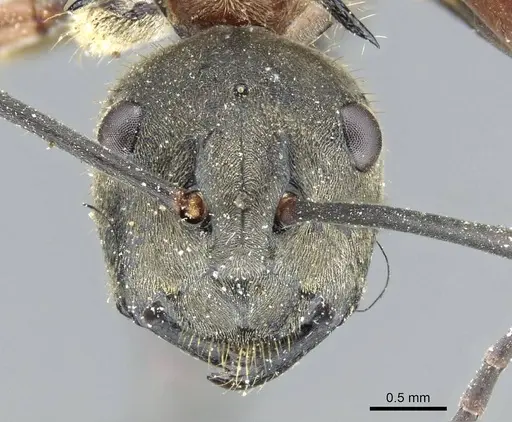
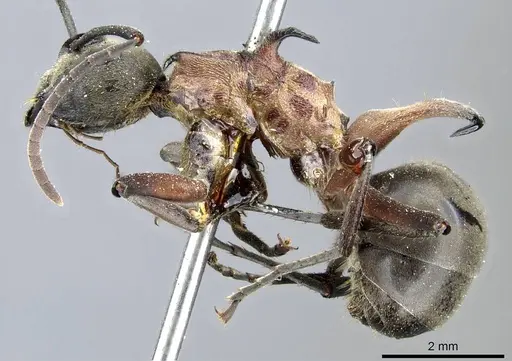
Polyrhachis erosispina is a large arboreal ant native to New Guinea and eastern Indonesian islands including Sulawesi. Workers measure 8.01-9.37 mm in total length, and queens measure 10.98-12.14 mm . They have long spines on the pronotum and mesonotum, hook-shaped spines on the petiole, and abundant hairs covering the body . The gaster is uniformly black or very dark reddish-brown . This species nests in the lower arboreal zone, often in dead bamboo stems or between liana stems and tree trunks, using silk to bind materials .
Quick Summary
- Difficulty: Medium
- Origin & Habitat: Native to New Guinean mainland and eastern Indonesian islands including Sulawesi, found in wet forest and rainforest habitats [1][2].
- Colony Type: Single-queen colonies (monogyne), with each nest containing exactly one queen [2].
- Size & Growth:
- Queen: ~10.98-12.14 mm [1]
- Worker: ~8.01-9.37 mm [1]
- Colony: Unknown maximum, no specific data available
- Growth: Moderate, inferred from typical Polyrhachis patterns
- Development: Unknown, no species-specific data available (Development time may vary with temperature, based on genus patterns, estimated at 6-10 weeks under optimal conditions)
- Antkeeping:
- Temperature: Keep warm, around 24-28°C, based on tropical habitat distribution
- Humidity: Keep nest substrate consistently moist but not waterlogged, with some drier areas available
- Diapause: No, as a tropical species, they do not require hibernation
- Nesting: Arboreal nesters, provide vertical structures like twigs or bamboo sections, and include fine materials for silk binding [3][1]
- Behavior: Generally calm and non-aggressive, arboreal by nature, spending time in elevated nest sites [3][2]. Workers forage actively and can escape if barriers are inadequate, but standard formicarium barriers work well due to their size [2].
- Common Issues: maintaining high humidity is critical to prevent stress and death from dry conditions, arboreal nature requires vertical space and appropriate nesting structures, horizontal-only setups may be rejected, escape prevention is important, ensure barriers are secure for large ants, wild-caught colonies may carry parasites or stress, leading to post-capture mortality, slow founding phase means colonies can appear stagnant, avoid overfeeding or disturbing the nest
Nest Preferences and Housing
Polyrhachis erosispina nests arboreally, typically in dead bamboo stems or between liana stems and tree trunks [1][2]. In captivity, provide vertical space with structures like twigs, cork bark, or bamboo sections [3][1]. They use silk to bind nest materials, so include fine, manipulable materials in the setup [3]. Naturalistic setups work well, but acrylic or ytong nests can be used if paired with appropriate nest additions [3][1].
Feeding and Diet
Polyrhachis ants are omnivorous, feeding on honeydew, nectar, and insects in the wild [2]. In captivity, offer sugar water or honey as a constant energy source, and protein like mealworms or crickets 2-3 times per week. Remove uneaten prey after 24-48 hours to prevent mold.
Temperature and Seasonal Care
As a tropical species, keep temperatures around 24-28°C year-round. Use a gentle temperature gradient if possible, and avoid drops below 22°C. They do not require diapause. High humidity is important, keep the nest substrate moist but not waterlogged.
Behavior and Colony Dynamics
Colonies are monogyne, with one queen per nest [2]. Workers are active foragers and construct nests using silk to bind plant materials [3][2]. The species is generally calm, but large ants can bite if handled roughly [2]. Colony growth is moderate, with the queen distinctly larger than workers [1].
Frequently Asked Questions
How long does it take for Polyrhachis erosispina to produce first workers?
No specific data is available for this species. Based on typical Polyrhachis patterns, it may take 6-10 weeks under optimal temperatures, but this is an estimate.
Can I keep multiple Polyrhachis erosispina queens together?
No, this species is strictly monogyne, each colony has exactly one queen [4]. Multiple queens will fight, so do not combine them.
What type of nest is best for Polyrhachis erosispina?
Arboreal nests with vertical structures are best, such as naturalistic setups with twigs or bamboo sections [3][1]. They use silk to bind materials, so include fine manipulable items.
Are Polyrhachis erosispina good for beginners?
They are rated Medium difficulty due to specific humidity and temperature needs. Beginners should ensure they can maintain tropical conditions before attempting this species.
How big do Polyrhachis erosispina colonies get?
The maximum colony size is not documented for this species. Based on typical Polyrhachis patterns, colonies may reach dozens to low hundreds of workers, but no specific data is available.
Do Polyrhachis erosispina need hibernation?
No, as a tropical species from New Guinea and Indonesia, they do not require hibernation and should be kept warm year-round.
What do Polyrhachis erosispina eat?
They are omnivorous. Offer sugar water or honey as a constant energy source, and protein like mealworms or crickets 2-3 times per week.
When should I move Polyrhachis erosispina to a formicarium?
Wait until the colony has several workers, and ensure the formicarium provides vertical space and nesting materials they can incorporate [3][1].
Why is my Polyrhachis erosispina colony not growing?
Check temperature (24-28°C), humidity (moist substrate), and queen welfare. Slow growth is normal during founding, avoid disturbing the nest frequently.
Report an Issue
The current care sheet is based fully on literature. See inconsistencies, or something that's incorrect? Please , it will be resolved after review from an admin. Contributing to the blogs tab also helps providing information, to make us be able to further improve the caresheets. Thank you for your support!
References

This caresheet is licensed under CC BY-SA 4.0 .
Community Blogs
Literature
Loading distribution map...Loading products...