
Polyrhachis equina
- Sci. Name
- Polyrhachis equina
- Subgenus
- Campomyrma
- Tribe
- Camponotini
- Subfamily
- Formicinae
- Author
- Smith, 1857
- Distribution
- Found in 2 countries
Introduction
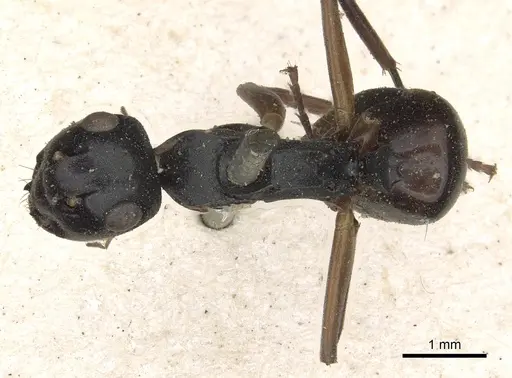
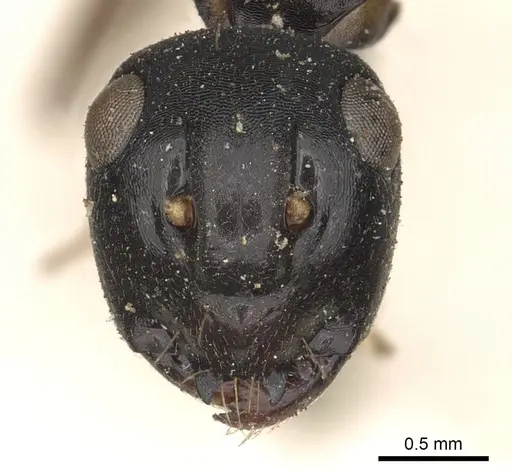
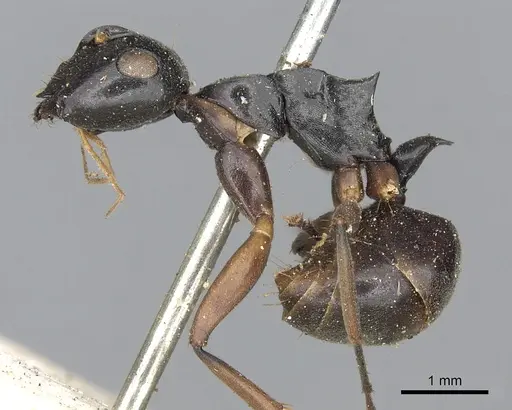
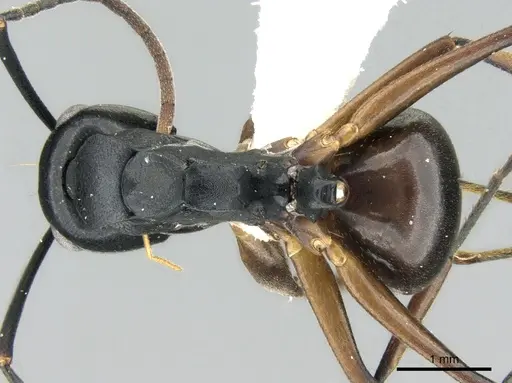
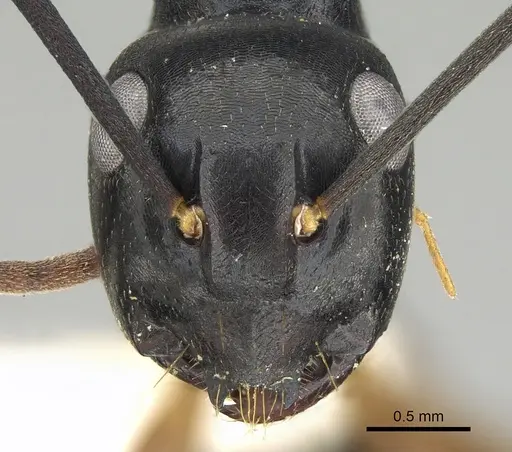
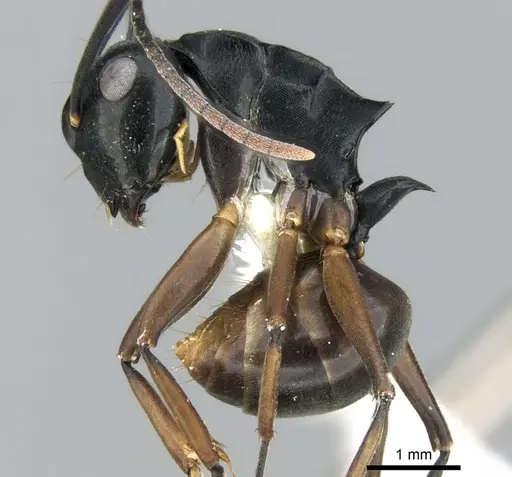
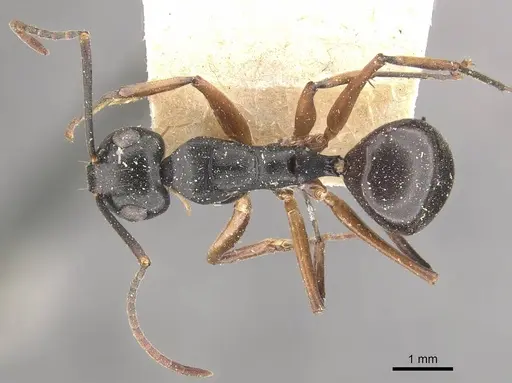
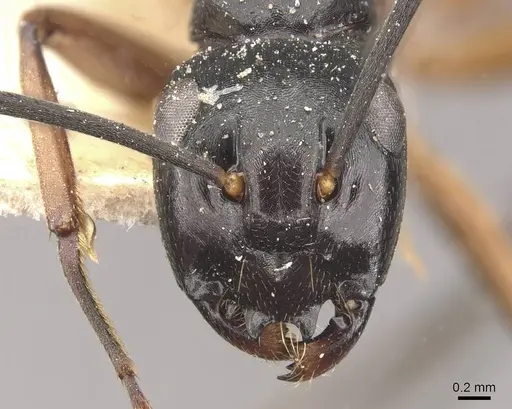
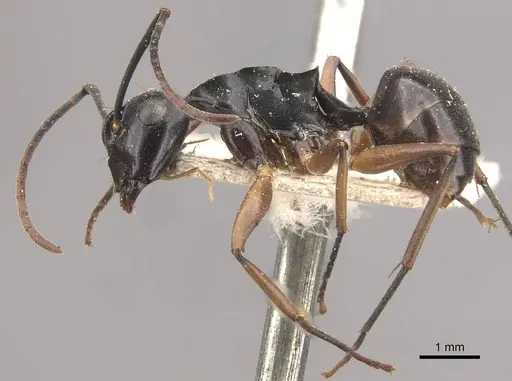
Polyrhachis equina is a medium-sized spiny ant native to Southeast Asia, found in Borneo, Malaysia, and Indonesia . Workers measure 6.05-6.65 mm in total length and have dark brown to black coloration with a bilobed clypeus and concave mesonotal and propodeal dorsa . These ants are diurnal foragers, commonly seen on tree trunks and vegetation . What makes P. equina interesting is its arboreal lifestyle - it nests in hollow branches and decaying wood rather than underground . They feed on honeydew, nectar, and small prey , and colonies can range from small groups to large polydomous networks with thousands of workers .
Quick Summary
- Difficulty: Medium
- Origin & Habitat: Tropical rainforest of Borneo, Sarawak, Malaysia, and Indonesia. Nests in hollow branches and decaying wood, foraging on tree trunks [2][3].
- Colony Type: Colony structure is unconfirmed, but Polyrhachis species can be monogyne or polygyne [3].
- Size & Growth:
- Queen: Size data unavailable, inferred from Polyrhachis genus patterns [3]
- Worker: 6.05-6.65 mm total length [2]
- Colony: Up to 10,000 workers for polygynous colonies, with small colonies having a few hundred workers [3][4]
- Growth: Moderate
- Development: Unknown, no specific data available (Development time likely varies with temperature in their tropical range)
- Antkeeping:
- Temperature: Keep warm, roughly 24-28°C, as they are tropical ants [3]
- Humidity: Keep nest substrate consistently moist but not waterlogged, based on their nesting habits [2]
- Diapause: No, tropical species do not require hibernation [3]
- Nesting: Lignicolous, prefer cavity-based nests like Y-tong or natural wood setups [2]
- Behavior: Diurnal and arboreal, actively foraging during the day. Not aggressive but will defend nest if threatened. Escape risk is moderate due to climbing ability [3].
- Common Issues: mold in nest due to over-misting, use proper ventilation and condition-based watering, temperature drops below tropical range, use heating if room temperature falls below 24°C, escape through gaps in lid, they are active climbers, check barriers regularly, overfeeding leading to mold in outworld, remove uneaten prey after 24 hours, stress from excessive disturbance, minimize nest inspections during founding and early growth phases
Nest Preferences and Housing
Polyrhachis equina is a lignicolous species, meaning it naturally nests in decaying wood and hollow branches [2]. In captivity, use Y-tong (AAC) nests or naturalistic setups with cork bark and branches. Provide a dry, cavity-based nest area with access to a moist outworld for foraging. Ensure the nest has multiple chambers connected by small tunnels, and include climbing structures in the outworld [2][3].
Feeding and Diet
In the wild, these ants feed on hemipteran honeydew, extrafloral nectar, and small arthropod prey [3]. In captivity, offer constant access to sugar water or honey, and provide protein like fruit flies or pinhead crickets 2-3 times per week. Remove uneaten prey after 24 hours to prevent mold [3].
Temperature and Seasonal Care
As tropical ants, they require warm conditions year-round. Keep the nest area at roughly 24-28°C [3]. A heating cable can create a gradient for self-regulation. They do not need hibernation, and temperature drops can slow activity [3].
Behavior and Observation
Workers are active foragers during the day, patrolling surfaces for food [3]. They are not aggressive but will defend the nest if provoked. Their spiny morphology aids defense. Escape risk is moderate due to climbing ability, so ensure smooth barriers [3].
Colony Establishment and Growth
Founding behavior is unconfirmed. After emergence, growth is moderate, with colonies reaching up to 10,000 workers over time [3][4]. Provide a quiet, dark location during early stages and offer food only after workers appear [2].
Frequently Asked Questions
How long does it take for Polyrhachis equina to have first workers?
No specific data is available, but based on related Polyrhachis species, it may take several weeks under optimal conditions [3].
What do Polyrhachis equina ants eat?
They need a balanced diet of sugar and protein. Provide constant access to sugar water or honey, and offer small insects like fruit flies 2-3 times per week [3].
Do Polyrhachis equina ants need hibernation?
No, they are tropical ants and do not require hibernation. Keep them warm year-round [3].
What is the best nest type for Polyrhachis equina?
Y-tong (AAC) nests or naturalistic setups with cork bark and branches work well, as they are lignicolous [2].
Are Polyrhachis equina ants good for beginners?
They are intermediate-level due to specific temperature and humidity needs, but manageable with some experience.
How big do Polyrhachis equina colonies get?
Colonies can reach up to 10,000 workers for polygynous groups [3].
Can I keep multiple queens together?
Polyrhachis equina may be facultatively polygynous, but combining unrelated queens is risky and not well-documented [3].
Why is my Polyrhachis equina colony not growing?
Check temperature (24-28°C) and humidity. Ensure proper diet and minimize disturbance [3].
When should I move Polyrhachis equina to a formicarium?
Wait until the colony has at least 30-50 workers and the test tube setup is inadequate. They adapt well to Y-tong nests [2].
Report an Issue
The current care sheet is based fully on literature. See inconsistencies, or something that's incorrect? Please , it will be resolved after review from an admin. Contributing to the blogs tab also helps providing information, to make us be able to further improve the caresheets. Thank you for your support!
References

This caresheet is licensed under CC BY-SA 4.0 .
Community Blogs
Literature
Loading distribution map...Loading products...