
Polyrhachis epinotalis
- Sci. Name
- Polyrhachis epinotalis
- Subgenus
- Myrma
- Tribe
- Camponotini
- Subfamily
- Formicinae
- Author
- Santschi, 1924
- Distribution
- Found in 9 countries
Introduction
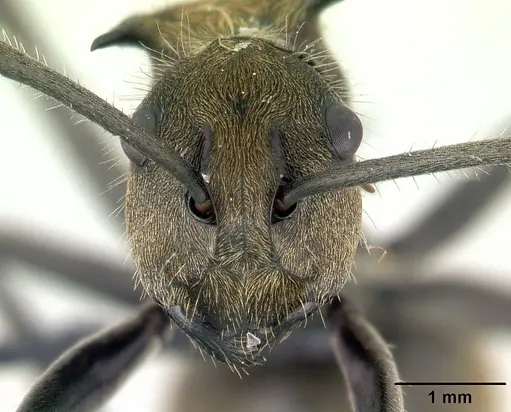
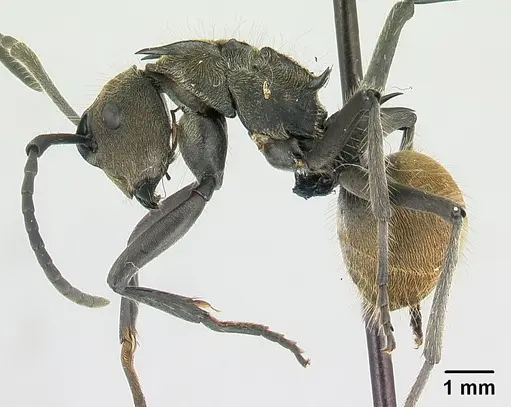
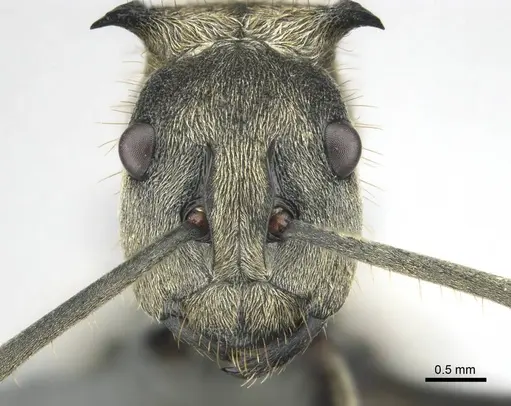
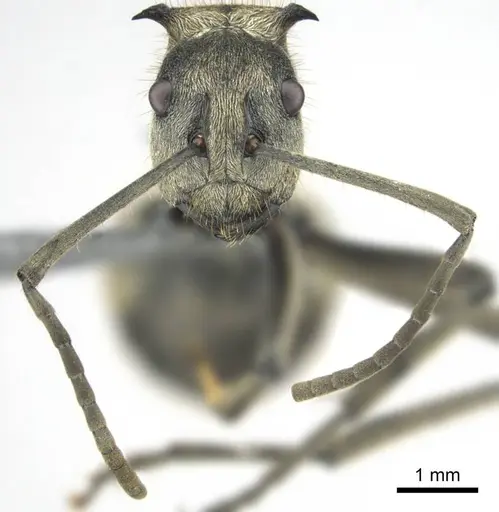
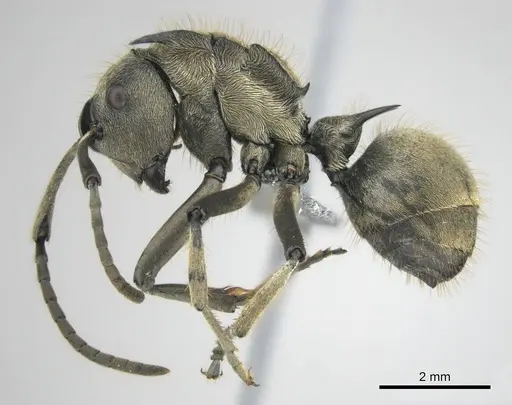
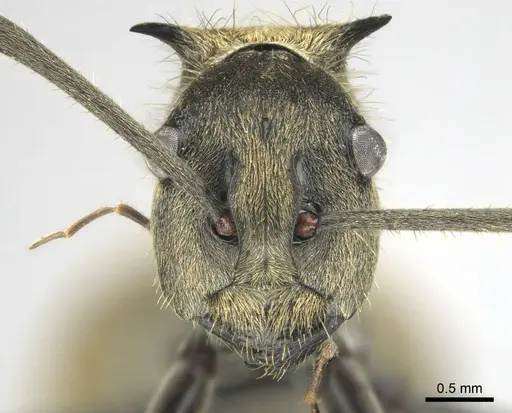
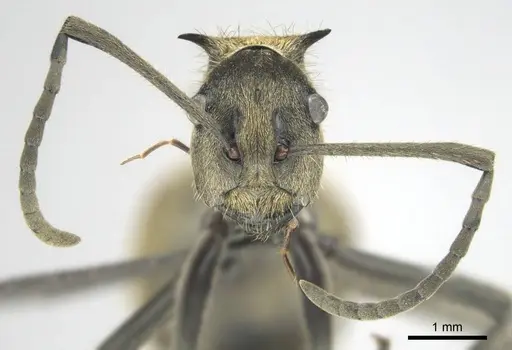
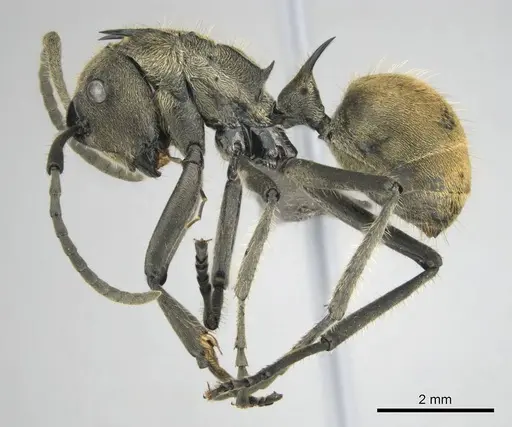
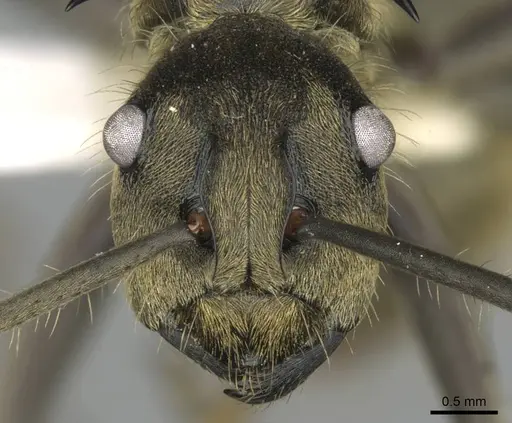
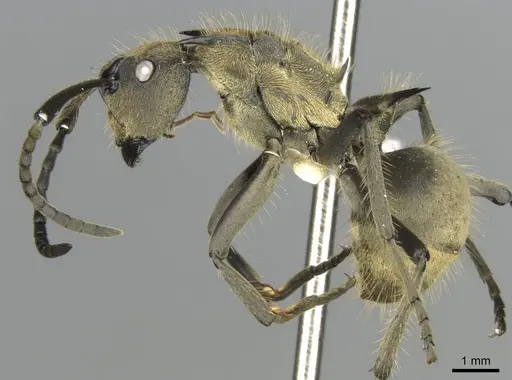
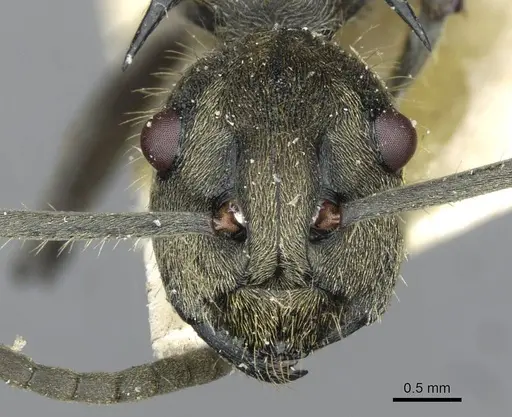
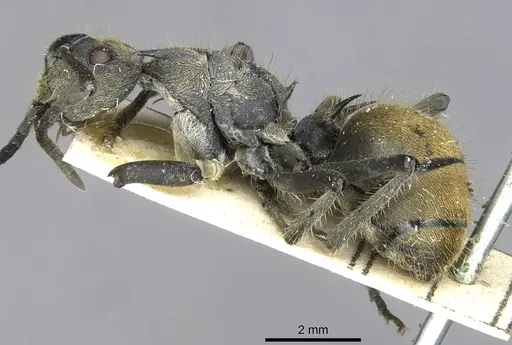
Polyrhachis epinotalis is a large ant species native to the Afrotropical region of central and eastern Africa. Workers have a distinctive oval head shape, abundant golden pubescence, and long upturned propodeal spines . This species was previously considered a subspecies of Polyrhachis militaris but was revived as a separate species in 2016 . Almost nothing has been documented about the biology of Polyrhachis epinotalis in scientific literature. What we know comes from morphological studies and distribution records .
Quick Summary
- Difficulty: Medium
- Origin & Habitat: Afrotropical region, found in Central African Republic, Democratic Republic of Congo, Equatorial Guinea, Gabon, Kenya, Rwanda, Uganda, and Zambia [1][2]. Natural habitat is likely forested areas.
- Colony Type: Colony structure is unconfirmed. Based on related Polyrhachis species patterns, it is likely monogyne (single queen), but no specific data exists.
- Size & Growth:
- Queen: Size data unavailable, no documented queen measurements.
- Worker: Size data unavailable, body length measurements not provided in literature.
- Colony: Unconfirmed, maximum colony size unknown.
- Growth: Moderate, estimated based on related Formicinae species patterns.
- Development: Estimated 6-10 weeks at optimal temperatures, based on typical Formicinae development. (No specific development data exists, estimate based on related species patterns.)
- Antkeeping:
- Temperature: Keep warm, roughly 24-28°C, based on tropical species patterns. Provide a temperature gradient for self-regulation.
- Humidity: Keep nest substrate consistently moist but not waterlogged, as they are forest-dwelling ants.
- Diapause: No, as a tropical species, they likely do not require diapause.
- Nesting: Use Y-tong, plaster, or soil nests with multiple chambers. Provide some vertical space due to arboreal tendencies.
- Behavior: Polyrhachis epinotalis workers spray formic acid for defense, as they lack a functional sting. They are moderately aggressive when disturbed and active foragers. Escape risk is medium due to their size, always use barrier tape as a precaution.
- Common Issues: lack of specific care data may require experimentation to optimize conditions., high humidity requirements can lead to mold if ventilation is poor., arboreal nesting instincts may cause stress in horizontal-only setups, provide vertical space., escape prevention: workers are medium-sized, but always use barriers as a precaution., founding behavior is unconfirmed, so expect uncertainty during colony establishment.
Identification and Appearance
Polyrhachis epinotalis can be identified by its distinctly oval head in full face view, with convex sides converging posteriorly. The propodeal spines are long, upturned, and spine-like, often approaching the height of the propodeal declivity [1]. The body is covered in abundant golden pubescence, hiding much of the underlying sculpture [1].
Natural History and Distribution
This species is found across the Afrotropical region, with records from Central African Republic, Democratic Republic of Congo, Equatorial Guinea, Gabon, Kenya, Rwanda, Uganda, and Zambia [1][2]. It was revived as a separate species from Polyrhachis militaris in 2016 based on morphological differences [1]. Almost no biological data exists about nesting habits, diet, or behavior in the wild.
Housing and Nest Setup
Use Y-tong, plaster, or soil nests with multiple connected chambers. Provide some vertical space due to arboreal tendencies. Keep the nest substrate lightly moist but not waterlogged, and ensure good ventilation to prevent mold. A water test tube should always be available. Given their medium size, standard escape prevention measures work well, but barrier tape is recommended.
Feeding and Diet
Based on related Polyrhachis species, they are likely omnivorous. Offer sugar water, honey, or diluted syrup constantly as an energy source. For protein, provide small insects like fruit flies or mealworms 2-3 times per week. Remove uneaten prey after 24-48 hours to prevent mold.
Temperature and Seasonal Care
As a tropical species, keep them warm at roughly 24-28°C with a temperature gradient. Avoid temperatures below 20°C for extended periods. They likely do not require diapause, but may show reduced activity in cooler conditions.
Behavior and Handling
Workers spray formic acid for defense, as they lack a functional sting. They are moderately aggressive when disturbed and active foragers that climb well. When observing, you may see workers patrolling and carrying prey back to the nest.
Frequently Asked Questions
How long does it take for Polyrhachis epinotalis to produce first workers?
The exact time is unknown, but based on typical Formicinae development, expect approximately 6-10 weeks from egg to worker at optimal temperatures. Patience is key, wait at least 2-3 months before concern.
What do Polyrhachis epinotalis ants eat?
They are likely omnivorous. Offer sugar water or honey constantly, and protein like small insects 2-3 times per week. Remove uneaten prey after 24-48 hours.
What temperature do Polyrhachis epinotalis need?
Keep them warm at roughly 24-28°C with a temperature gradient. Avoid prolonged exposure to temperatures below 20°C.
Are Polyrhachis epinotalis good for beginners?
They are rated as Medium difficulty. The lack of specific care data means you may need to experiment, but they are not the most challenging species.
How big do Polyrhachis epinotalis colonies get?
The maximum colony size is unconfirmed. No data exists on colony size for this species.
Do Polyrhachis epinotalis need hibernation?
No, as a tropical species, they likely do not require diapause. Keep them at stable warm temperatures year-round.
What type of nest is best for Polyrhachis epinotalis?
Use Y-tong, plaster, or soil nests with multiple chambers and some vertical space. Keep substrate moist and ensure good ventilation.
Can I keep multiple queens together?
Colony structure is unconfirmed. Based on related species patterns, they are likely monogyne (single queen). Combining unrelated queens is not recommended as it often leads to fighting.
Why is my Polyrhachis epinotalis colony growing slowly?
Possible reasons include suboptimal temperatures, low humidity, or insufficient protein. Ensure proper care and remember that this species has no documented biology, some trial and error may be needed.
Report an Issue
The current care sheet is based fully on literature. See inconsistencies, or something that's incorrect? Please , it will be resolved after review from an admin. Contributing to the blogs tab also helps providing information, to make us be able to further improve the caresheets. Thank you for your support!
References

This caresheet is licensed under CC BY-SA 4.0 .
Community Blogs
CASENT0178253
View on AntWeb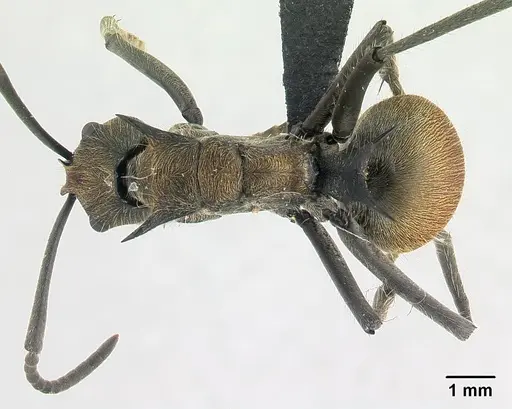
CASENT0250038
View on AntWeb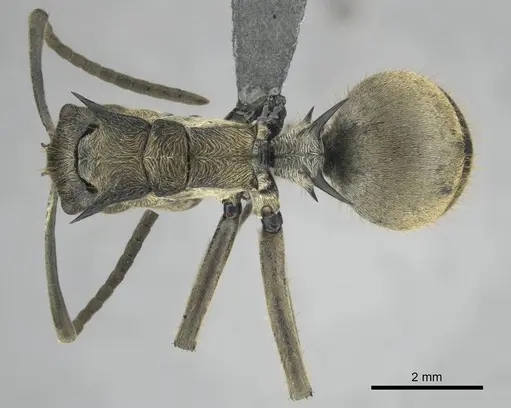
CASENT0815029
View on AntWeb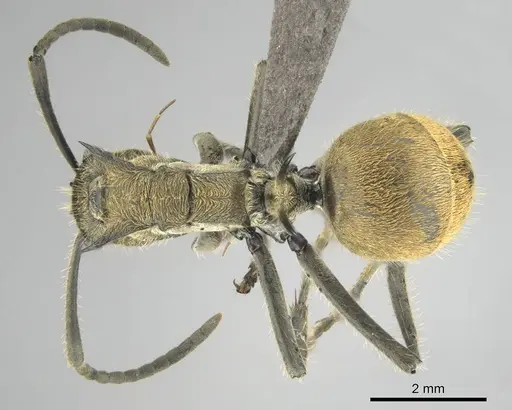
CASENT0906820
View on AntWeb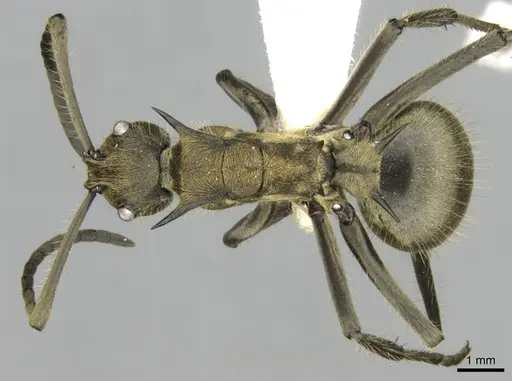
CASENT0910908
View on AntWeb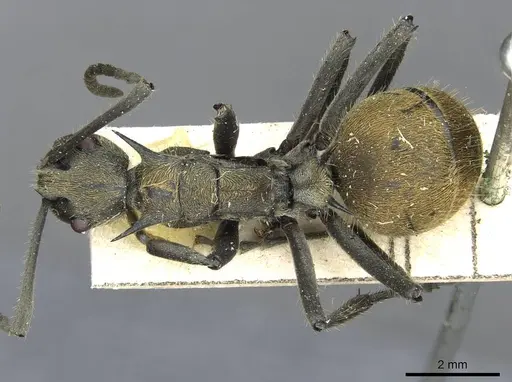
Literature
Loading distribution map...Loading products...