
Polyrhachis cornuta
- Sci. Name
- Polyrhachis cornuta
- Subgenus
- Myrma
- Tribe
- Camponotini
- Subfamily
- Formicinae
- Author
- Stitz, 1910
- Distribution
- Found in 1 countries
Introduction
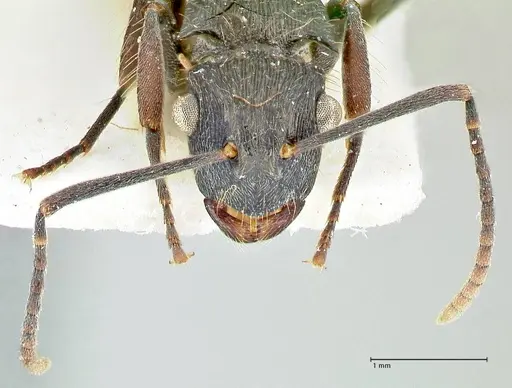
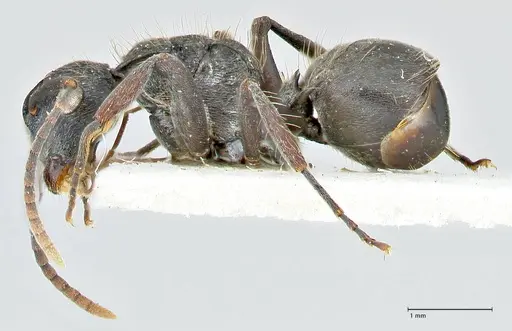
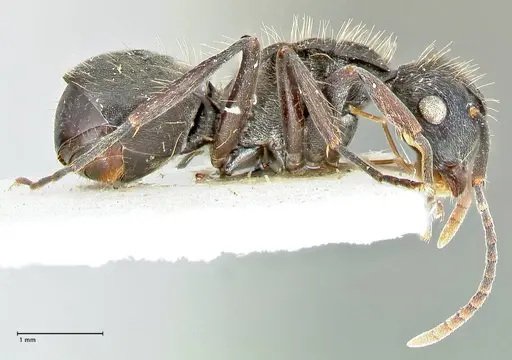
Polyrhachis cornuta is a medium-sized African ant belonging to the Formicinae subfamily. Workers are approximately 4.6 to 5.6 mm in total length , with a black body, brownish legs and antennae, and a spiny petiole. The petiole has a pair of enormous curved spines that wrap around the base of the abdomen, giving the species its name 'cornuta' meaning 'horned' . These ants are endemic to the Democratic Republic of Congo, specifically recorded from the Kinshasa area . This species belongs to the militaris species group and is closely related to Polyrhachis phidias. The genus Polyrhachis is known for its spiny ants, but P. cornuta stands out for its unusually developed lateral petiolar spines. Almost nothing is known about their biology in the wild - this is one of the least studied ant species in the hobby .
Quick Summary
- Difficulty: Medium to Hard
- Origin & Habitat: Democratic Republic of Congo, endemic to Kinshasa region [3].
- Colony Type: Colony structure is unconfirmed. Based on genus patterns, likely monogyne (single queen) but not documented.
- Size & Growth:
- Queen: Unknown, no queen description exists
- Worker: Approximately 4.6 to 5.6 mm total length [1][2]
- Colony: Unknown, no colony size data exists
- Growth: Unknown, inferred from genus patterns as moderate
- Development: Unknown, estimated 6-10 weeks based on related Polyrhachis species [2] (No direct observations, estimates based on genus-level patterns.)
- Antkeeping:
- Temperature: Keep warm, roughly 24-28°C, as inferred from tropical habitat [3].
- Humidity: Maintain moderate humidity, keep nest substrate lightly moist but not waterlogged [2].
- Diapause: No diapause required, as tropical species [3].
- Nesting: Nesting preferences unconfirmed, based on genus patterns, provide arboreal-style nest with climbing structures [2].
- Behavior: Based on genus patterns, likely docile and active foragers. Escape risk moderate due to size and climbing ability.
- Common Issues: lack of captive husbandry information makes successful keeping challenging., no confirmed diet preferences, must experiment with sugar sources and protein., unknown if they accept sugar water or require honeydew/plant-based foods., no information on founding behavior, queen care is speculative., potential escape artists given their active foraging nature.
Housing and Nest Setup
Since specific nesting habits of P. cornuta are unknown, based on genus patterns, Polyrhachis ants are primarily arboreal or semi-arboreal [2]. For captivity, a Y-tong or plaster nest works well. Provide climbing structures in the outworld. Use standard escape prevention [2].
Feeding and Diet
Diet preferences are unconfirmed for this species. Based on genus patterns, Polyrhachis ants typically feed on honeydew and small insects [2]. In captivity, offer sugar water or diluted honey as a constant sugar source, plus small insects for protein [2].
Temperature and Humidity
As a tropical species from the Democratic Republic of Congo, P. cornuta requires warm conditions [3]. Target 24-28°C, but since no specific data, observe colony behavior [2]. For humidity, keep nest substrate lightly moist [2].
Colony Founding and Development
No scientific observations exist of P. cornuta colony founding. Based on typical Formicinae patterns, the queen likely seals herself in a chamber [2]. The egg-to-worker timeline is unknown, estimated 6-10 weeks based on related species [2].
Behavior and Temperament
Specific behavioral observations do not exist. However, the genus Polyrhachis is generally docile [2]. Workers are moderately sized and should be contained by standard barriers [2].
Frequently Asked Questions
How long does it take for Polyrhachis cornuta to produce first workers?
The egg-to-worker timeline is completely unknown for this species, no scientific observations exist. Based on related Polyrhachis species, estimate 6-10 weeks at optimal tropical temperatures (24-28°C) [2].
What do Polyrhachis cornuta ants eat?
Diet is unconfirmed. Based on genus patterns, they likely feed on honeydew and small insects [2]. Offer sugar water or diluted honey as a constant sugar source, plus small insects (fruit flies, small mealworms) for protein 2-3 times weekly.
Are Polyrhachis cornuta ants good for beginners?
This species is not recommended for beginners. Almost no captive husbandry information exists, everything must be inferred from genus patterns. This makes successful keeping challenging and risky for new antkeepers.
Do Polyrhachis cornuta ants need hibernation?
Probably not. As a tropical species from equatorial Africa, they likely remain active year-round. No diapause requirement has been documented, and their natural environment does not experience cold winters [3].
What temperature do Polyrhachis cornuta ants need?
Keep nest areas warm, roughly 24-28°C, as inferred from tropical habitat [3]. Use a heating cable on one side of the nest to create a gradient if room temperature is lower.
How big do Polyrhachis cornuta colonies get?
Colony size is completely unknown, no colony data exists in scientific literature. Based on related species in the genus, colonies may reach several hundred workers over time.
Can I keep multiple Polyrhachis cornuta queens together?
Colony structure is unconfirmed. No information exists about whether this species is monogyne (single queen) or polygyne (multiple queens). Do not attempt combining unrelated queens until more information is available.
What type of nest is best for Polyrhachis cornuta?
Based on genus patterns, a Y-tong or plaster nest works well. Provide climbing structures in the outworld since many Polyrhachis species are semi-arboreal [2].
Why is so little known about Polyrhachis cornuta?
This species is endemic to a limited region (Kinshasa, DRC) and has rarely been collected or studied. The last major documentation was in 1910,and no ecological or behavioral studies have been published since. It remains one of the least studied ant species in the hobby [2].
Report an Issue
The current care sheet is based fully on literature. See inconsistencies, or something that's incorrect? Please , it will be resolved after review from an admin. Contributing to the blogs tab also helps providing information, to make us be able to further improve the caresheets. Thank you for your support!
References

This caresheet is licensed under CC BY-SA 4.0 .
Community Blogs
FOCOL2575
View on AntWeb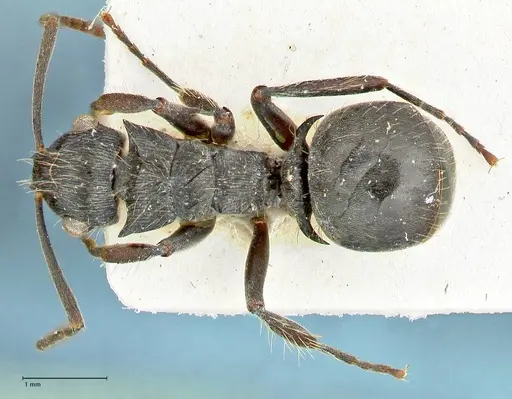
Literature
Loading distribution map...Loading products...