
Polyrhachis conops
- Sci. Name
- Polyrhachis conops
- Subgenus
- Myrma
- Tribe
- Camponotini
- Subfamily
- Formicinae
- Author
- Forel, 1901
- Distribution
- Found in 0 countries
Introduction
Polyrhachis conops is a large ant species native to the Bismarck Archipelago in New Guinea. Workers are 9.93-11.18 mm long, and queens are 11.94-12.65 mm long . This species belongs to the Polyrhachis continua species-group within the subgenus Myrma. The only known specimens are the syntypes described in 1901 . They nest in tree stumps and rotting wood in tropical forests .
Quick Summary
- Difficulty: Medium
- Origin & Habitat: Bismarck Archipelago, New Britain in Papua New Guinea. They are lignicolous, nesting in tree stumps and rotting wood in tropical forest environments [2][3].
- Colony Type: Colony structure is unconfirmed. Based on genus patterns, likely single-queen colonies, though some Polyrhachis species can form multi-queen colonies.
- Size & Growth:
- Queen: 11.94-12.65 mm [1]
- Worker: 9.93-11.18 mm [1]
- Colony: Unknown, no colony size data exists for this species
- Growth: Moderate, based on typical Polyrhachis growth patterns
- Development: Estimated 8-12 weeks at tropical temperatures based on related Polyrhachis species, but not directly studied for this species (Development timeline is not directly studied for this species. Cocoons are present, which is typical for the genus [2].)
- Antkeeping:
- Temperature: Keep at 24-28°C. As a tropical species from the Bismarck Archipelago, they need warm conditions. Inferred from habitat.
- Humidity: Keep the nest substrate consistently moist but not waterlogged. Inferred from tropical forest habitat.
- Diapause: No, as a tropical species, they do not require hibernation. Maintain warm temperatures year-round.
- Nesting: Use a naturalistic setup with rotting wood or cork bark, as they are lignicolous [2]. A Y-tong or plaster nest with wood insert works well. Avoid acrylic nests.
- Behavior: Polyrhachis ants are alert and defensive. Workers are active foragers and will defend their nest vigorously. They lack a sting but can spray formic acid, which is typical for Formicinae. Escape prevention is important, use standard barrier methods and secure lids.
- Common Issues: very limited natural history data means care is based on genus-level inference rather than species-specific research, tropical temperature requirements may be challenging in cooler climates without heating, wild-caught colonies may be difficult to obtain since this is a rare species known only from type specimens, nesting in wood requires specific setup considerations compared to typical test tube colonies
Nest Preferences and Housing
Polyrhachis conops is a lignicolous species, meaning it nests in rotting wood and tree stumps in the wild [2]. In captivity, replicate this by providing a naturalistic setup with cork bark, rotting wood, or a wooden insert in a nest. The subgenus Myrma tends to prefer arboreal or semi-arboreal sites, so a vertically-oriented setup works well. A Y-tong nest with a wood chamber or a custom wooden formicarium mimics their natural preferences. Keep the wood moderately moist but not waterlogged, these ants need damp conditions but good ventilation to prevent mold.
Temperature and Heating
As a tropical species from the Bismarck Archipelago, Polyrhachis conops requires warm temperatures. Aim for 24-28°C in the nest area. Since no specific temperature data is available, this is inferred from their habitat. Use a heating cable or heat mat on one side of the nest to maintain warmth, creating a gradient so workers can regulate exposure.
Feeding and Diet
Polyrhachis ants are generalist omnivores. Offer sugar sources like honey water constantly and protein such as live or frozen insects 2-3 times per week. In the wild, they forage for honeydew and hunt small invertebrates. Remove uneaten prey after 24-48 hours to prevent mold. Fresh water should always be available.
Behavior and Temperament
Polyrhachis ants are alert and defensive. Workers are active foragers that quickly respond to threats. They lack a sting but can spray formic acid from an acidopore, which is typical for Formicinae. When working with the colony, move slowly and avoid disturbing the nest directly. Use escape prevention methods even though they are not tiny, they are strong and will exploit loose connections.
Colony Establishment and Growth
Polyrhachis conops is known only from the original type specimens, so establishing a captive breeding line is challenging. If you obtain a queen, she is likely claustral based on genus patterns, but this is unconfirmed for this species. She will seal herself in a chamber and raise the first workers without feeding. Do not disturb a founding queen for at least 4-6 weeks. Once workers emerge, the colony will grow gradually at a moderate rate.
Frequently Asked Questions
How long does it take for Polyrhachis conops to raise first workers?
Based on typical Polyrhachis development, expect 8-12 weeks from egg to first worker at optimal tropical temperatures (24-28°C). The exact timeline is unconfirmed for this specific species.
What size colony does Polyrhachis conops reach?
Colony size is unknown, no scientific data exists on maximum colony size for this species. Based on related Polyrhachis species, colonies likely reach several hundred workers over time.
What temperature do Polyrhachis conops need?
Keep them at 24-28°C. As a tropical species from the Bismarck Archipelago, they require warm conditions year-round. A heating cable on one side of the nest can help maintain appropriate temperatures.
Can I keep Polyrhachis conops in a test tube?
Not ideally. This is a lignicolous species that prefers rotting wood or cork bark. A naturalistic setup with wood insert or a Y-tong nest works better than a standard test tube setup [2].
Is Polyrhachis conops good for beginners?
No. This is an expert-level species due to limited natural history data, specific nesting requirements, and the need for tropical temperatures. The difficulty is compounded by the rarity of this species in the antkeeping hobby.
Do Polyrhachis conops need hibernation?
No. As a tropical species from the Bismarck Archipelago, they do not require diapause or hibernation. Keep them warm year-round.
What do Polyrhachis conops eat?
They are omnivorous. Offer sugar sources constantly and protein 2-3 times per week. Remove uneaten food promptly to prevent mold.
How big do Polyrhachis conops queens get?
Queens are large at 11.94-12.65 mm total length [1]. Workers are also large at 9.93-11.18 mm, making this one of the larger Polyrhachis species.
Where is Polyrhachis conops found in the wild?
This species is known only from the Bismarck Archipelago, specifically New Britain island in Papua New Guinea. It was originally described by Forel in 1901 from specimens collected at Herbertshöhe [3][1].
Can I keep multiple Polyrhachis conops queens together?
Not recommended. The colony structure is unconfirmed for this species, and combining unrelated queens carries risks of aggression. Most Polyrhachis species establish single-queen colonies.
Why is Polyrhachis conops so rare in the hobby?
This species is known only from the original type specimens collected in the early 1900s, the syntypes are the only specimens ever documented [1]. It has never been rediscovered or commonly collected, making wild colonies essentially unavailable to antkeepers.
Report an Issue
The current care sheet is based fully on literature. See inconsistencies, or something that's incorrect? Please , it will be resolved after review from an admin. Contributing to the blogs tab also helps providing information, to make us be able to further improve the caresheets. Thank you for your support!
References

This caresheet is licensed under CC BY-SA 4.0 .
Community Blogs
CASENT0910916
View on AntWeb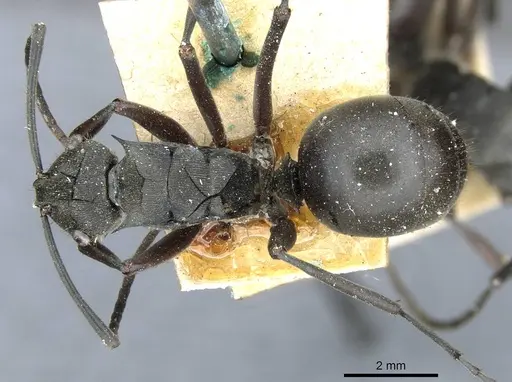
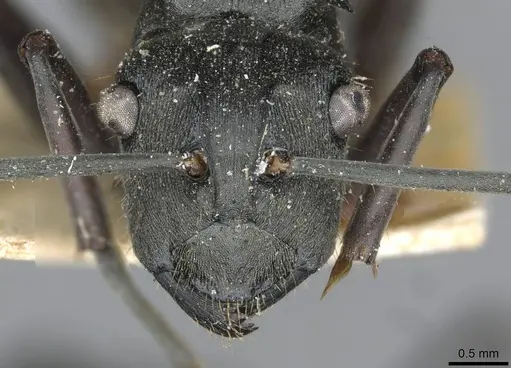
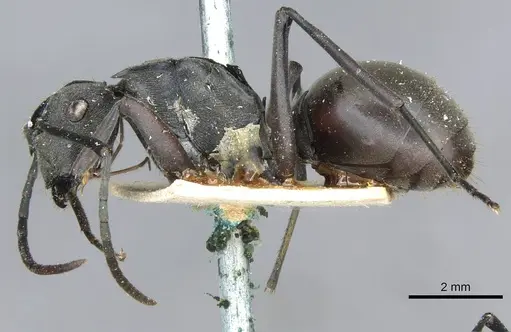
Literature
Loading distribution map...Loading products...