
Polyrhachis cleophanes
- Sci. Name
- Polyrhachis cleophanes
- Subgenus
- Myrmhopla
- Tribe
- Camponotini
- Subfamily
- Formicinae
- Author
- Smith, 1861
- Distribution
- Found in 1 countries
Introduction
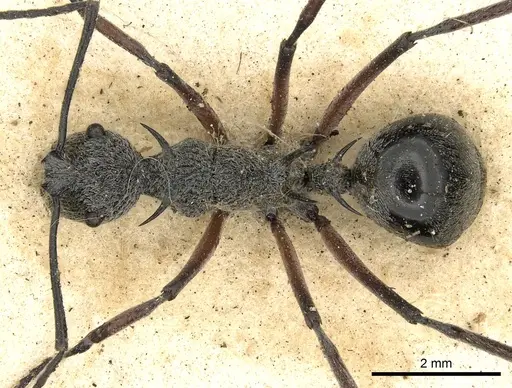
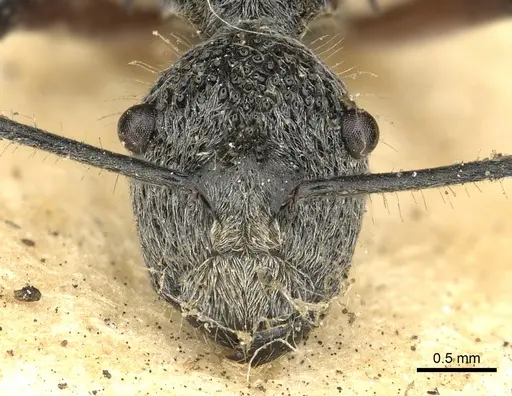
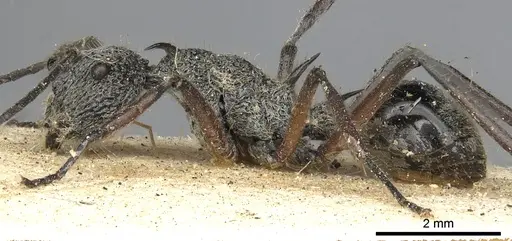
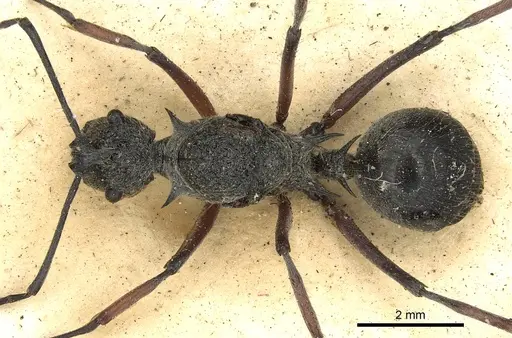
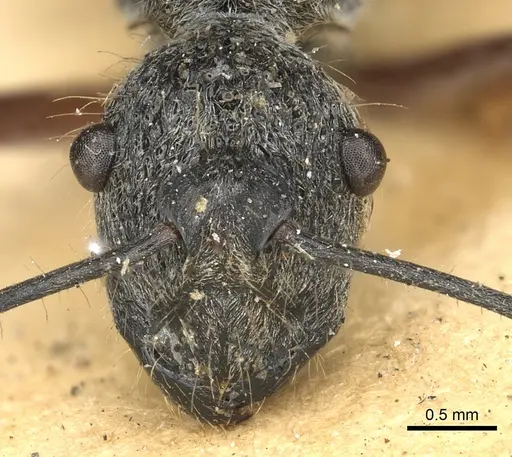
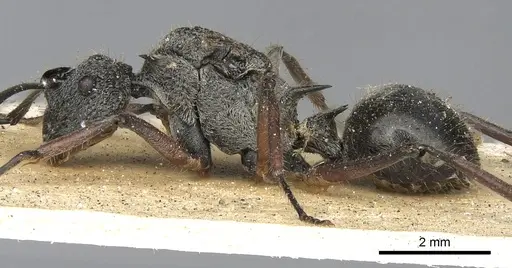
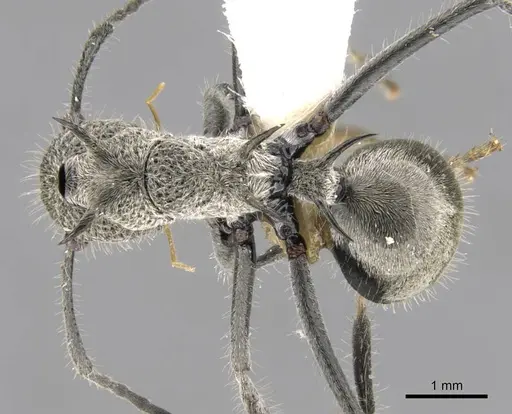
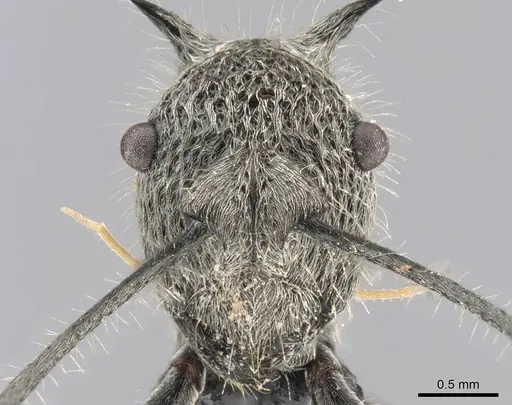
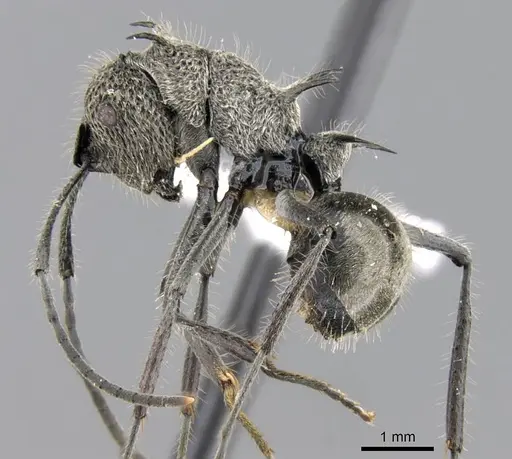
Polyrhachis cleophanes is a medium-sized ant species native to Sulawesi, Indonesia . Workers have distinctive hooked spines on the thorax, a trait common to the Polyrhachis genus . The species is found at elevations between 1000-1260 meters . This species is part of the Polyrhachis cleophanes species-group and was originally described in 1861 . It is notable for its highland distribution, suggesting adaptation to cooler conditions.
Quick Summary
- Difficulty: Medium
- Origin & Habitat: Sulawesi, Indonesia, found in highland areas at 1000-1260m elevation [3]. The type locality is Tondano, a highland region in North Sulawesi [2].
- Colony Type: Unconfirmed, colony structure has not been documented for this species.
- Size & Growth:
- Queen: Approximately 8-10mm, inferred from Polyrhachis genus patterns [3]
- Worker: Approximately 6-8mm, inferred from Polyrhachis genus patterns [3]
- Colony: Unknown for this species, related Polyrhachis species typically reach several hundred workers
- Growth: Moderate, estimated based on genus patterns
- Development: 8-12 weeks, estimated based on typical Polyrhachis development at tropical temperatures [3] (Development time is estimated from related species, specific data for P. cleophanes is unavailable)
- Antkeeping:
- Temperature: Keep at 24-28°C, they come from a tropical island but higher elevations suggest they tolerate slightly cooler conditions [3]
- Humidity: Keep the nest substrate consistently moist but not waterlogged [3]
- Diapause: No, Sulawesi has no true winter, so diapause is not required [3]
- Nesting: Provide a nest with moderate humidity, such as plaster or soil nests. Polyrhachis species often prefer semi-arboreal sites, so include vertical space [3]
- Behavior: Polyrhachis ants are generally calm and not aggressive. Workers are active foragers but can be shy. They lack a functional sting and spray formic acid as defense. Escape prevention should be moderate, they are not tiny ants but can climb well.
- Common Issues: limited availability, this species is rarely available in the antkeeping hobby., lack of species-specific care information means keepers must rely on genus-level guidance., highland origin suggests specific temperature requirements that may differ from lowland relatives., slow colony growth can frustrate beginners who expect rapid development., wild-caught colonies may carry parasites or diseases not yet characterized.
Natural History and Distribution
Polyrhachis cleophanes is endemic to Sulawesi, one of the larger islands in Indonesia's archipelago [1][2]. The species was first described in 1861 by Frederick Smith based on specimens collected by Alfred Russel Wallace [2]. The type locality is Tondano, a highland area in North Sulawesi, which explains the elevation records of 1000-1260 meters where specimens have been found [3]. This highland origin suggests the species may prefer cooler conditions than many other tropical ants.
Identification and Morphology
Polyrhachis cleophanes is a member of the Polyrhachis cleophanes species-group [3]. Workers display the characteristic hooked spines on the promesonotum that give the genus its common name of 'spiny ants' [3]. The spines serve as a defensive adaptation. Workers measure approximately 6-8mm in length, and the queen is larger at approximately 8-10mm [3]. Both castes have the typical Formicinae feature of a single waist segment between the thorax and abdomen.
Housing and Nest Preferences
In captivity, Polyrhachis cleophanes should be provided with a nest that offers moderate humidity and protection from direct light. A plaster or soil nest works well for this genus, providing chambers that can be kept slightly moist [3]. Given their highland origin, avoid overheating the nest, stay within the 24-28°C range [3]. Include some vertical space or climbing structures in the outworld, as Polyrhachis ants are semi-arboreal [3]. The outworld should have moderate humidity and a water source. Escape prevention is important but not critical for this species.
Feeding and Diet
Like most Polyrhachis species, P. cleophanes is likely an omnivore that accepts both sugar sources and protein. Offer sugar water, honey, or diluted syrup as a constant energy source. For protein, provide small insects such as fruit flies, small crickets, or mealworms [3]. Feed protein prey 2-3 times per week, adjusting based on colony size and consumption. Remove uneaten prey after 24-48 hours to prevent mold.
Temperature and Seasonal Care
Based on their highland Sulawesi origin, Polyrhachis cleophanes likely prefers temperatures in the moderate tropical range of 24-28°C [3]. Avoid temperatures above 30°C, as this species does not come from extremely hot lowland environments. Room temperature within this range is typically suitable. Unlike temperate species, they do not require a winter diapause period [3].
Colony Development
The colony development timeline for Polyrhachis cleophanes has not been specifically documented. Based on typical Polyrhachis patterns, expect the following: claustral founding is unconfirmed, but if it occurs, the queen would seal herself in a chamber and raise the first brood alone. The first workers would emerge in approximately 8-12 weeks under optimal temperature conditions [3]. The colony will grow gradually over several months to a few years, eventually reaching several hundred workers in a mature colony. Growth rate is moderate.
Frequently Asked Questions
How long does it take for Polyrhachis cleophanes to produce first workers?
Based on typical Polyrhachis development, expect 8-12 weeks from egg to first worker at optimal temperatures (around 26°C) [3]. This is an estimate since the specific development time for P. cleophanes has not been documented.
What temperature do Polyrhachis cleophanes ants need?
Keep them at 24-28°C. Their highland origin in Sulawesi suggests they prefer slightly cooler conditions than many tropical ants [3]. Avoid temperatures above 30°C.
Do Polyrhachis cleophanes ants need hibernation?
No, they do not require hibernation. Sulawesi has no winter, so these ants are adapted to year-round activity [3]. Simply maintain stable tropical temperatures.
What do Polyrhachis cleophanes eat?
They are omnivores. Offer sugar water or honey as a constant energy source, and protein prey (small insects like fruit flies or mealworms) 2-3 times per week [3].
Are Polyrhachis cleophanes good for beginners?
This species is rated as medium difficulty. While not overly demanding, the lack of species-specific care information means keepers should have some experience with tropical ant species [3].
How big do Polyrhachis cleophanes colonies get?
Based on related species, colonies likely reach several hundred workers at maturity. The exact maximum is unknown as this species has not been studied in detail [3].
Can I keep multiple Polyrhachis cleophanes queens together?
The colony structure of this species is unconfirmed. Most Polyrhachis species are single-queen (monogyne), so it is not recommended to house multiple unrelated queens together without evidence of polygyny [3].
What type of nest is best for Polyrhachis cleophanes?
A plaster or soil nest with moderate humidity works well. Include some vertical climbing space in the outworld since this genus is semi-arboreal [3].
Where can I find Polyrhachis cleophanes for sale?
This species is rarely available in the antkeeping hobby. It is not commonly traded compared to more popular species. You may need to seek specialty breeders or import from regions where it is permitted.
Report an Issue
The current care sheet is based fully on literature. See inconsistencies, or something that's incorrect? Please , it will be resolved after review from an admin. Contributing to the blogs tab also helps providing information, to make us be able to further improve the caresheets. Thank you for your support!
References

This caresheet is licensed under CC BY-SA 4.0 .
Community Blogs
Literature
Loading distribution map...Loading products...