
Polyrhachis bugnioni
- Sci. Name
- Polyrhachis bugnioni
- Subgenus
- Hemioptica
- Tribe
- Camponotini
- Subfamily
- Formicinae
- Author
- Forel, 1908
- Distribution
- Found in 1 countries
Introduction
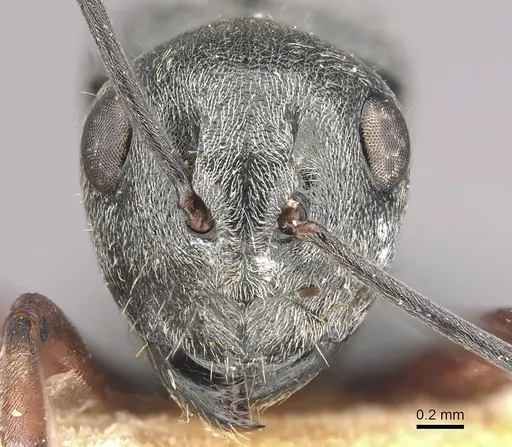
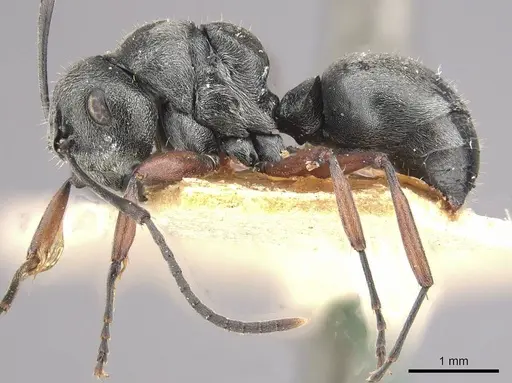
Polyrhachis bugnioni is an arboreal ant endemic to the primary forests of Sri Lanka. Workers are 5.5-5.7 mm and queens 6.5-7 mm in total length . They have a black body with pale legs that appear white in living specimens . This species is found only in the wet zone of Sri Lanka . Their most unusual trait is nesting in the stipules of Humboldtia laurifolia trees, using silk to seal the nest .
Quick Summary
- Difficulty: Medium
- Origin & Habitat: Endemic to Sri Lanka, found exclusively in primary forest habitats in the wet zone of the island [2].
- Colony Type: Likely monogyne based on documented colony with one queen. Colonies are monodomous, maintaining a single nest [3].
- Size & Growth:
- Queen: 6.5-7 mm [1]
- Worker: 5.5-5.7 mm [1]
- Colony: Up to 30 workers [1]
- Growth: Moderate
- Development: Unknown, no specific studies. Based on related Polyrhachis species, estimate 6-10 weeks at optimal temperatures [1]. (Development timeline is unconfirmed, tropical ants typically take 6-8 weeks from egg to worker.)
- Antkeeping:
- Temperature: Keep warm, roughly 24-28°C, as they are from tropical Sri Lanka [1].
- Humidity: Keep nest substrate consistently moist but not waterlogged, reflecting their humid forest habitat [1].
- Diapause: No, as a tropical species [1].
- Nesting: Arboreal nesters that use silk. Provide vertical structures like cork bark and materials for silk-weaving [3][1].
- Behavior: Generally peaceful and excellent climbers. Escape prevention is important due to their small size [1].
- Common Issues: small colony size means slow growth, avoid overfeeding., high humidity can lead to mold if ventilation is poor., arboreal nature requires vertical space and climbing structures., escape prevention is crucial due to small size and agility., rare species, so obtaining colonies may be difficult.
Nesting and Housing
Polyrhachis bugnioni nests arboreally in the wild, using silk to seal stipules of Humboldtia trees [1][3]. In captivity, provide vertical structures like cork bark or branches, and materials for silk-weaving. A Y-tong nest with climbing elements works well.
Temperature and Humidity
Maintain temperatures around 24-28°C, with a gentle gradient using a heating cable [1]. Keep humidity high by misting the outworld and ensuring the nest substrate is moist but not waterlogged [1].
Feeding and Diet
Offer sugar water or honey constantly, and protein like fruit flies or small insects 2-3 times per week [1]. Remove uneaten prey to prevent mold.
Behavior and Colony Structure
Colonies are likely monogyne and monodomous [3]. Workers are peaceful climbers [1]. Use silk to construct nests, so provide suitable materials.
Frequently Asked Questions
How long does it take for Polyrhachis bugnioni to produce first workers?
The exact timeline is unknown, but based on related Polyrhachis species, estimate 6-10 weeks from egg to worker at optimal temperatures [1].
Can I keep Polyrhachis bugnioni in a test tube setup?
A test tube can work for founding colonies, but transition to an arboreal setup with vertical space [1].
What makes Polyrhachis bugnioni different from other Polyrhachis?
This species has pale legs, is endemic to Sri Lanka, and nests in Humboldtia stipules using silk [1][3].
Are Polyrhachis bugnioni good for beginners?
This species is rated medium difficulty due to humidity needs and arboreal nature [1].
How big do Polyrhachis bugnioni colonies get?
Colonies reach up to 30 workers [1].
Do Polyrhachis bugnioni need hibernation?
No, as a tropical species, they do not require hibernation [1].
What do Polyrhachis bugnioni eat?
They are omnivorous, offering sugar water and protein like small insects [1].
Why are the legs of Polyrhachis bugnioni white?
The pale legs are a distinctive feature that darken after death [1].
Where does Polyrhachis bugnioni nest in the wild?
They nest in the stipules of Humboldtia laurifolia trees, sealing them with silk [1][3].
Report an Issue
The current care sheet is based fully on literature. See inconsistencies, or something that's incorrect? Please , it will be resolved after review from an admin. Contributing to the blogs tab also helps providing information, to make us be able to further improve the caresheets. Thank you for your support!
References

This caresheet is licensed under CC BY-SA 4.0 .
Community Blogs
CASENT0910965
View on AntWeb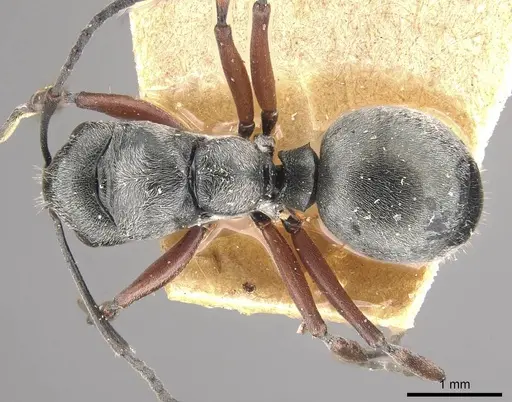
Literature
Loading distribution map...Loading products...