
Polyrhachis boltoni
- Sci. Name
- Polyrhachis boltoni
- Subgenus
- Hemioptica
- Tribe
- Camponotini
- Subfamily
- Formicinae
- Author
- Dorow & Kohout, 1995
- Distribution
- Found in 2 countries
Introduction
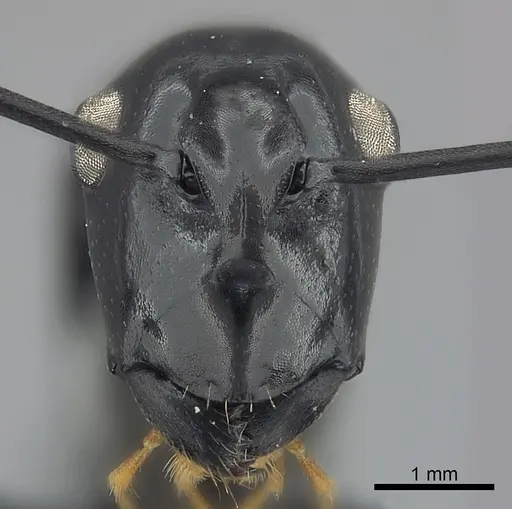
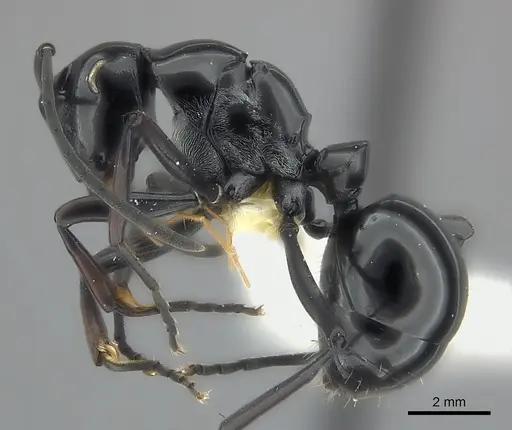
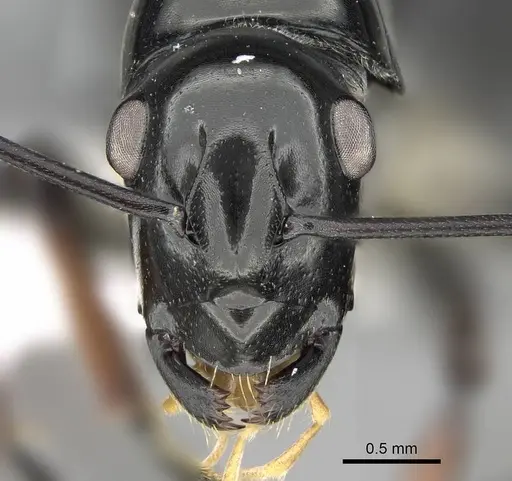
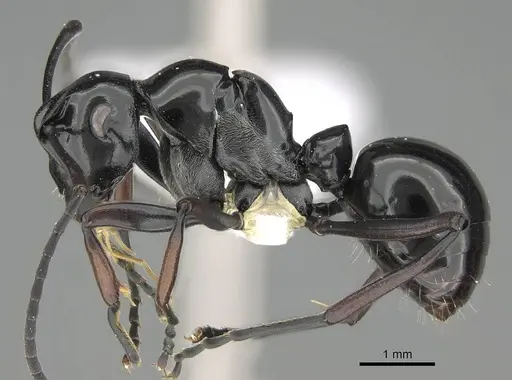
Polyrhachis boltoni is a medium-sized arboreal ant native to the rainforests of Borneo, Brunei, Malaysia, and Indonesia. Workers are jet black with a highly polished body, and queens are slightly larger, with distinctive large eyes and an elongated face. This species belongs to the subgenus Hemioptica and builds silk-woven nests in trees, typically 1.8-4 meters high, using dead leaves and detritus . A key feature is their polydomous behavior, where a single colony occupies multiple connected nests across the tree canopy, often observed in both primary and secondary forests .
Quick Summary
- Difficulty: Medium
- Origin & Habitat: Lowland dipterocarp rainforests of Borneo, Brunei, Malaysia, and Indonesia. Nests are built arboreally in trees, often in canopy areas [4][1].
- Colony Type: Polydomous, colonies likely occupy multiple connected arboreal nests. No queen was found in studied nests, suggesting the colony spreads across locations, but queen number is unconfirmed [1].
- Size & Growth:
- Antkeeping:
- Temperature: Keep warm, roughly 24-28°C, based on tropical rainforest patterns
- Humidity: Keep nest substrate consistently moist but not waterlogged, as they are from humid rainforests
- Diapause: No, tropical species do not require hibernation
- Nesting: Arboreal setup with vertical space and materials for silk weaving, such as leaves and detritus [2][3][1]
- Behavior: Diurnal and peaceful, with low aggression but escape risk due to small size, workers flee when disturbed [1].
- Common Issues: arboreal nesting requirements make setup challenging, they need vertical space and weaving materials, high humidity needs can lead to mold if ventilation is poor, escape prevention is important due to small size and arboreal nature, polydomous colonies may be stressed in single-nest setups, consider multiple connected areas, tropical warmth requirements year-round mean consistent heating is essential
Housing and Nest Setup
P. boltoni requires an arboreal setup that mimics their natural rainforest canopy habitat. Create a naturalistic enclosure with vertical space, branches, or leaves where they can build silk-woven nests. Provide materials like small leaf fragments or wood pieces for weaving. Position the nest at least 30cm above the floor, with high humidity and adequate ventilation to prevent mold [2][3][1].
Feeding and Diet
In the wild, workers forage on detritus from leaves and rotting wood. In captivity, offer sugar sources like honey water and protein such as fruit flies or mealworms. Feed small amounts 2-3 times per week, removing uneaten food to prevent mold [1].
Temperature and Humidity
As a tropical species, keep temperatures warm, roughly 24-28°C, with a gradient using a heating cable. Humidity should be maintained by keeping the nest substrate moist but not waterlogged, with occasional misting.
Colony Structure and Polydomy
P. boltoni appears polydomous, with colonies spread across multiple nests in the canopy. Studied nests contained up to 85 workers, but no queen was found, suggesting satellite nests. In captivity, provide connected nesting areas to reduce stress [1].
Behavior and Activity
Workers are diurnal, active during daylight, and peaceful, fleeing when disturbed. Their small size and arboreal nature mean escape prevention is crucial [1].
Frequently Asked Questions
Can I keep Polyrhachis boltoni in a test tube?
No, standard test tube setups are unsuitable. This species needs an arboreal setup with vertical space and weaving materials [1].
What is the best nest type for Polyrhachis boltoni?
A naturalistic arboreal setup with branches, leaves, and materials for silk weaving [2][3][1].
How long does it take for Polyrhachis boltoni to produce first workers?
Unknown, no specific data for this species. Based on related tropical ants, it may take several weeks, but this is unconfirmed.
Are Polyrhachis boltoni good for beginners?
Not ideal for beginners due to specific arboreal needs and humidity requirements. Suitable for intermediate keepers [1].
Do Polyrhachis boltoni need hibernation?
No, as a tropical species, they do not require diapause.
What do Polyrhachis boltoni eat?
Scavengers that eat detritus, in captivity, offer sugar sources and protein like insects [1].
How big do Polyrhachis boltoni colonies get?
Up to 85 workers per nest, with multiple nests per colony [1].
Can I keep multiple queens together?
Unconfirmed, colony structure suggests single queen with polydomous nests, but multiple queens have not been studied [1].
Why are my Polyrhachis boltoni dying?
Common causes include low humidity, incorrect temperature, poor ventilation, or inadequate nesting setup. Review conditions and ensure arboreal habitat [1].
Report an Issue
The current care sheet is based fully on literature. See inconsistencies, or something that's incorrect? Please , it will be resolved after review from an admin. Contributing to the blogs tab also helps providing information, to make us be able to further improve the caresheets. Thank you for your support!
References

This caresheet is licensed under CC BY-SA 4.0 .
Community Blogs
CASENT0217421
View on AntWeb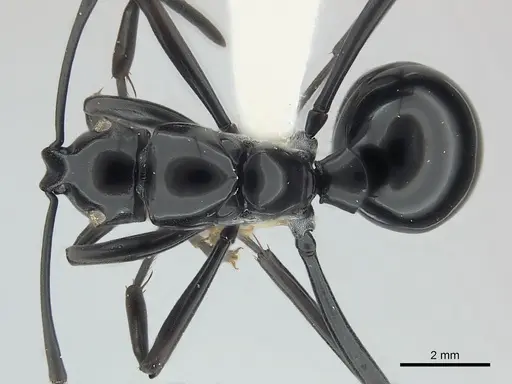
CASENT0919848
View on AntWeb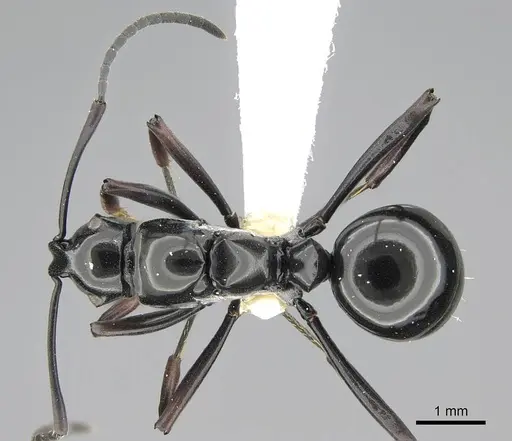
Literature
Loading distribution map...Loading products...