
Polyrhachis bihamata
- Sci. Name
- Polyrhachis bihamata
- Tribe
- Camponotini
- Subfamily
- Formicinae
- Author
- Fabricius, 1775
- Distribution
- Found in 9 countries
Introduction
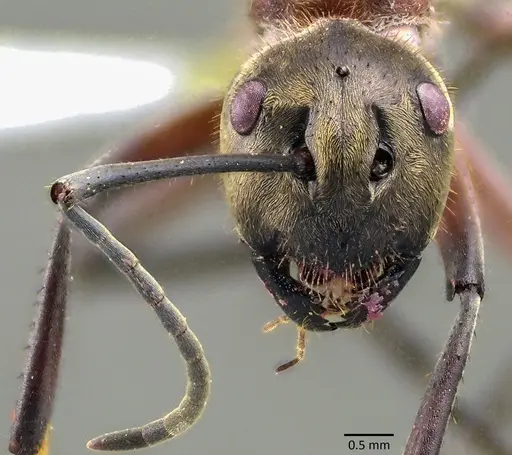
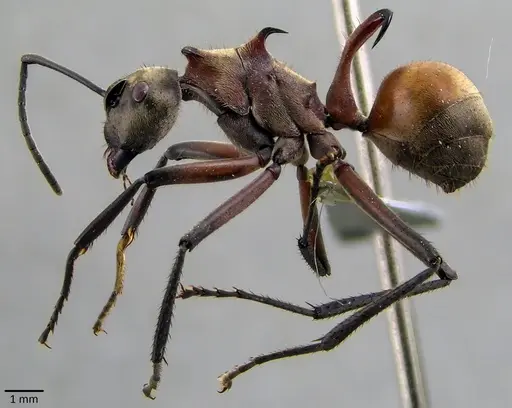
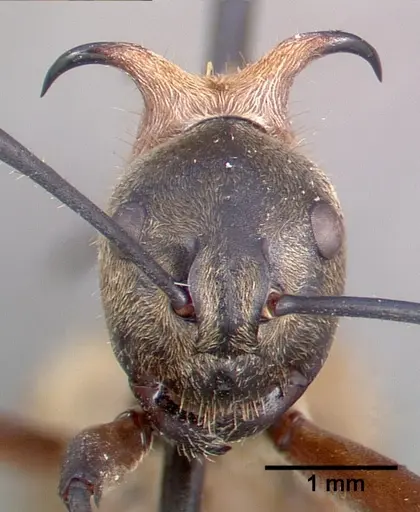
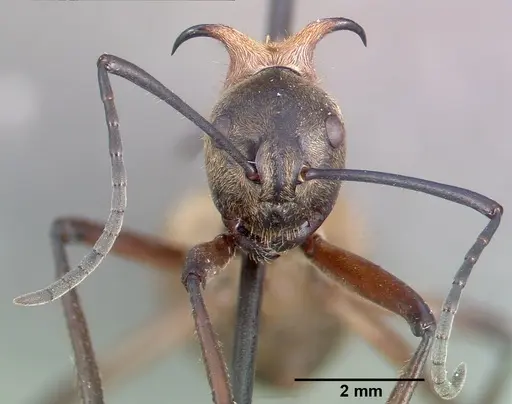
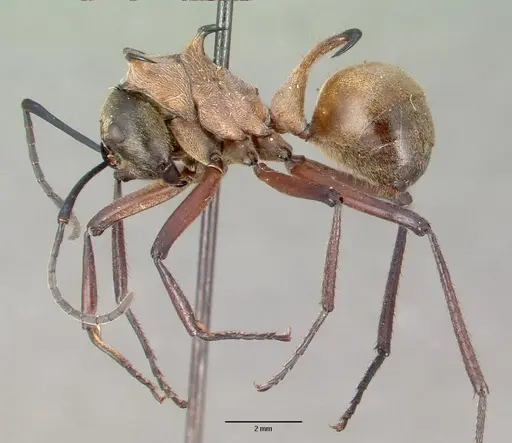
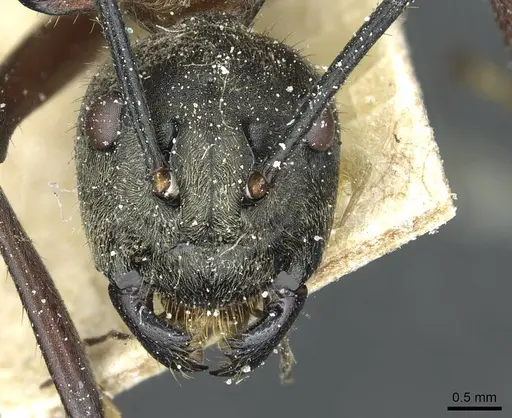
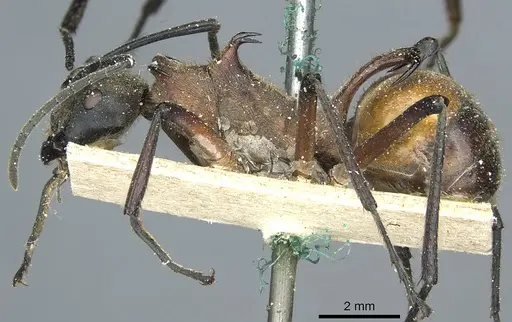
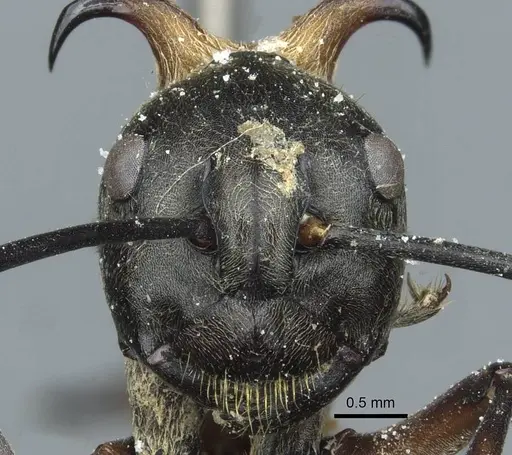
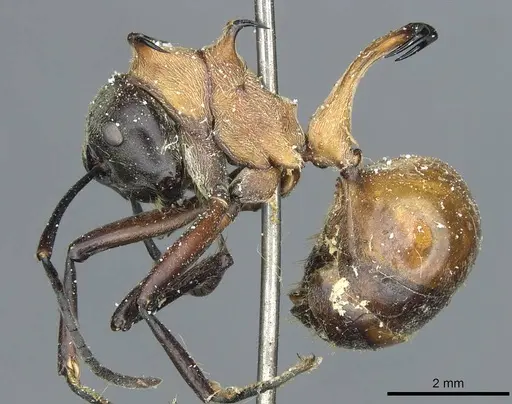
Polyrhachis bihamata is a large ant species native to Southeast Asia, ranging from Vietnam and Thailand through Malaysia to Borneo, Sumatra, and parts of India. Workers measure 9.5-12.0 mm total length and have a bicolored pattern: head, antennae, spine tips, and legs are black, while the mesosoma, petiole, and most of the gaster are orange-brown . They have pronotal spines pointing backward and hooked petiolar spines that run parallel . This species nests arboreally, often close to the ground against tree trunks using foliage, vines, and silk . What makes P. bihamata unique is its dense, golden standing setae covering the body, which distinguishes it from similar species with reduced pilosity . These ants are diurnal foragers that patrol vegetation for honeydew and prey, and they weave silk nests using larval silk .
Quick Summary
- Difficulty: Medium
- Origin & Habitat: Southeast Asia, including Vietnam, Laos, Thailand, Myanmar, Malaysia, Borneo, Sumatra, Java, Bali, the Philippines, India, and southern China. Inhabits primary rainforests, nesting close to ground level against tree trunks or inside dead bamboo [2][4].
- Colony Type: Colony structure ranges from small monogyne colonies to polydomous polygynous colonies [3].
- Size & Growth:
- Queen: Approximately 13.3 mm total length [2]
- Worker: 9.5-12.0 mm total length [1][2]
- Colony: Up to several thousand workers [3]
- Growth: Moderate
- Development: Estimated 6-10 weeks based on typical Polyrhachis development patterns (Development timeline is not documented in the research, this estimate is inferred from genus-level patterns.)
- Antkeeping:
- Temperature: Keep at warm temperatures, roughly 24-28°C, based on their tropical rainforest habitat [2][3].
- Humidity: High humidity is essential, as they inhabit rainforests, keep substrate consistently moist but not waterlogged [2][3].
- Diapause: No diapause required, as a tropical species, they do not need hibernation [3].
- Nesting: Arboreal nesters in the wild, prefer nests with vertical surfaces, such as cork bark or wood, and materials for silk weaving [2][5].
- Behavior: Diurnal and active foragers that climb vertical surfaces readily. They are not aggressive toward keepers but will defend their nest. Workers are medium-sized and use compound eyes for visual navigation during the day [6][3]. Escape prevention is moderate due to their size [1].
- Common Issues: high humidity requirements can lead to mold if ventilation is poor, balance is critical., arboreal nesting means they need vertical space and climbing structures, not just horizontal tunnels., wild-caught colonies may be stressed from collection and transport, with higher mortality risk., cocooned pupae require stable humidity, too dry and they desiccate, too wet and they mold., primary forest specialists, they may struggle in secondary habitats or suboptimal captive environments.
Housing and Nest Setup
You need an arboreal-focused setup for Polyrhachis bihamata. In the wild, they nest against tree trunks using foliage and vines, weaving larval silk to bind materials [2]. For captivity, use a vertical frame with cork bark, twigs, or artificial leaves for workers to walk on and attach brood to [5]. Test tubes can work for founding colonies but should be horizontal with cotton stoppers. Ensure vertical surfaces for climbing, and use standard fluon barriers for escape prevention due to their medium size [1].
Feeding and Diet
You should offer a constant sugar source like sugar water or honey, and protein such as fruit flies or small crickets [3]. They are diurnal foragers, so provide food during daylight hours. Remove uneaten protein within 24-48 hours to prevent mold.
Temperature and Humidity Management
Keep temperatures around 24-28°C based on their tropical habitat [2][3]. Maintain high humidity with moist substrate, but ensure ventilation to prevent mold [2].
Colony Development and Growth
Queens are likely claustral, sealing themselves to raise first brood [2]. First workers may emerge in 6-10 weeks under optimal conditions. Colonies grow moderately, reaching several hundred workers within the first year [3]. Cocoons require stable humidity for development [5].
Behavior and Foraging
These ants are diurnal arboreal foragers, active during the day and exploring vertical surfaces [3]. They use compound eyes for navigation [6] and are not aggressive but will defend their nest [1].
Seasonal Care
As a tropical species, no diapause is needed [3]. Maintain consistent warmth and humidity year-round, with slight temperature reductions in winter if colony activity decreases [2].
Frequently Asked Questions
Is Polyrhachis bihamata good for beginners?
Polyrhachis bihamata is rated as medium difficulty. The main challenges are maintaining high humidity and providing arboreal-style housing with vertical climbing surfaces [2][3].
How long does it take for the first workers to emerge?
Based on typical Polyrhachis development, expect first workers within 6-10 weeks under optimal temperatures [2].
What do Polyrhachis bihamata ants eat?
They are omnivores with a preference for sweet liquids and protein. Offer sugar water continuously and small insects like fruit flies 2-3 times per week [3].
Can I keep multiple queens together?
Polyrhachis bihamata can be polygynous, but introducing unrelated queens to an established colony is risky. Keep foundress queens alone until they establish workers [3].
What type of nest do they need?
They need an arboreal-style setup with vertical climbing surfaces, such as cork bark or wood, and materials for silk weaving [2][5].
Do they need hibernation?
No, as a tropical species, they do not require hibernation or diapause [3].
How big do colonies get?
Colonies can reach up to several thousand workers in the wild [3].
Why are my ants dying?
Common causes include low humidity, temperatures below 20°C, mold from poor ventilation, or stress from wild collection. Check nest moisture and temperature [2][3].
When should I move them to a larger setup?
Move from a test tube to a larger nest once the colony reaches 20-30 workers or when crowded [2].
Are they escape artists?
They are medium-sized ants, so standard fluon barriers work well for escape prevention [1].
Report an Issue
The current care sheet is based fully on literature. See inconsistencies, or something that's incorrect? Please , it will be resolved after review from an admin. Contributing to the blogs tab also helps providing information, to make us be able to further improve the caresheets. Thank you for your support!
References

This caresheet is licensed under CC BY-SA 4.0 .
Community Blogs
ANTWEB1041866
View on AntWeb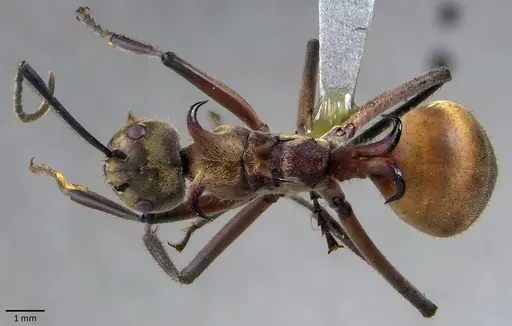
CASENT0010659
View on AntWeb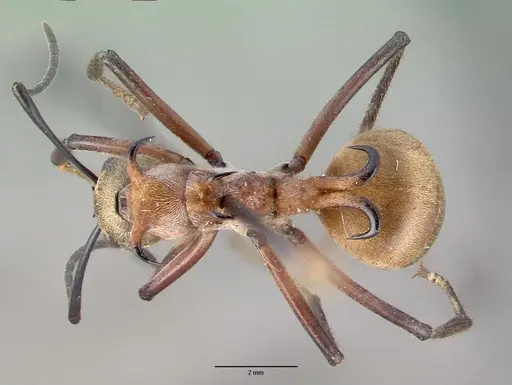
CASENT0912164
View on AntWeb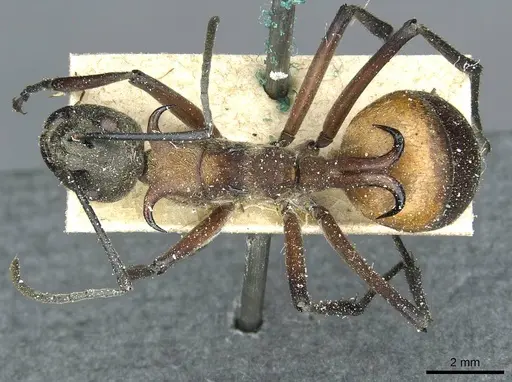
CASENT0912165
View on AntWeb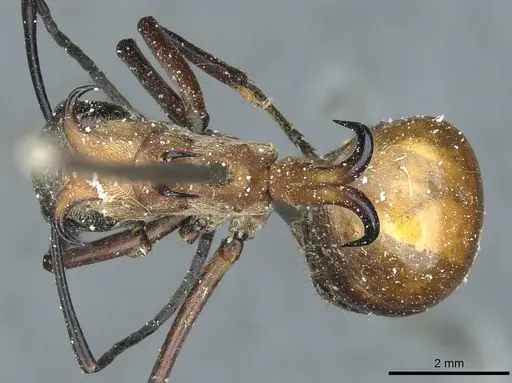
Literature
Loading distribution map...Loading products...