
Polyrhachis arnoldi
- Sci. Name
- Polyrhachis arnoldi
- Subgenus
- Myrma
- Tribe
- Camponotini
- Subfamily
- Formicinae
- Author
- Forel, 1914
- Distribution
- Found in 1 countries
Introduction
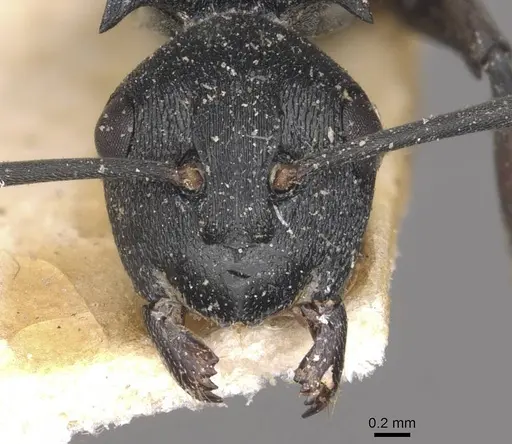
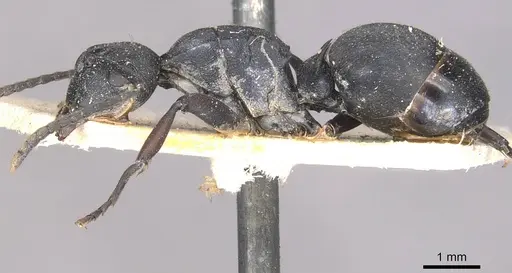
Polyrhachis arnoldi is a small to medium-sized arboreal ant belonging to the subgenus Myrma (viscosa-group) . Workers have finely reticulate-punctate sculpturing on the first gastral segment, convex eyes, and a propodeum lacking a transverse raised ridge or median tooth . This species nests in trees and constructs shelters using silk, a behavior common to many Myrma species . The genus Polyrhachis is known for their spiny appearance and often metallic or colorful exoskeletons, though specific coloration for Polyrhachis arnoldi is not documented.
Quick Summary
- Difficulty: Medium
- Origin & Habitat: African species, with arboreal nesting in tropical and subtropical forested regions [1][3]. Specific countries are not well-documented.
- Colony Type: Based on subgenus Myrma patterns, likely polygynous (multiple queens), but unconfirmed for Polyrhachis arnoldi [1].
- Size & Growth:
- Queen: size data unavailable
- Worker: size data unavailable
- Colony: Unknown
- Growth: Moderate, inferred from genus patterns
- Development: Unknown, no specific data available for Polyrhachis arnoldi. Based on related species, estimated 6-10 weeks at optimal temperature, but this is an inference. (Development data is lacking, estimates are based on genus-level patterns.)
- Antkeeping:
- Temperature: Keep at 24-28°C as a starting point, based on general care for arboreal ants [4]. Adjust based on colony activity.
- Humidity: Maintain moderate to high humidity, with substrate kept slightly moist but not waterlogged [4].
- Diapause: Unknown for this species [1].
- Nesting: Arboreal setup is ideal, using nests with chambers scaled to their size, such as Y-tong or plaster nests, and providing climbing structures [1][3].
- Behavior: Polyrhachis arnoldi workers are generally calm and not aggressive toward keepers. They lack a functional sting and use formic acid spray for defense, typical of Formicinae [4]. Workers are active foragers and climb well, so escape risk is moderate with standard barriers [4].
- Common Issues: lack of species-specific care data requires reliance on genus-level guidance., arboreal nature demands vertical space and climbing structures., silk-nesting behavior needs humidity control to prevent nest drying., wild-caught colonies may have parasites difficult to treat., slow colony growth may frustrate beginners.
Nesting Preferences and Setup
Polyrhachis arnoldi is an arboreal species that naturally nests in trees and uses silk to construct protective chambers [1][3]. In captivity, provide nests with moderate chamber sizes that retain humidity, such as Y-tong or plaster nests. Ensure good ventilation to prevent mold. In the outworld, include climbing structures like branches or cork bark to mimic their natural habitat [1].
Feeding and Diet
Polyrhachis ants are omnivorous, feeding on small insects, honeydew, and nectar. Offer varied diet including small live prey like fruit flies and sugar water continuously [4]. Remove uneaten prey after 24-48 hours to prevent mold.
Temperature and Humidity Requirements
Maintain temperatures around 24-28°C with a gentle gradient for self-regulation [4]. Humidity should be moderate to high, with substrate slightly moist but not waterlogged [4]. Monitor for condensation to avoid excess moisture.
Colony Founding and Development
Founding behavior is unconfirmed for Polyrhachis arnoldi. Based on genus patterns, queens may be semi-claustral, leaving the nest to forage [1]. First workers may take several weeks to emerge, but no specific timeline is documented.
Behavior and Temperament
Workers are calm and not aggressive, using formic acid spray for defense [4]. They are active foragers and climb well, so escape risk is moderate with tight lids and barriers.
Frequently Asked Questions
How long does it take for Polyrhachis arnoldi to produce first workers?
No specific data is available. Based on related Polyrhachis species, estimated 6-10 weeks at optimal temperature, but this is an inference [1].
Can I keep Polyrhachis arnoldi in a test tube?
Test tubes can work for founding colonies but are not ideal long-term. Arboreal ants prefer vertical space, so move to a proper nest as the colony grows [4].
What do Polyrhachis arnoldi ants eat?
They are omnivorous, eating small live prey, honeydew, and sugar water [4].
Are Polyrhachis arnoldi good for beginners?
This species is rated medium difficulty due to lack of species-specific care data. Beginners should research Polyrhachis care thoroughly [4].
Do Polyrhachis arnoldi need hibernation?
Hibernation requirements are unknown for this species [1].
How big do Polyrhachis arnoldi colonies get?
Colony size is unknown, with no specific data documented.
When should I move my Polyrhachis arnoldi colony to a formicarium?
Move to a proper nest when the colony is crowded, providing arboreal-friendly structures [4].
Can I keep multiple Polyrhachis arnoldi queens together?
Colony structure is unconfirmed. Based on subgenus patterns, polygyny is likely, but combining queens is risky without evidence [1].
Why is my Polyrhachis arnoldi colony dying?
Common causes include incorrect humidity, temperature stress, disturbance, parasites, or starvation. Review care parameters and adjust gradually [4].
Report an Issue
The current care sheet is based fully on literature. See inconsistencies, or something that's incorrect? Please , it will be resolved after review from an admin. Contributing to the blogs tab also helps providing information, to make us be able to further improve the caresheets. Thank you for your support!
References

This caresheet is licensed under CC BY-SA 4.0 .
Community Blogs
CASENT0903461
View on AntWeb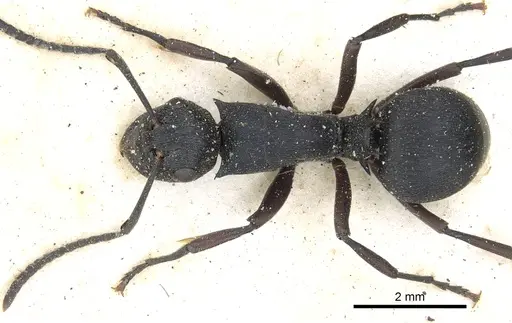
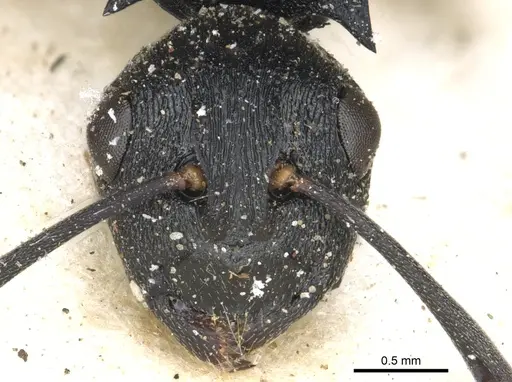
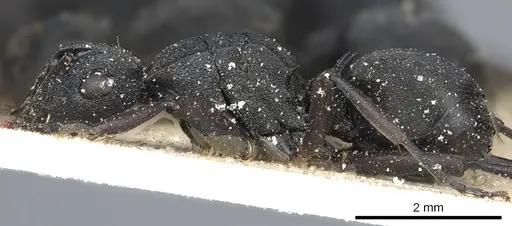
CASENT0910943
View on AntWeb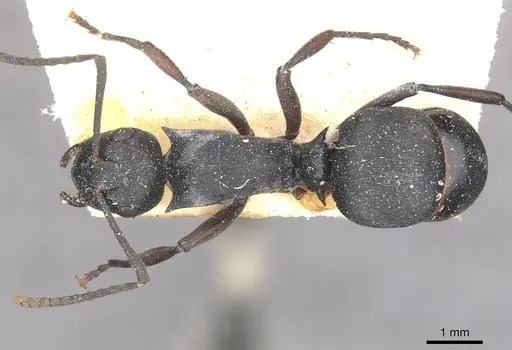
Literature
Loading distribution map...Loading products...