
Polyrhachis argentosa
- Sci. Name
- Polyrhachis argentosa
- Subgenus
- Hedomyrma
- Tribe
- Camponotini
- Subfamily
- Formicinae
- Author
- Forel, 1902
- Distribution
- Found in 1 countries
Introduction
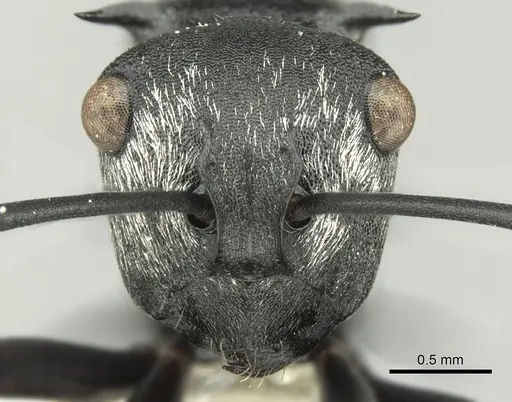
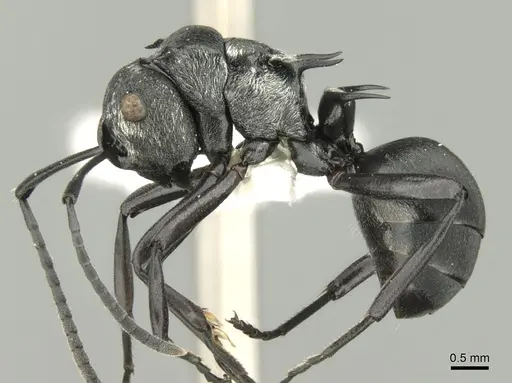
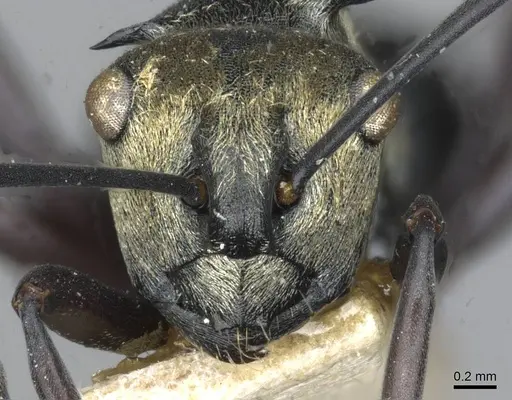
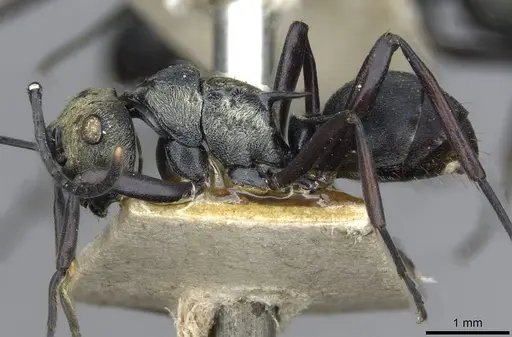
Polyrhachis argentosa is a slender ant native to central and northern Queensland, Australia . Workers are smaller and more slender than the similar Polyrhachis daemeli, with a convex mesonotal and propodeal dorsum, and lack pubescence on the gastral dorsum . They nest in plant cavities, typically in small hollow branches and bamboo internodes . This species has reverted to arboreal nesting but does not use larval silk for nest construction, unlike some other Polyrhachis species .
Quick Summary
- Difficulty: Medium
- Origin & Habitat: Central and northern Queensland, Australia, in rainforest habitats at elevations around 200m [1].
- Colony Type: Colony structure is unconfirmed in scientific literature. Based on genus patterns, likely monogyne (single queen).
- Size & Growth:
- Queen: size data unavailable
- Worker: ~5-7 mm, inferred from Polyrhachis genus
- Colony: Unknown
- Growth: Moderate, inferred from Formicinae patterns
- Development: Estimated 6-8 weeks at optimal temperature, inferred from related Formicinae species (Development time is inferred from genus-level data since species-specific timing is not documented)
- Antkeeping:
- Temperature: Keep warm and stable, roughly 24-28°C, based on tropical habitat [1].
- Humidity: Keep nest substrate consistently moist but not waterlogged, as they are from humid rainforest environments [1].
- Diapause: No, they are from tropical Queensland with mild winters [1].
- Nesting: Arboreal nesting in hollow plant cavities [2][3].
- Behavior: Generally calm and non-aggressive. Workers are active foragers and adept climbers. They lack a sting, using formic acid spray for defense.
- Common Issues: dry conditions kill colonies quickly, rainforest species need constant humidity, wrong nest orientation, they prefer vertical/elevated nests, not horizontal test tubes, temperature too low causes sluggish behavior and poor brood development, mold problems from overwatering or poor ventilation, wild-caught colonies may have parasites that are difficult to treat
Nest Preferences and Housing
Polyrhachis argentosa is an arboreal species that naturally nests in hollow plant cavities, small branches, bamboo internodes, and similar structures [2][3]. In captivity, provide vertical or elevated nesting options rather than horizontal test tubes. Use bamboo sections, acrylic nests with narrow chambers, or custom arboreal setups. Position the nest so ants can climb up into it, mimicking their natural height preference. Avoid deep soil nests, they are lignicolous (wood-dwelling) ants [2].
Temperature and Heating
Maintain temperatures between 24-28°C during the active season, with a slight gradient allowing cooler areas if needed. During winter, reduce temperatures slightly to around 20-22°C to simulate mild subtropical conditions, but avoid cold below 18°C. These ants do not require true hibernation [1].
Humidity Requirements
Keep the nest substrate consistently moist but never waterlogged. The nest area should show some condensation, indicating proper humidity. A water tube connected to the nest helps maintain moisture and provides drinking water. Mist the outworld occasionally, but avoid letting water pool in the nest chambers [1].
Feeding and Diet
Offer sugar water or honey as a constant energy source. For protein, provide small insects like fruit flies, crickets, or mealworms 2-3 times per week. Remove uneaten prey after 24 hours to prevent mold [1].
Behavior and Temperament
Workers are generally calm and less aggressive than many ant species. They are active foragers that explore their environment, particularly in upper regions of the enclosure. They lack a sting and use formic acid spray for defense, typical of Formicinae. Workers are adept climbers and will readily scale surfaces [1].
Frequently Asked Questions
Can I keep Polyrhachis argentosa in a test tube?
Standard horizontal test tubes are not ideal, these are arboreal ants that prefer vertical or elevated nesting. Use bamboo sections or acrylic nests with narrow vertical chambers instead [2][3].
What temperature do Polyrhachis argentosa ants need?
Keep them warm at 24-28°C during the active season, with a slight gradient. Reduce to around 20°C in winter [1].
How long does it take for Polyrhachis argentosa to produce first workers?
Estimated 6-8 weeks from egg to first worker at optimal temperature, inferred from related Formicinae species.
Are Polyrhachis argentosa good for beginners?
They are rated as medium difficulty. The main challenges are maintaining high humidity and providing proper arboreal nesting [1].
What do Polyrhachis argentosa eat?
They are omnivorous. Offer sugar water or honey constantly, and protein sources like small insects 2-3 times per week [1].
Do Polyrhachis argentosa need hibernation?
No true hibernation is required, they come from subtropical Queensland with mild winters [1].
Why is my Polyrhachis argentosa colony dying?
The most common cause is low humidity, these rainforest ants die quickly in dry conditions. Check that the nest is consistently moist [1].
When should I move my Polyrhachis argentosa to a formicarium?
Move them once the colony is active and healthy in their founding setup, ensuring proper vertical nesting space and humidity control.
How big do Polyrhachis argentosa colonies get?
Colony size is not well documented, but growth is moderate, expect several months to establish a solid colony.
Report an Issue
The current care sheet is based fully on literature. See inconsistencies, or something that's incorrect? Please , it will be resolved after review from an admin. Contributing to the blogs tab also helps providing information, to make us be able to further improve the caresheets. Thank you for your support!
References

This caresheet is licensed under CC BY-SA 4.0 .
Community Blogs
CASENT0906600
View on AntWeb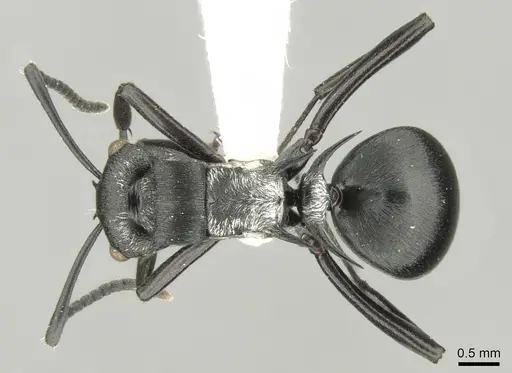
CASENT0910844
View on AntWeb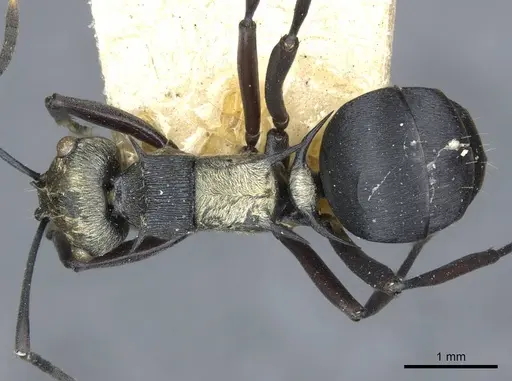
Literature
Loading distribution map...Loading products...